Summary
This guide explains why legal pages are essential for every website and what they include.
Further, it explores which legal pages are required under major global privacy laws, the risks of operating a website without them, and the best places to display these policies.
Finally, the guide walks you through how to create legal pages effectively and answers common questions to help you maintain compliance and protect your business online.
Missing or incomplete legal pages can lead to user mistrust, account suspensions, legal complaints, or even heavy penalties under privacy laws like GDPR and CCPA.
Every website collects user data. From cookies and contact forms to analytics and payment processing, websites handle personal information continuously. Without proper legal disclosures, you may unknowingly violate global data privacy regulations.
If you’re unsure which legal pages your website actually needs or why they matter, you’re not alone. Many site owners struggle to understand compliance requirements and where to start.
In this guide, we’ll walk you through the essential legal pages your websiteneeds, explaining what each page does and how it helps protect your business while building trust with your visitors.
Why Legal Pages Matter for Every Website?
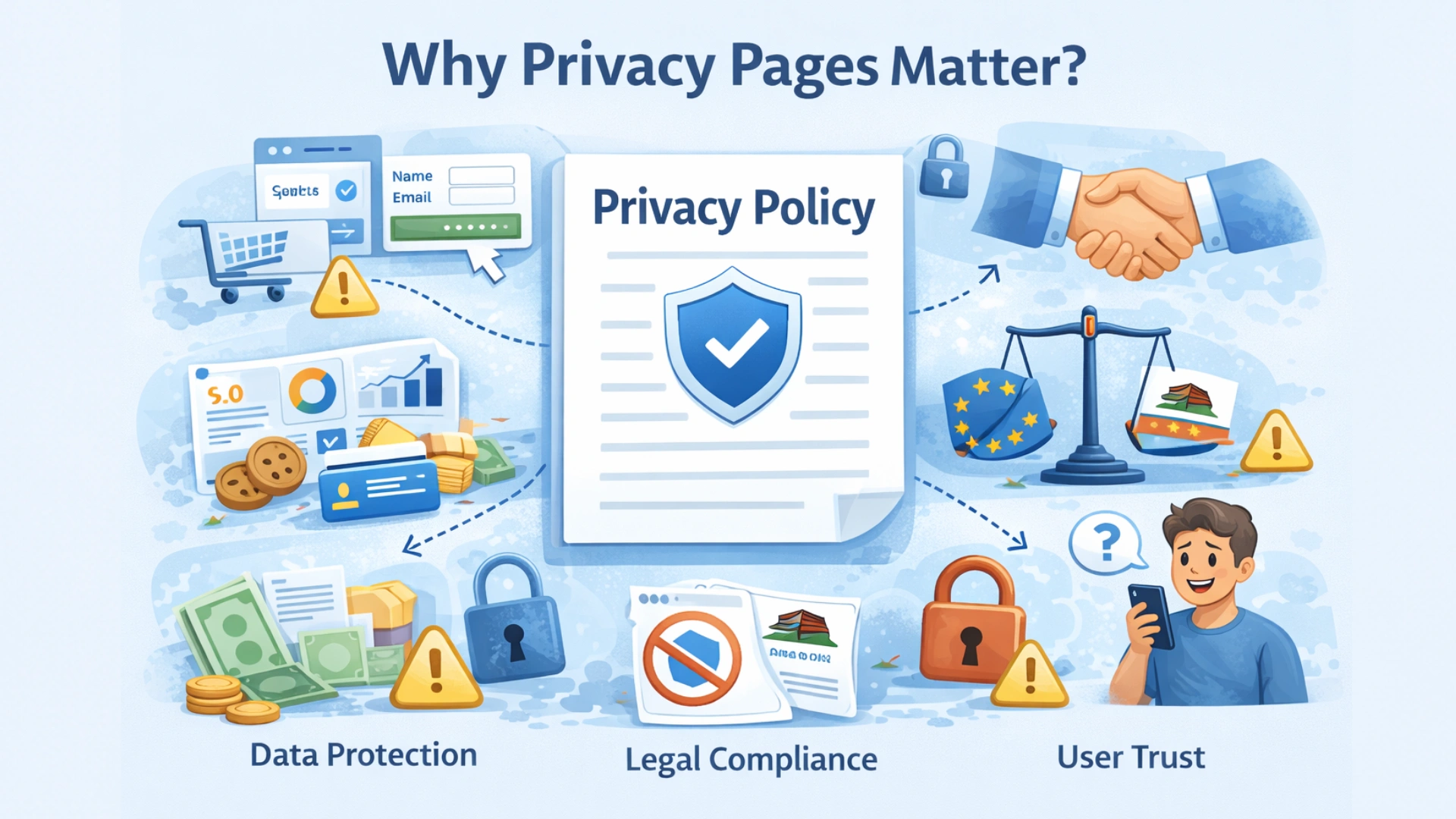
Legal pages are essential because modern websites regularly collect and process user data through cookies, contact forms, analytics tools, subscriptions, and online transactions. These website legal pages describe how an organization will collect, use, store, and secure the information provided by users.
The privacy page will also assist an organization in complying with the privacy regulations of various jurisdictions (GDPR, CCPA, etc.) as they pertain to the protection of users’ personal data.
Additionally, legal pages not only help businesses comply with the law, but they also help create trust and transparency between visitors and the site. Users are more likely to engage with your site, sign up for services, or purchase goods when they understand how their information is collected or handled and what the rules are that apply to your website.
Furthermore, proper legal pages also protect website owners by reducing legal risks, preventing disputes, and setting clear expectations for users.
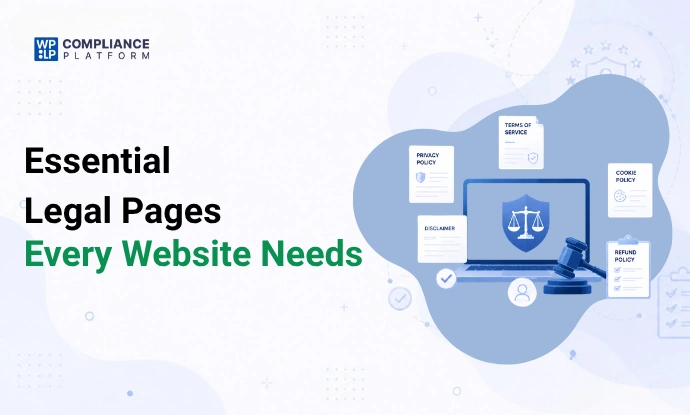
5 Essential Legal Pages Every Website Needs
Below are the top 5 important legal pages for a website you must have.
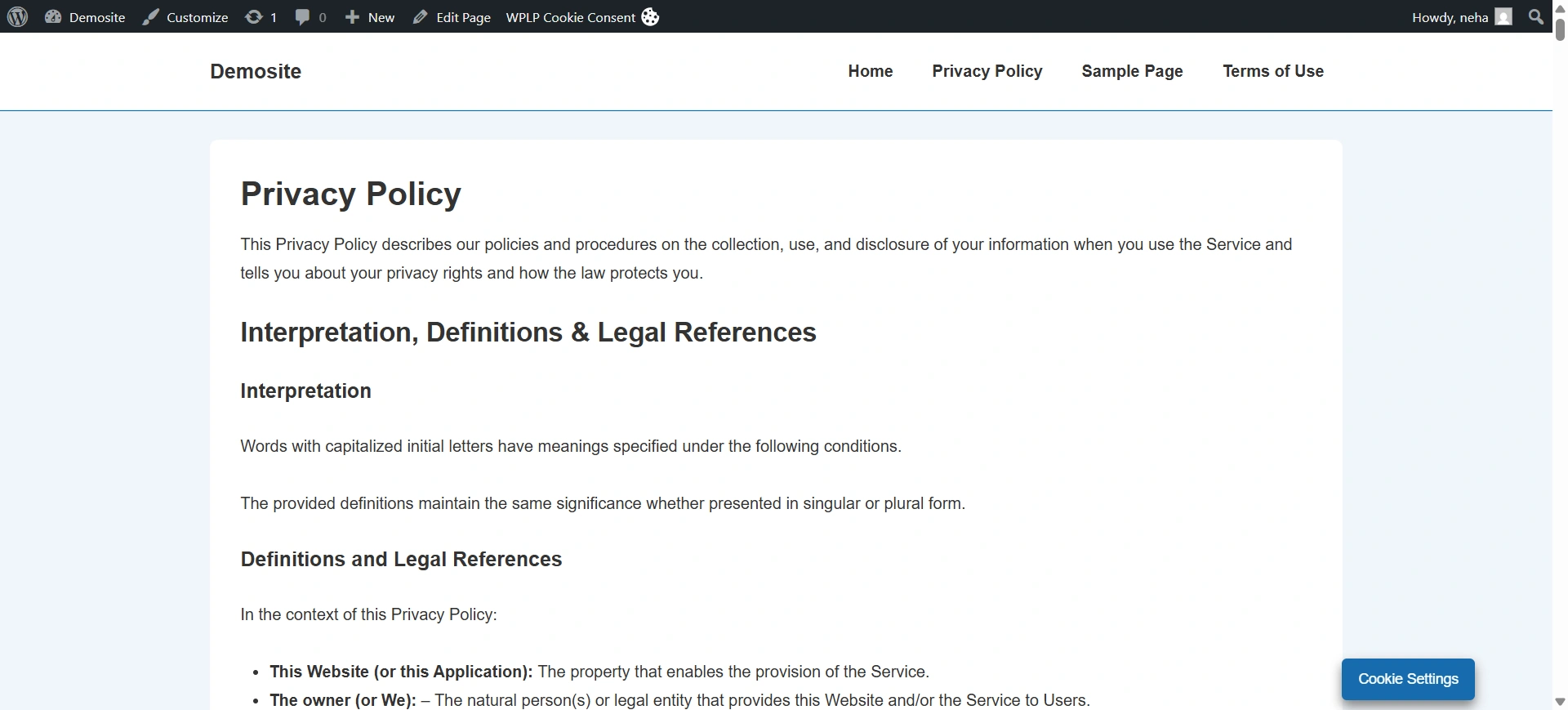
1. Privacy Policy
A Privacy Policy is a legal document that explains how your website collects, uses, stores, and protects your visitors’ private data. This includes information collected via forms, cookies, analytics tools, account registrations, and/or purchases. This is the most important legal page for any website.
Why You Need Them
A Privacy Policy is a fundamental building block for website compliance. GDPR, CCPA, and numerous other global privacy laws require this. Many businesses use tools to create a GDPR-compliant privacy policy without starting from scratch. It requires businesses to openly and transparently explain how they collect, use, and store users’ personal data.
Even businesses with the most basic websites that collect email addresses or analytics data must have these disclosures available.
A properly drafted Privacy Policy will provide users with additional reassurance that their Personal Information will be managed appropriately and foster greater confidence in how they will engage with your website.
What to Include
- Types of personal data collected (name, email, IP address, cookies, device data)
- Purpose and legal basis for processing data (consent, contract, legitimate interest)
- Third-party services that access data (e.g., Mailchimp, Stripe, Google Analytics)
- Data storage and security practices
- Contact details for privacy-related requests
- User rights, including access, correction, deletion, and data portability
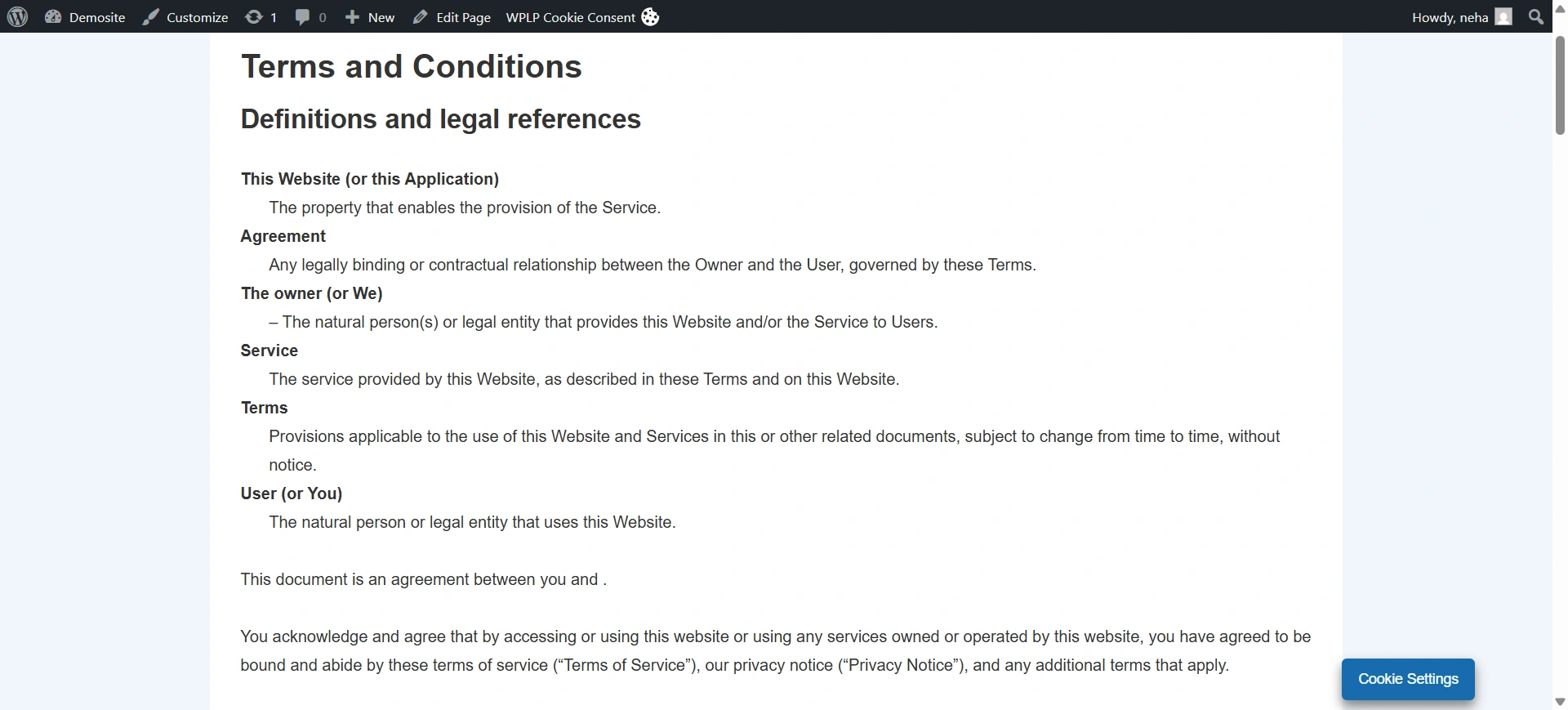
2. Terms and Conditions (Terms of Service)
The Terms and Conditions page states guidelines when accessing or using your website. Additionally, the document serves as a legal contract between the website and its users, defining the conduct that is legally acceptable and the limitations of user behavior.
Why You Need Them
Terms and conditions are not required by law, but they provide a very strong legal benefit. This legal page provides protection for your intellectual property and limits your legal liability.
It also strengthens your relationship with your users and shows them how they should behave on your website. You can also resolve potential disputes by clearly communicating your users’ responsibilities at the outset.
What to Include
- Intellectual property ownership (content, logos, and branding belong to you)
- Acceptable use policies and prohibited behavior
- Account suspension or termination rules
- Limitation of liability clauses
- Disclaimer of warranties
- Governing law and dispute resolution terms
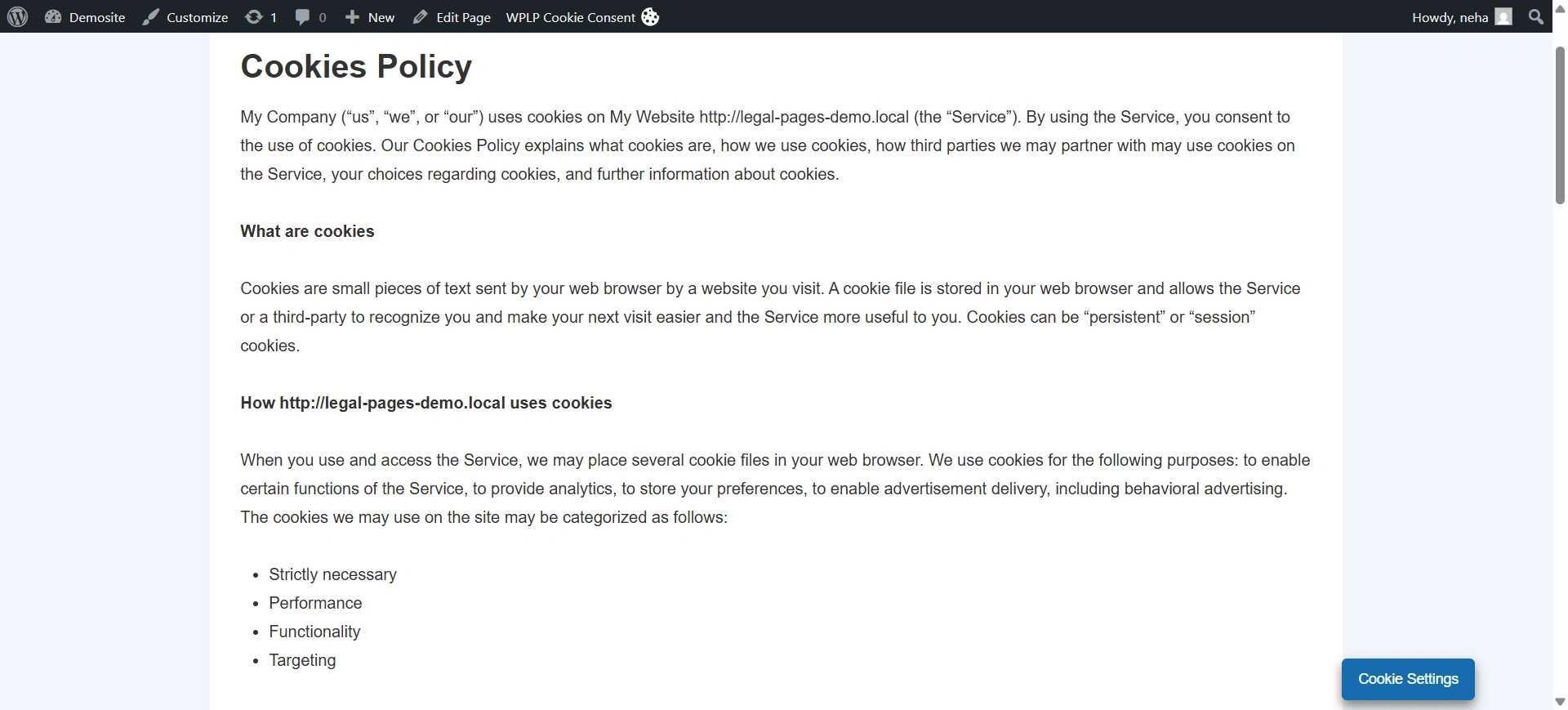
3. Cookie Policy
A cookie policy page explains how cookies and other tracking technologies are utilized on your website to gather information about a user’s behavior, preferences, and browsing habits.
Why You Need Them
Websites commonly use cookies for identifying visitors, personalizing content, and advertising purposes. To stay compliant, it’s also important to add a cookie consent banner that allows users to manage their preferences.
Various government regulations, such as the EU’s ePrivacy Directive, require websites to disclose how they use these tracking technologies.
A cookie policy is a document that explains what cookies are, what they do, and how users can control their use on their devices.
By providing users with clear information about how cookies are used, the website demonstrates compliance with government regulations regarding transparency regarding such tracking mechanisms and respects users’ ability to select their preferences on websites.
What to Include
- Types of cookies used (essential, analytics, marketing, preference cookies)
- Purpose of each cookie category
- Cookie duration and storage details
- Instructions for managing or disabling cookies via browser settings
- Links to third-party cookie provider policies (Google, Facebook, etc.)
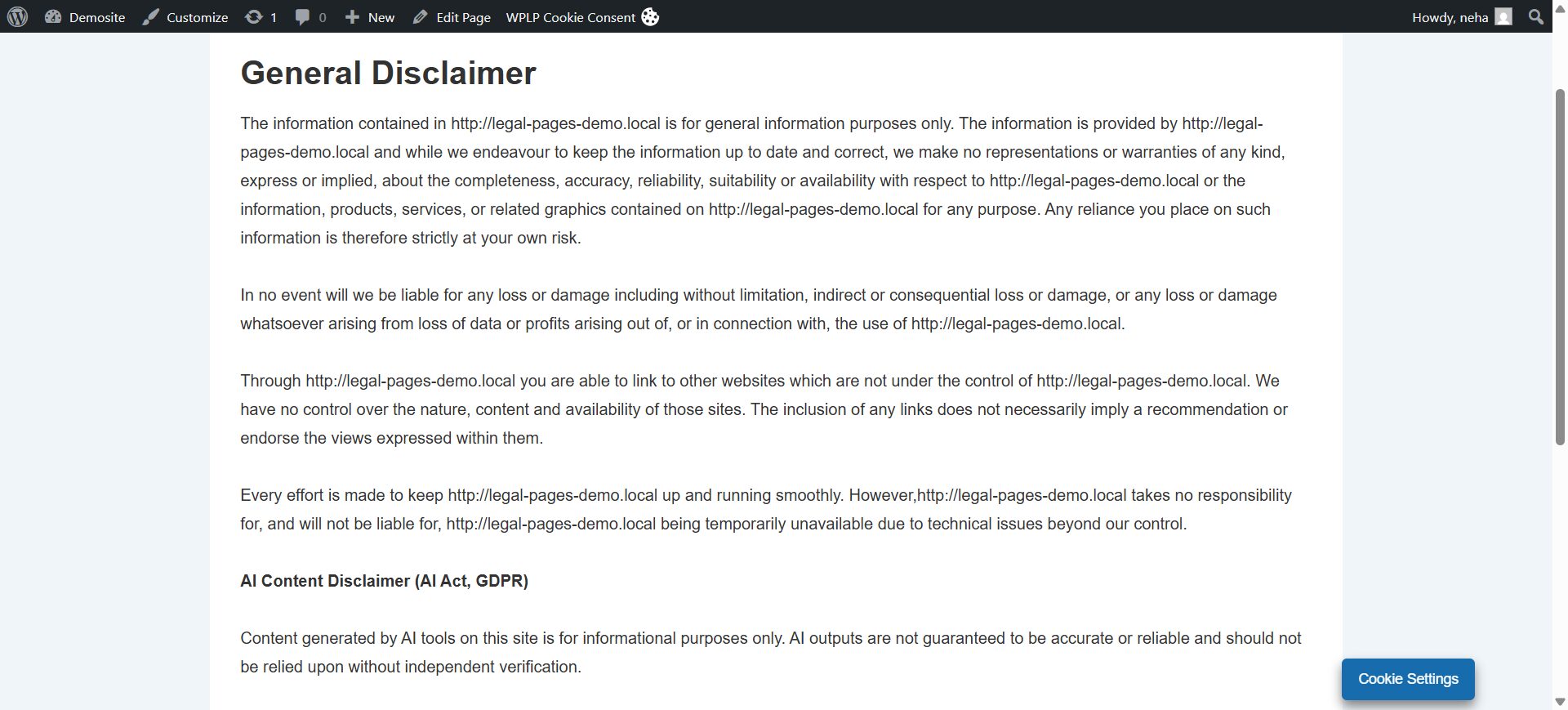
4. Disclaimer Page
A Disclaimer states the limitations of liability related to the services and/or information presented on your website. It also informs users that all content is strictly for informational purposes and should not be relied upon for any specific result.
Why You Need Them
A disclaimer is critical if you provide advice or Reviews or participate in an Affiliate Program. The Disclaimer protects you from liability regarding how users interpret or act upon your Content.
The purpose of this document is to provide a realistic Expectation about the results of your Content and assist in preventing Legal Actions against you due to outcomes or results of your Content.
What to Include
- Affiliate disclosure statements (FTC compliance)
- “Not Professional Advice” notice for medical, legal, financial, or fitness content
- Accuracy and errors disclaimer (information may change over time)
- External links disclaimer
- Earnings or results disclaimers (if applicable)
5. Refund & Return Policy (For eCommerce)
A Refund and Return Policy explains the conditions under which items may be returned, refunded, or exchanged after the purchase of products by the consumer.
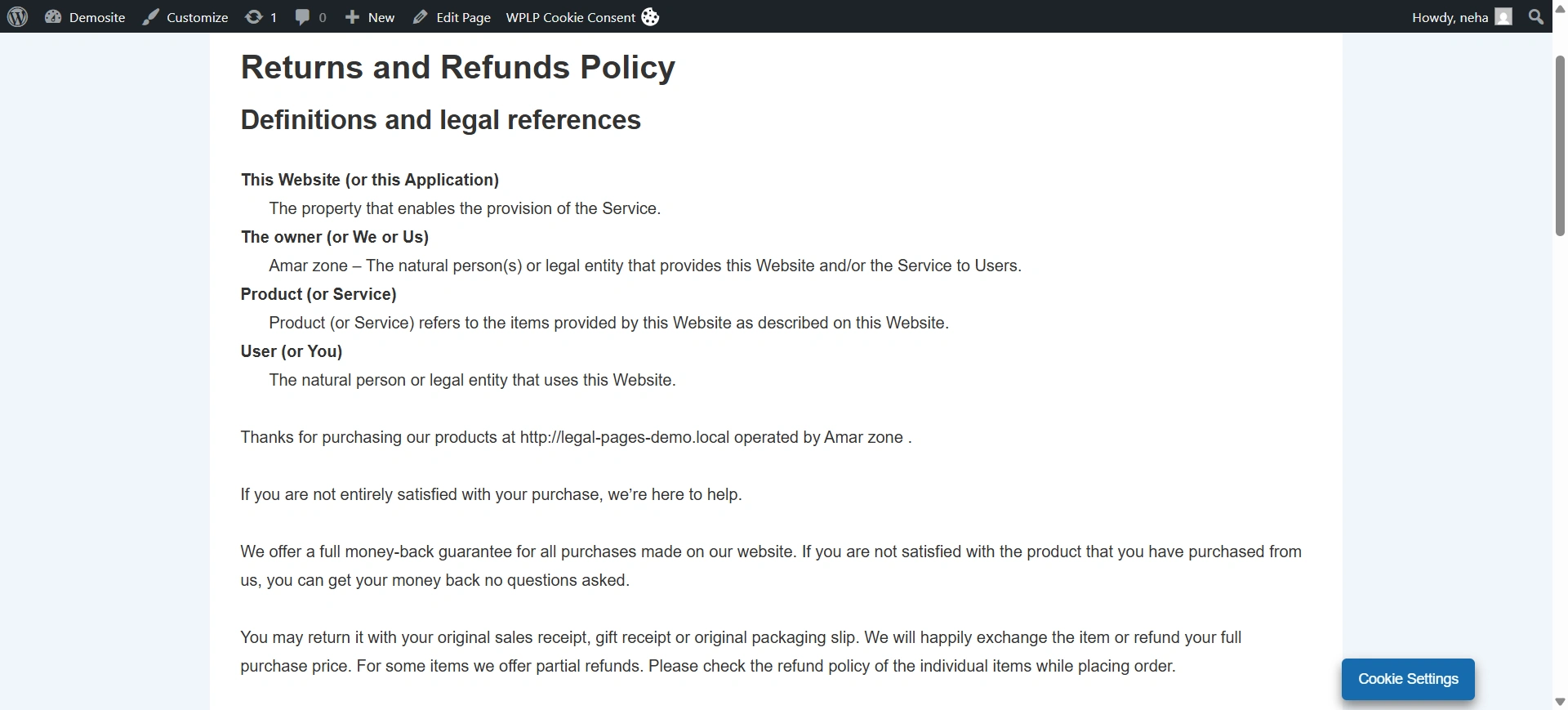
Why You Need Them
A clear set of refund and return regulations for online retailers is important for keeping customers satisfied. Additionally, if businesses are transparent about their policies, it reduces the risk of problems or disputes (and is required by payment processors such as Stripe or PayPal).
Furthermore, understanding how returns work before purchasing will give the customer confidence in their purchase decision.
What to Include
- Return eligibility timeframe (e.g., 14 or 30 days)
- Conditions for accepting returns (unused items, original packaging)
- Refund processing timelines
- Responsibility for return shipping costs
- Non-refundable items or exceptions
- Steps customers must follow to request a return or refund
What Legal Pages Are Not Legally Required but Still Recommended?
Now that you understand the essential legal pages for a website, there are some pages that aren’t mandated by privacy laws but are “Internet Best Practices.” These pages turn a “generic website” into a “trusted brand.”
- “About Us” Page: This establishes a human connection. Additionally, when customers understand the history and beliefs driving a business, they tend to trust the company more.
- Contact Information: Absolutely necessary. Moreover, having a physical address and email address, as well as having a presence on social media, indicates that you are a legitimate company and not just a quick, off-the-cuff operation.
- Terms of Use: Typically interchanged with terms/conditions; however, the Terms of Use define how users can interact with your website when using the website and limiting the company’s liability concerning third-party materials.
- Shipping Policy: For eCommerce, being upfront about lead time and international shipping limits also decreases customer support tickets and makes for a better overall customer experience.
Which Legal Pages Are Required by Major Privacy Laws?
Different privacy laws around the world require websites to provide specific legal pages that explain how user data is collected, used, and protected. While the exact requirements vary, most regulations focus on transparency and user rights.
Here are some of the most popular privacy laws and the legal pages they typically require:
| Privacy Law | Region | Required Legal Pages | Purpose |
|---|---|---|---|
| GDPR (General Data Protection Regulation) | European Union (EU) | Privacy Policy, Cookie Policy, Cookie Consent Notice, Data Request/User Rights Page | Provides clear visibility, permissions for lawful processing of data, as well as user control over their own data. |
| CCPA / CPRA | California, USA | Privacy Policy, Do Not Sell or Share My Personal Information Page, Notice at Collection | Ensures users are informed about how their data is used and whether they wish to share it with third parties. |
| UK Data Protection Act 2018 | United Kingdom | Privacy Policy, Cookie Policy, User Rights Information Page | Requires clear disclosure of data usage and user privacy rights. |
| LGPD (Lei Geral de Proteção de Dados) | Brazil | Privacy Policy, Cookie Policy, Data Subject Rights Page, DPO Contact Information | Provides transparency and user rights similar to GDPR. |
| DPDP Act | India | Privacy Policy, Consent Notice, Grievance/Contact Page | Organizations must notify individuals of their rights in relation to their data and provide users with a mechanism for filing a complaint regarding the collection of their data. |
What Happens If Your Website Doesn’t Have Legal Pages?
Failing to include important legal pages on your website may expose you and your business to potential legal and commercial liabilities.
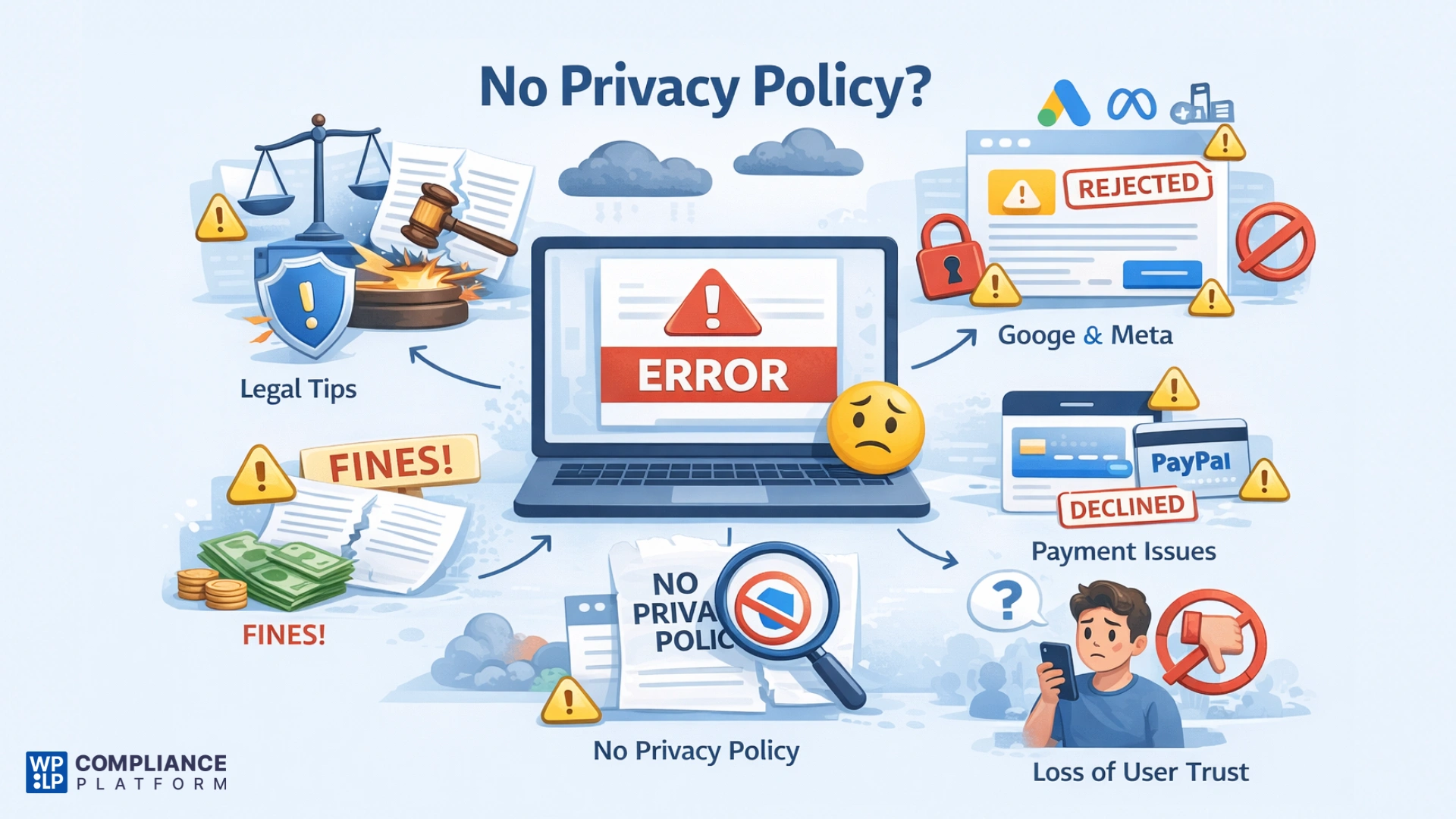
- Legal Penalties and Compliance Issues: Most privacy regulations, like the GDPR, CCPA, and data protection laws, require a clear privacy policy disclosing how a website handles data. If your website does not have either a privacy policy or related pages, it could be considered non-compliant and may be subject to fines or other legal action.
- Advertising and Platform Restrictions: To obtain approval from large platforms like Google Ads, Meta Ads, and app marketplaces for ads and integrations, you usually need a privacy policy. Ads without one may be rejected from the platform and may cause your account to be suspended or terminated.
- Payment Gateway Problems: Usually, payment processors like Stripe and PayPal will also require legal pages like a privacy policy and a terms of service page. “If you do not have these pages, you may experience a longer wait time to get approved to use their service, if you even get approved at all.
- Loss of User Trust: When users visit websites, they expect clear visibility into how their information is collected and used. Users who cannot quickly find privacy information may choose to leave your site altogether or not provide personal information, which will negatively impact your conversions.
- Reduced Business Credibility: A website that lacks a privacy policy or other legal pages can appear unprofessional or unsafe to customers, particularly if it sells products online or is a SaaS or lead-generation site.
Where to Display Your Privacy Policy
A Privacy Policy is only effective when users can easily find and access it. Proper placement ensures transparency, improves user trust, and helps demonstrate compliance if your practices are ever reviewed legally.
Here’s how and where you should display your Privacy Policy:
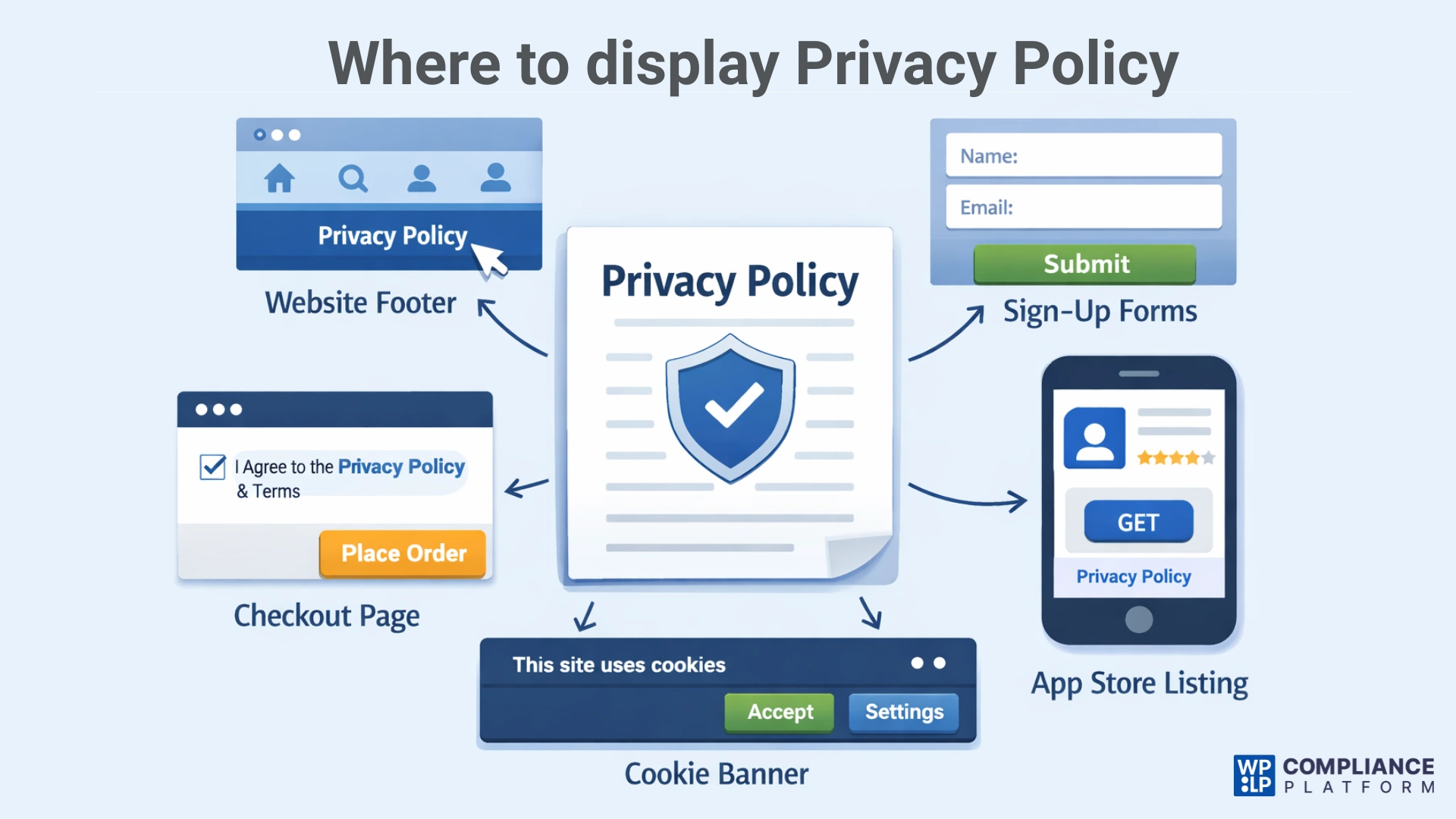
1. The Global Footer
The footer is generally considered to be the best place for this. The footer appears on all pages of your website. Users can access it easily from any page. For users to easily identify what the link is for, it is better to label it as “Privacy Policy” rather than using general terms (“Legal”, “Information”, etc.).
2. Data Collection Points
When you ask users for their personal information, make sure there is a link to your Privacy Policy close by. A Privacy Policy informs users about how you plan to use their information before they provide it to you, helping you obtain informed consent and improve transparency.
3. Checkout & Registration Pages
During account creation or checkout, users should see a clear notice or checkbox stating that they agree to your Terms of Service and Privacy Policy. This step confirms user acknowledgment of your policies and is often required by payment processors and compliance standards to reduce disputes or legal claims.
4. Cookie Banners
For websites that use cookies or other tracking technologies, the cookie consent banner must include a direct link to the Cookie Policy or Privacy Policy to help users understand which tracking tools are used before activating cookies. It will also help users manage their consent preferences.
5. App Store Listings
For mobile apps, both Apple App Store and Google Play require developers to display a Privacy Policy link on the app’s store listing page. Because users must be able to review how their data will be handled before downloading the app, transparency is a prerequisite for app approval.
How to Create Legal Pages for Your Website
Creating legal pages for your website is an important step toward legal compliance and building user trust. A privacy policy outlines the way in which your website gathers, uses, and secures information from visitors, and the majority of privacy legislation requires you to have one when collecting personal data.
Instead of creating policy documents manually, many site owners use tools like WPLP Compliance Platform to generate legal pages automatically while ensuring legal compliance.
With tools like WPLP Compliance Platform, you can create legal pages using ready-made templates tailored to your business type and data practices.
The platform guides you step by step from installing the plugin and configuring settings to generating and publishing your privacy policy in just a few clicks. These templates are designed to support major privacy regulations such as GDPR and CCPA, helping reduce compliance risks while saving time.
If you want detailed, step-by-step instructions, you can check out this complete guide:
How to create a privacy policy for a website.
This article walks you through the entire process, including setup, customization, and where to display your privacy policy on your website.
FAQ
Almost every website needs a Privacy Policy. If you are in the EU or have EU visitors, you must also have a Cookie Policy. If you sell goods, most payment processors require a Refund Policy.
No, not all websites need to have terms and conditions. However, operating your website without them, it is a massive risk. They are your primary defense against lawsuits and intellectual property theft.
No. You cannot copy someone else’s privacy policy. First, it’s copyright infringement. And secondly, their data practices (the plugins they use, the data they store) are likely different from yours. Using a policy that doesn’t accurately reflect your site is a legal violation in itself.
Yes, Privacy laws like the GDPR and CCPA apply based on the user’s location, not the size of the business. A small blog with one visitor from California must technically comply with California privacy standards.
It must include what data you collect, why you collect it, who you share it with, how long you keep it, and how users can exercise their rights.
Conclusion
It is important to have legal pages on your website as they are essential in managing your website appropriately and within the law. Privacy policies, cookie policies, legal terms, and refund policies are all examples of pages that train users on how you run your business online and how you will handle user data.
By creating these clear policies, you will reduce the potential for disagreement and protect your business from legal disputes. Doing so also helps to create a safer experience for users.
If creating the legal pages for your website is too much of a hassle, products like the WPLP Compliance Platform can make the process easier. These tools allow you to generate accurate and professional legal pages for your website in a fraction of the time that you would normally need to do it.
Disclaimer: This article is for informational and reading purposes only and does not constitute legal advice.
If you enjoyed reading this, consider exploring these articles.
- Implied vs Explicit Cookie Consent: What’s Legal Under GDPR, ePrivacy, and CPRA?
- Major Data Breaches & Cybersecurity Lessons for Website Owners
- Best Practices for Implementing Cookie Consent
Make your site compliant with the WPLP Compliance Platform, and add a cookie banner that makes user consent count.