Summary
A Blog Privacy Policy helps build trust and meet regulations like GDPR and CCPA. Our article covers key aspects, including data collection, cookies, and third-party services.
Discover simple ways to create one using templates and plugins.
If your blog collects emails, uses analytics, or shows ads, you legally need a privacy policy.
A privacy policy is more than just a legal requirement. It’s a shield that protects your user data and strengthens your bond with your customers, assuring them that their information is in safe hands.
Implementing a blog privacy policy is a way to inform your readers about their data privacy rights. It also allows you to collect information from your visitors while protecting their data.
In this guide, you’ll learn exactly how to write a privacy policy for your blog, what to include, and how to stay compliant with laws like GDPR and CCPA.
📌 Privacy Policy for Blogs (Quick Answer)
A blog privacy policy is a legal page that explains:
- What data you collect
- Why you collect it
- How you use and protect it
- Whether you share it with third parties
- What rights users have
Do You Need a Privacy Policy For Your Blog Website?
Yes. If your blog collects any personal data, including emails, IP addresses, or analytics data, you are legally required to have a privacy policy under laws like GDPR, CCPA, and CalOPPA.
Transparency is essential; a privacy policy tells visitors what information you gather, how you use it, and how it’s secured. Hence, you need a privacy policy for a blog website.
What Data Does a Blog Collect?
Many times a blog will gather more information than the owner knows about. Below is just a few examples of information we gather from visitors:
- Name, email and other details collected through their subscriptions or contact forms
- IP address (most servers log this when you visit a site)
- Cookies and other types of tracking information
- Comments or inputs into forms that are completed
- Analytical information such as Google Analytics; and/or
- Advertising Tracking Data (if you display ads).
If you use any of the above types of information on your blog, a privacy policy is no longer an option but is in fact required to comply with laws in most jurisdictions.
Global Privacy Laws Affecting Blog Websites
If you collect personal information on your blog, you are required by law to put a Privacy Policy on your site.
If readers of your blog reside in a jurisdiction with privacy laws, you are legally required to abide by them. These laws include:
- The General Data Protection Regulation (GDPR) is a data privacy law that applies to all websites that store or receive traffic from citizens of the European Union (EU). GDPR Laws mandate that all websites provide a privacy notice or policy outlining the rights of users, the information they gather, and how it will be used.
- The GDPR is closely aligned with the Personal Information Protection and Electronic Documents Act (PIPEDA), a data privacy law in Canada. Blogs that obtain personal data from Canadian citizens are required to publish blog rules outlining the data they collect, why they collect it, and how they use it.
- The California Online Privacy Protection Act, or CalOPPA, mandates that websites that gather personally identifiable information from California residents include a privacy statement.
- The CCPA, or California Consumer Privacy Act, is California’s response to the GDPR. Users have the right to know what personal data is being gathered about them.
- Other state laws resembling the CCPA and CalOPPA are being implemented in several other states.
Privacy Laws That Apply to Blogs
| Law | Region | Key Requirement |
|---|---|---|
| GDPR | European Union | Requires consent and full transparency about data use |
| CCPA | California, USA | Gives users rights over their personal data |
| CalOPPA | California, USA | Requires a clearly visible privacy policy |
| PIPEDA | Canada | Governs collection and use of personal data |
Several other US states are also implementing laws similar to the CCPA and CalOPPA. Always check the laws applicable to your audience’s location.
What to Include in Your Blog Privacy Policy
When drafting a privacy policy for your blog, it’s important to include the following key elements:
- Types of Data Collected: Clearly outline the types of personal data you collect from visitors, including information such as names, email addresses, IP addresses, and any other data collected through cookies or other tracking technologies.
- Purpose of Data Collection: Explain the purpose of the data being collected. This includes purposes such as improving user experience, email marketing, analytics, or any other relevant use case.
- Data Protection Measures: Detail the security measures you have in place to protect the personal data you collect. These include encryption, secure data storage, and other relevant security protocols.
- Third-Party Sharing: If you share personal data with third parties, disclose this in your privacy policy. This includes third-party services such as analytics or advertising networks.
- Cookies and Tracking Technologies: Explain the use of cookies, web beacons, and other tracking technologies on your blog and provide information on how users can manage their cookie preferences.
- User Rights: Inform users of their rights regarding their personal data, including the right to access, correct, delete, or restrict the processing of their data.
- Legal Requirements: Disclose any legal requirements that may compel you to disclose personal data, such as regulatory or law enforcement requests.
- Updates to the Privacy Policy: Specify how and when you will update the privacy policy and how users will be notified of these changes.
- Contact Information: Provide contact details so users can contact you with questions or concerns about their personal data privacy issues.
By including these elements in your blog’s privacy policy, you can ensure transparency and compliance with data protection regulations while building trust with your readers.
How to Write a Privacy Policy (Step-by-Step)
Before using a plugin or generator, it helps to understand what goes into a privacy policy. Here’s a simple manual approach:
Step 1: Identifying Which Data is Collected
Go through your blog and catalog the forms, tools, and plugins on your blog that capture and store personal data in one form or another, including email addresses, names, and IP addresses.
Step 2: Recording the Purpose of Data Collection
Record the purpose of collecting each type of data you collect and document the reasons for your collection of that type of data, such as the collection of email addresses for sending out a newsletter.
Step 3: Documenting Cookie and Tracking Tool Usage
Identify any tracking tool(s) that you may have installed on your blog (such as Google Analytics, Facebook Pixel, etc.), along with the cookies set by those tools and information on how to opt-out of cookie tracking.
Step 4: Identifying Any Third-Party Services You Use
If you pass any data collected by your blog to another company or provider (such as Mailchimp or Google AdSense), you should provide a name for the provider and link to their respective privacy policies.
Step 5: Informing Users About Their Rights
Let users know they can request access to their data and request corrections or deletions. You should also provide the procedures for requesting access to and making requests for the correction and/or deletion of data.
Step 6: Providing Contact Information for Users
Provide users with a functional email address or contact page to reach you in the event of privacy-related concerns.
Step 7: Keeping Your Privacy Policy Updated
You should set a periodic reminder to review the privacy policy whenever you add a new plugin, tool, or method for collecting personal data on your blog.
Once you understand the manual process, you can use a platform like WPLP Compliance to speed up drafting but knowing the structure helps you verify the output is accurate for your blog.
How to Create a Blog Privacy Policy
Having read this, you may wonder how to create a privacy policy for a wordpress blog website.
You can create a privacy policy for your website using a privacy policy generator. The most effective and time-consuming approach is to use a plugin. We suggest using the WP Legal Pages plugin to create a privacy policy and other legal pages, such as terms and conditions, return and refund, and more, for your blog website.
WP Legal Pages Plugin– A Free Privacy Policy Generator
WP Legal Pages is a free privacy policy generator that helps you quickly and easily edit the legal pages on your website.
The ready-made template helps you rapidly draft a privacy policy that meets your business’s needs.
In addition, WP Legal Pages allows you to construct a wide range of legal pages for your website by providing access to over thirty+ pre-designed policy templates.
The plugin includes refund policies, terms and conditions, privacy policies, and disclaimers, among other legal templates.
Since the goal is to create a privacy policy, let’s examine the steps involved.
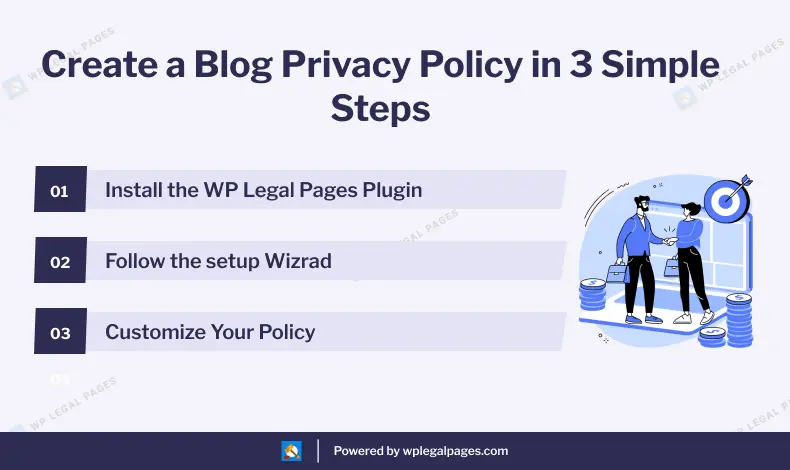
Step 1: Installing the WP Legal Pages Plugin
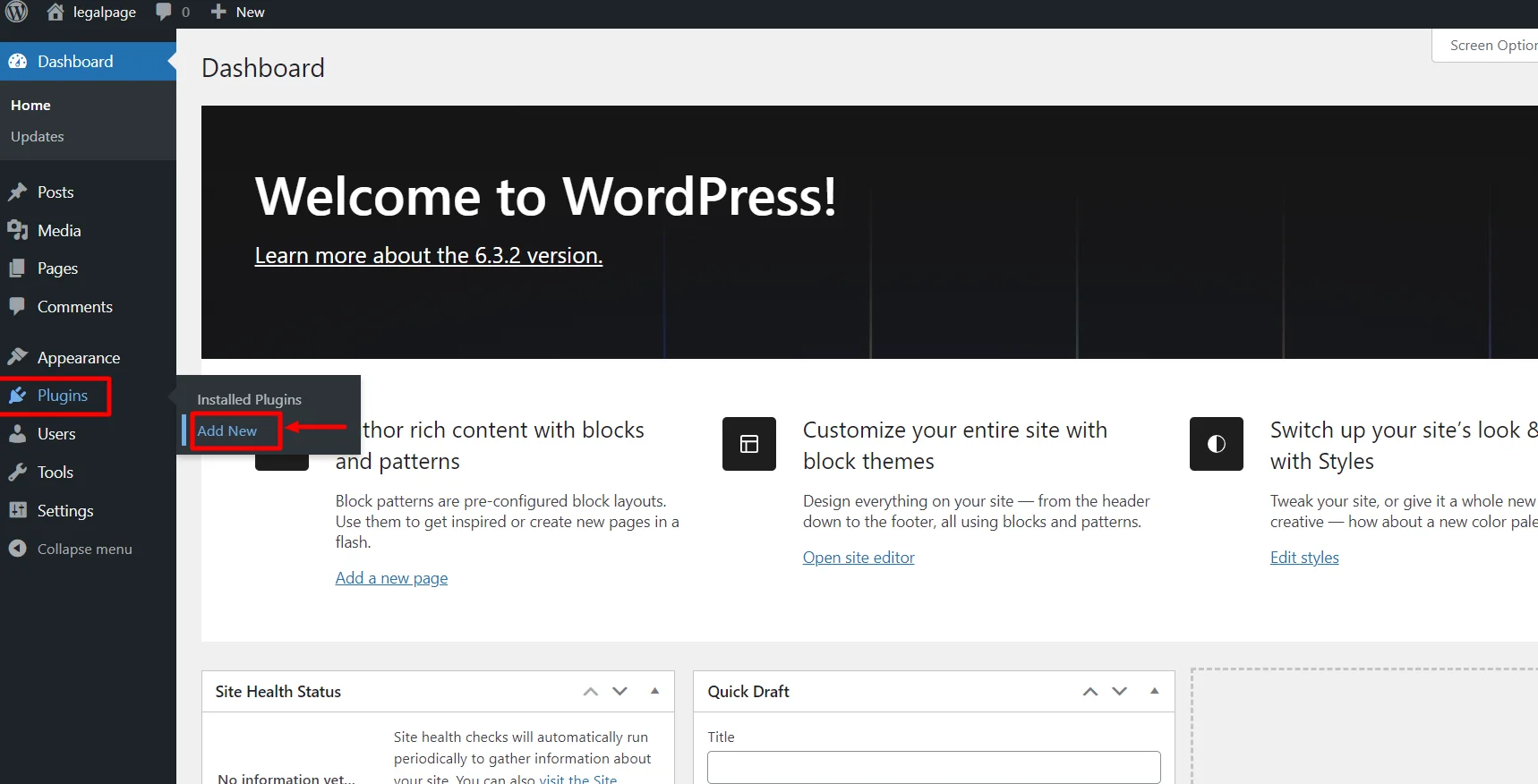
From your WordPress Dashboard, click on Plugins > Add New.
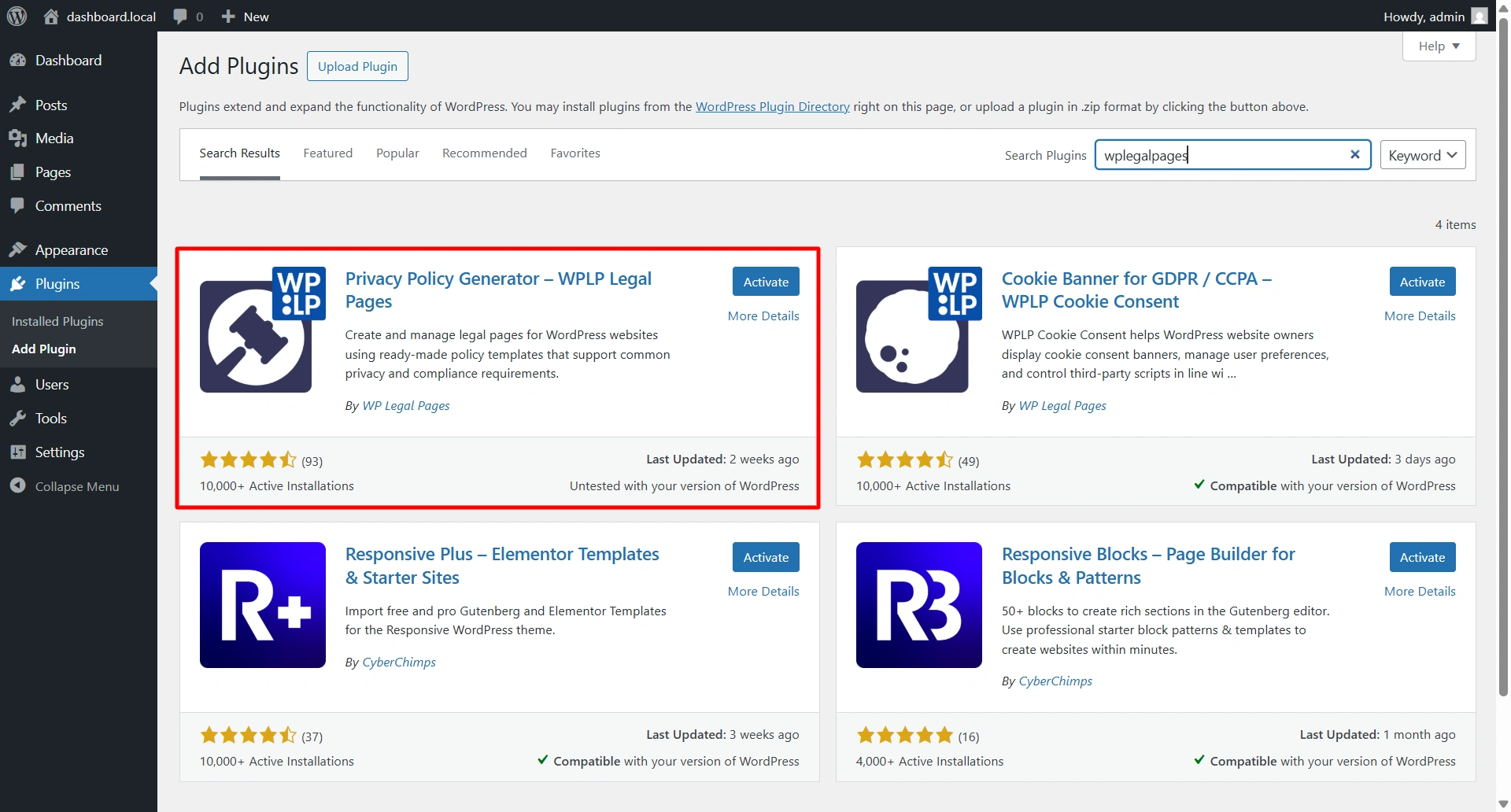
Search for WPLegalPages in the search bar. Click on the Install Now Button. Activate the plugin by clicking the Activate button.
Step 2: Making a Privacy Policy for a Blog Website
To create a Privacy Policy for your website, click Create Legal Page from the WP Legal Pages menu.
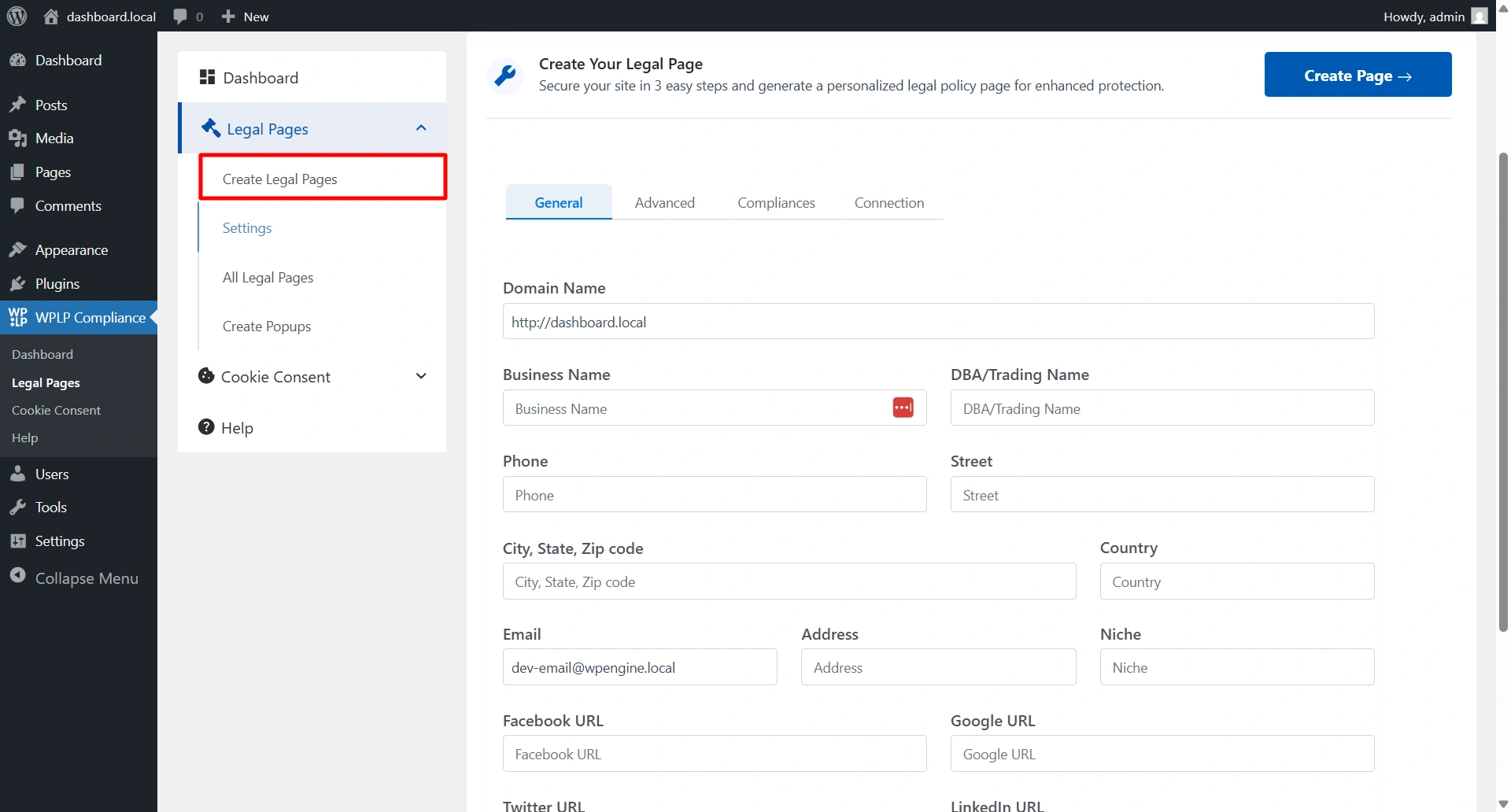
You will now be able to see four templates available in the free version. Click on the Standard Privacy Policy option to create a Privacy Policy for the real estate website.
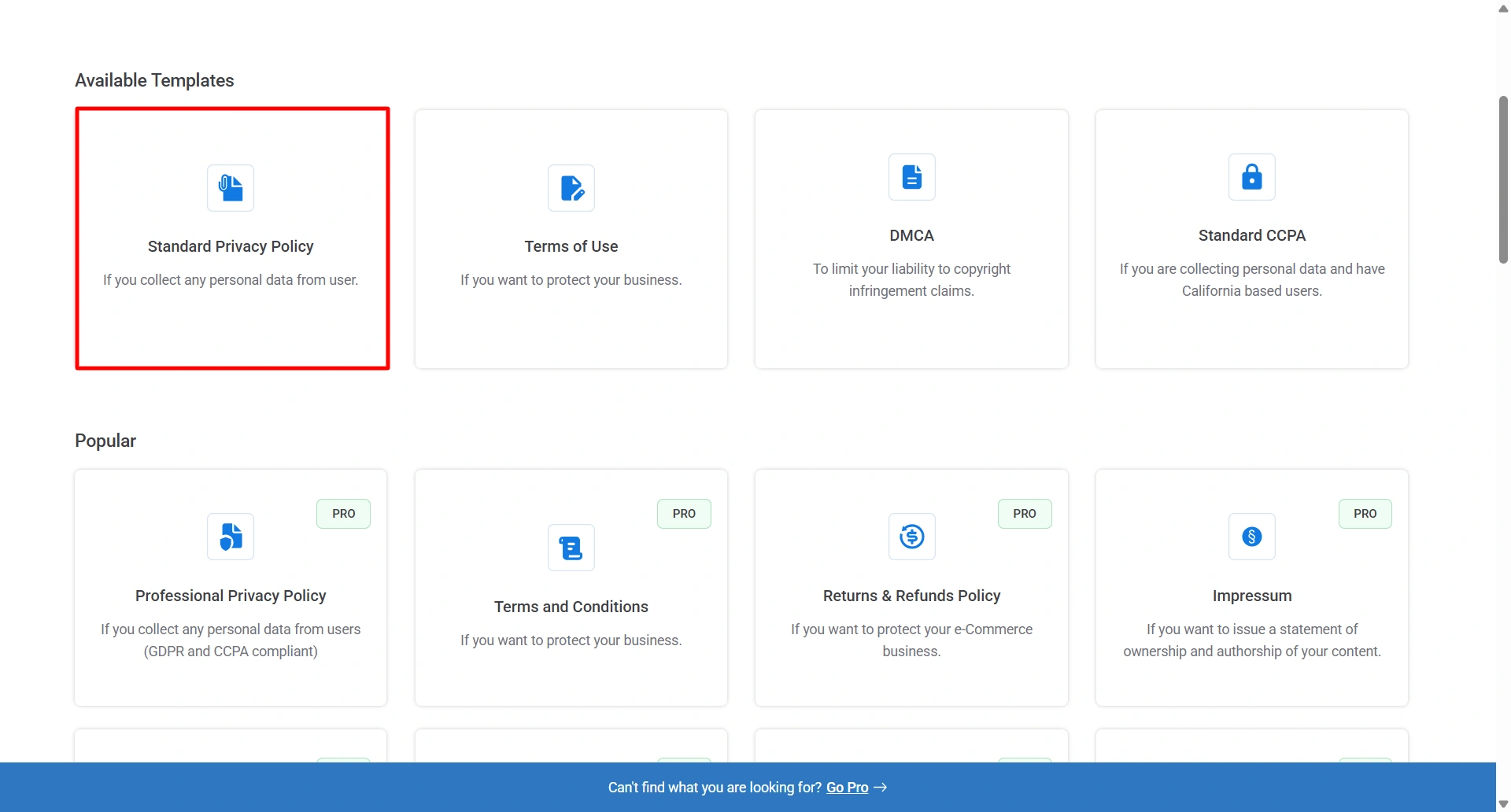
Fill in the Basic Details and click Next.
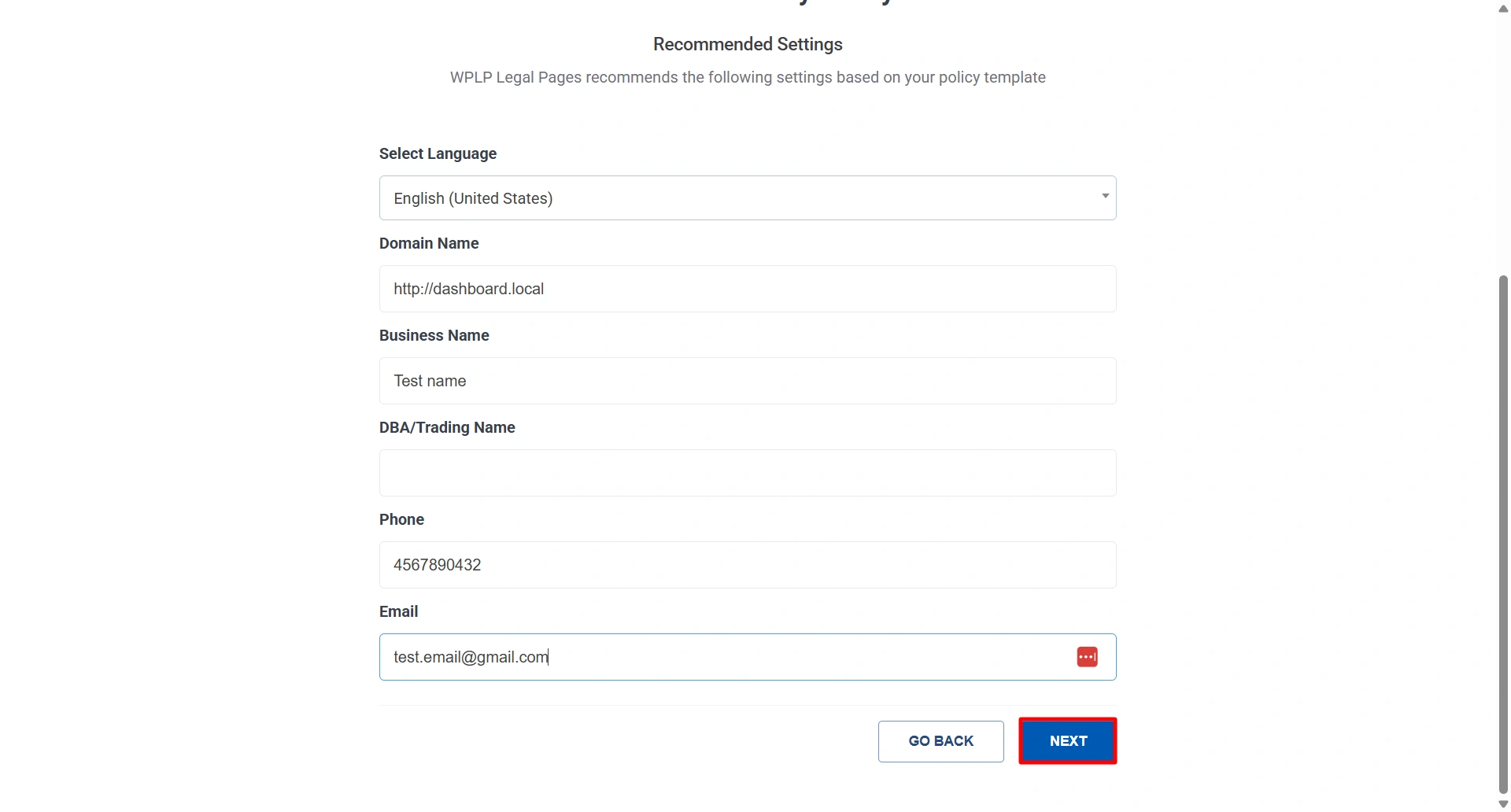
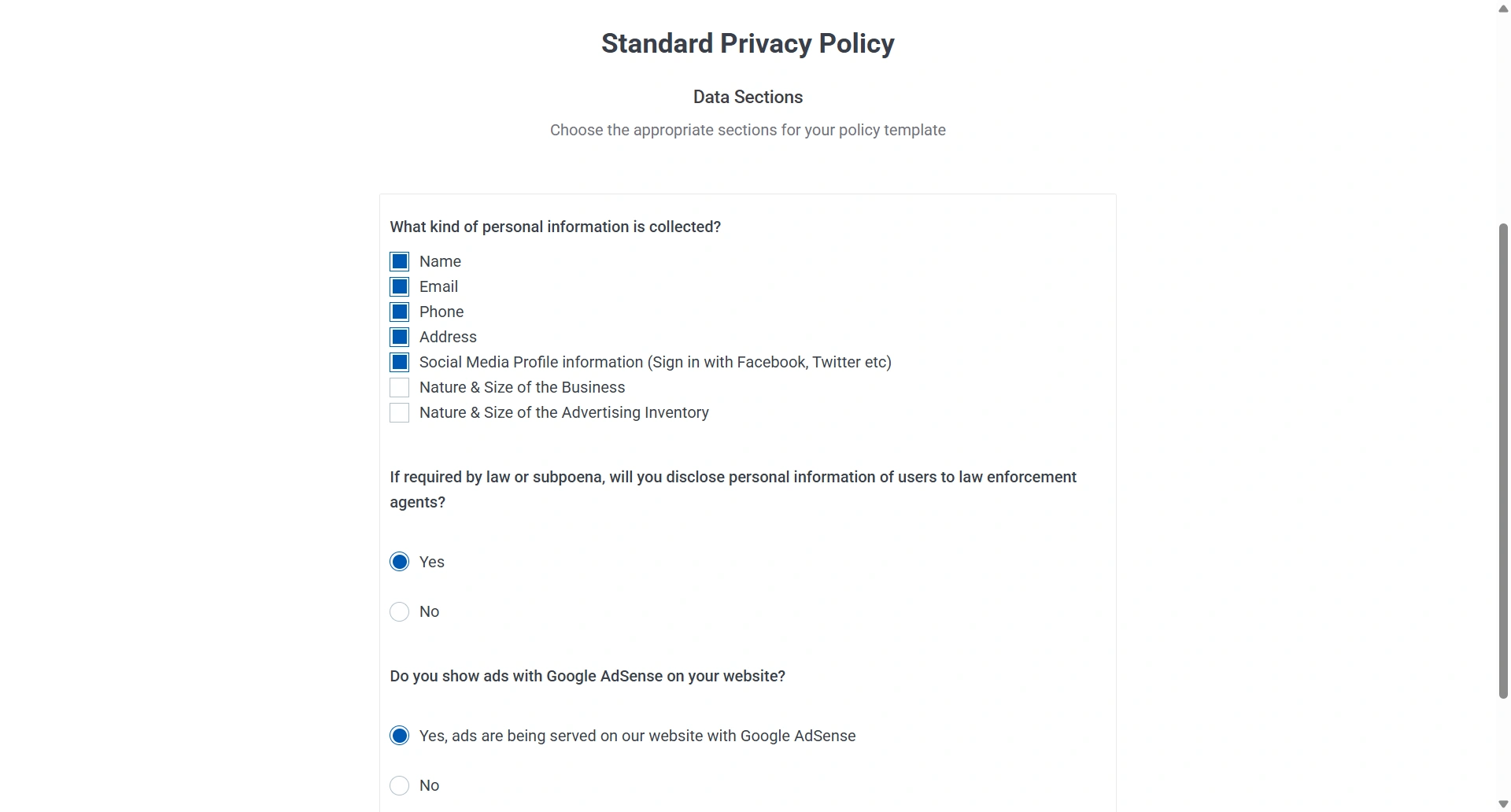
Select the appropriate section for your legal policy, then click Next.
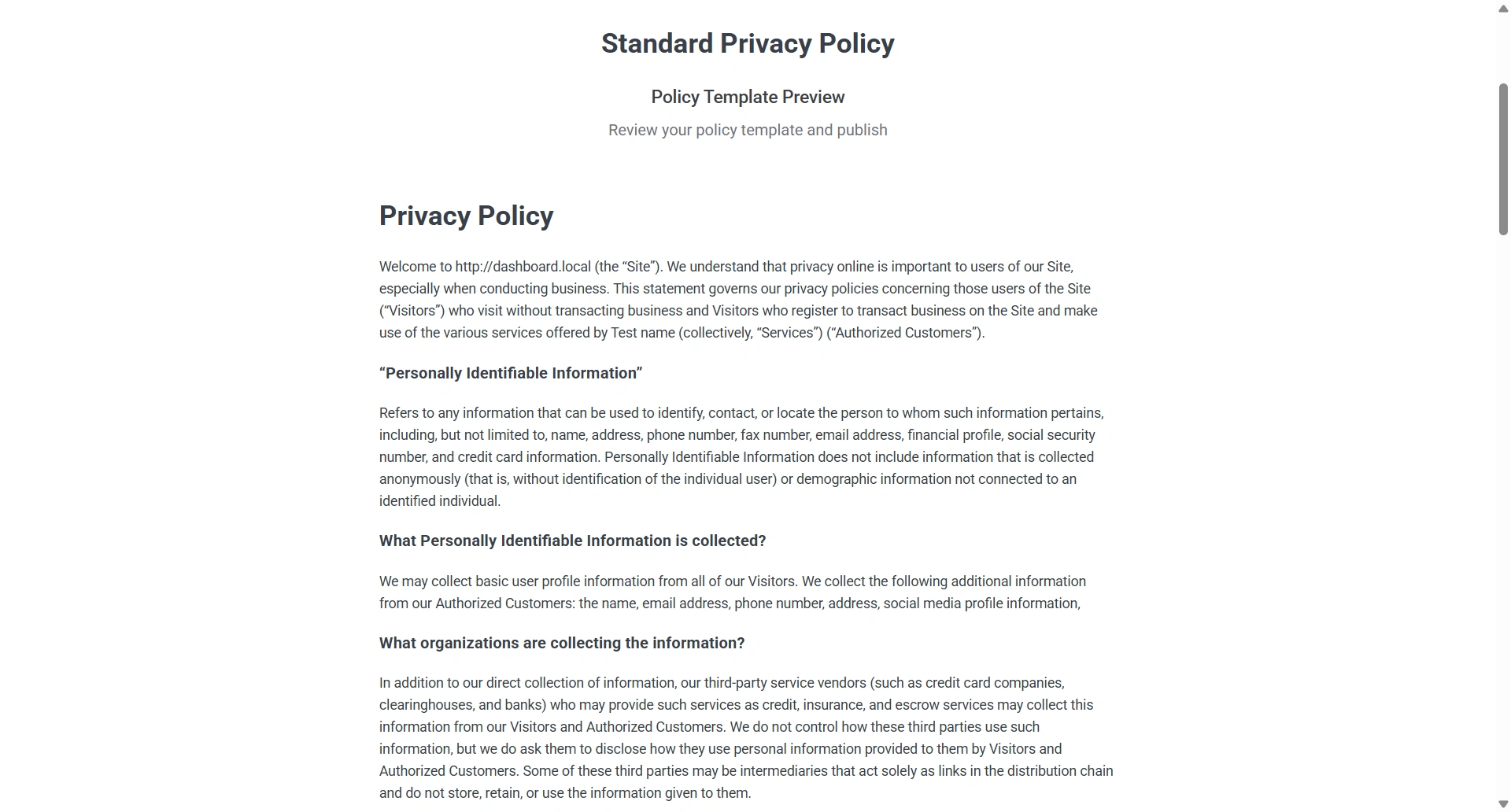
Your Privacy Policy Template Preview is ready.
Step 4: Customizing your Privacy Policy
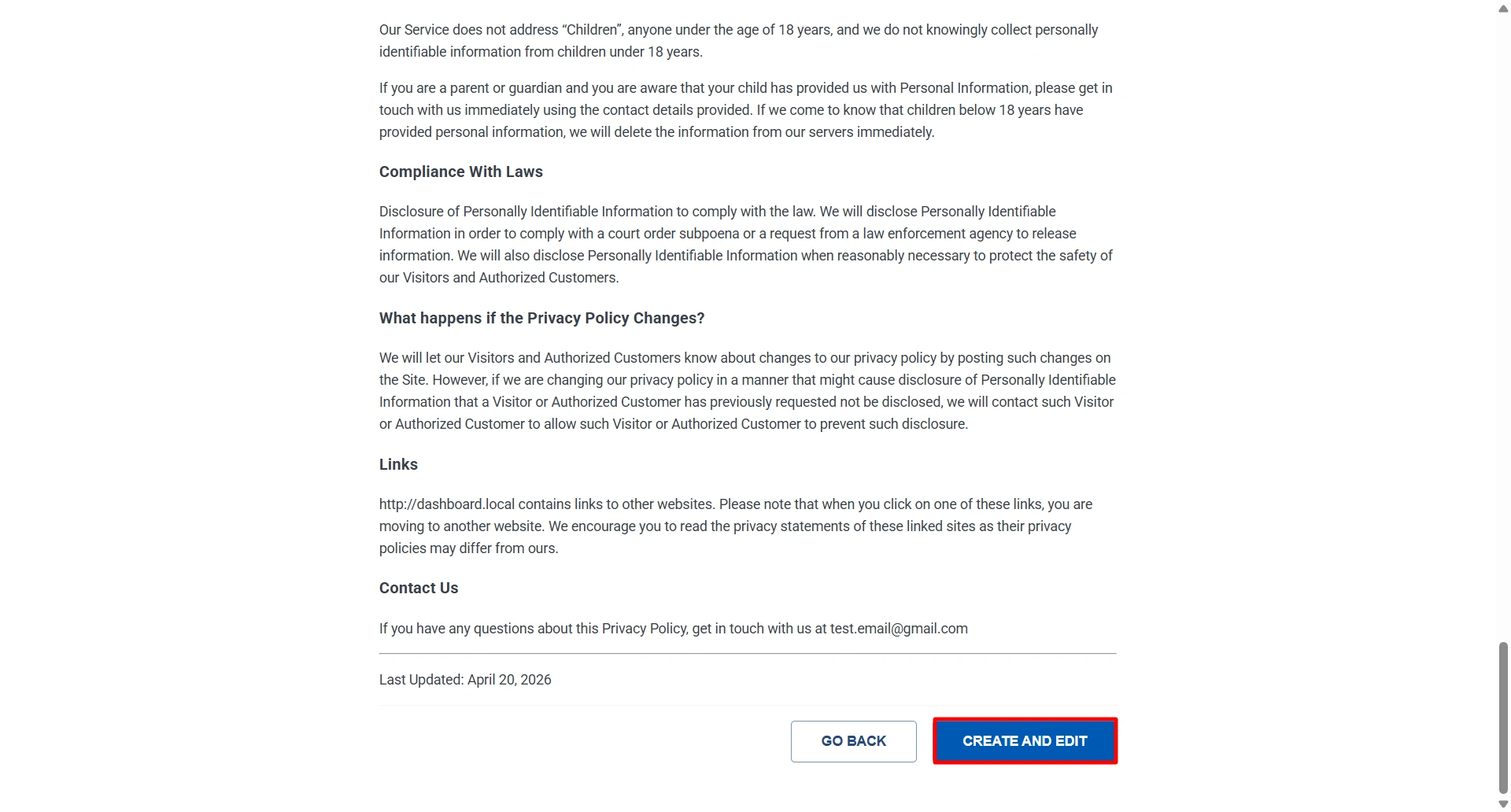
Click on the Create and Edit option to edit or add any additional information to your privacy policy.
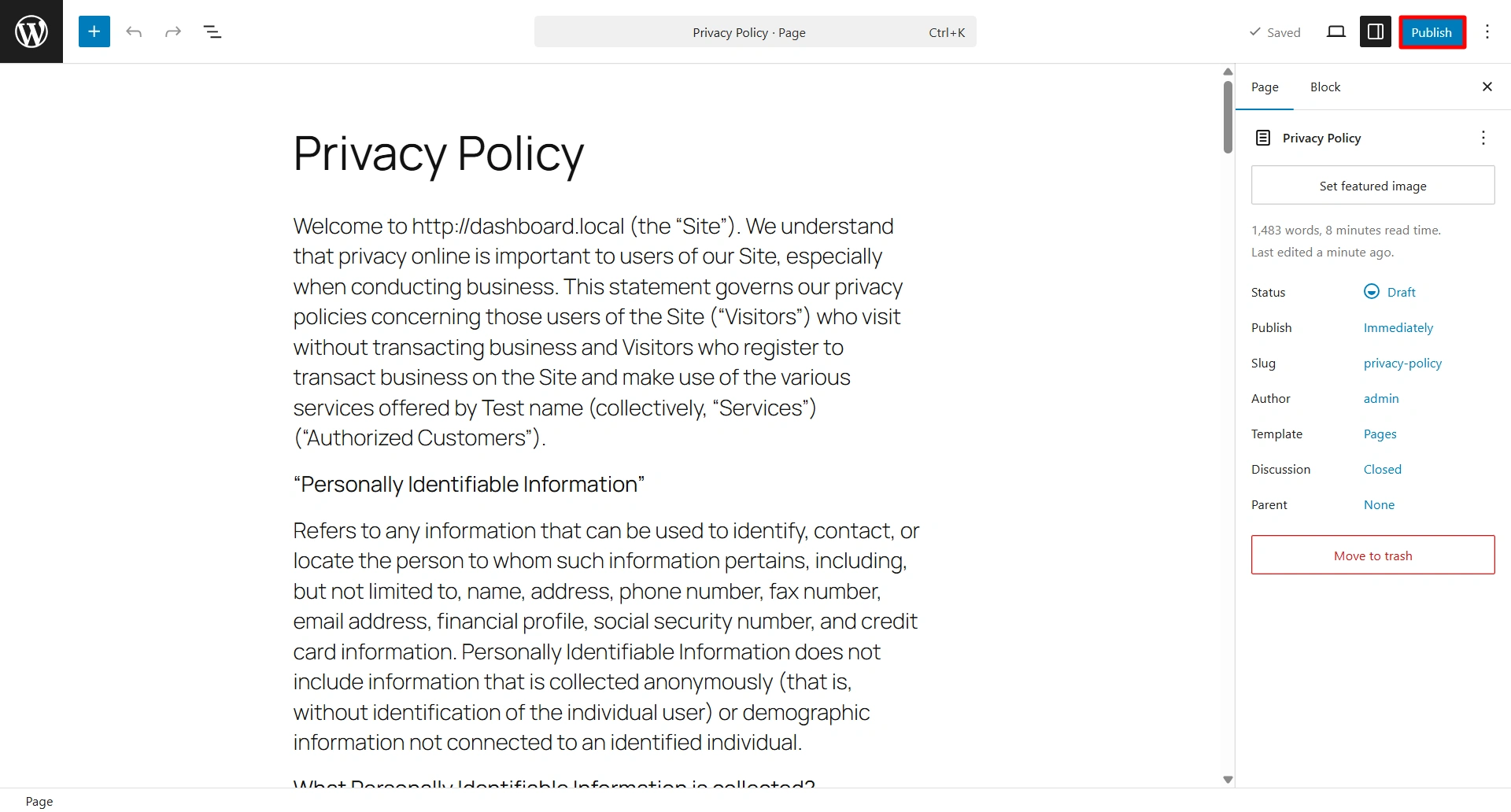
After you have made the necessary changes, click on Publish.
That’s all! Your data privacy statement is ready with just a few clicks. Now, let’s examine some laws impacting your privacy policy.
Sample Free Privacy Policy For Blog Website
Now, let’s take a look at some of the blog privacy policy examples that some of the blog websites have added to their websites.
1. My Blogger Lab
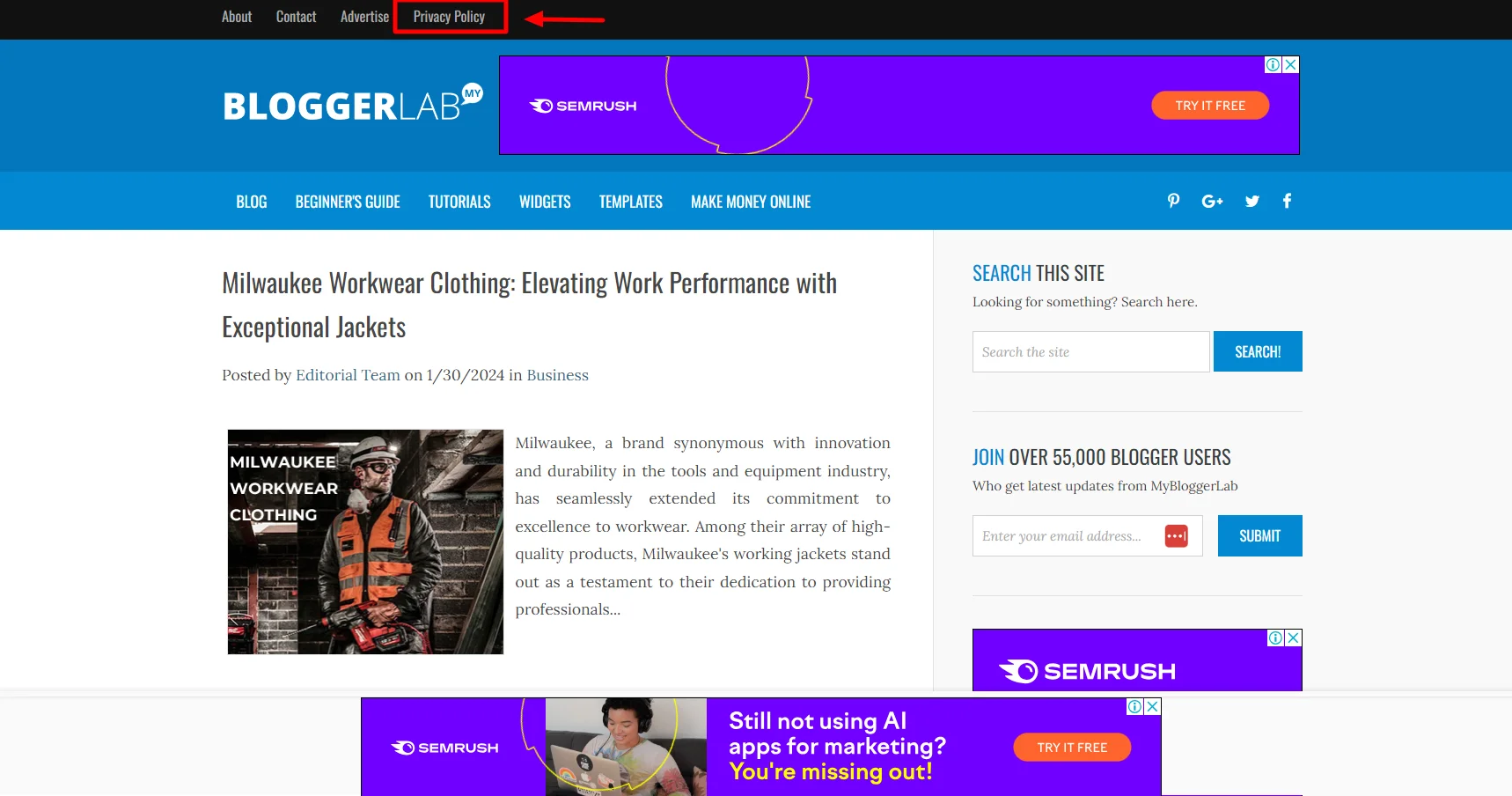
Using a Blogger site, My Blogger Lab spreads the love for the Blogger platform. Instead of placing it in the footer, the website placed its privacy policy in the header.
Including your policy in the header makes sure that it is immediately visible to all.
2. Blog.Google
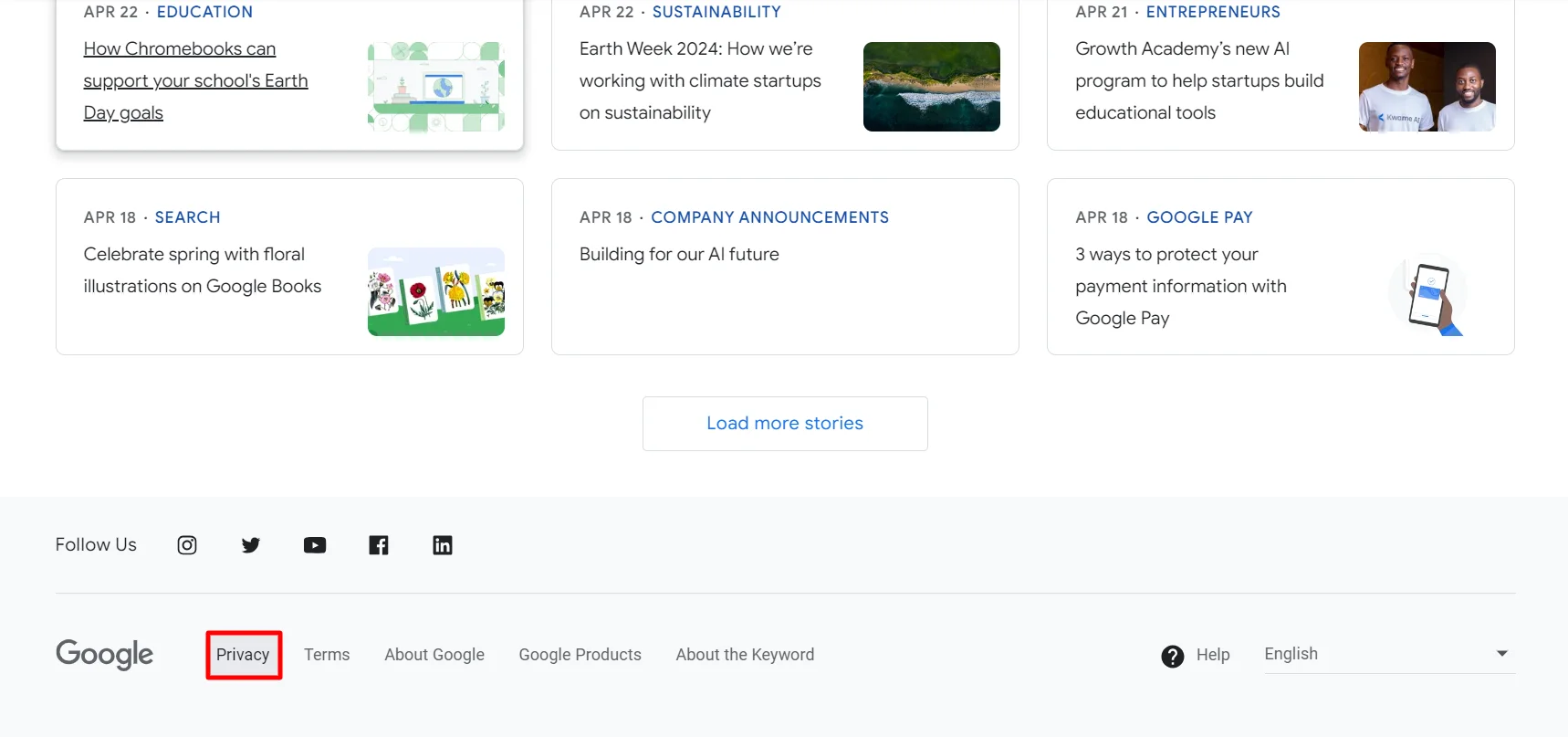
Google has an official blog called blog.google, where it posts news, updates, and insights on its projects, services, and goods.
Google Blog has its privacy policy in the footer.
3. YourHealthMatters
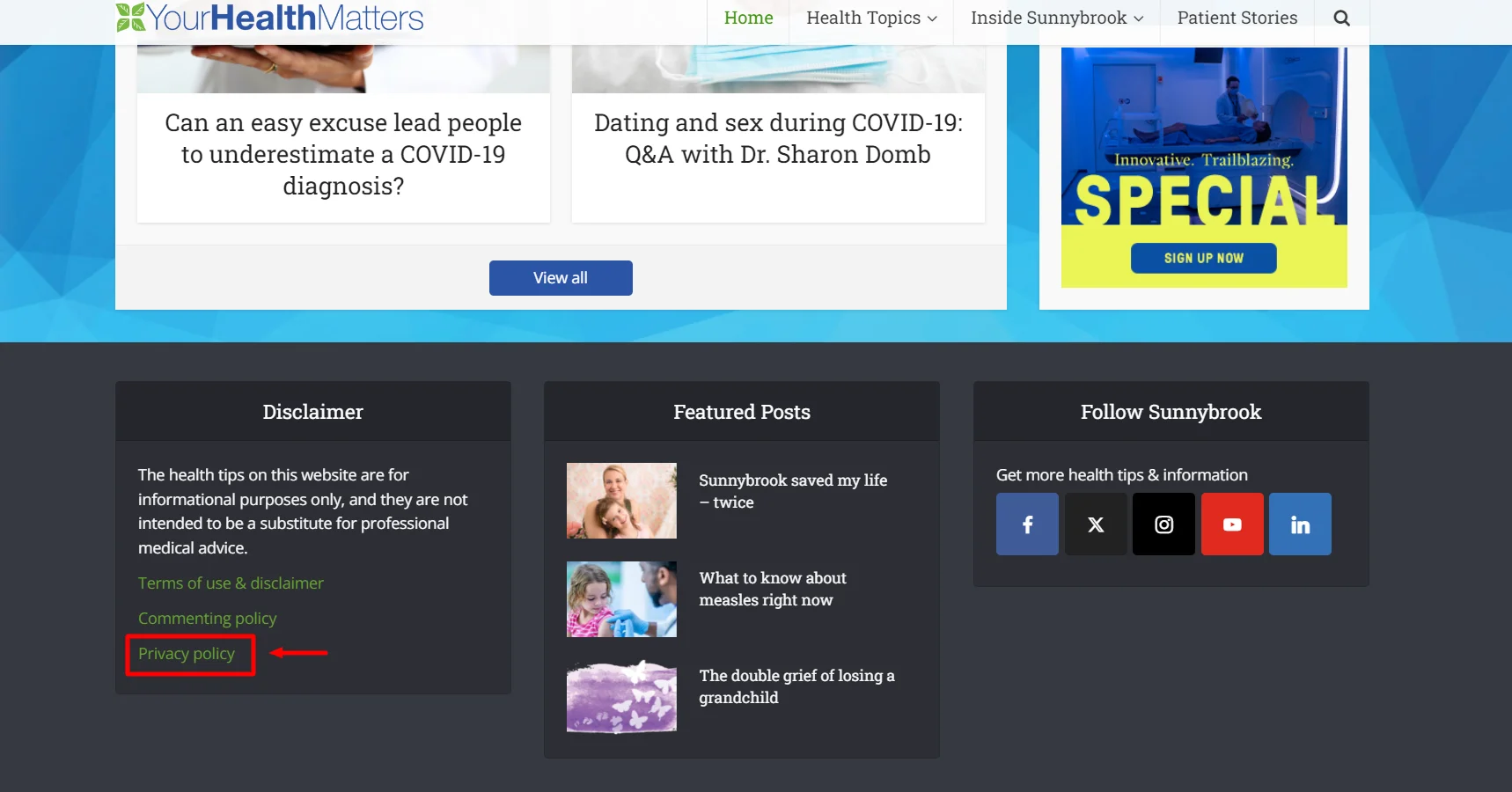
The YourHealthMatters blog offers links to its Privacy Policy in the footer of its homepage.
Where Should You Display Your Blog Privacy Policy?
Your privacy policy should be accessible from every page of your blog. Here are all the places you should link to it:
- Footer: appears on every page; the standard and expected location
- Signup and subscription forms: anywhere you collect an email address
- Checkout or payment pages: if you sell products or memberships
- Contact forms: users submitting messages should know how their data is used
- Cookie consent banners: link directly from the banner to your policy
- Account creation pages: if users register on your blog
The more prominently you display your privacy policy, the more trust you build and the more clearly you demonstrate legal compliance.
Common Privacy Policy Mistakes to Avoid
Many bloggers make these errors. Make sure you don’t:
- If you use a general template for your privacy policy, it may not suit the way you use tools on your website, which means customizing it is necessary.
- Your privacy policy needs to reflect how you use your site; every time you add new plugins, analytics, or advertising services, you should update your policy.
- If your website collects information from users via cookies, such as information from Google Analytics, the Facebook pixel, or when users click on ads that are served from a third-party Google AdWords service, you must clearly disclose this in your privacy policy.
- If you collect user data using third-party services, such as Mailchimp, Google AdSense, Disqus, etc., you should disclose in your privacy policy that you are collecting data from users via those services.
- Your privacy policy should also provide users with a way to contact you about their data; include at least one email address as contact information.
FAQ
Your blog’s privacy policy should outline the types of personal data collected and why it is collected, in addition to providing information on data protection measures, third-party sharing, cookie usage, user rights, legal requirements, policy updates, and contact information for questions or concerns.
Even though it might not always be required by law, having a blog privacy policy is a best practice that increases openness, fosters audience confidence, and aids in maintaining compliance with data protection regulations.
Yes, you can use the WP Legal Pages plugin. A free privacy policy generator to create a blog privacy policy for your website.
Conclusion
We are aware that a privacy policy is essential for blog websites. Having a blog privacy policy tells your readers that you respect their privacy and want to comply with the law.
You can create your privacy policy for a WordPress blog with the WP Legal Pages plugin, which will help you make a customized and free privacy policy for blog websites.
If you found this article informative, you can explore our other published articles for additional insights and knowledge:
- Most Common Privacy Policy Issues To Avoid
- Understanding Privacy Statements and Simplifying Compliance
- Privacy Policy vs Terms And Conditions – An Ultimate Guide
Grab the WP Legal Pages plugin to create the best legal pages for your website.