Someone follows a tip on your blog. It goes wrong. Now they want you to pay for it.
A website disclaimer sets limits on what you’re responsible for. It won’t stop every complaint. It does make clear what your content is for, and what visitors do with it at their own risk.
This guide covers what a disclaimer is, which sites need one, 14 types with free template wording, where to put it, and how far the law lets it go.
What is a website disclaimer?
A website disclaimer is a notice to your visitors. It says your content is general information, and that you’re not responsible for losses caused by relying on it.
The word itself means a statement that denies or limits responsibility. On a website, that usually covers 4 things:
- Your content: It’s general information, and it may contain errors.
- Advice: It isn’t professional advice for the reader’s situation.
- Other people’s content: You don’t control linked sites, guest posts, or comments.
- Your relationships: You may earn money from some links or reviews.
Most sites publish one main disclaimer page and add short notes next to specific content, such as a medical note at the top of a health article.
Disclaimer vs terms and conditions vs disclosure
These 3 pages get mixed up. They do different jobs.
| Page | What it does | Who it protects | Required? |
|---|---|---|---|
| Disclaimer | Limits your responsibility for your content | You | Usually optional |
| Terms and conditions | Sets the rules for using your site and buying from you | You and your users | Strongly advised for stores and sites with accounts |
| Disclosure | Tells visitors about a relationship that affects what you say | Your visitors | In the US, the FTC requires you to clearly disclose a material connection, such as a commission or free product |
Your privacy policy is a 4th, separate page. A disclaimer can’t replace it. It covers personal data. If you collect personal data, laws such as the GDPR in the EU and CalOPPA in California usually require it. A disclaimer can’t replace it.
Why your website needs a disclaimer
A disclaimer does 4 useful things:
- Sets expectations about advice. A reader who sees “this isn’t financial advice” before acting on your post. Knows you weren’t giving them personal advice.
- Limits your liability for mistakes. Content goes out of date. A disclaimer says you don’t promise it’s complete or current.
- Separates you from content you don’t control. Links, ads, guest posts, and comments come from other people.
- Supports your rights. A copyright line makes clear who owns your content, and on what terms people can use it.
It matters most when your content could lead to a loss: health, money, law, DIY instructions, travel tips, tools, or calculators.
Does your site need a disclaimer?
No law requires every website to have a general disclaimer. Your content decides what you need.
| Your site | What to publish |
|---|---|
| Personal blog or hobby site | A short general disclaimer |
| Blog with guest posts or open comments | General disclaimer with a views expressed clause |
| Affiliate or review site | A clear disclosure next to affiliate links (FTC rules in the US), plus a general disclaimer |
| Health, fitness, or wellness content | A medical disclaimer |
| Courses, coaching, or content that mentions income | An earnings disclaimer, plus a testimonial disclaimer if you show results |
| Legal, tax, or investment content | A “not professional advice” disclaimer. Licensed professionals must also follow their regulator’s rules. |
| Online store | Terms and conditions with a warranty disclaimer |
| Site with calculators or tools | A no-guarantee disclaimer shown next to the tool |
| YouTube channel or podcast | A disclaimer in the description, plus sponsor disclosures |
14 types of website disclaimers (free template wording)
Each type below has template wording you can copy for free. Pick the types that match your site, combine them on one page, and replace text in [square brackets].
Always include type 1. It has the liability wording with the legal exceptions. This wording is a starting point and isn’t legal advice.
[Template wording reviewed by (legal reviewer) on (date).]
1. General (no responsibility) disclaimer
The basic disclaimer most sites need. It says your content is general information and that visitors use it at their own risk.
The information on [Website Name] is for general information only. We are not responsible for any loss that results from relying on it, to the fullest extent permitted by law.
Nothing on this page limits any liability that cannot be limited by law, or affects your rights as a consumer.
2. Warranty (“as is”) disclaimer
For online stores, software, and web apps. It says you don’t promise the site or product will be error-free or always available.
The Website and its content are provided “as is” and “as available”. We don’t promise that the Website will be uninterrupted, secure, or free of errors.
Consumer law limits how far this goes. In the US, if you give a written warranty, the federal Magnuson-Moss Warranty Act stops you from disclaiming implied warranties. Some states also limit “as is” sales to consumers. In the UK and EU, you can’t remove a consumer’s statutory rights. Put warranty terms in your terms and conditions, where buyers accept them.
3. Medical disclaimer
For health, fitness, nutrition, and wellness content. It says your content doesn’t replace a doctor.
The content on this site is for information only. It is not medical advice and doesn’t replace a consultation with a qualified health professional. If you think you have a medical emergency, call your local emergency number.
Build one with a medical disclaimer generator, or compare wording in these medical disclaimer examples.
4. Legal disclaimer
For sites that explain laws, write about legal topics, or are run by lawyers. It says reading your content doesn’t create a lawyer-client relationship.
The content on this site is general legal information, not legal advice. Reading it or contacting us doesn’t create a lawyer-client relationship. Speak to a qualified lawyer about your situation.
5. Financial and investment disclaimer
For sites about money, investing, crypto, or tax.
Nothing on this site is financial, investment, or tax advice. Investments can lose value. Past performance is not a guide to future results.
If you’re a registered adviser or broker, your regulator sets extra rules on what you can say. A website disclaimer doesn’t replace those rules.
6. Earnings disclaimer
For courses, coaching, business programs, and affiliate content that mentions income. It says you don’t guarantee results.
We don’t promise that you will earn any money using the ideas or products on this site. Your results depend on your own effort, skills, and circumstances.
Build one with an earnings disclaimer generator. The disclaimer only works if your income claims are true. See “What a disclaimer can’t do” below.
7. Testimonial disclaimer
For sites that show reviews, case studies, or customer results.
Testimonials reflect the experience of the people who gave them. Your results may be different.
Under the FTC’s Endorsement Guides, if you can’t show that the results in a testimonial are typical, you must clearly say what results people can generally expect. If you paid or rewarded a reviewer, say so too.
8. Affiliate disclaimer
For sites that earn a commission from links. It’s a disclosure. In the US, the FTC requires you to clearly disclose a commission or other material connection when you recommend a product.
Some links on this page are affiliate links. If you buy through them, we may earn a commission at no extra cost to you.
The FTC expects this to be clear and close to the link, before the reader clicks. A footer link alone isn’t enough. See the FTC’s Endorsement Guides FAQ. Most programs, Amazon Associates included, also require a disclosure in their terms. Here’s the exact wording for Amazon, or build a page with an affiliate disclosure generator.
9. Copyright disclaimer
For anyone who publishes original writing, photos, music, or video. It states who owns the content.
© [Year] [Business Name]. All rights reserved. You may not copy or republish content from this site without our written permission.
In most countries, copyright protects your work as soon as you create it. A notice doesn’t create the right, but it tells people who to ask. See how to add copyright text to your website. If people copy your work, a DMCA notice page tells them how you handle takedown requests.
10. Fair use disclaimer
For reviews, commentary, news, and teaching content that uses short parts of other people’s work.
This site may use copyrighted material for commentary, criticism, news reporting, or teaching. We believe this is fair use under Section 107 of the US Copyright Act.
Fair use is a US legal defense, decided case by case. A fair use disclaimer doesn’t make a use fair. Other countries have narrower rules, such as “fair dealing” in the UK.
11. Views expressed disclaimer
For sites with guest posts, contributors, forums, or comments.
Opinions in guest posts and comments belong to their authors and don’t reflect our views. We may remove content that breaks our rules.
12. AI-generated content disclaimer
For sites that publish text, images, or media made or assisted by AI.
Some content on this site is created with the help of AI tools. A person reviews it before we publish it. AI content can contain errors, so check important information.
In the EU, the AI Act’s transparency rules (Article 50) have applied since 2 August 2026. Images, audio, or video made with AI to look real must be labelled. AI-generated text published to inform the public on matters of public interest must also be disclosed, unless a person reviews it and takes editorial responsibility.
13. YouTube and social media disclaimer
For video creators and brand social accounts.
This video is for entertainment and information only. It isn’t professional advice. [Brand Name] sponsored this video.
Put it in the description and, for sponsors, say it in the video too. See YouTube disclaimer examples. On social media, use the platform’s paid partnership label where it has one.
14. Email disclaimer
For business emails that may contain confidential information.
This email is for the named recipient only and may contain confidential information. If you received it by mistake, please tell the sender and delete it.
An email disclaimer is mostly a courtesy notice. It can’t make a stranger keep a secret.
Website disclaimer examples
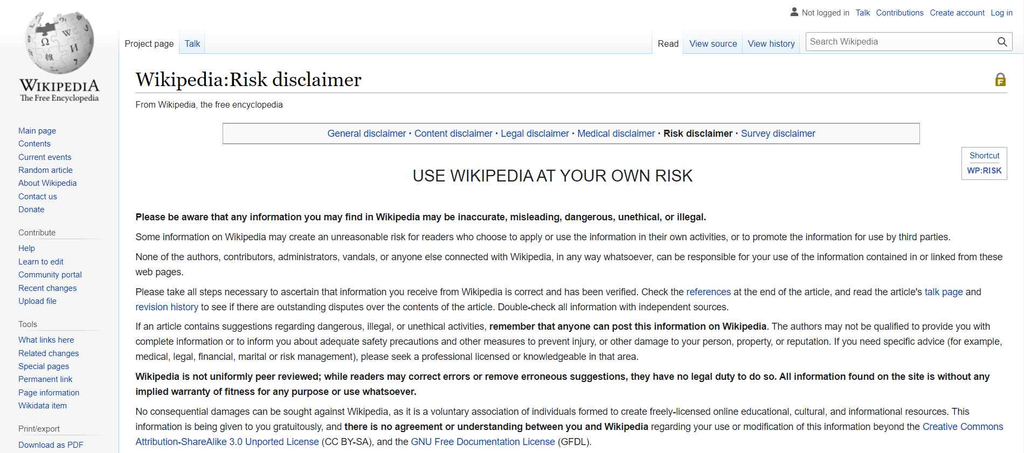
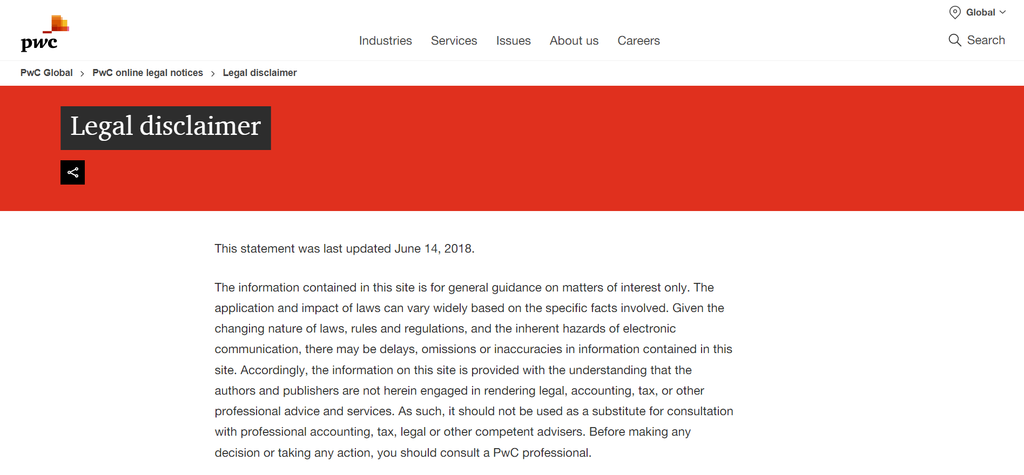
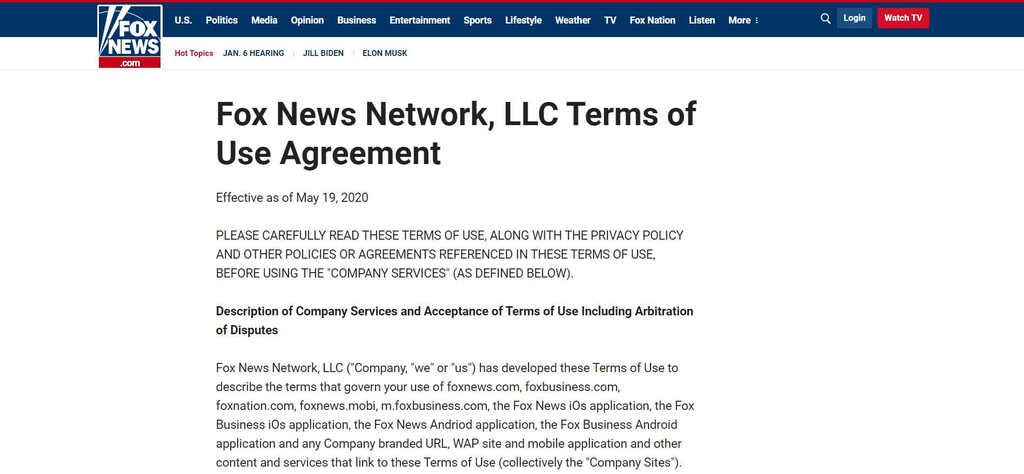
Here’s how 4 well-known sites word theirs.
No responsibility or limited liability disclaimer
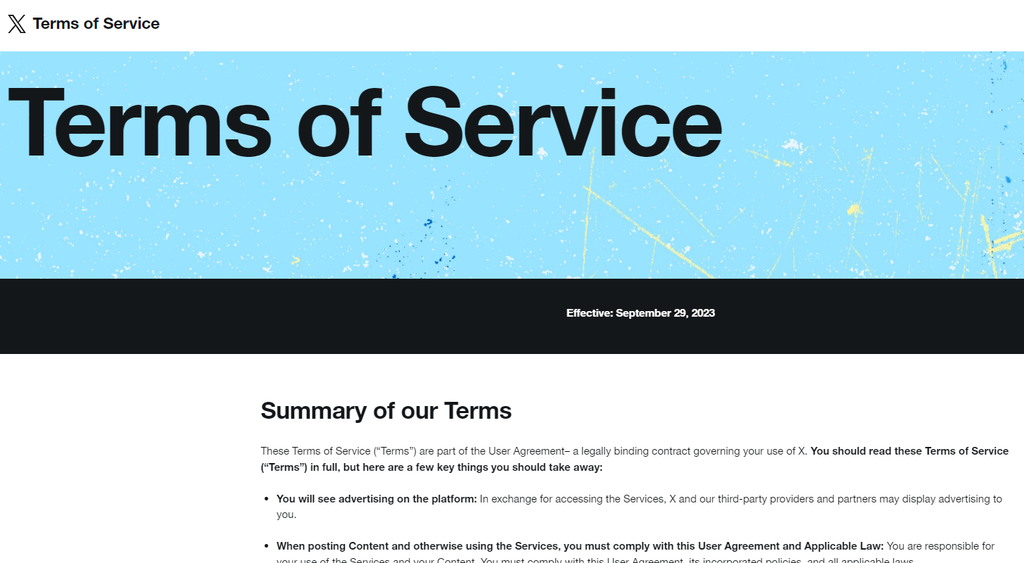
Use at your own risk disclaimer
Errors and omissions disclaimer
Views expressed disclaimer
What should a disclaimer include?
Pick the clauses that match your site. Skip the rest.
- Who you are: Your business name and website address.
- Information only: Your content is general information, not advice for the reader’s situation.
- Not professional advice: Name the fields that apply: legal, financial, tax, medical.
- Accuracy: You try to keep content correct but don’t promise it’s complete or current.
- Personal responsibility: Visitors are responsible for how they use your content.
- Third-party links and content: You don’t control linked sites, guest posts, or comments.
- Affiliate relationships: Point to your affiliate disclosure if you have one.
- Products for children: State the age range each product suits, and warn about small parts. If you collect personal data from children under 13, COPPA applies. See the FTC’s COPPA FAQs.
- Limitation of liability with exceptions: Limit liability “to the fullest extent permitted by law”, and keep the exceptions the law requires.
- Consumer rights: Say the page doesn’t affect rights the law won’t let you remove.
- Dates, changes, and contact: An effective date, a “last updated” date, and an email for questions.
Where to put your disclaimer
A disclaimer only helps if people can see it. Use more than one spot:
- Footer link: Link your main disclaimer page in the footer, so it’s on every page.
- Standalone page: Publish the full text on its own page, such as /disclaimer.
- Next to the claim: Put a one-line note right beside health tips, income figures, or affiliate links.
- Before tools and calculators: Show a short no-guarantee note before visitors use the tool.
- Inside your terms: Repeat the liability wording in your terms and conditions, where users accept it.
- Video descriptions and email footers: Add the matching short disclaimer there.
Are website disclaimers legally binding?
Partly. It depends on how visitors see the disclaimer, and on the law where they live.
Notice vs contract. A disclaimer page on its own is mostly a notice. Its liability wording is stronger when it’s part of a contract users accept, such as terms they agree to at signup or checkout. In the US, courts have refused to enforce “browsewrap” terms that sat behind a footer link with no clear notice (for example, Nguyen v. Barnes & Noble, 9th Circuit, 2014). See terms and conditions examples for how sites ask users to accept their terms.
Fairness. Courts and regulators look at whether the wording is clear and fair. Vague or one-sided terms are easier to challenge.
The law sets a floor. Some liability can’t be excluded:
- UK: You can’t exclude liability for death or personal injury caused by negligence (Unfair Contract Terms Act 1977, section 2; Consumer Rights Act 2015, section 65).
- EU: Terms that unfairly limit a consumer’s rights are not binding on the consumer (Unfair Contract Terms Directive 93/13/EEC).
- US: Rules vary by state. Courts often refuse to enforce exclusions for gross negligence or intentional harm.
- India: The Consumer Protection Act 2019 lets consumers challenge unfair contract terms. (Consumer Protection Act 2019, section 2(46))
A line such as “we are not liable for anything, ever” can mislead visitors about their rights. Use “to the fullest extent permitted by law” and keep the exceptions.
How to write a website disclaimer
4 steps, then a few rules to keep it effective.
Identify the type of disclaimer you need
Start with why you need one. Use the “Does your site need a disclaimer?” table and the 14 types above to pick.
Run a health blog? You need a medical disclaimer. Review products with affiliate links? You need an affiliate disclosure and a general disclaimer.
State the liability that comes with your business
Name the risks your content creates.
Example: a beauty blogger shares skincare tips. A reader gets a rash. The disclaimer should say readers should patch-test products, and that you’re not responsible for reactions to the products or routines you mention.
Decide which rights you want to protect
Know what you own and want to keep.
A musician who publishes original songs should state their copyright. A photographer should do the same for their images.
Limit your responsibility for third parties
If you link to other sites or use outside services, say who’s responsible for what.
Run an online store with a third-party courier? State who handles delivery problems, and where refunds and exchanges come from.
Tips for an effective disclaimer
- Write for your audience: Know what your visitors expect from you, and word the disclaimer for them.
- Keep it short: Visitors only benefit from a disclaimer they read. Short pages get read.
- Be exact about what you cover: State what you take responsibility for and what you don’t. Vague wording causes disputes.
- Write your own: Don’t copy another site’s disclaimer. Their wording may not match your site, and copying it can raise copyright issues.
- Get a lawyer to check it when the risk is higher: If you run an online store, collect personal data, or have visitors under 13, ask a lawyer to review your disclaimer before you publish it.
- Don’t use it to cover false claims: A disclaimer does not make a false or misleading claim legal. If a page says something untrue about your product or results, a disclaimer will not protect you.
What a disclaimer can’t do
Know these limits before you rely on one.
It doesn’t fix a false claim. In the US, the FTC treats false or unproven claims as deceptive, whatever your disclaimer says. See the FTC’s Advertising FAQs for small business.
It doesn’t work if visitors miss it. The same FTC guidance says a disclaimer “easily missed on a website” is not likely to be effective.
It doesn’t stop a lawsuit. Anyone can still take you to court. A disclaimer gives you something to point to when they do.
It doesn’t replace other required pages. You still need a privacy policy if you collect personal data, and a disclosure if you earn from recommendations.
Common mistakes in copied disclaimers
We reviewed a widely copied generic disclaimer while rewriting our own templates in October 2026. These problems show up across the web:
- A total liability exclusion with no exceptions. “In no event will we be liable for any loss or damage whatsoever.” This fails the UK and EU rules above.
- Law names used as labels. Sections headed “(GDPR)” about content accuracy. GDPR covers personal data. It says nothing about whether your articles are accurate.
- No “not professional advice” clause. That’s the main reason most sites publish a disclaimer.
- Copied wording. Text that matches thousands of other sites may not fit yours, and it can raise copyright issues.
- Never updated. A disclaimer written before you added affiliate links, AI content, or a shop doesn’t cover them.
Website disclaimer generator: what WPLP Legal Pages adds to a template
The template wording above works for a small site with simple content. As your site grows, you have to pick the right clauses, write full medical or earnings pages, keep your terms consistent, and update everything when the law or your site changes.
WPLP Legal Pages is a WordPress plugin that does this work for you. It builds your legal pages from a questionnaire and publishes them in WordPress:
- It picks the clauses for you. You answer questions such as “Do you use affiliate links?” and “Do you publish guest posts?” The plugin keeps the sections that apply and removes the rest.
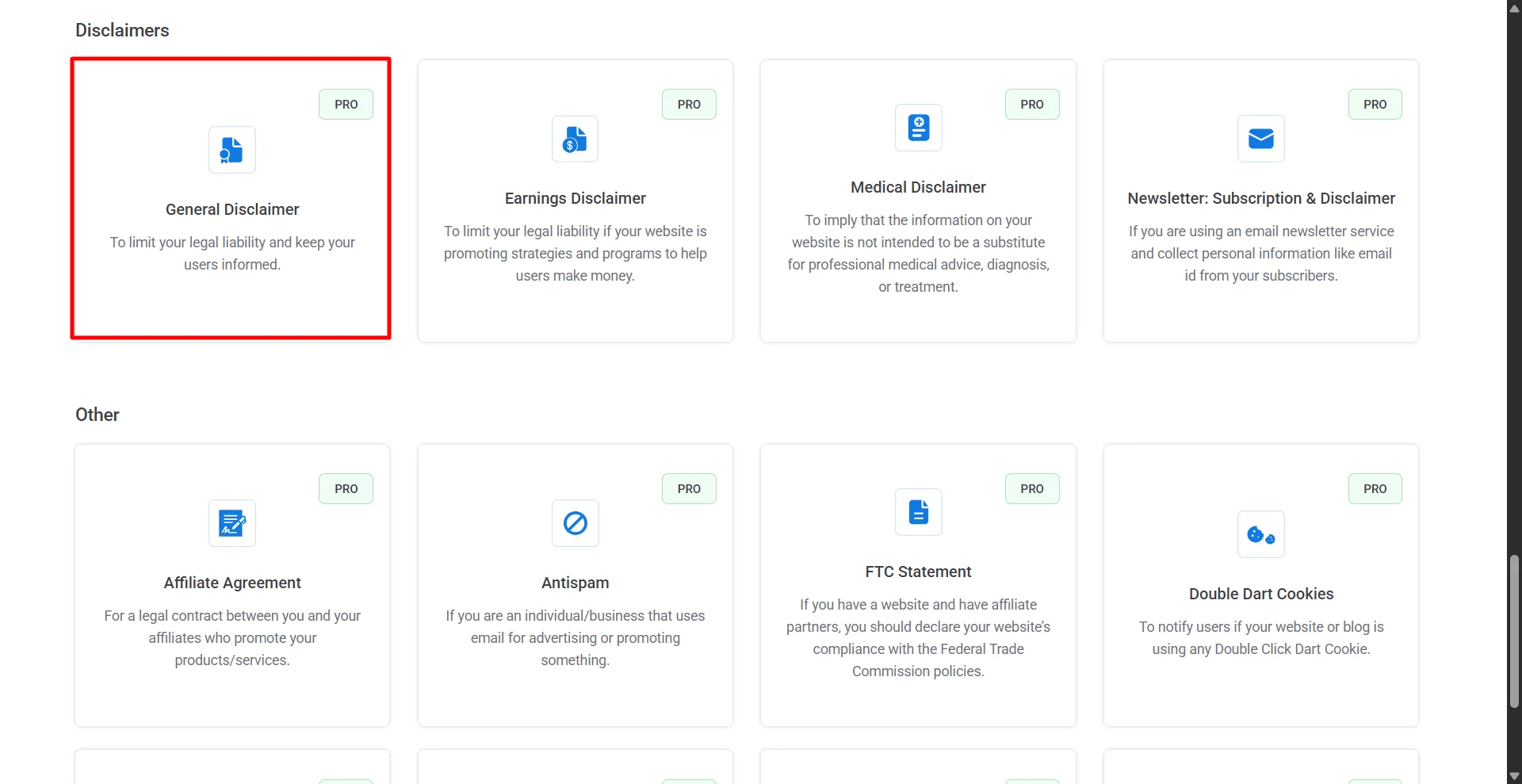
- It has full specialist templates. General, Medical, and Earnings disclaimers, plus an affiliate disclosure, as complete pages. The samples in this article are 1 to 3 sentences each.
- It publishes in 1 click. No copying text from a document into a page builder.
- It places the page for you. Add legal pages to your footer automatically, or show them in a popup. These are free on every plan.
- It tells returning visitors when a page changed. An update banner shows the change date. Free on every plan.
- It drafts updates when the law changes. On paid plans, the plugin detects a relevant law change and drafts updated text. Nothing goes live until you approve it.
- It keeps your pages consistent. Your disclaimer and terms come from the same questionnaire, so the liability wording matches.
- It covers more than 1 site. Manage several sites from the WPLP web app, up to your plan’s site limit.
Disclaimer templates are on paid plans, from $48/year. The free plan includes a Privacy Policy, Terms of Use, DMCA notice, and CCPA page.
How to create a website disclaimer using WPLP Legal Pages
Step 1: Install the plugin
Go to Plugins > Add New, search for WPL, and click Install Now > Activate.
Step 2: Set up the plugin
Open WP Legal Pages and click Accept to configure the plugin.
Step 3: Activate your paid plan
Purchase a paid plan and activate your license key.
Step 4: Create your disclaimer
Go to WP Legal Pages > Create Legal Page, select a disclaimer template, complete the setup, review it, and click Publish. Add the page to your website footer.
FAQs
What does disclaimer mean?
A disclaimer is a statement that denies or limits your responsibility for something. On a website, it limits your responsibility for your content and how people use it.
What is a legal disclaimer on a website?
A legal disclaimer sets out the limits of your liability for your site’s content and use. It also says you make no promises beyond what’s on the page.
Is a website disclaimer legally required?
Usually not. Some related pages are. In the US, you must clearly disclose material connections, such as affiliate commissions or paid reviews, and income claims must be true and backed up.
Can I use one disclaimer for my whole site?
Yes, for the general clauses. Add short notes next to specific content too, such as affiliate links or health tips. A footer link alone may not be enough for those.
Can I copy another site’s disclaimer?
Don’t. Their wording may not match your site, and copying it can raise copyright issues. Start from a template and change it to fit what you publish.
How often should I update my disclaimer?
Review it once a year, and whenever your site changes: new affiliate links, AI content, a shop, or a new topic. Update the “last updated” date each time.
Conclusion
Most sites don’t need a disclaimer by law. Most sites benefit from one.
Pick the types that match your content. Put short notes where the risk is, and link the full page in your footer. Keep the legal exceptions in your liability wording, and get a lawyer to review it if you sell online, collect personal data, or have young visitors.
Start with the template wording in the 14 types above, or build a full page from a questionnaire with WPLP Legal Pages.
Keep reading: