
U.S. Privacy Law Compliance Made Easy With WPLP
Summary
The article discusses some common requirements for compliance. It outlines the basic parameters of compliance for website owners, including the need for clear disclosures, consumer rights, cookie tracking, and clear data-handling practices.
The article also offers examples of how the WPLP Compliance Platform can make these compliance processes easier.
Does your website still use the same generic privacy policy while the U.S. state privacy policy keeps changing?
Most site owners are unaware that several states, like Virginia, Utah, Connecticut, etc., have established their own state-specific privacy laws. These laws require specific transparency, consumer rights, and data handling.
This guide reviews what U.S. privacy compliance mean for your site. It will also outline how the WPLP Compliance Platform will save you time and money by using prebuilt templates. You will find easy-to-follow directions to create legal pages as per the laws.
Let’s dive in!
Overview of the New U.S. Privacy Landscape
Data privacy issues have become a growing concern lately across the United States. States have reacted by adopting increasingly sophisticated data privacy laws at the state level.
There is no single federal privacy regulation. As a result, individual states have adopted their own privacy regulations to protect personal data. Due to this, navigating the U.S. privacy compliance has become more complex for website owners.
Many states, like Virginia, Utah, Connecticut, etc., have established extensive data privacy regulations. These privacy laws contain differing definitions and thresholds, but generally have a similar focus. Their main focus is to hold businesses accountable for collecting, using, and sharing users’ personal data.
In essence, these laws intend to offer the users transparency and control over their data. These laws require websites to provide clear notices and current legal requirements regarding their data practices.
The number of regulatory requirements in the U.S. to protect user privacy is now expanding. As a result, the website owners are now continuously monitoring and managing U.S. privacy compliance. With these new laws, compliance has now become an ongoing task rather than a one-time effort.
What These Laws Mean for Your Website
Every U.S. state has its own privacy law. Yet every law presents similar expectations of a website that collects personal information about the user. Therefore, website owners are able to focus on a small number of basic requirements common to a majority of U.S. states.
Common website obligations across the U.S. include:
Clear privacy disclosures
Websites must clearly define the information they collect about the user. They need to provide reasons for collecting the information and how the information will be used. These disclosures must be in simple, plain language and easy to read.
Consumer rights
Websites must inform users of their rights to access and delete their personal data, and correct inaccuracies in their information. Users should be given the choice to opt out of specific data processing activities.
Cookie usage transparency
Websites must disclose their use of cookies and tracking technology. Businesses should stay clear about the reasons for using cookies and what types of cookies are used on their site.
Data sharing notice
Be transparent whether or not the data from users is shared with third parties such as analytics companies, advertising, or purchase.
As a result, the way websites operate now requires them to comply with privacy laws such as GDPR, CCPA, and others. To stay aligned with U.S. privacy compliance, a website can no longer hide its use of personal information.
Websites must disclose its use of data clearly and allow users to read these details. The users must be aware of where their data will go without reading a lengthy or vague document. Website owners need to ensure that their data practices match with what has been stated in their policies.
Because of this change in privacy laws, websites can no longer use a single policy for all types of data they collect. A website needs an up-to-date policy for each of the following categories:
- Data collection
- Cookie usage
- Consumer rights under U.S. Privacy Laws, GDPR, and CCPA
Each website needs an updated legal page on a regular basis in order to comply with the current U.S. online privacy policies.
How WPLP Compliance Platform Simplifies Ongoing Compliance

It is a time-consuming task to manage compliance with state privacy laws because these laws are continuously evolving. Website owners should not manually track changes and update policies individually.
Instead, they need to have a systematic way of managing compliance with state privacy law requirements over the long term. The WPLP Compliance Platform assists website owners in streamlining their ongoing privacy compliance activities.
WPLP has a number of built-in features to help reduce the amount of manual effort required by website owners. It also ensures that legal consent and requirements remain in compliance with all applicable laws.
Here are a few notable features available in the WPLP Compliance Platform:
Template auto-updates
Provides a collection of legal page templates with automatic updates to keep them current with evolving privacy law requirements. So that website owners do not have to spend time reviewing these pages manually every month.
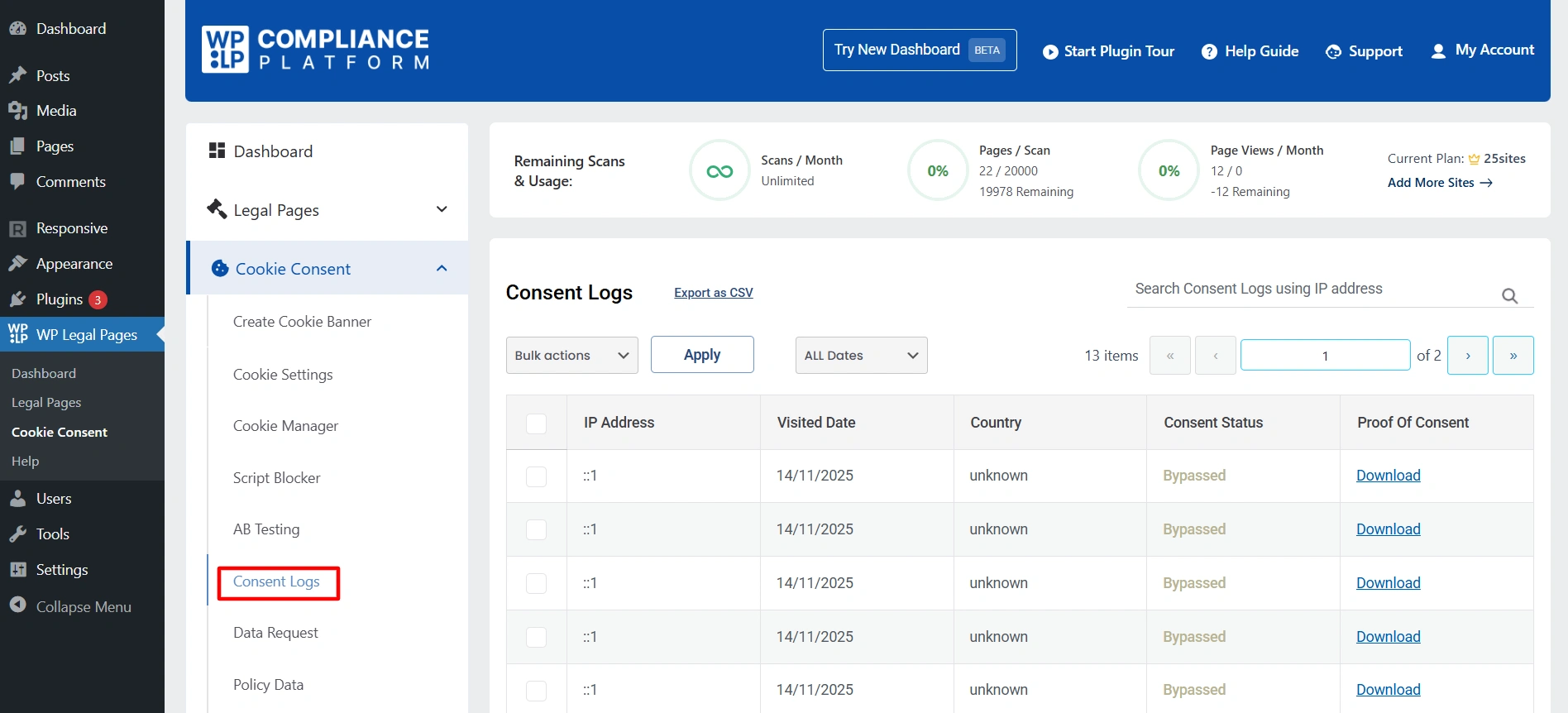
Cookie scanner and consent logs
These features of the WPLP scan a website for cookies and record a user’s cookie consent. This ensures that the website owner’s cookie policy is clear and will be enforced effectively in the event of an audit.
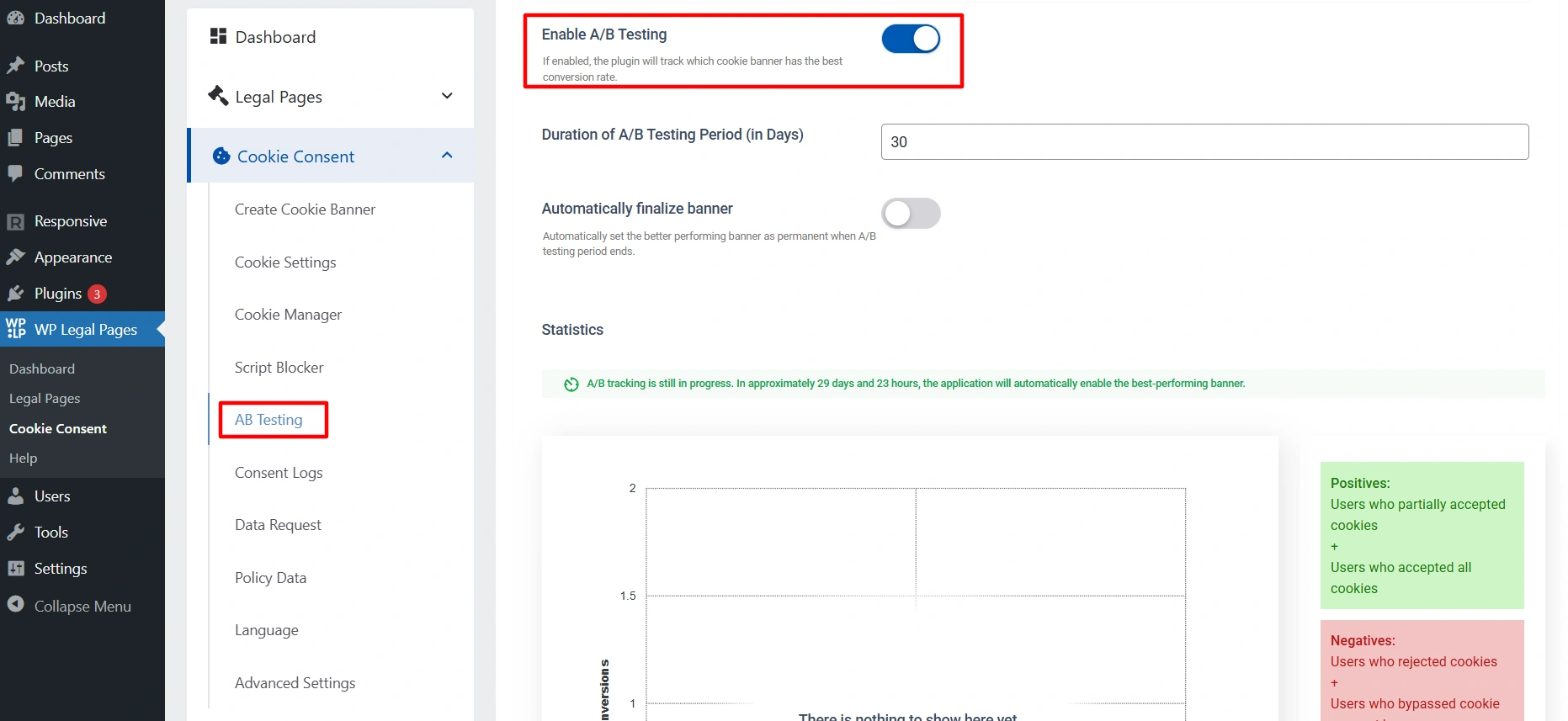
A/B testing for banners
This feature allows website owners to test multiple versions of their cookie banners to determine the optimal design that meets both compliance and user engagement goals.
Geo-targeted cookie banners
WPLP provides website owners with the ability to display the appropriate cookie notice to their website visitors. This is based on their geographic location to ensure compliance with each state’s or province’s cookie requirements.
Ready-made legal pages
Website owners are provided pre-built legal pages for all of the applicable privacy laws. It includes laws like: GDPA, CCPA, CPRA, COPPA, etc. These pre-built legal pages significantly reduce the amount of time required to create a new legal page.
WPLP has consent monitoring, legal page creation, and everything related to privacy laws on a single platform. This allows business owners to devote their efforts to running their business rather than spending time worrying about compliance requirements.
WPLP helps alleviate some of the complexities associated with managing the privacy laws of multiple jurisdictions.
Those who are looking for an easy way to remain compliant with various state privacy policies, WPLP is a great solution to help with managing compliance.
Creating Compliant Legal Pages and Cookie Notices for These New Laws Using WPLP
To begin using the WPLP tool for compliance, there is a structured and practical roadmap to follow.
1. Identify the different types of information your website collects. Your website can include contact forms, a newsletter, an analytics tool, a payment processor, a live chat plugin, etc.
2. Understand which legal documents your website needs. For most websites, these include a Privacy Policy, Cookie Policy, and Terms and Conditions.
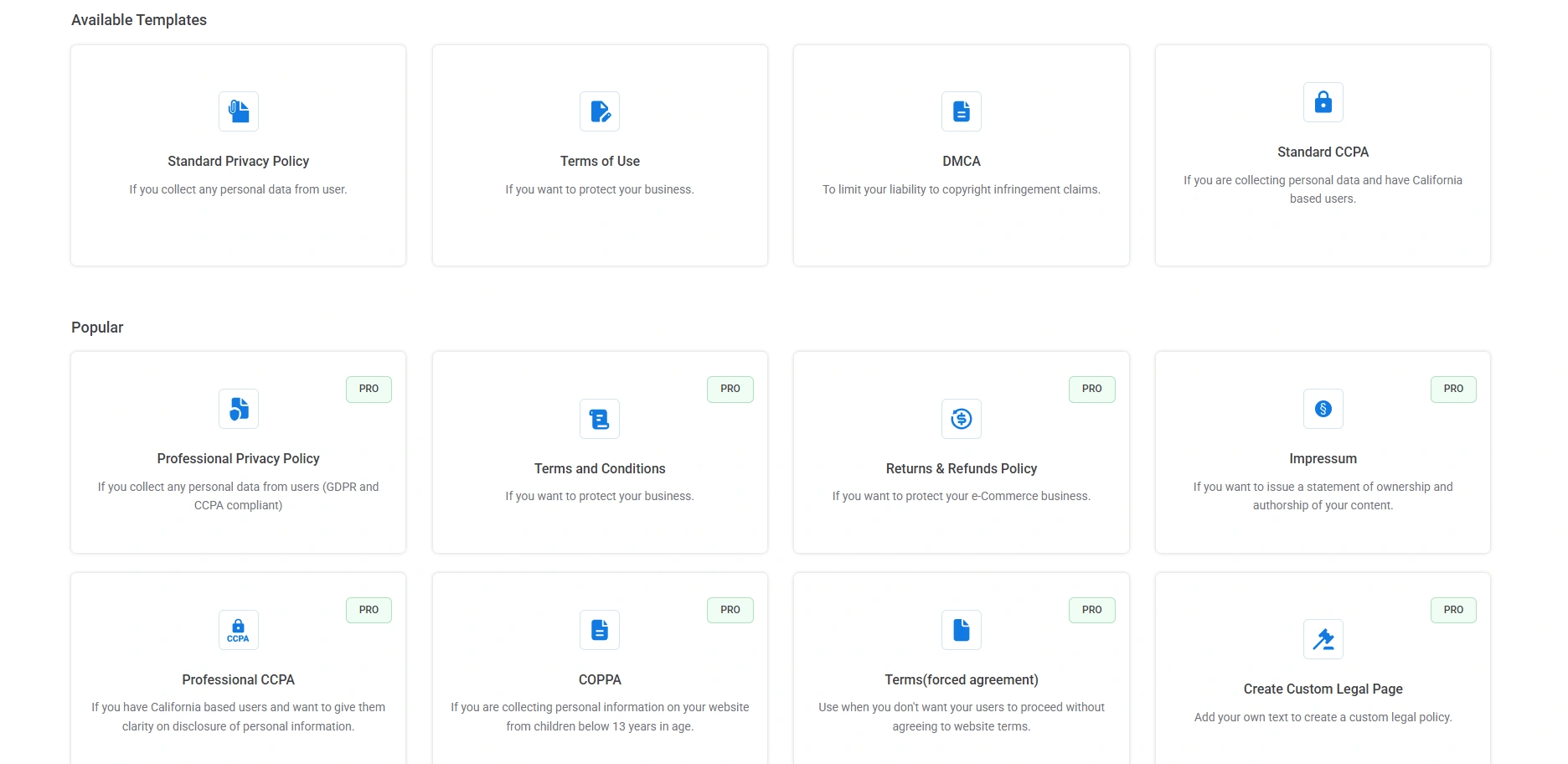
3. Use pre-prepared WPLP templates created to meet the requirements of specific regulations. For example:
- CPRA/CCPA templates are for California Consumer Rights
- GDPR templates for consent/legal processing
- COPPA templates are related to children’s information
These templates provide a simple, structured starting point so you’re not missing any critical elements.
4. Once you have chosen your template, customize it according to your website’s use case. You will clearly outline:
- What type of information is being gathered
- Which third parties receive it
- What rights users have
- How cookies and trackers operate, including if a child gathers it.
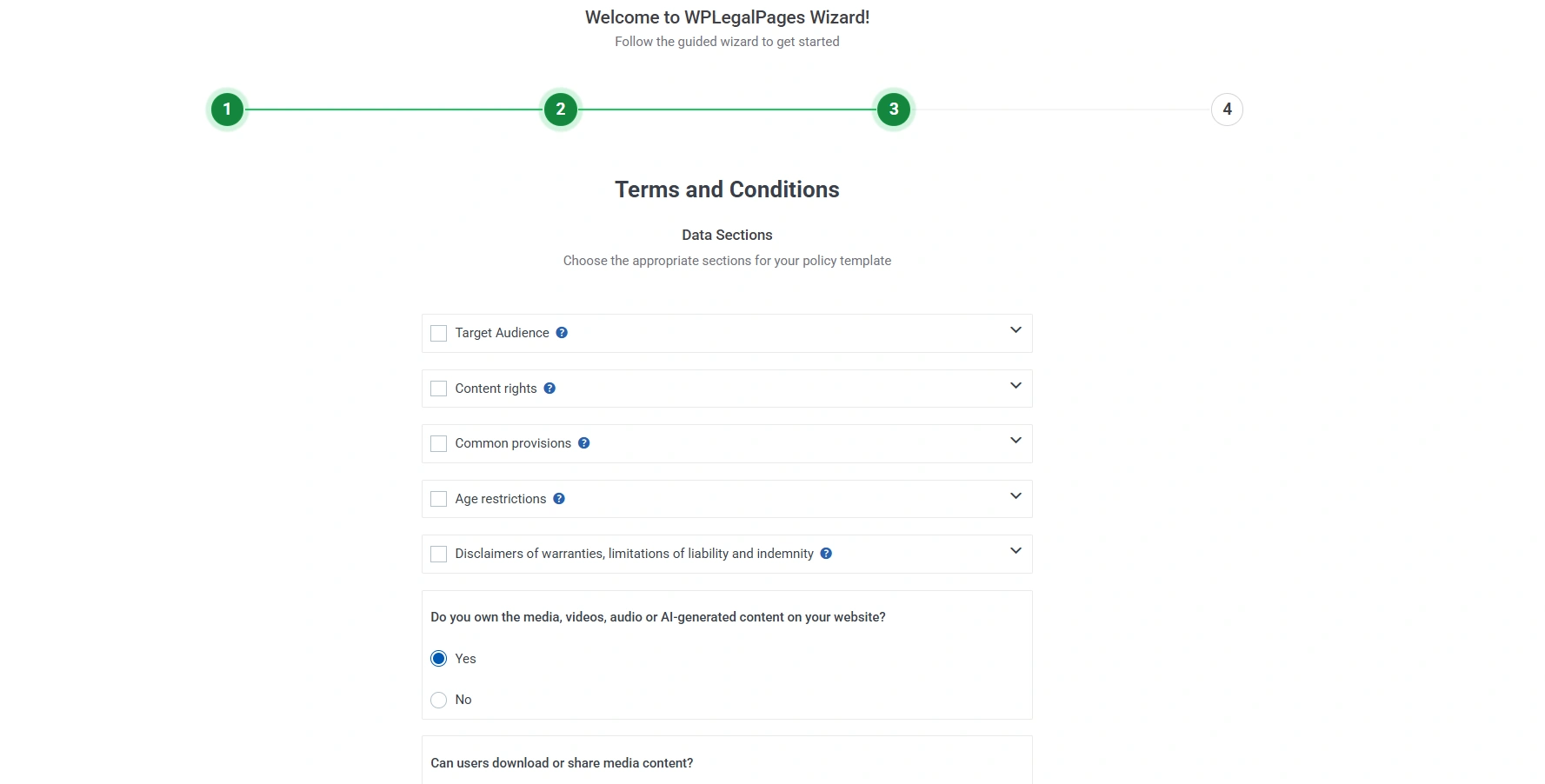
WPLP makes this process easy through the use of on-screen prompts for customizing your template.
5. Run the WPLP cookie scan after completing all your other legal documents. This tool gives you a complete list of all cookies found on your site, including total count, cookie category, and when to run your next scan.
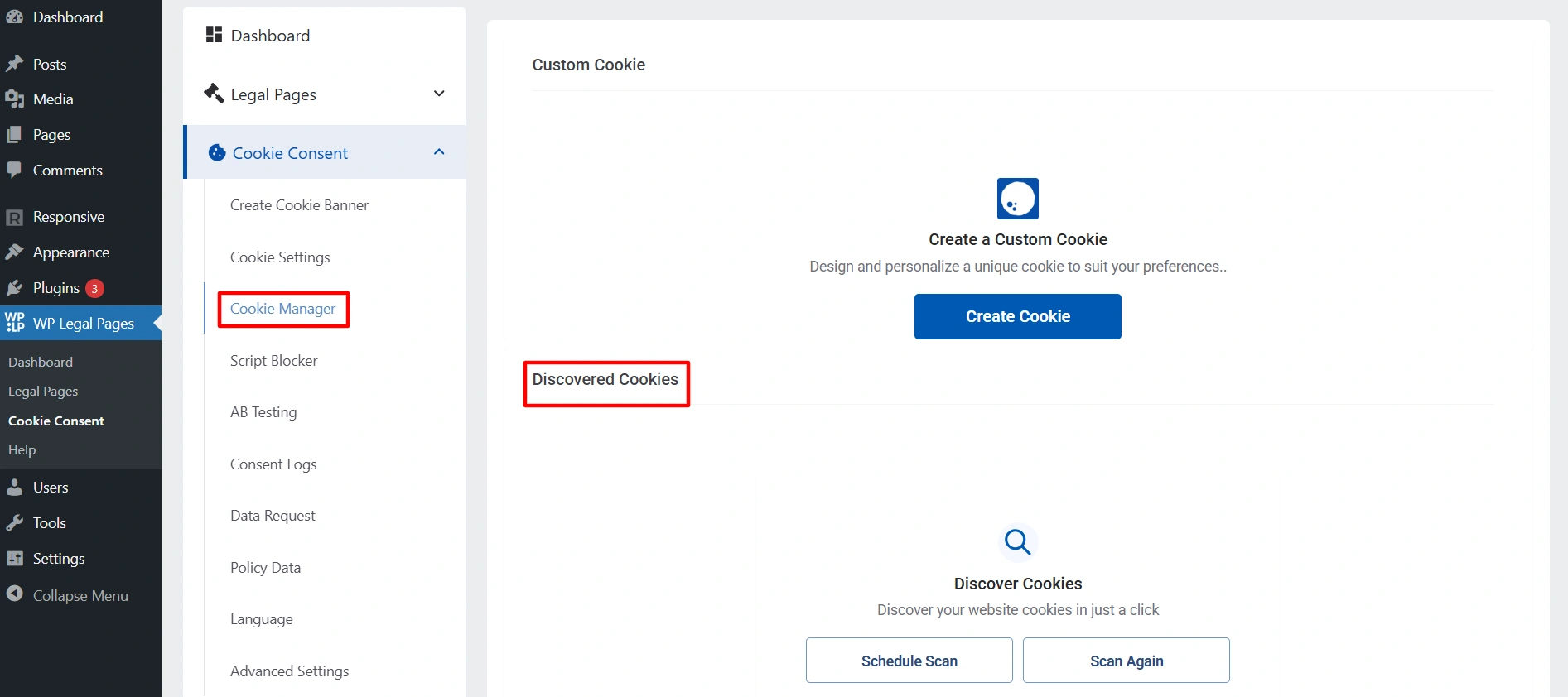
By using this tool, you can keep your cookie policy up to date without having to manually review each cookie on your site.
6. Create a cookie banner for your visitors to notify them and obtain consent when required. WPLP keeps track of user consent automatically, creating an accurate record of who agreed to what settings.
7. Make sure your legal documents provide visitors with information regarding user rights:
- Access
- Delete
- Correct
- Opt-out
WPLP makes it easy to explain these rights in simple language.
8. When everything is set up properly, publish your legal documents. Remember to schedule regular scans to maintain U.S. privacy compliance.
You can effectively maintain your Compliance with little or no manual work by following these steps with WPLP.
Tips to Keep Your Website Privacy Compliant All Year
U.S. privacy compliance is an ongoing process and not a set-and-forget process. As the business evolves and laws change frequently, businesses need to revisit certain areas of compliance.
These best practices can help businesses to stay compliant throughout the year:
- Review policies regularly: If you are adding new features, tools, or data collection methods, you should always review your privacy/legal pages.
- Monthly cookie checks: You should conduct a monthly check of cookies and other tracking technologies. This will help you to identify any new or changed trackers early.
- Maintain a list of all third-party tools: It is important to have a complete list of any third-party tools you use for analytics, marketing, and any service that collects or processes either your data or user data.
- Ensure forms disclose data collection: When a user completes a form, they should clearly understand what information is being collected and the use of that information.
- Make opt-out instructions easy: Allow users to opt out of any services offered through your site. Users should have easy-to-follow instructions for opting out of any service associated with their data rights.
By being proactive, website owners can effectively address their data protection obligations with confidence. This will help them build strong relationships with their users through a structured approach to ongoing compliance. Not only will this approach provide protection for businesses, but it will also demonstrate a sincere commitment to their users’ privacy rights.
FAQs
Some laws apply only after reaching certain thresholds. There are also many best practices that all websites processing user data should adopt.
Cookie transparency and opt out options are not necessarily mandatory, but are strongly advised for compliance.
It should be reviewed each time data processing procedures are changed, as well as at a minimum of once or twice per year.
Yes, if it is well written with all the legal state requirements mentioned properly.
Yes, WPLP is routinely updated to accommodate the changing landscape of privacy laws. It eliminates the need for you (the company) to manually update your privacy policy.
Conclusion
The expansion of U.S. privacy laws means that every website created today must comply with these statutes. As a result, websites must provide users with transparency regarding how they collect, share, store, and utilize their customers’ personal data.
Website owners should review their company policies and procedures on a regular basis. They also need to maintain and update their disclosures and keep a close track of the cookies on their websites.
By proactively managing compliance, owners can minimize their compliance risks and create a stronger bond of trust with their customers.
If you’re looking for a way to navigate the U.S. privacy compliance without any legal complexities, consider using the WPLP Compliance Platform. It is an easy-to-use solution for those seeking to remain compliant with the U.S. Privacy laws.
If this was helpful, consider reading these articles:
- How to Create a Privacy Policy For Your Business Website
- Google Ads Cookies Explained: What They Do & Why It Matters
- Important Legal Pages for Every Website
It’s time to take action and bring your website’s compliance up to date with the WPLP Compliance Platform.
Disclaimer: This article is only for information purpose, and does not contain any legal advice.