Summary
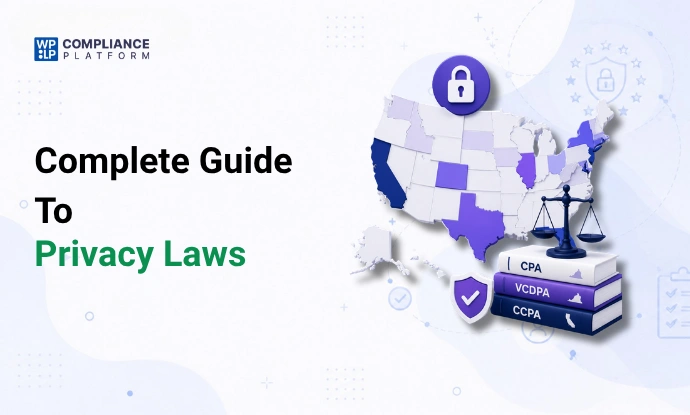
Providing a definition for personal data, and detailed comparison of the various privacy laws enacted by individual states and the ways in which the states enforce their privacy laws.
Finally, the guide shows how automation using platforms such as WPLP Compliance Platform will enable businesses to comply with their state privacy laws on a national scale.
The growth and expansion of digital services is creating a growing demand for preserving the security and privacy of consumers in the United States.
In the last several years, various states have implemented their own privacy laws.
There is now a likelihood of U.S. state privacy law being enacted. The worth of consumers’ personal data continues to expand exponentially. Therefore, the awareness of these laws is extremely important for both businesses and consumers.
What Is Personal Data Under US Privacy Laws?
Under United States privacy legislation, personal data is considered to be any data that has been or can be associated with an identified or identifiable person. This includes names, email addresses, IP addresses, and location information.
Most laws generally do not treat publicly available information as personal data. But they do use increased protections for sensitive personal data compared to standard personal data.
What Is Driving the Rise of US Privacy Laws?
Growing public awareness around privacy, personal data collection, and sharing has contributed to increased consumer demand for privacy protection. With no federal privacy law in place, many states have enacted their own laws to protect the collected data.
Factors accelerating this trend include:
- Public demand for transparency and access to personal data.
- Growing use of automated decision-making, profiling, and targeted marketing.
- Increased attention from other countries, particularly in light of the GDPR regulations.
- Federal privacy regulations such as APRA and ADPPA have not been enacted.
As a result, states including California, Virginia, Colorado, Connecticut, Utah, and others have developed their own privacy frameworks to address this market need. This has created compliance challenges for companies doing business across multiple states.
US Privacy Law Requirements
Even though there are some variations in how laws can be enforced & where they apply, most U.S. laws follow a similar framework.
Universal Consumer Rights
Under state and federal legislation, consumers are granted the right to:
- Access the personal information collected about them.
- Correct the personal information that is incorrect or no longer relevant.
- Request the deletion of your personal information.
- Transfer your personal information to another provider.
- Opt out of:
- Selling your personal information.
- Targeted advertising.
- Certain profiling activities.
These laws are consistent with the principles set forth in GDPR as well as in specific U.S. Laws, including the Oregon Consumer Privacy Act, the Virginia Consumer Data Protection Act, the Indiana Consumer Data Protection Act, and federal proposals such as APRA & ADPPA.
Comparison of US State Privacy Laws
Below is the list of major U.S. state privacy laws, highlighting the date of implementation and what they require from businesses.
| Name of Law | Effective Date | Who Must Comply |
| California Privacy Rights Act (CPRA) | Jan 1, 2023 | For-profit businesses collecting CA residents’ data that meet at least one threshold: $25M+ revenue, 100,000+ consumers’ data processed, or 50%+ revenue from selling/sharing personal data. |
| Virginia Consumer Data Protection Act (VCDPA) | Jan 1, 2023 | Businesses controlling or processing personal data of 100,000+ Virginia consumers, or 25,000+ consumers with revenue from data sales. |
| Colorado Privacy Act (CPA) | Jan 1, 2023 | Controllers or processors conducting business in Colorado or targeting residents and processing personal data of 100,000+ consumers annually. |
| Connecticut Data Privacy Act (CTDPA) | Jan 1, 2023 | Businesses targeting Connecticut residents and processing personal data above statutory thresholds. |
| Utah Consumer Privacy Act (UCPA) | Dec 31, 2023 | Businesses with $25M+ revenue that process personal data of 100,000+ Utah consumers or derive revenue from selling personal data. |
| Indiana Consumer Data Protection Act (ICDPA) | Jan 1, 2026 | Businesses processing personal data of 100,000+ Indiana residents, or 25,000+ with data sale revenue. |
| Iowa Consumer Data Protection Act (ICDPA) | Jan 1, 2025 | Businesses controlling or processing personal data of 100,000+ Iowa residents, or 25,000+ with data sale revenue. |
| Montana Consumer Data Privacy Act (MCDPA) | Oct 1, 2024 | Controllers or processors handling personal data of 50,000+ Montana residents annually. |
| Tennessee Information Protection Act (TIPSA) | July 1, 2025 | Businesses processing personal data of 100,000+ Tennessee residents, or 25,000+ with data sale revenue. |
| Texas Data Privacy and Security Act (TDPSA) | July 1, 2024 | Any entity conducting business in Texas or targeting residents that processes personal data |
| Oregon Consumer Privacy Act (OCPA) | July 1, 2024 | Businesses controlling or processing Oregon residents’ personal data above the defined consumer thresholds. |
| Delaware Personal Data Privacy Act (DPDPA) | Jan 1, 2025 | Businesses processing personal data of 35,000+ Delaware residents, or 10,000+ with revenue from data sales. |
| Florida Digital Bill of Rights (FDBR) | July 1, 2024 | Businesses with $1 billion+ global annual revenue that collect personal data of Florida residents. |
Common Requirements Across All US Privacy Laws
Under the U.S. privacy laws, all businesses must follow a few common frameworks in order to stay transparent with their ways of handling personal data.
1. Prepare Transparent Privacy Notices
Every major privacy law requires companies to provide clear and easily accessible privacy policies. These notices must include:
- What personal information is collected
- Why is it collected
- How the company will use and/or share it
- How consumers can exercise their privacy rights
Failure to publish a clear, concise, and understandable policy will result in increased compliance risk. It can also be treated as misleading practices as determined by the regulators.
2. Consumer data request honorability
Organizations should have documented processes to effectively handle consumer privacy requests. This includes receiving, verifying, and responding within legally defined timeframes. It also means coordinating with all third-party vendors who may be involved.
A lack of coordination in this manner can leave an organization at risk of partial compliance or enforcement exposure.
3. Reduce Data Collection
The U.S. privacy laws continuously pinpoint minimizing data collection. Businesses must only collect data that is related, necessary and proportionate to its intended use.
Excessive or irrelevant data collection can violate privacy laws regardless of whether that data was ever used. This therefore may trigger an investigation for being out of compliance with privacy laws.
4. Apply Security Measures
Organizations must adhere to and comply with various laws requiring them to have security measures. It includes administrative, technical, and physical safeguards in place.
The purpose of these safeguards is to protect against the unauthorized use, access or disclosure of personal information.
Adequate security safeguards should be appropriate for the sensitivity of the data and related to the size of the organization. Inadequate security controls are a significant contributor to enforcement actions.
Unique Differences Between State Privacy Laws
All of the privacy laws regulating personal information across the United States have similarities. However, the way each state enforces these laws results in risk for organizations due to the differences in enforcement.
1. Age-Based Protection
California has taken it a step further than most states by giving users enhanced privacy rights up until age 16. Thus, this makes the compliance obligations of California businesses much more extensive than the other states.
2. Universal Opt Out Signals
Global Privacy Control (GPC) is an opt-out mechanism that allows users to specify their privacy preferences automatically through their web browsers. Some of the other states to have adopted GPC include Colorado and Oregon.
3. Dark Patterns
A growing number of states have specifically prohibited the use of dark patterns. State privacy laws require that consent interfaces be clearly defined, symmetrical, and understandable. They should not contain misleading language, pre-checked boxes or misleading visual graphics.
4. Enforcement Models
In most instances, state privacy laws allow enforcement only by the state attorney general. This means consumers cannot directly sue businesses. Therefore, there is less risk of litigation but also more oversight.
By contrast, there are proposals which allow for a private right of action under the proposed federal privacy laws. This would allow consumers to bring suit against businesses and would raise the level of risk for businesses under those proposals.
How Websites Can Stay Compliant Without Reading Every Law
Businesses face a challenge in complying with numerous privacy laws at once. Every time they read a law individually, they waste valuable time and are likely to make mistakes.
To address this issue, a compliance platform seems like a practical solution. This provides a way for businesses to have their compliance policies dynamically adaptable to the user’s location and relevant legal requirements.
The WP Legal Pages Compliance is specifically created for businesses to help them do this:
- Generate policies based on the state’s specific laws.
- Provide cookie consent banner display options based on geographic locations.
- Automate the process of managing opt-outs, as well as data requests.
- Ensure that as changes occur within the state’s laws, businesses will still remain compliant.
How WPLP Automatically Adapts to US States
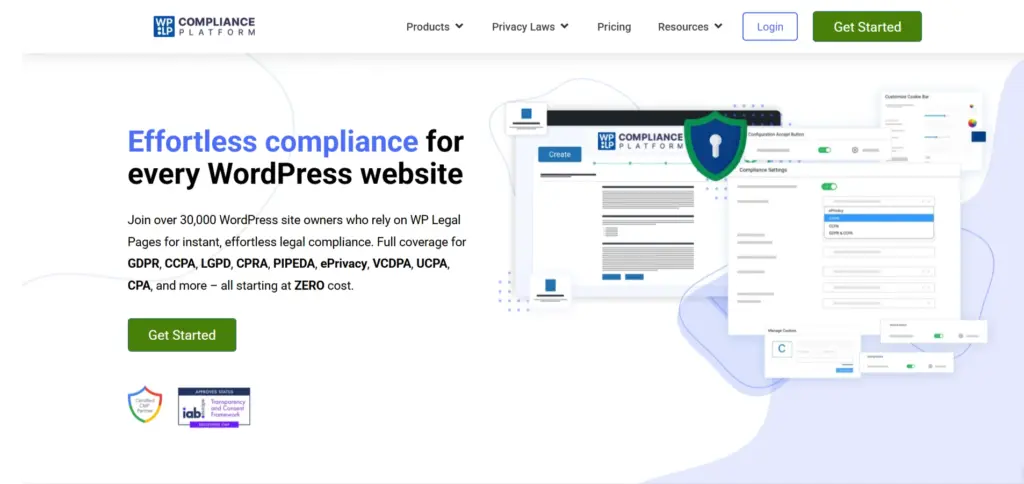
WPLP offers an innovative solution for achieving ongoing compliance with the U.S. privacy law.
1. The WPLP Compliance Platform adjusts to meet the location-based requirements of your visitors. For e.g., visitors from California, Virginia and Colorado, will see the privacy policy and consent options based on their local law.
2. The WPLP platform automatically updates your website’s compliance with the evolving laws of individual states. This eliminates the need for manual updates to maintain compliance.
3. WPLP takes into account the current and pending state (e.g., CCPA, VCDPA and CPA) and pending Federal Privacy Laws (APRA and ADPPA).
4. WPLP is designed to enable businesses to quickly create customized privacy policies, cookie banners and data access request processes.
By utilizing WPLP, businesses can decrease the risk of being sued under the U.S. Privacy Laws. It helps in promoting consumer trust and increasing efficiency when complying with the U.S. privacy laws.
Frequently Asked Questions (FAQ)
No, each state has its own specific set of privacy regulations, which differ in terms of scope and enforcement.
Most privacy laws in the U.S. give consumers the right to access, rectify, delete, transfer, and opt out of the sale or use of their personal data.
Generally state-level privacy regulations apply to companies based on their data-processing thresholds rather than company size or revenue.
Many websites can implement compliance automation tools like the WPLP Compliance Platform that can help them maintain compliance according to the location of their customers.
Conclusion
The increase in US privacy laws is a sign that consumer rights are growing. This emphasises accountability for how companies use personal information.
At the same time, as privacy legislation continues to change at the state level, the use of manual descriptions and methods of compliance will no longer be feasible for companies.
WPLP is a service that automates compliance with US privacy laws and state laws. This allows companies to establish long-term trust with users.
As enforcement of regulations grows, it is imperative to have proactive tools and solutions for compliance with state and federal laws, including the APRA and ADPPA proposals.
If you enjoyed this, consider reading:
- How to Create a Privacy Policy For Your Business Website
- What is Data Privacy? – Everything You Need To Know
- What Is A Cookie Banner And Why Do You Need One For Business
Get started with WPLP Compliance Platform now and prepare your website for future compliance with US privacy laws.
This article is only for information purpose, and does not suggest any legal advice.