
What Privacy Policy Must Include: Essential Legal Requirements Explained
Summary
The guide also highlights common mistakes to avoid while writing a privacy policy, and it provides guidance on how to write a compliant privacy policy
Many websites collect user information such as email addresses, browsing data, or contact details, but don’t clearly explain how that information is handled.
Without a proper privacy policy, visitors may not know what data is being collected, why it’s collected, or how it will be used. This lack of transparency can lead to compliance issues and weaken user trust.
If you run a blog, business website, ecommerce store, or SaaS platform, having a clear and complete privacy policy is essential.
In this guide, we’ll explain what a privacy policy must include, the key sections required for transparency and compliance, common mistakes to avoid, and practical tips for creating a reliable privacy policy for your website.
Why Privacy Policies Are Legally Required
The reason businesses must have privacy policies is to provide customers with clear information about how their personal data will be collected, used, stored, and disclosed.
Many modern privacy laws mandate fair business practices and require companies to transparently disclose their data collection and use practices and to grant users some control over the personal information they share with an organisation. These regulations clearly define privacy policy requirements and explain what a privacy policy must include to remain compliant.
Even if an organisation collects simple information, such as a user’s email address through a contact form or newsletter sign-up, it must still provide users with a clear explanation of how it will process their personal data after collection. A privacy policy demonstrates the organisation’s trust and helps it comply with all applicable data privacy regulations.
If you want to understand why a privacy policy is important for your website, read this detailed article.
Below, we will see some of the privacy policy sections and what a privacy policy should include to meet legal and transparency standards.
Key Sections Every Privacy Policy Must Include
A well-structured privacy policy should clearly explain every stage of the data lifecycle from collection to storage and usage.
The following sections help ensure transparency and compliance with major privacy regulations.
1. Types of Personal Information Collected
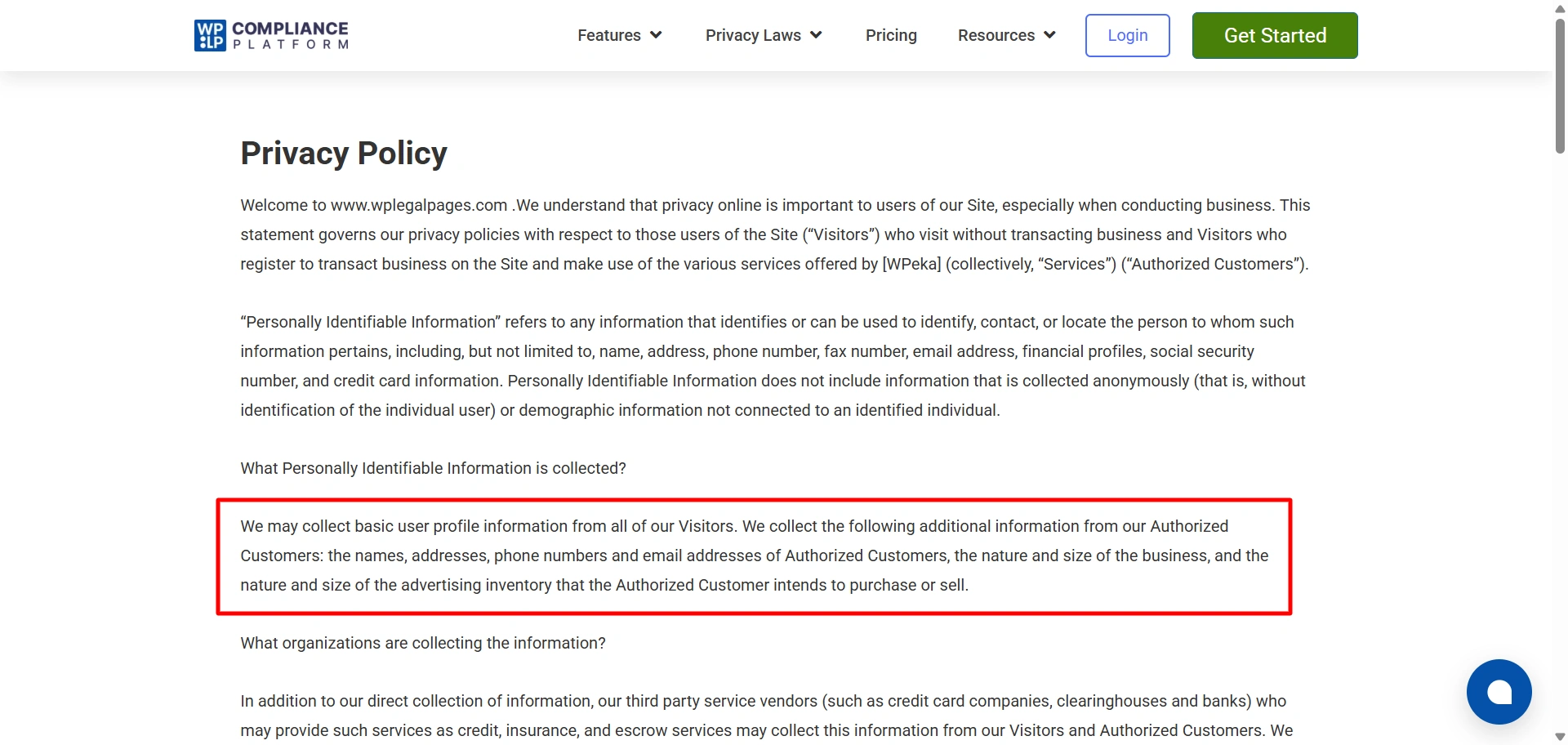
Your privacy policy should clearly list the categories of personal data collected from your website users. This is one of the most important website privacy policy requirements.
Personal data consists of any information that can identify an individual directly or indirectly. Some of the types of personal data collected by websites can include the following:
- Names and contact details, such as email addresses or phone numbers
- Billing and payment information for purchases
- IP addresses and device information
- Location data
- Login credentials for user accounts
- Browsing behavior and website activity
2. How the Information Is Collected
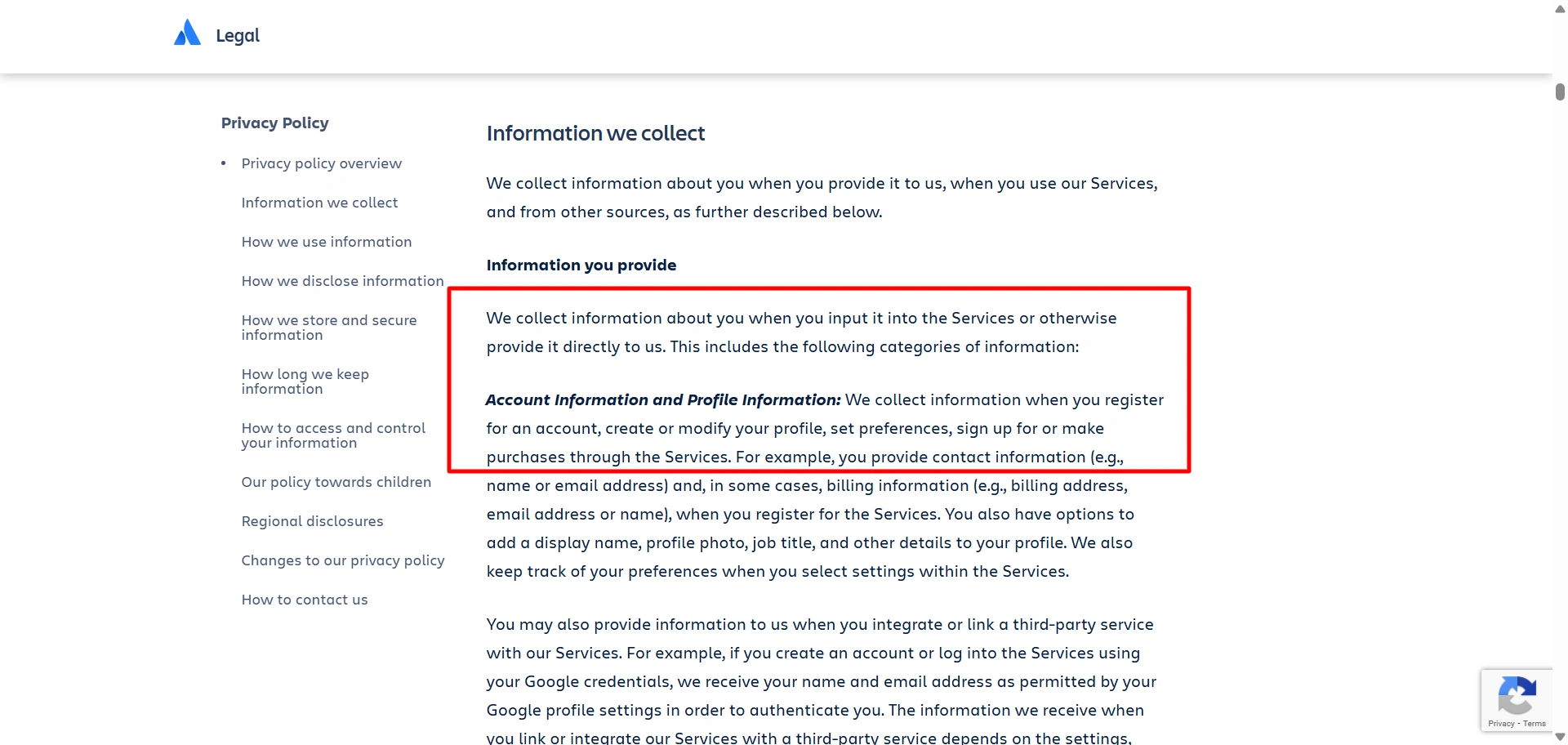
In addition, a privacy policy must include how the information is collected. Explaining collection methods is a key part of privacy policy requirements.
Some methods are:
- Users fill out a contact form or request a newsletter
- Account creation page
- Checkout and purchase page
- Cookies and device fingerprints
- Analytics tracking and web analytics.
For example, when a visitor fills out a contact form, they willingly provide personal information such as their name and email address. At the same time, analytics tools may automatically collect technical data like IP addresses or browsing activity.
Transparency about data collection methods helps the user understand how you obtain their data and is an essential part of what a privacy policy must contain.
3. How Personal Data Is Used
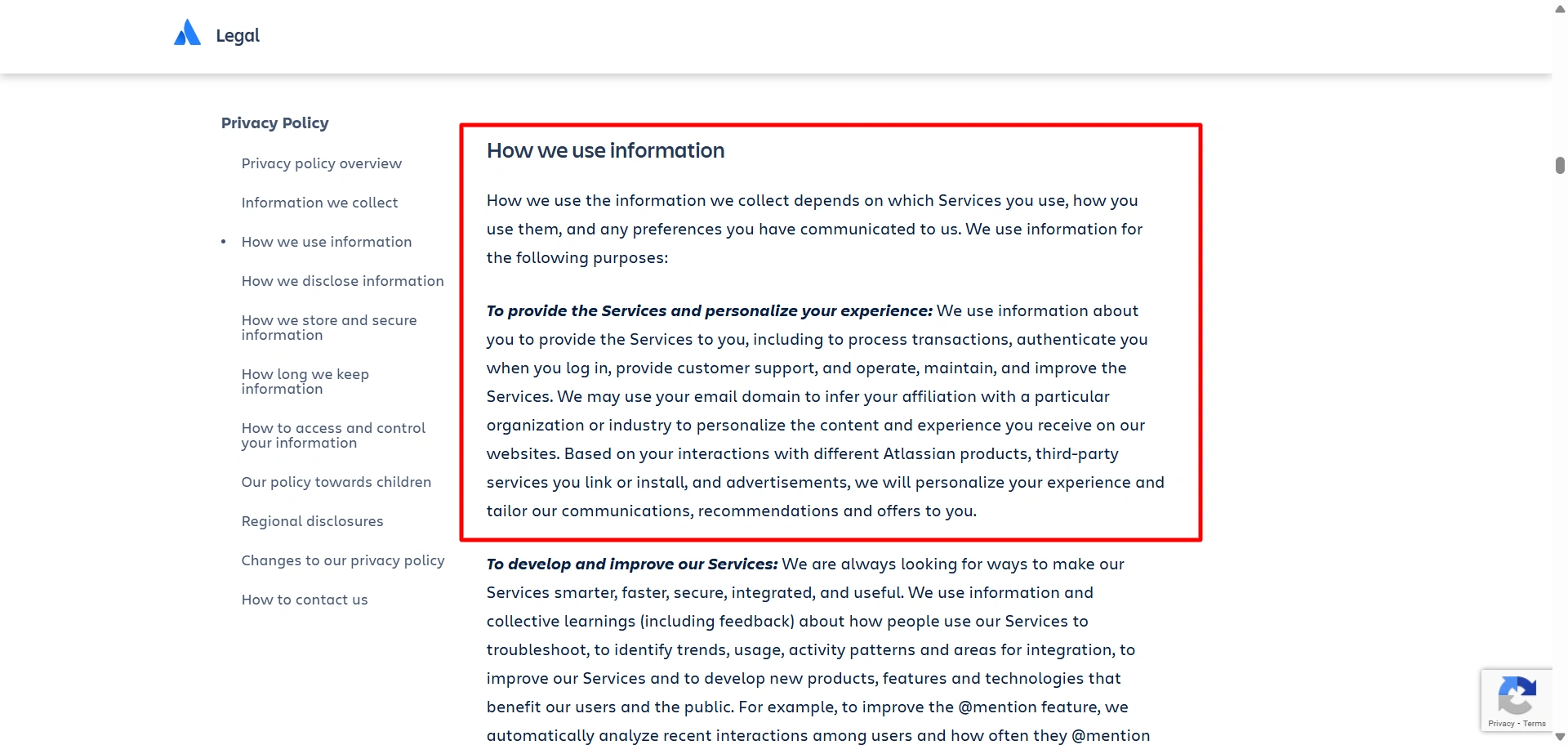
Another essential section of a privacy policy explains why the collected data is used. This helps users understand the purpose behind data collection and how their information benefits the website’s services.
Common examples of the use of personal data are:
- Processing orders and transactions
- Responding to inquiries from customers
- Sending out newsletters or marketing e-mails
- Improving the functionality of a website and/or the overall user experience
- Using analytics tools to determine how well a website is performing
For example, an online retailer may use a customer’s personal information to fulfil orders and deliver products, while an educational content website may use analytics data to determine how to best structure the site and improve the quality of the content.
An explanation of how an organisation will use a customer’s personal data will ensure transparency in the privacy policy and assist the organisation in meeting privacy compliance requirements.
4. Data Sharing With Third Parties
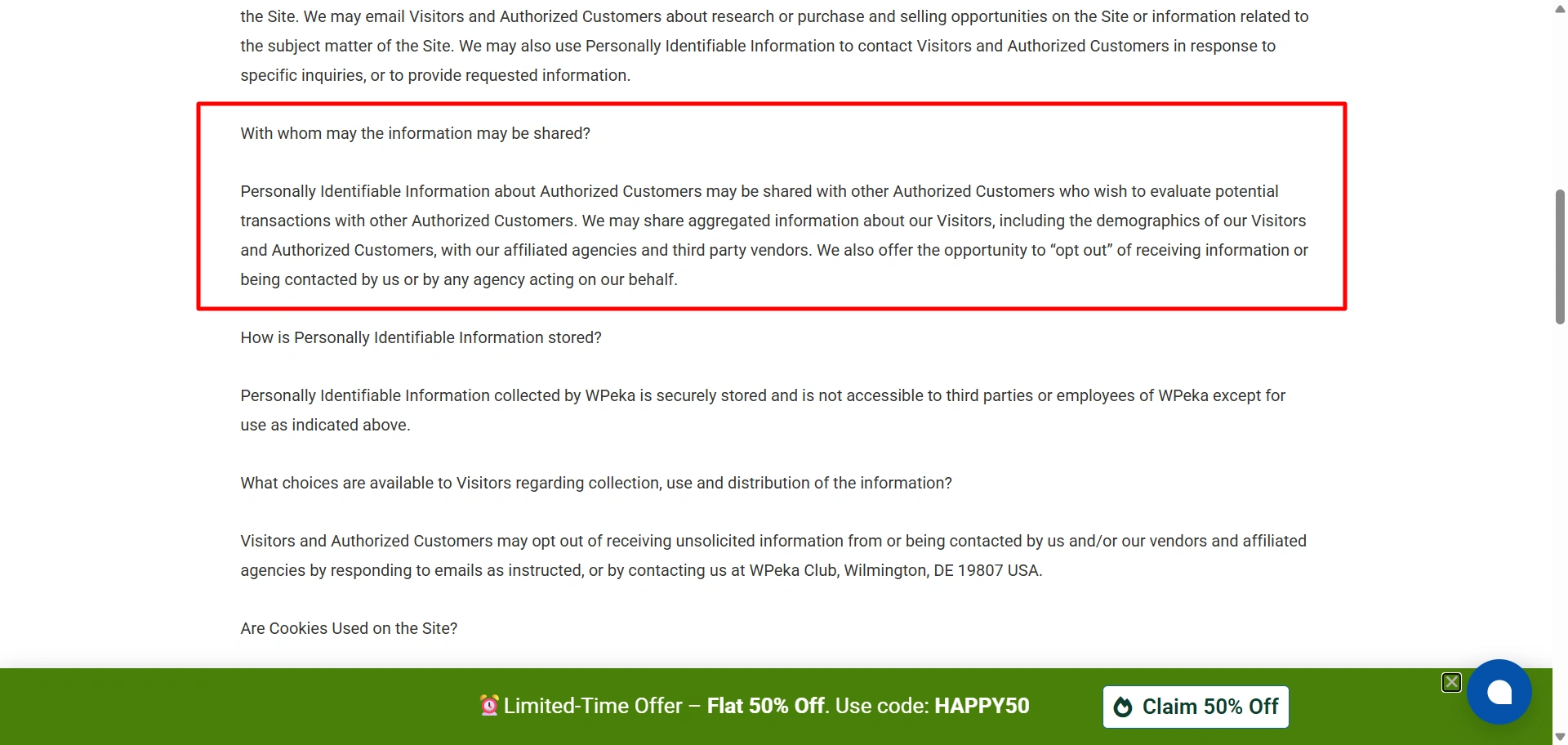
Different websites share user information with external service providers to support their operations in similar ways. The privacy policy must include how you use third parties in connection with your application.
Examples include:
- Merchant service providers where payments are processed
- Email Marketing companies that send out newsletters
- Analytics providers that track and analyse the activity on your site
- Ad Networks that serve relevant advertisements
- Hosting providers who provide hosting services to websites
For example, your e-commerce store may use a payment gateway to process orders and securely handle customer credit card or other payment information through a third-party payment processor. Mutual confidentiality and the use of non-personally identifiable information, such as your customers’ location or preferences, will enable you to collect data on the effectiveness of your advertising.
Users appreciate transparency about how your website shares their personal information with third parties because it helps them understand where their data may be sent. This section clearly answers what a privacy policy must contain regarding data sharing.
5. User Privacy Rights
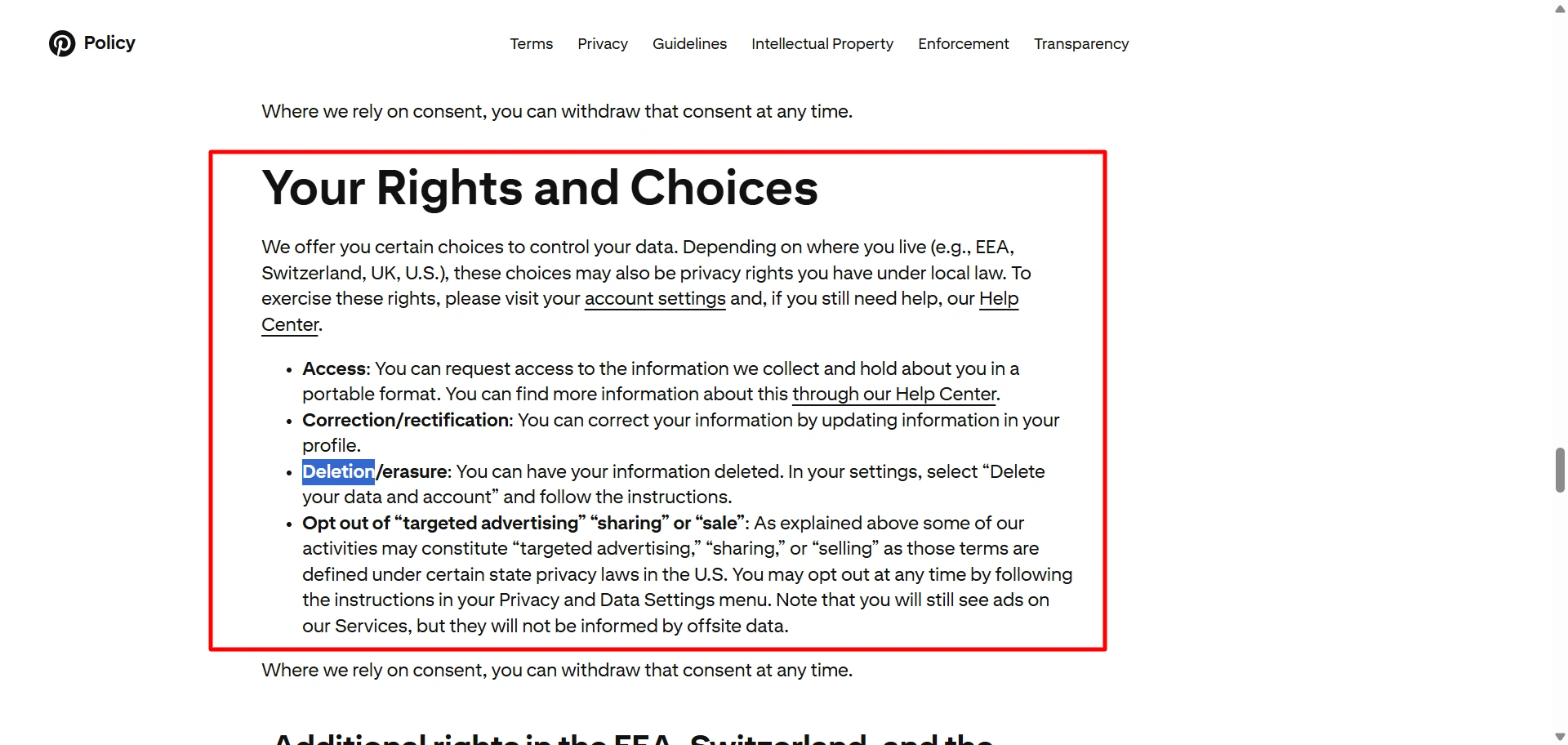
Modern privacy laws grant individuals certain rights regarding their personal data. Your privacy policy should explain what rights users have and how they can exercise them.
Common user rights are:
- Right to access their Personal Data
- Right to correct information regarded as inaccurate
- Right to request deletion of Personal Data
- Right to Opt-Out of Marketing Communication
- Right to restrict / object to certain data processing activities
For example, a User can request a copy of all the data stored on your website or have their personal information deleted. By detailing these rights, it provides Users with the knowledge to manage his/her own Personal Information.
Explaining these rights is an important part of privacy policy requirements.
6. Data Retention Policy
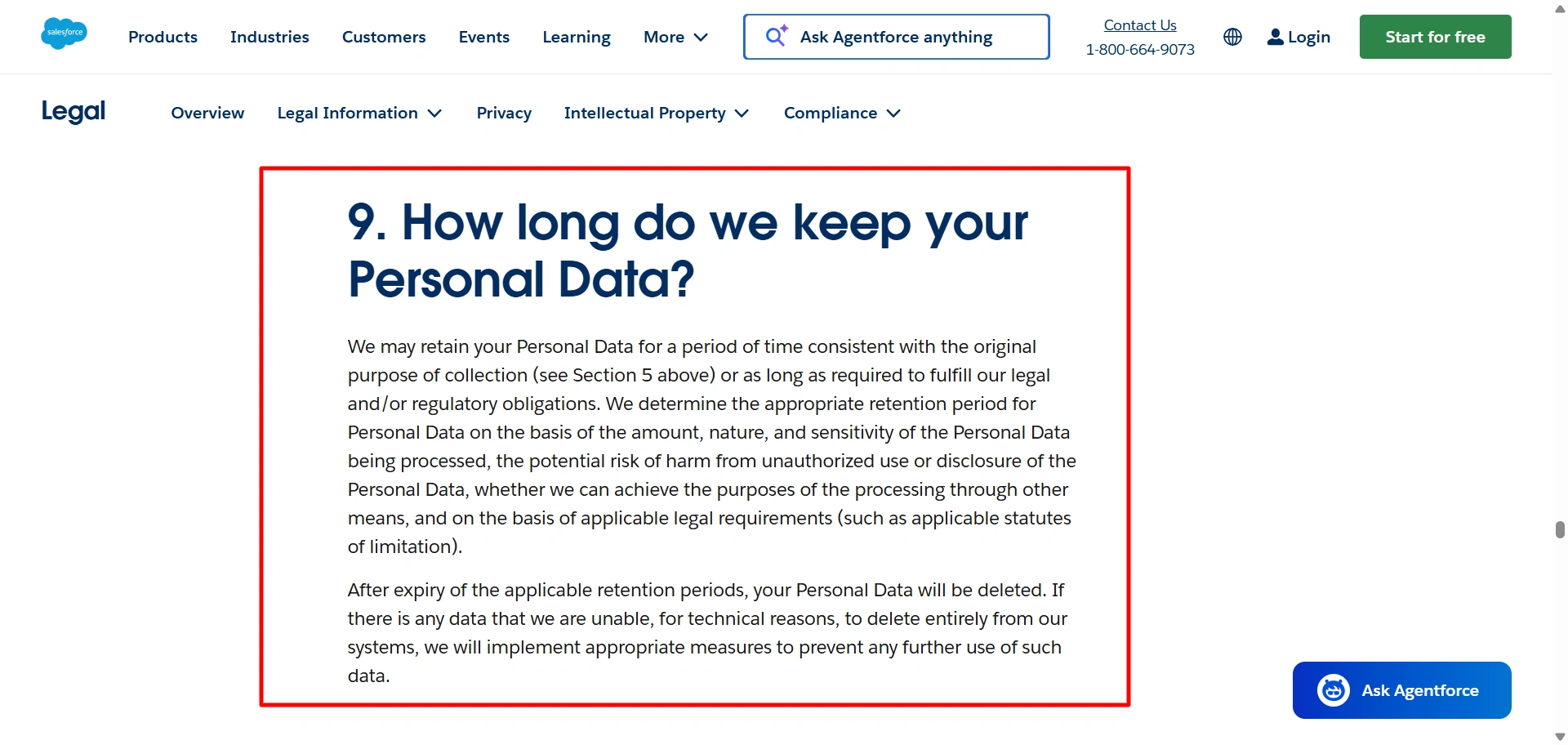
The data retention period and the reasons for retaining each type of data collected must be explained in a business’s privacy policy. This is another key element of what a privacy policy should include.
Businesses are typically not permitted to hold personal information on an ongoing basis unless required by law.
Examples include:
- Businesses may keep order information for several years to fulfill tax and legal requirements.
- Companies may retain email addresses used for newsletters until the customer unsubscribes.
- Businesses may keep records of support inquiries only as long as necessary to provide ongoing customer support.
By clearly stating retention periods or criteria for data deletion, businesses demonstrate responsible data management practices.
7. Security Measures
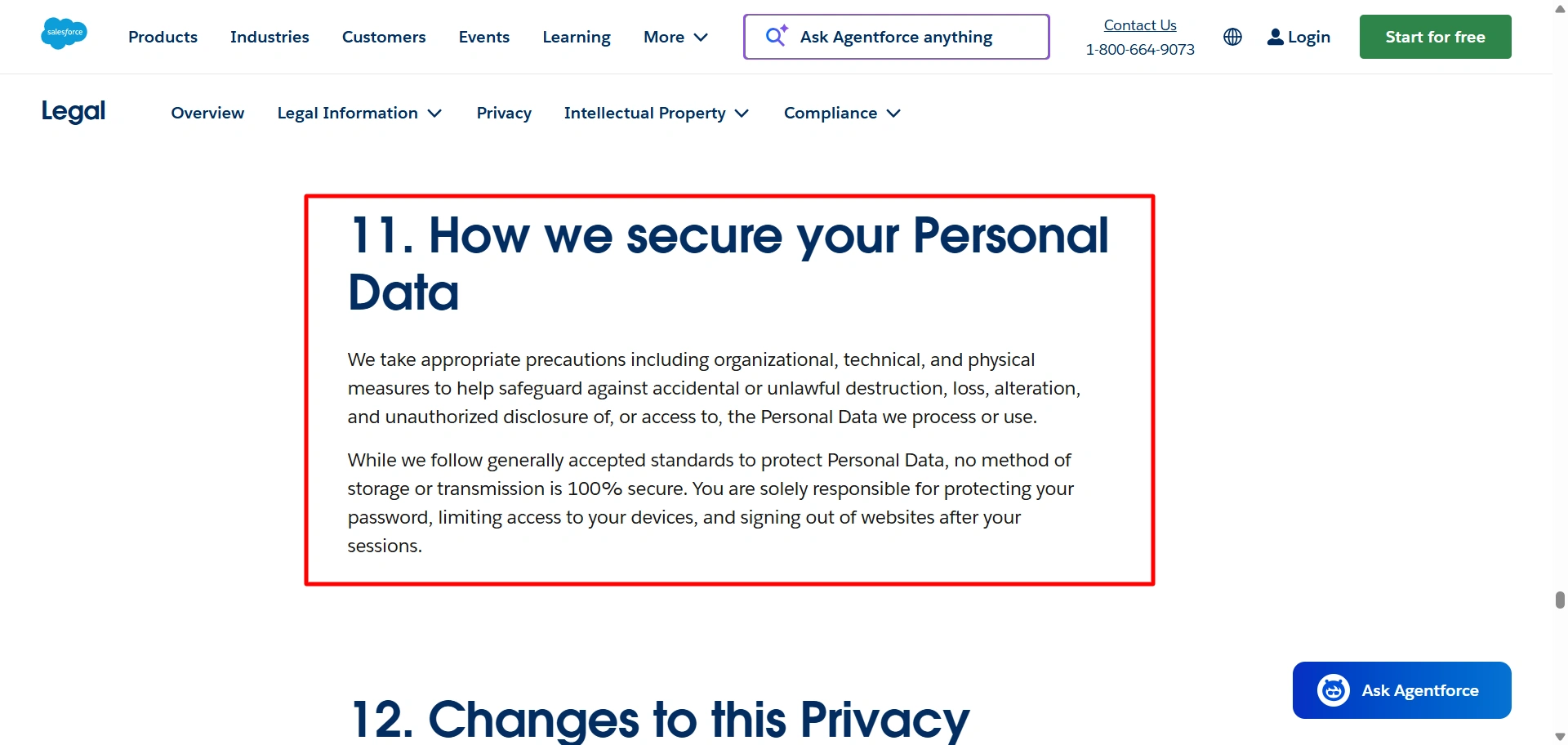
Website operators have a vital obligation to protect the privacy of individuals whose personal information they collect through their sites. The site’s privacy policy must include how the data will be secured.
Some popular security measures include:
- The encryption of private data at the time of transmission
- Usage of secure servers and hosting infrastructure
- The implementation of access control (who has access to view user data)
- Continuous monitoring with periodic security updates
Although website operators need not disclose highly technical details about various types of physical and/or network security, providing a general overview gives users comfort that they will be protected from unauthorized access to their data and/or misuse or breaches of it.
8. Policy Updates and Notifications
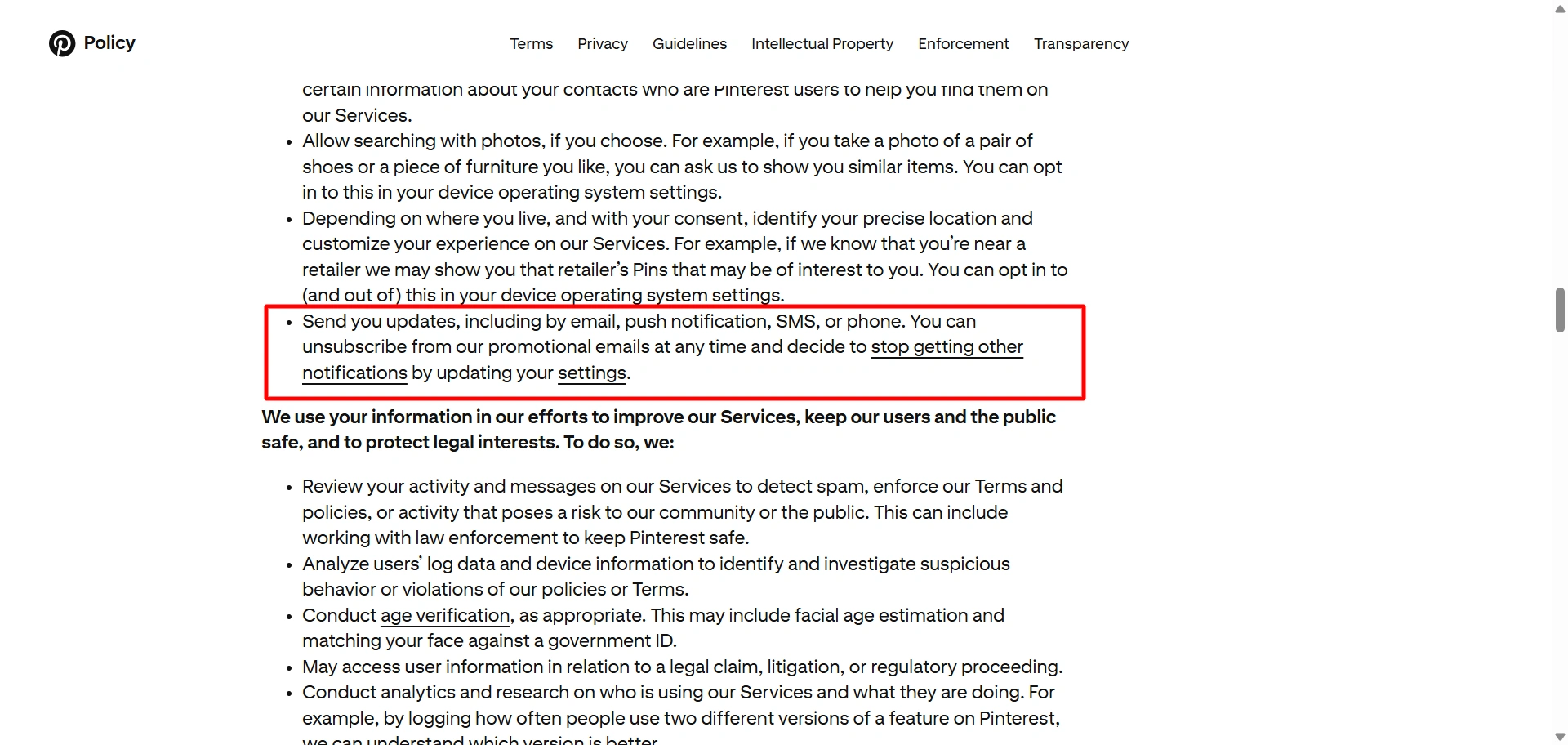
Your company’s privacy policy should determine how you will notify customers about changes to your policy and when you will update your website based on current laws and additions to the site’s functionality.
Typical updates list:
- Display the date you put on your “last updated” privacy policy page.
- Provide notification by email when you make significant changes.
- Display a notice at the top of your homepage when you make an update.
Regularly updating the privacy policy ensures that it is accurate and in compliance with the latest regulations and data practices.
Now you know what clauses a privacy policy must include, but there are some common mistakes that you must avoid.
Common Privacy Policy Mistakes to Avoid
Creating a privacy policy is essential for transparency and compliance, but many websites make common mistakes that can lead to legal risks or loss of user trust.
Avoiding the following issues can help ensure your privacy policy is clear, accurate, and aligned with major privacy regulations like the GDPR and CCPA.
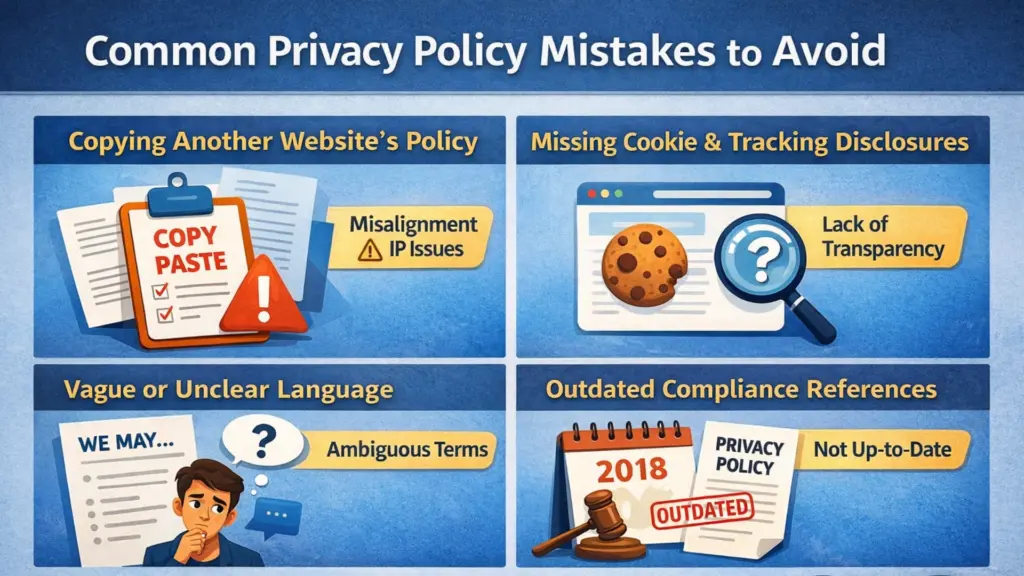
1. Copying Another Website’s Privacy Policy
One of the most common mistakes businesses make is copying a privacy policy from another website. While it might seem like a quick solution, it can create serious compliance issues.
Each website has different methods for collecting and processing data. Copying another person’s privacy policy may often contain irrelevant information or may not contain information needed about the tools or services used for your website.
For example, consider if you copied a privacy policy from a website that includes payment processing & ad networks though your website does not use either of those, the privacy policy would need to exclude them. If you copied a privacy policy from another site but also included analytics or email marketing tools/services that are actually being used, that would also misrepresent your company’s actual operations.
Without a proper privacy policy in place, you may also run into IP (Intellectual Property) issues, as privacy policies are often protected by copyright law.
To avoid any potential issues with your customers and yourself, it is very important that you create a proper privacy policy based on your actual operations for collecting data and the ways you use collected data and third-party partners (service providers). This ensures the policy accurately reflects what a privacy policy should include.
If you want to learn more about how copying a privacy policy can lead to legal and compliance issues, you can read this detailed article.
2. Missing Cookie and Tracking Disclosures
Many websites use cookies, analytics tools, and tracking technologies without clearly explaining them in their privacy policy. This is a major compliance gap because privacy regulations require transparency about how user data is collected.
For instance, using an analytics platform, an advertising pixel, or embedding content means that a website can put cookies on the user’s devices to retrieve behavioral data such as browsing history and IP addresses. If a website does not disclose these tracking technologies, its privacy policy may be incomplete or insufficient.
Therefore, a compliant privacy policy should provide:
- What cookies and tracking technologies are used
- Why they are used (analytics, personalization, advertising, etc.)
- Whether third parties have access to the collected data
These disclosures are essential privacy policy sections for many modern regulations.
3. Using Vague or Unclear Language
Another common mistake is writing privacy policies with overly broad or vague statements. Phrases like “we may collect information” or “we may share data with partners” do not provide users with meaningful transparency.
To comply with the law, a business must clearly disclose what information it collects, why it collects it, and how it uses it. If a business’s policy uses broad or vague terminology, the user won’t have a clear understanding of how the business will ultimately use their information, and regulators may find the policy insufficiently written.
Privacy policies that utilize clear and specific language help businesses demonstrate compliance and build trust with their customers. As an example, instead of saying “we collect personal information,” the business should provide specific examples of personal information collected.
4. Outdated Compliance References
Many laws and regulations regarding privacy are continually evolving. If a company’s policy has not been updated in some time, it could quickly be irrelevant. A policy that was created a few years ago may not reflect more current legislation or new data practices.
Businesses should review and update their privacy policies regularly, especially when:
- New privacy laws are introduced
- Your website adds new tools or integrations
- Data collection practices change
- Your business expands to new regions with different regulations
Keeping your privacy policy updated ensures it accurately reflects your operations and remains compliant with evolving website privacy policy requirements.
How to Write a Compliant Privacy Policy
Writing a compliant privacy policy requires clearly explaining how your website collects, uses, stores, and protects user data. Instead of manually drafting a policy from scratch, many website owners use a privacy policy generator to simplify the process and help ensure their policies stay aligned with current privacy regulations.
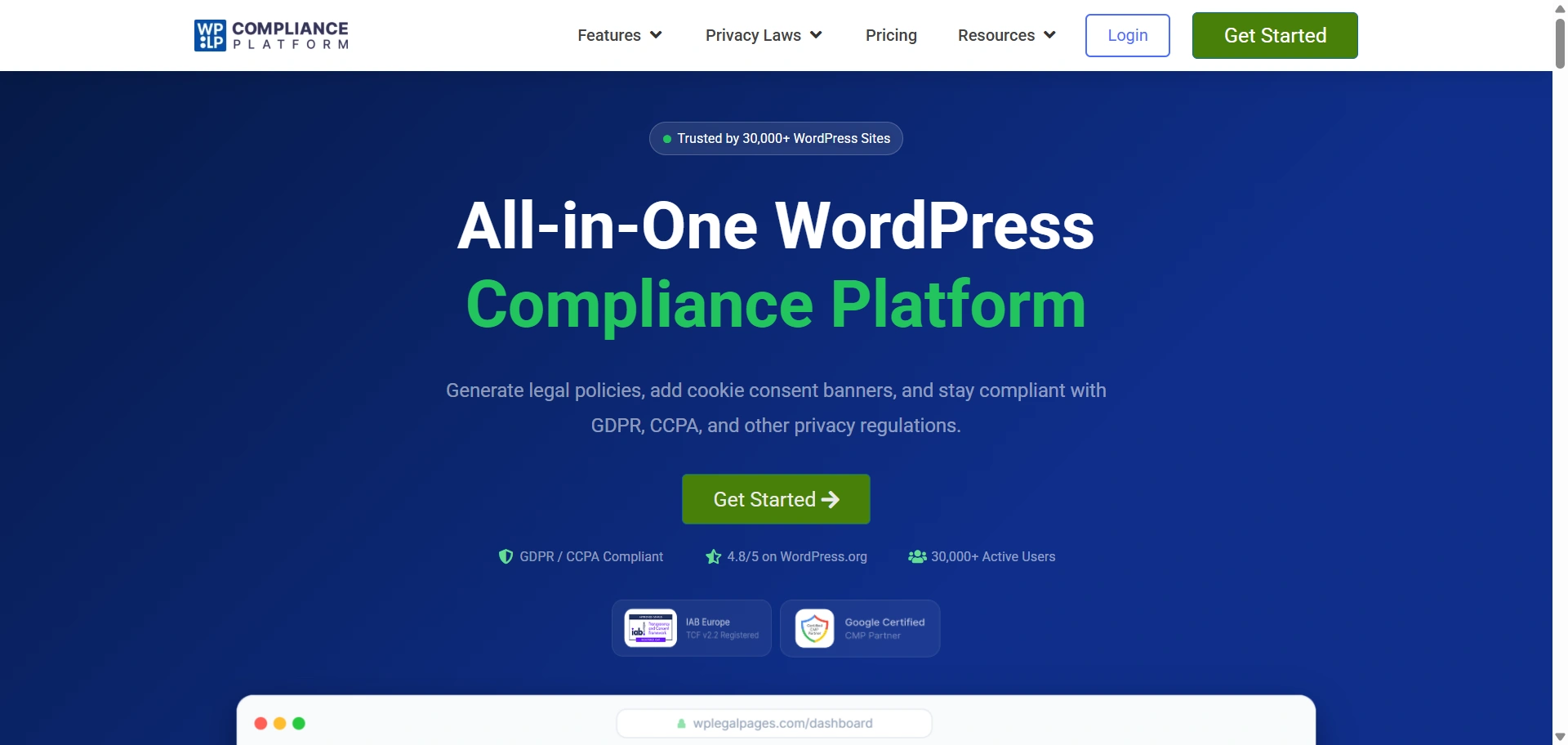
One such solution is the WPLP Compliance Platform, which helps website owners generate and manage legally compliant privacy policies directly within WordPress.
With this platform, you can:
- Generate a privacy policy automatically by answering a few questions about your website and the data you collect.
- Create legally structured policy pages that cover essential sections such as data collection, data usage, and third-party services.
- Customize policies to match your website’s business model and services.
Additional Compliance Features
The Compliance Platform also provides additional tools to ensure compliance across your entire website. These tools include:
- Cookie Consent Banner: Allows the website owner to inform visitors about the cookies and/or tracking technologies used by their site.
- Script Blocking: Prevents third-party scripts from loading until after the user has provided consent.
- Consent Logging: tracks user consent decisions for compliance documentation.
- Geo-targeted: It allows website owners to show different consent notifications according to visitors’ geographical location.
- Policy Templates: Provides ready-made legal pages such as terms & conditions, cookie policies, and more.
Using a compliance solution enables website owners to provide users with transparency into their data and to simplify compliance with legal policies. By automating policy creation and consent management processes for websites, businesses can comply with the changing landscape of data protection legislation.
FAQ
Yes, if your website collects any personal data such as names, emails, IP addresses, or cookies. Laws like the GDPR and the CCPA require businesses to disclose how user data is collected and used.
No. A privacy policy must reflect your own data practices. Copying another site’s policy can lead to inaccurate disclosures or legal issues. Tools like WPLP Compliance Platform can help generate a policy tailored to your website.
Yes. Email addresses are considered personal data under laws like the GDPR, so you must disclose how you collect and use them.
Update your privacy policy whenever your data practices change or new regulations apply. As a best practice, review it at least once a year.
Conclusion
A clear privacy policy helps users understand what data your website collects, how it is used, and how it is protected. It also helps ensure compliance with modern privacy regulations and builds trust with your audience.
By including key sections and avoiding common mistakes, you can create a transparent and legally reliable privacy policy. Tools like the WPLP Compliance Platform can further simplify this process by helping you generate policies, manage cookie consent, and maintain compliance more efficiently.
If you’ve liked reading this article, don’t forget to check our other articles:
- Privacy Compliance for WooCommerce Stores: What Store Owners Miss
- Data Retention Period for Consent Logs: Legal Expectations Explained
- ePrivacy Regulation Update: Will It Replace the Cookie Directive?
Grab the WPLP Compliance Platform now and make your site compliant.