Summary
It helps reduce legal risk and sets the right expectations. Use real examples as a reference, but do not copy them.
Make sure your disclaimer is easy to find on your site. The simplest way to create one is by using a tool like WPLP Compliance Platform.
Think about the last time you searched for a health tip online. You probably trusted what you read and moved on. Now flip that for a second. What if someone is reading your blog the same way?
That is where things get interesting.
Many websites in the health space handle this in a smart way, and if you notice closely, they all have something in common. Once you see it, you cannot unsee it.
The good part is, you do not have to figure it out on your own.
In this guide, you will go through real medical disclaimer examples from different types of websites, so you can understand what works and apply it to your own blog.
What is a Medical Disclaimer
A medical disclaimer is a legal statement that appears on a website and offers any health-related items or content.
A medical disclaimer indicates that the content on your website should not be used as a replacement for professional medical advice or consultations with medical specialists. Rather, it is only intended to be educational or instructive.
This disclaimer is crucial when discussing health and wellness-related topics. It protects website owners and users by stating the limitations of the information offered.
Medical disclaimers reduce your legal liability in the unlikely event that your content causes them harm, both directly and indirectly, and help readers make more informed judgments about your information.
5 Best Medical Disclaimer Examples
Here are some of the best medical disclaimer examples available online. These medical disclaimer samples are from renowned companies, so you can be sure how to draft one for your website.
| Website Type | What They Do | Key Disclaimer Focus |
| Health and Wellness Blogs | Share tips and advice | Content is for information only, not medical advice |
| Medical Facilities and Physicians | Limit liability for drug-related information | Not a substitute for professional consultation |
| Hospital Websites | Offer medical information | Direct users to qualified doctors for advice |
| Pharmaceutical Websites | Explain medicines and treatments | Limit liability for drug related information |
| Government Medical Websites | Share public health info | Provide health-related content |
1. Blogs on Health, Medicine, And Wellness
Content on these subjects frequently offers advice or recommendations on improving a medical problem or aspect of one’s health. By putting a medical disclaimer on your website, you can reduce the possibility that visitors will believe you are giving them advice and then take legal action against you.
An example of a medical disclaimer from the Everyday Health website is below.
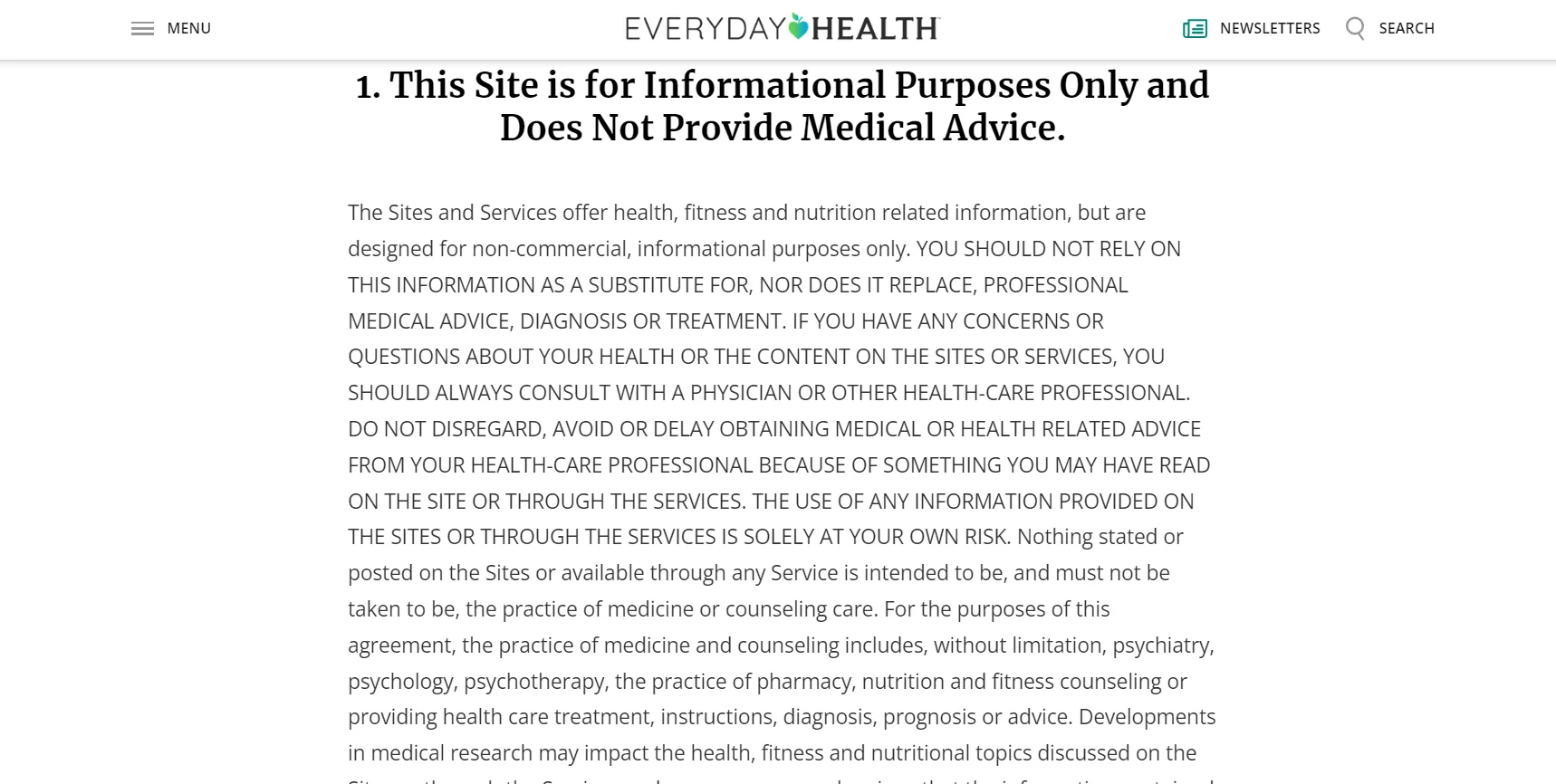
Among many Medical disclaimer examples, Everyday Health’s sample is concise and refers to the fact that they are informing users that they only provide information and are not providing any medical advice.
Disclaimer you can use: The information provided on this website is for educational purposes only and is not intended as medical advice. Always consult a qualified healthcare provider before making any health decisions.
2. Websites of Medical Facilities And Physicians
These websites frequently contain content about medical and health-related subjects. These websites should definitely have a notice about medical conditions.
A health and wellness disclaimer example from Scotland’s Hospital Hill Surgery is below.
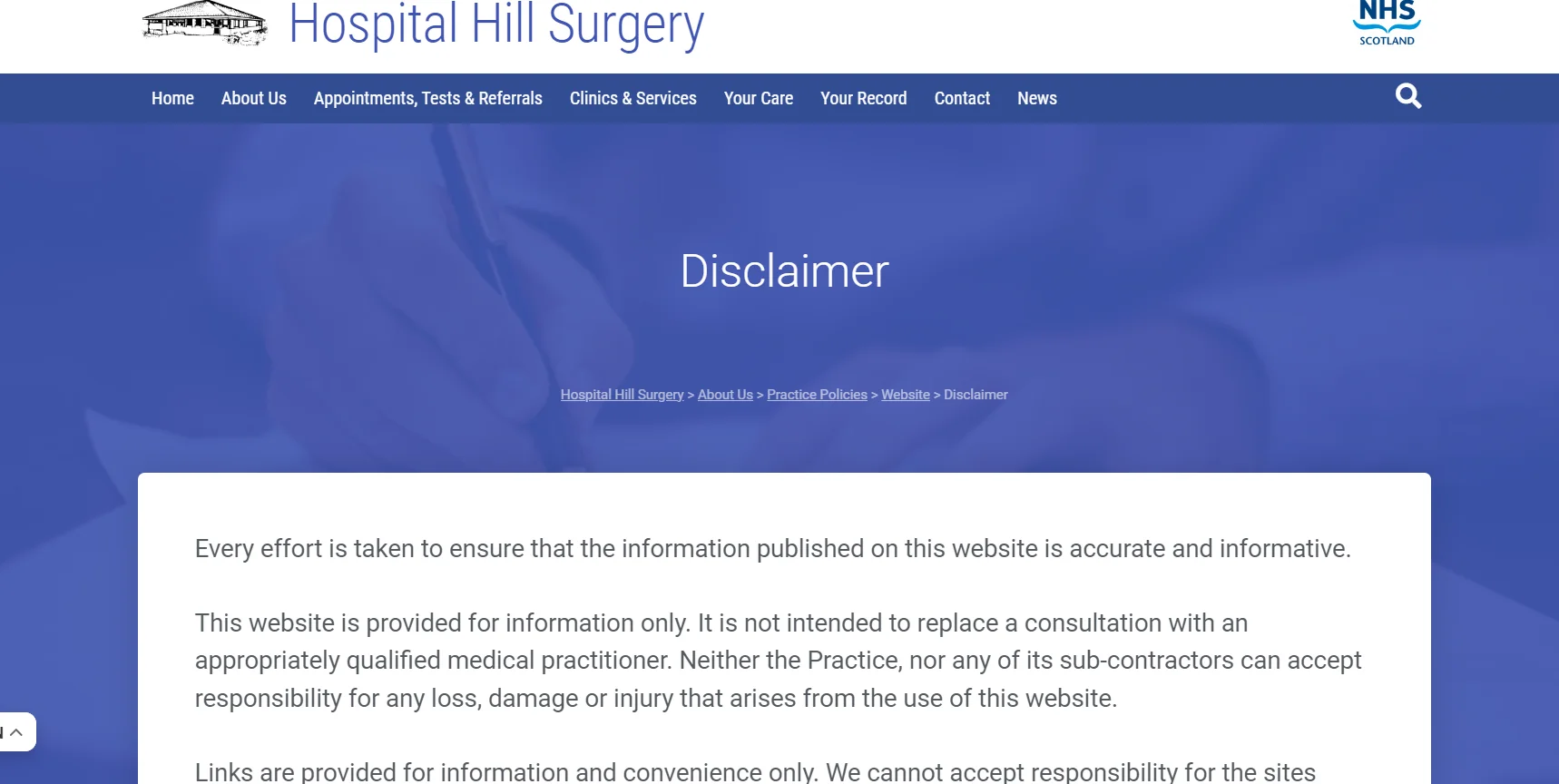
According to Hospital Hill Surgery’s Medical Disclaimer Examples, the provider’s website is intended for informational purposes only and should not be considered a substitute for the advice of a qualified medical practitioner.
Disclaimer you can use: This website does not provide medical advice. The content is intended for informational purposes only and should not replace professional medical consultation.
3. Hospital Websites
Hospital websites always provide a medical disclaimer and frequently provide information on various medical topics.
An example of a medical disclaimer from Mass General’s website.
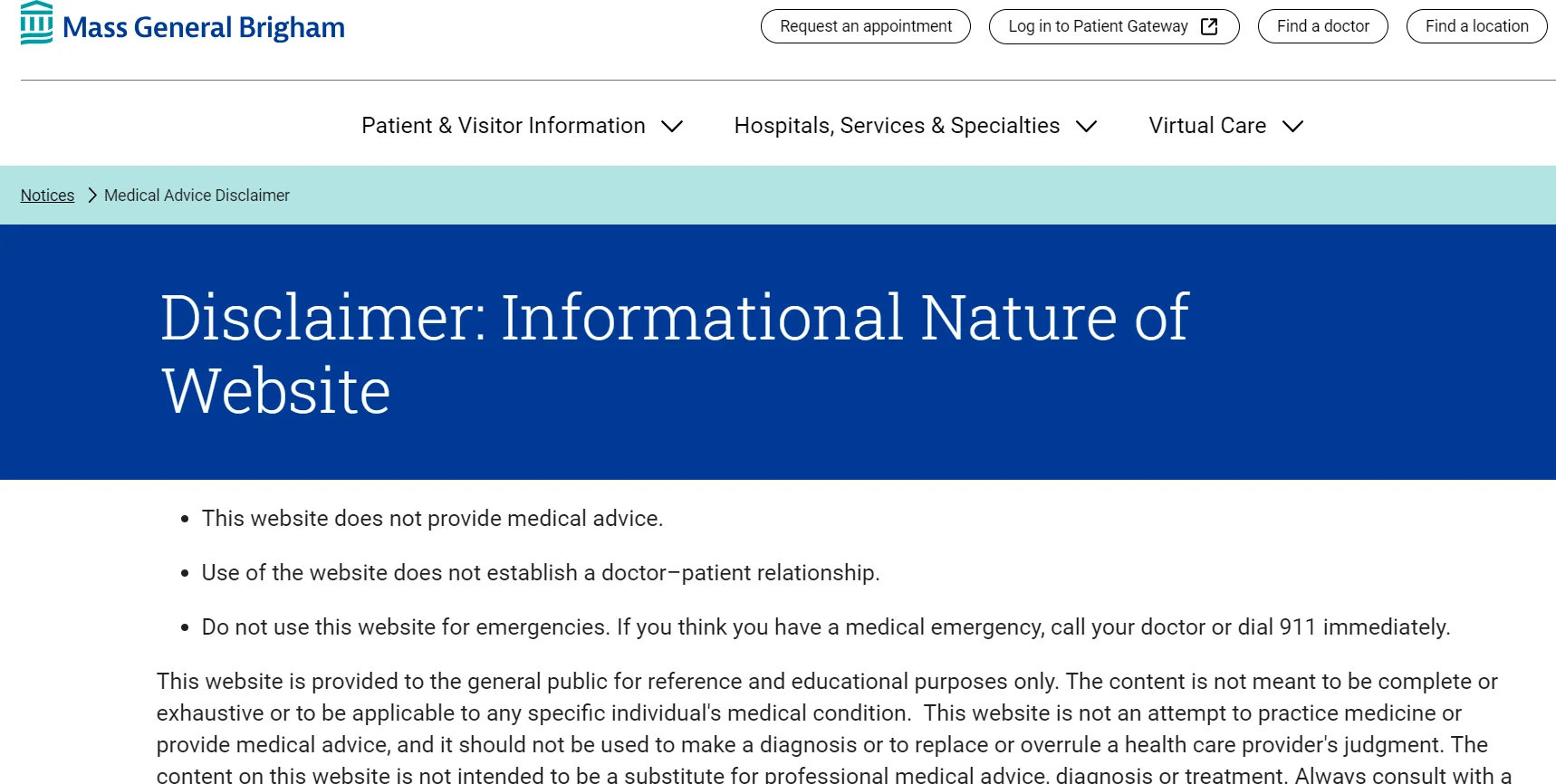
From Mass General Hospital’s Medical Disclaimer Examples, their legal document describes how patients can seek medical advice from qualified professionals.
Disclaimer you can use: No doctor-patient relationship is created through this website. Information is provided for general knowledge and should not be relied upon as medical advice.
4. Websites Run by Pharmaceutical Businesses
These companies provide information about how their medications might assist in treating different medical ailments. Thus, to help minimize liability, they need a medical disclaimer.
A Pfizer medical disclaimer sample is shown below.
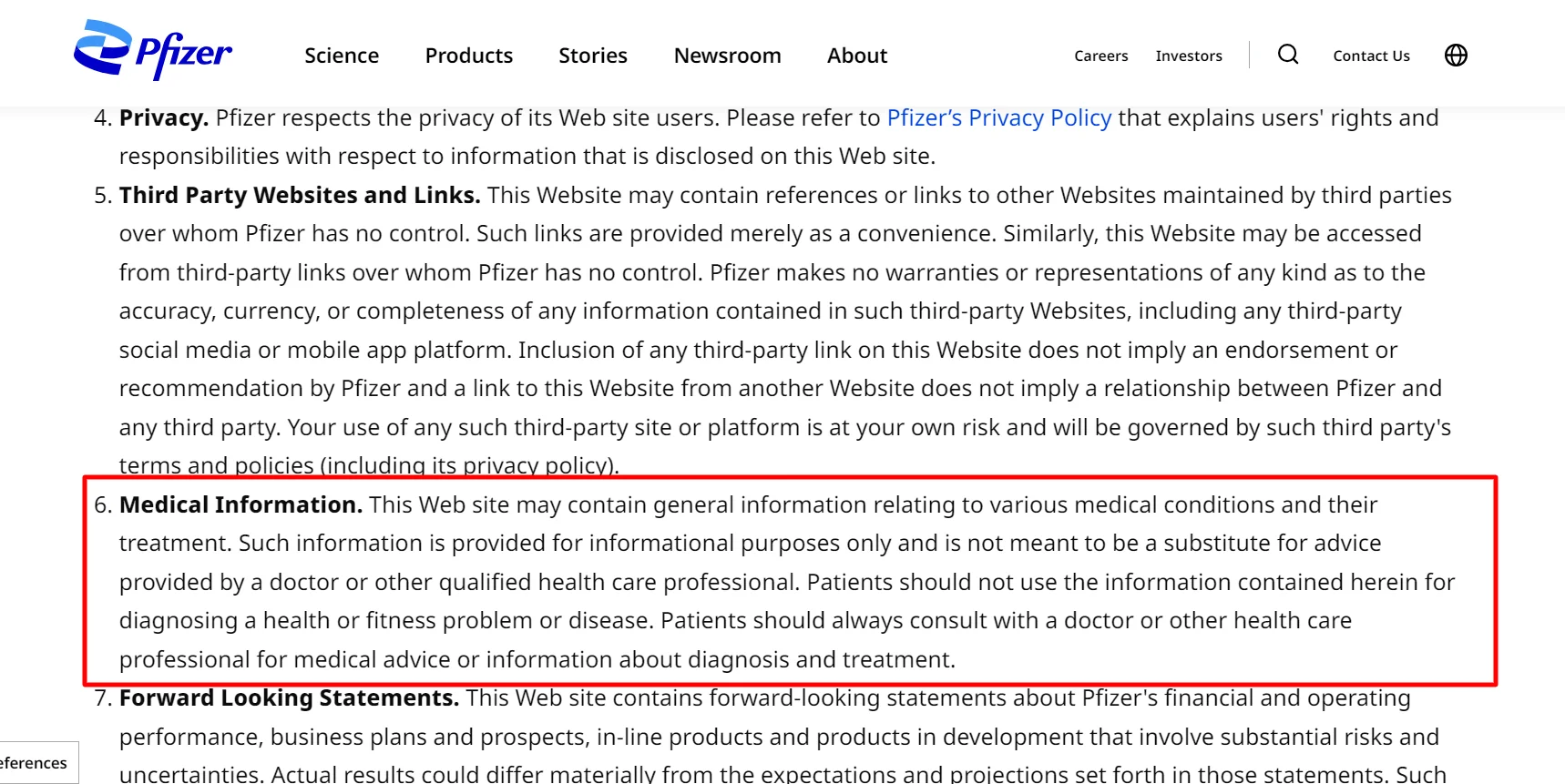
Pfizer does not have a different medical disclaimer, but they have included it in the privacy policy section.
Disclaimer you can use: The products and information on this site are not intended to diagnose, treat, cure, or prevent any disease.
5. Government Medical Websites
These websites inform their visitors that their medical content is for informational purposes only. They do this by including articles on various health problems.
An American Medical Association example can be found below.
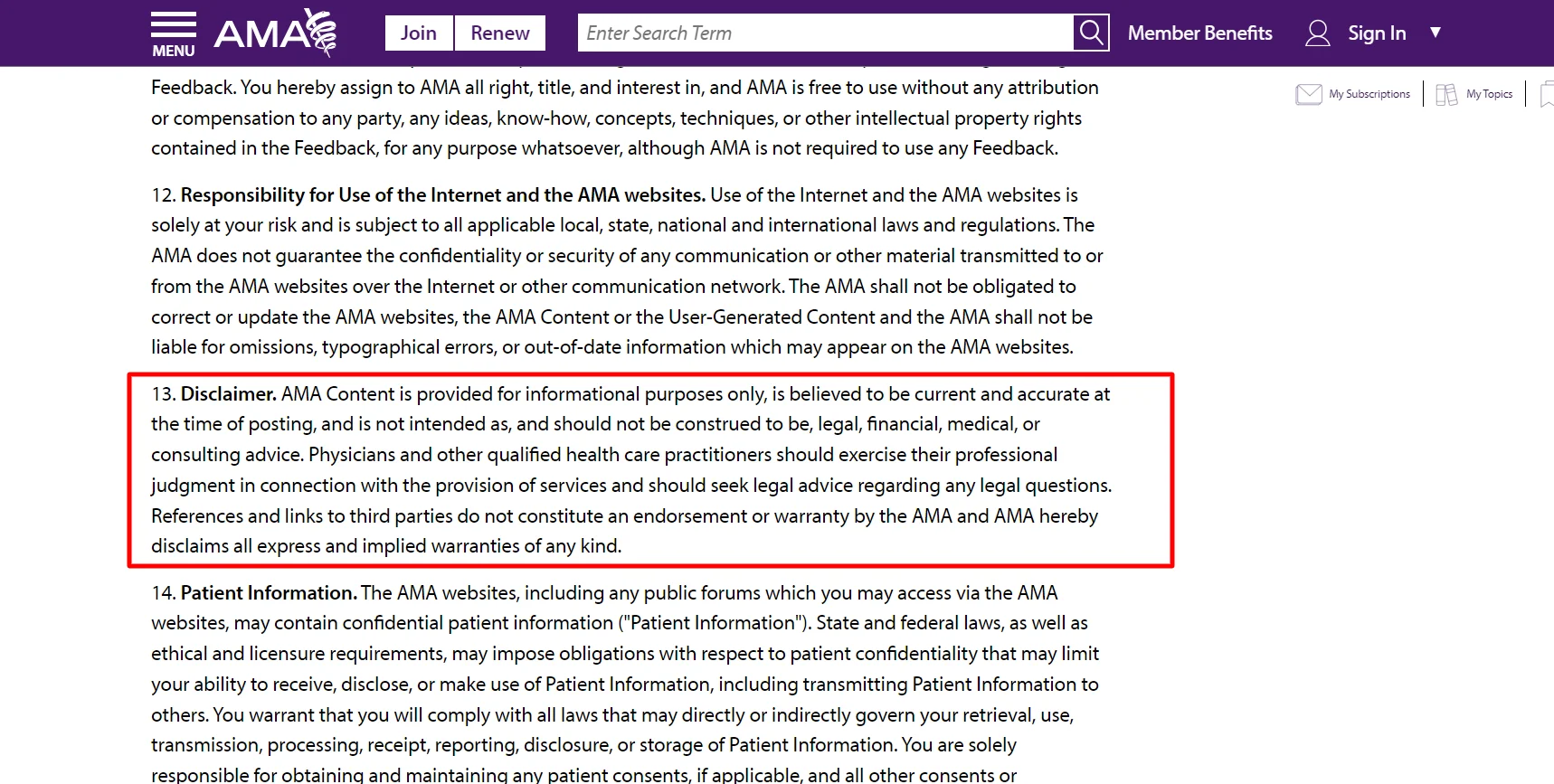
The AMA has a website that contains information on health and medical topics.
Disclaimer you can use: Use of this website and reliance on any information is solely at your own risk.
Medical Disclaimer vs. Health Disclaimer
Disclaimers are essential for websites that deal with health-related information, but the scope and intent of a medical disclaimer differ from those of a health disclaimer. Here’s a breakdown:
Medical Disclaimer
A medical disclaimer is a legal notice that explains your content is not to be treated as medical advice, diagnosis, or treatment. It is not a doctor-patient relationship disclaimer. It provides some protection from liability in case someone uses your information as a substitute for professional medical care.
You can see them used in websites of hospitals or clinics, online telehealth platforms, pharmaceutical or biotech company websites, or Medical research blogs.
The medical disclaimer key terms state that the content is for informational purposes only, advise people to seek licensed physicians or healthcare professionals for medical issues, deny liability for action taken on the site’s content, and may explain that no doctor-patient relationship is created by using the site.
Medical Disclaimer Example:
The information on this website is not intended as a substitute for professional medical advice, diagnosis, or treatment. Always seek the advice of your physician or other qualified health provider with any questions you may have.
Health Disclaimer
A health disclaimer is a wider disclaimer. The disclaimer applies to the more general sense of activities that encompass wellness, fitness, nutrition, or lifestyle advice that may have implications for someone’s health, but is not strictly “medical.”
It sets limits by reminding users that individual results vary, and it may be advisable to seek guidance from a professional.
You can find this type of disclaimer on fitness coaching websites, diet and nutrition blogs, supplement or wellness product websites, or even yoga and lifestyle coaching programs.
The health disclaimer key terms make it clear that the advice is general and may not apply to every person, and tell users to check with a doctor before following the advice if making lifestyle or fitness changes. And limits liability for injuries, symptoms, or results from following the advice.
Health Disclaimer Example:
The health information shared on this site is for general educational purposes only and is not intended to replace consultation with a qualified healthcare professional. Always consult your doctor before beginning any exercise, nutrition, or wellness program.
How to Make a Medical Disclaimer
Now that we have examined different medical advice disclaimer templates, you may wonder how to create one for your website.
You can hire a lawyer or create a medical disclaimer manually, but these can be time-consuming and tedious. This is where a tool like WPLP Compliance Platform can help.
WPLP Compliance Platform provides a powerful tool for creating any legal pages for your website. This WordPress solution will help you create a variety of legal pages for your website accurately and swiftly.
Beyond just disclaimers, the platform includes features such as:
- Pre-built medical advice disclaimer templates, privacy policies, cookie policies, terms & conditions, and more.
- Consent logging & audit-ready reports so you can track when users accept your policies, critical for healthcare websites under GDPR, HIPAA, or CCPA requirements.
- Automatic legal text updates to keep your pages compliant with the latest regulations.
- Cookie consent management with customizable banners that adapt to different privacy laws.
- Multi-language support to ensure compliance if your healthcare website serves international patients or users.
- Integration with WordPress & WooCommerce for seamless setup without coding.
It is the ideal choice for website owners, particularly those in the healthcare and wellness industries, because of its intuitive design.
Installing The Plugin
Let’s walk you through creating a Medical Disclaimer using the WP Legal Pages plugin.
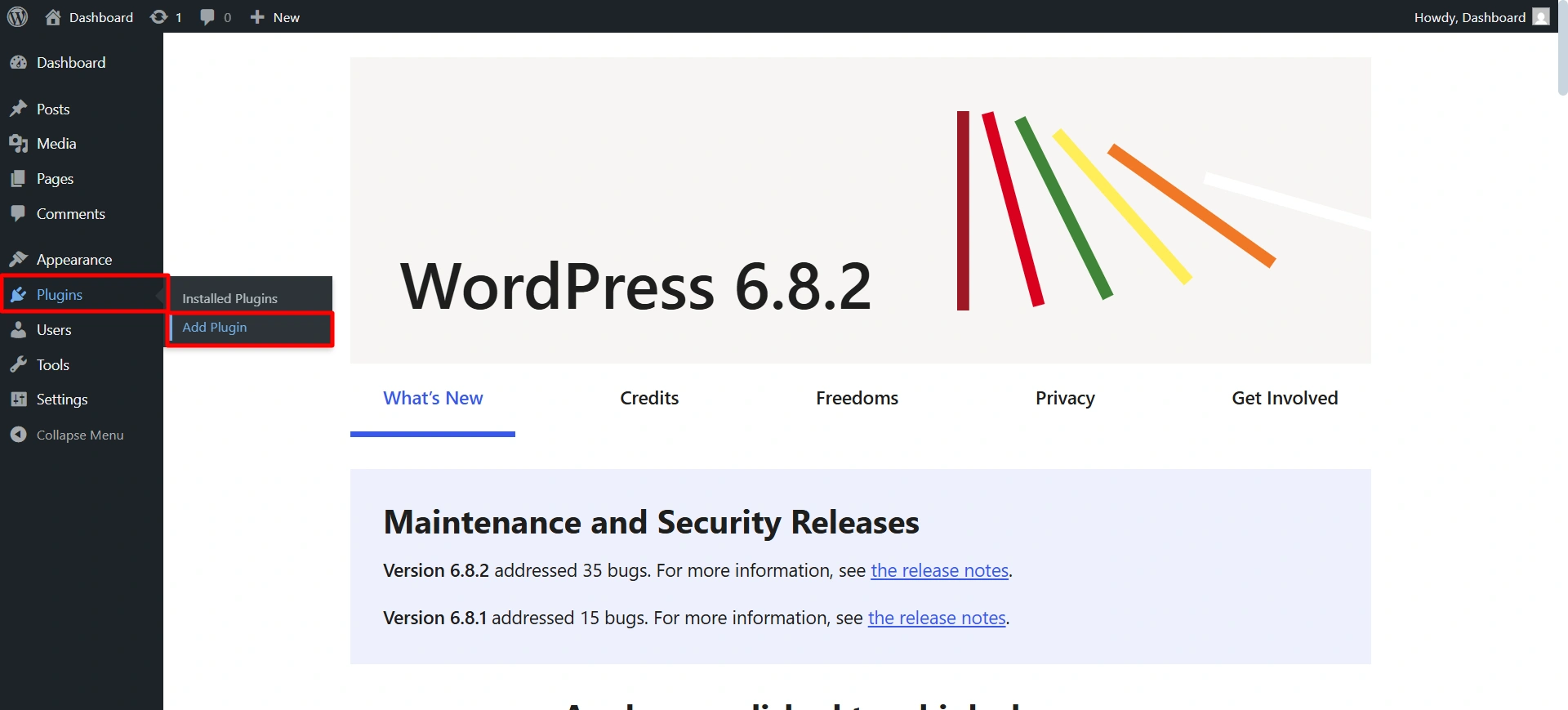
Open your WordPress dashboard. To install the plugin, go to Plugins > Add New.
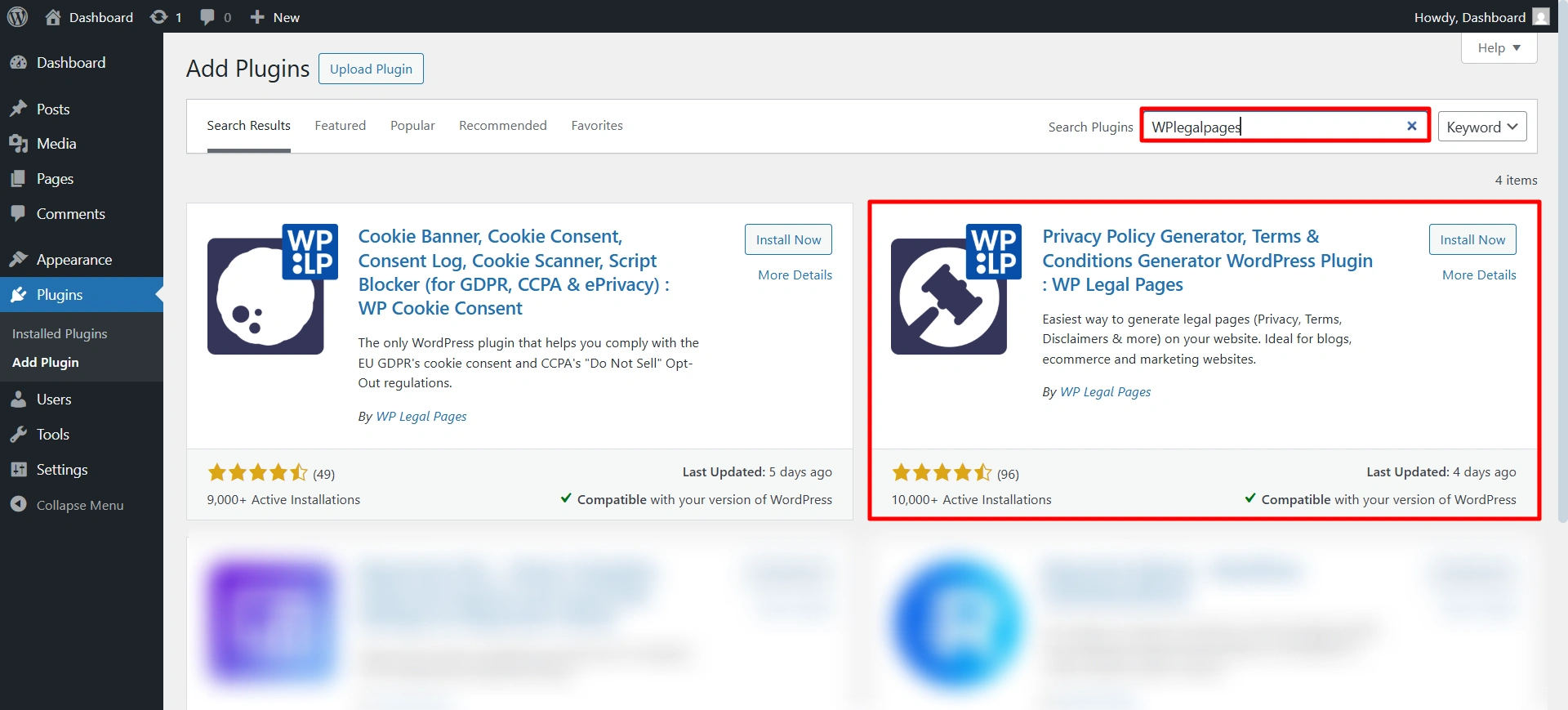
Type WPLegalPages in the search bar. Click on the Install Now button and activate the plugin.
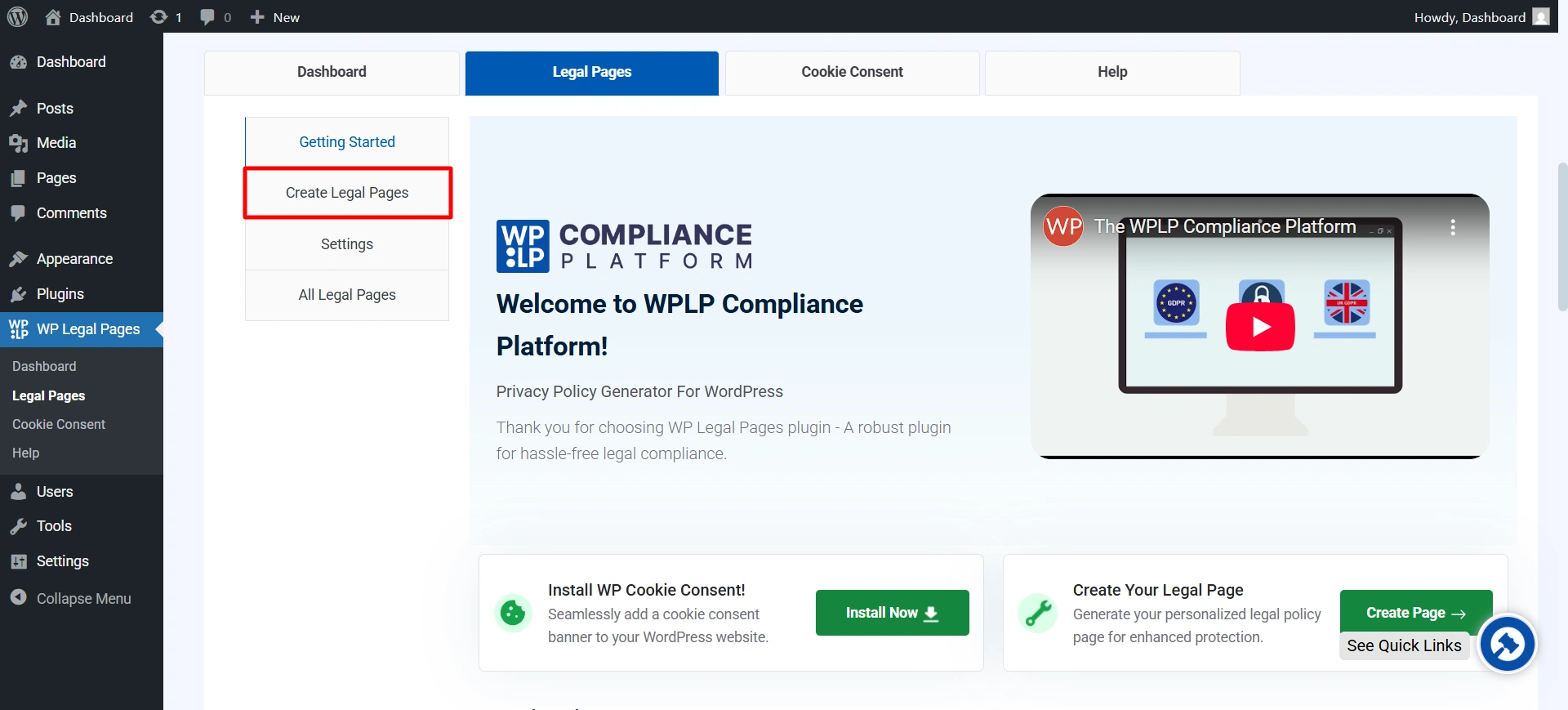
When activated, the WP Legal Pages plugin will be shown in the Dashboard.
Creating Medical Disclaimer
Hover over WP Legal pages from your dashboard and click Create Legal Page.
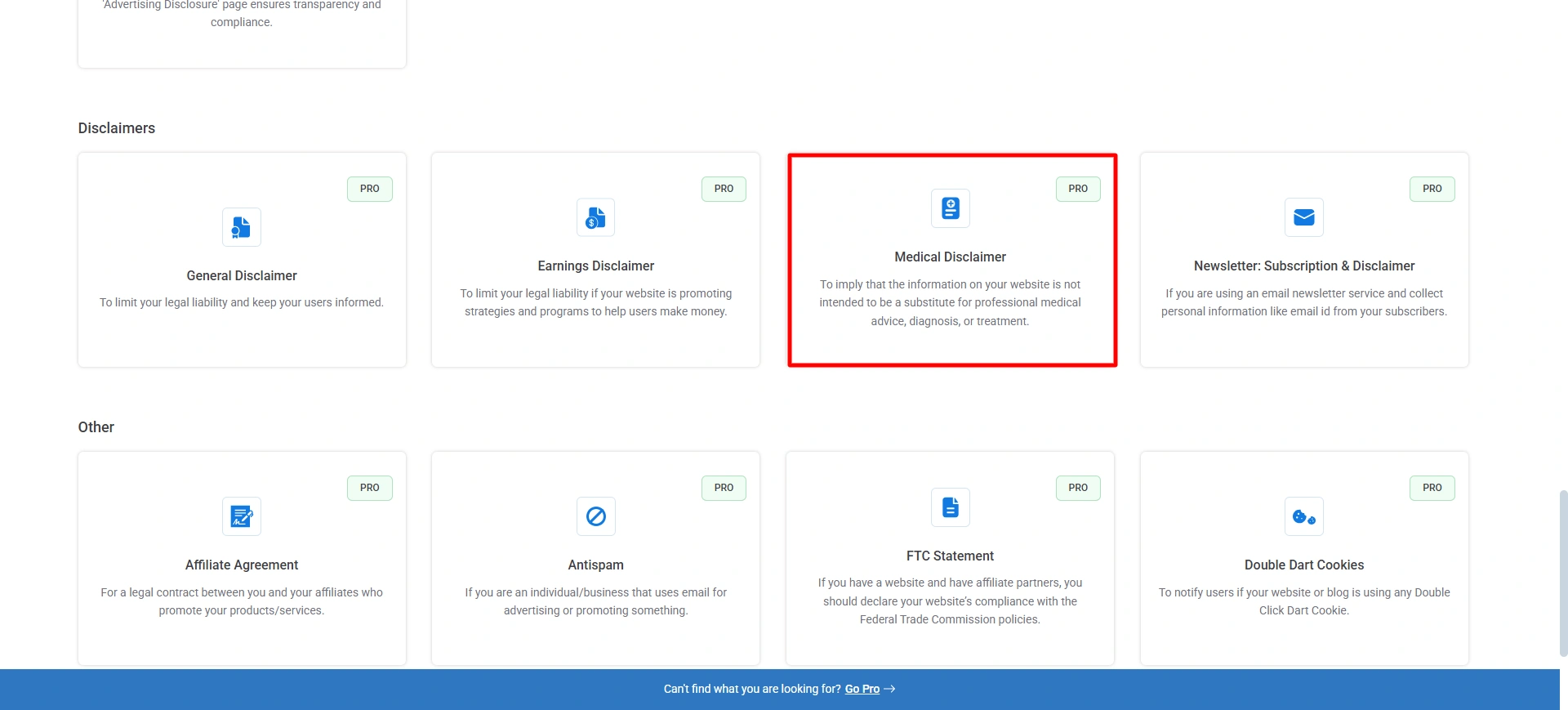
The following screen will appear once you click the Create Legal Page button. Choose the Medical Disclaimer template from the list of available templates.
Create an account and connect to the por templates. Once you are done it, start with the disclamier creatation.
Fill in the recommended settings and click on Next.
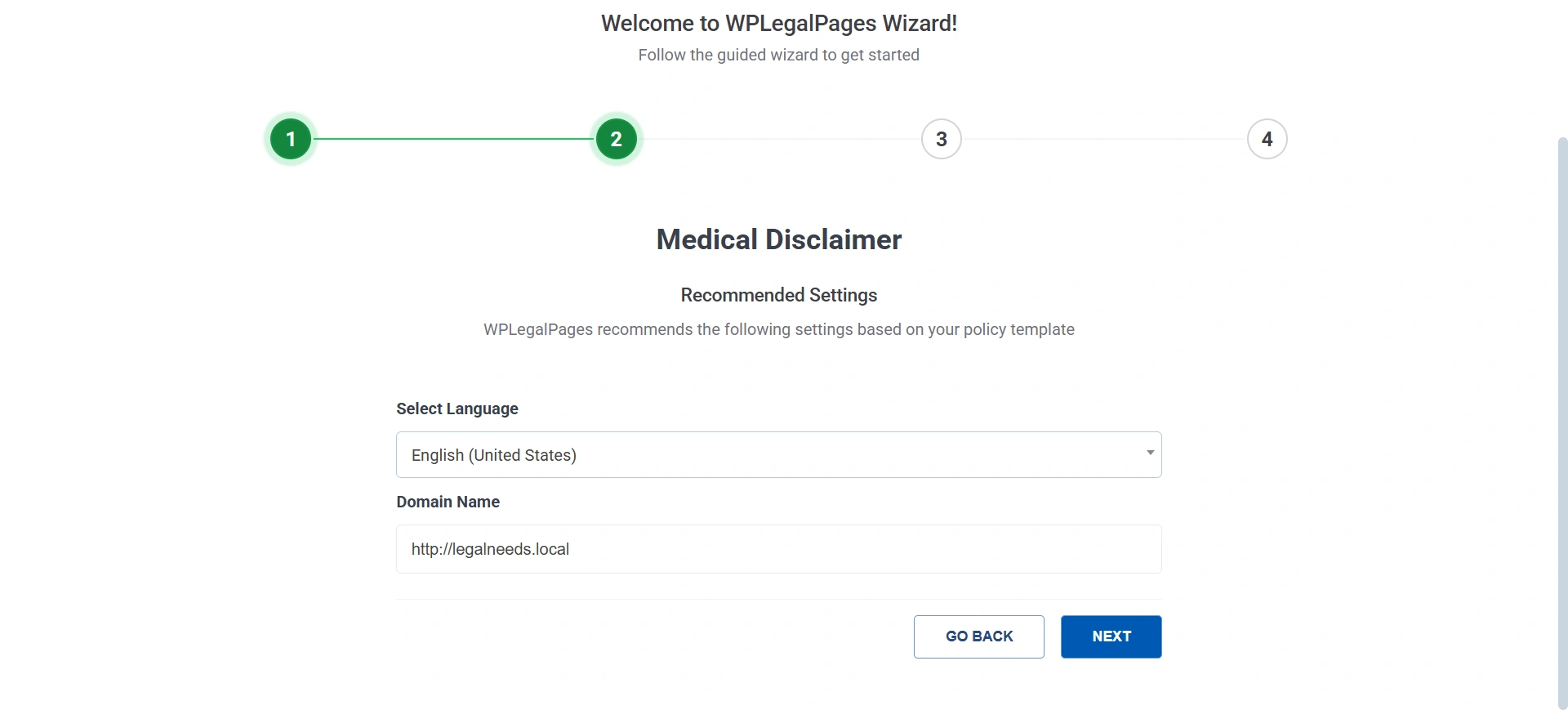
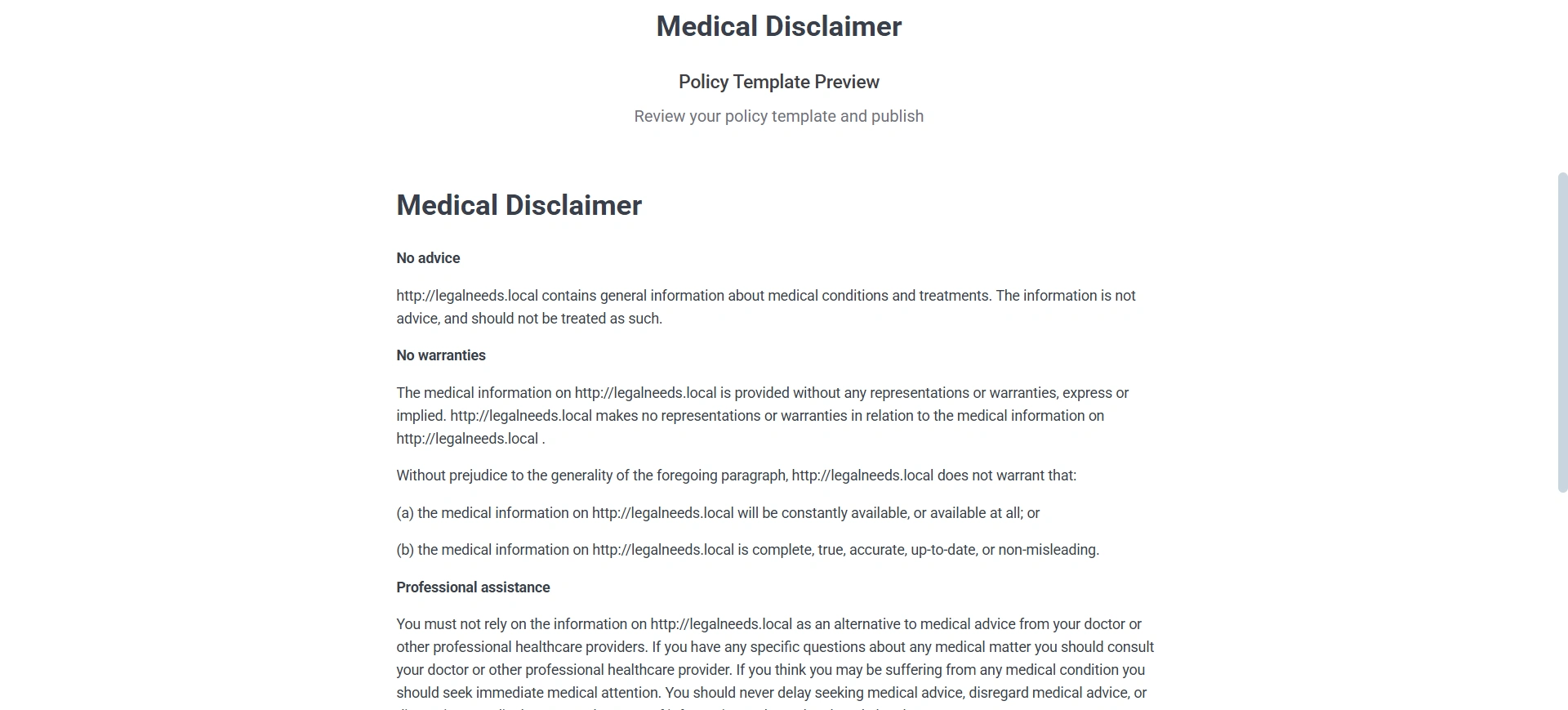
Your Medical Disclaimer is Ready. Click Create and Edit. It will direct you to the newly developed Medical Disclaimer page.
You can modify the Medical Disclaimer page in the editor. Once you have everything in place, click the Publish button.
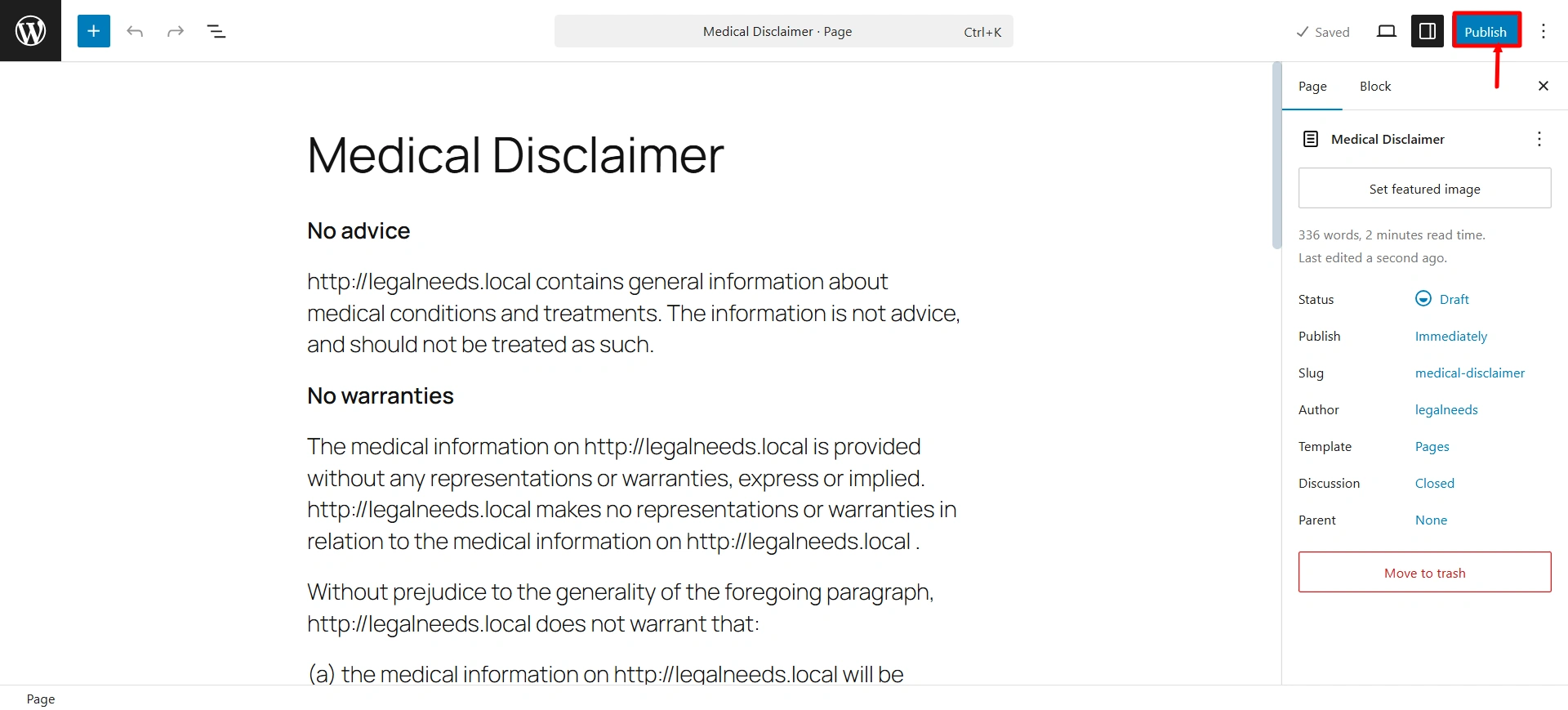
That’s it. You have created your Medical Disclaimer page in just a few minutes.
Who Needs a Medical Disclaimer
If your website is offering advice about medical, health, or wellness subjects, then you must provide a medical disclaimer.
Users frequently turn to the web for resources when making decisions regarding their health. Even if you aren’t providing direct diagnoses or treatments, by including a medical disclaimer, you set appropriate expectations and mitigate your legal risk. A medical disclaimer clearly communicates what are the limitations for the content you provide online.
You should seriously consider adding a medical disclaimer, if you’re operating in one of these categories:
- Health blogs providing readers with information about medical conditions, treatments, and tips.
- Websites devoted to fitness-related activities, such as workout plans or physical training.
- Websites that discuss nutrition or promote the use of vitamins or supplements.
- Websites that provide online consultations.
- Websites that provide patients with medical resources or knowledge.
- Websites that sell nutritional supplements or other health-related products.
Essentially, if there is potential for a consumer’s health-related actions to be influenced in any way by your content, then including a medical disclaimer is advisable.
Where and How to Display Medical Disclaimers
Having a solid medical disclaimer only gets you halfway to compliance. Where and how you position your disclaimer is equally important. If visitors cannot find or see the disclaimer, it will not have the intended effect. Here are some guidelines:
1. On-Page Notes
For blog posts, product descriptions, or articles where your page provides health-related advice, include a brief disclaimer either at the beginning or end of the page.
Example: “This content is provided for informational purposes only – it is not to be considered medical advice.”
This is essential as it allows your readers to understand the context of your advice before taking action based on your content.
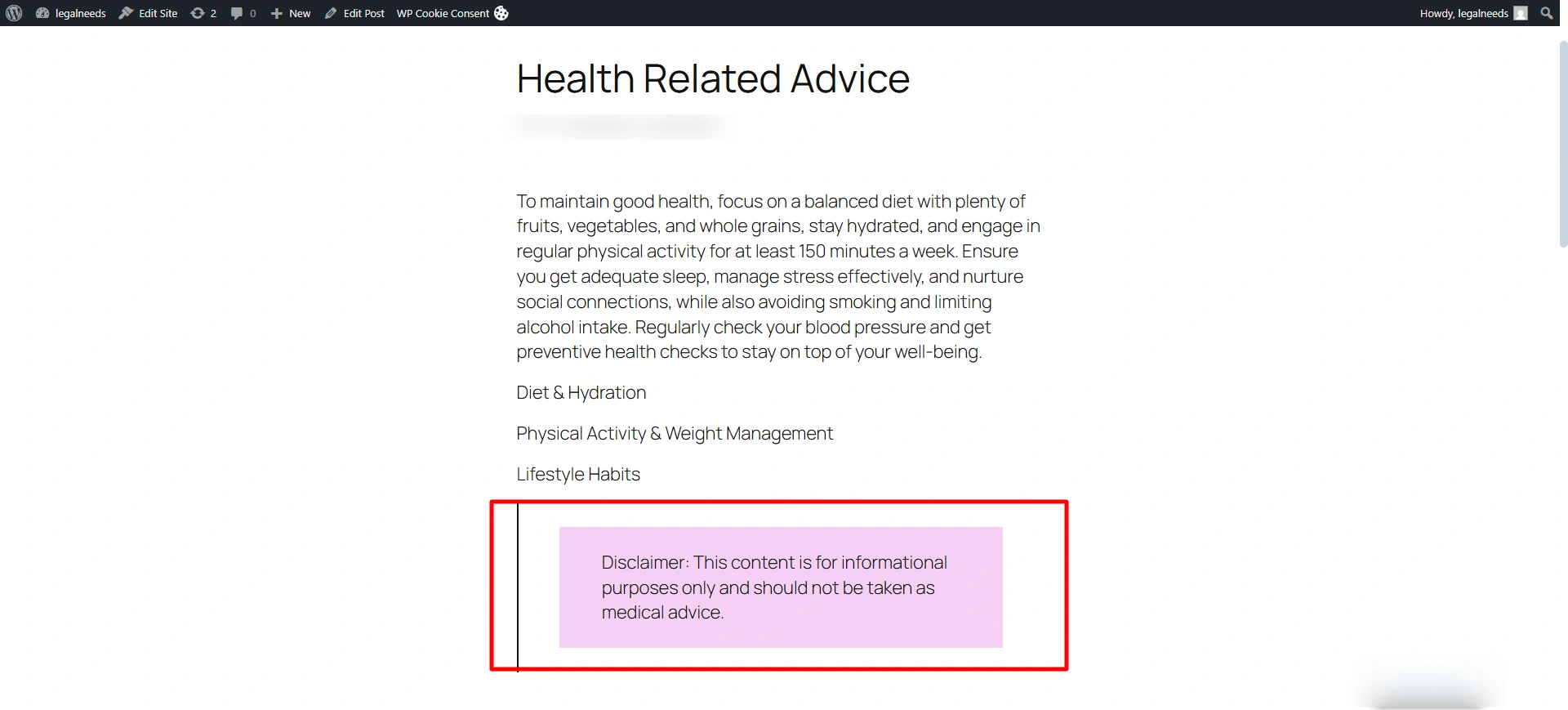
2. Dedicated Disclaimer Page
Create an exclusive legal disclaimer page that is dedicated to your medical disclaimer. With the WPLP Compliance Platform, copy the short code of your legal page and paste it into any page you would like.
Include links to the new page in your main navigation menu, your sidebar, or anywhere that you feel your visitors will likely want to locate your legal information.
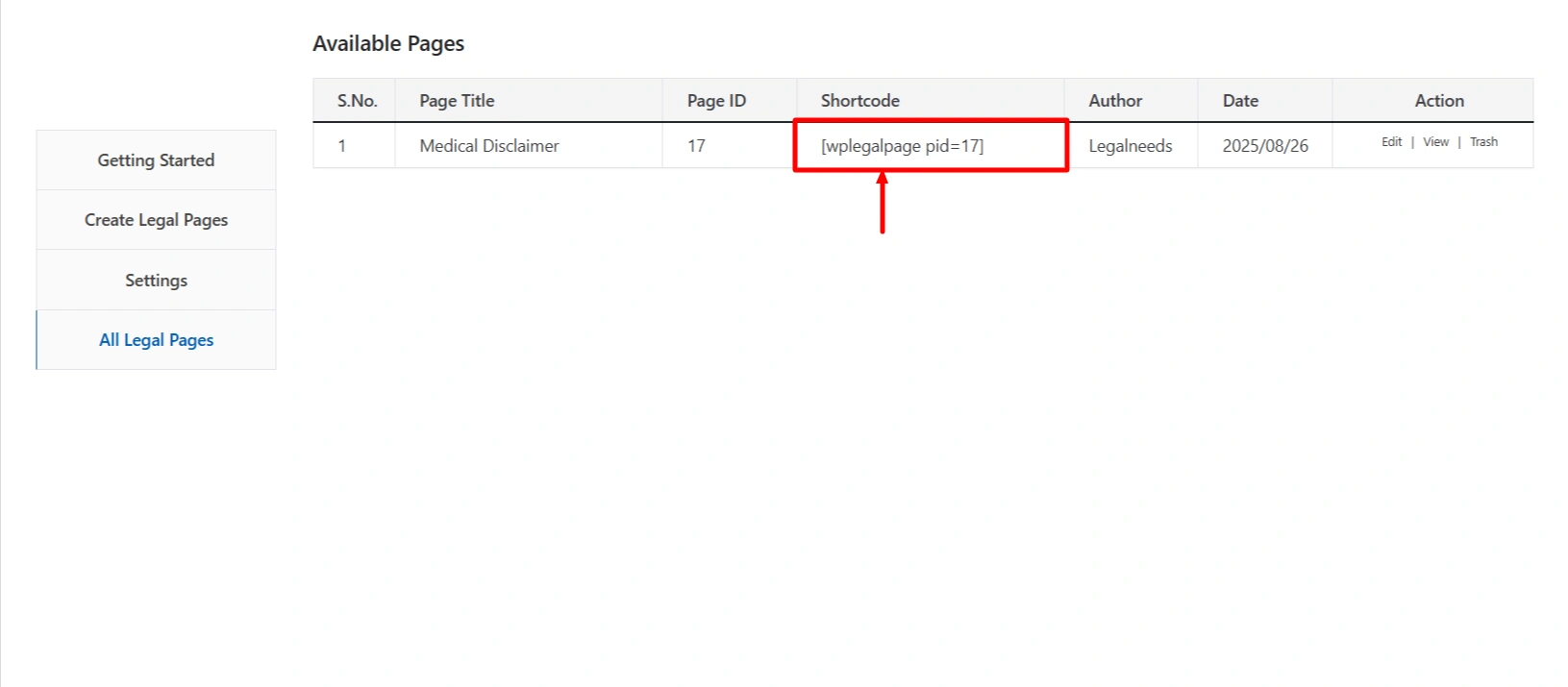
A complete disclaimer page allows you to elaborate on your liability, scope, and limitations.
3. Link in Footer
The footer of a website is a common place where visitors look for legal content – such as a Privacy Policy.
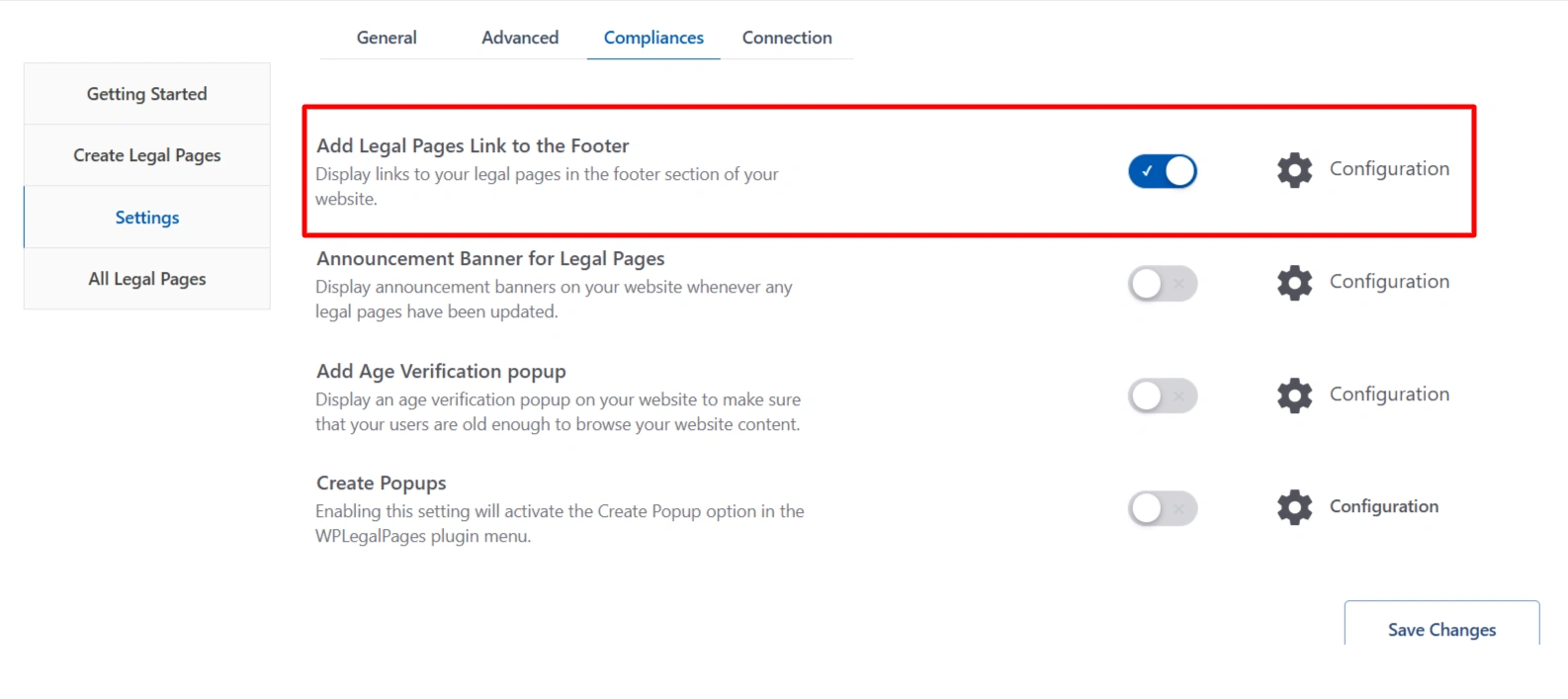
Link to your medical disclaimer page in the footer of your site, connecting it to the other legal links (Privacy Policy, Terms of Service, Cookie Policy, etc.).
This will allow your visitors to access the disclaimer from any page on your site. With WPLP, you can do it by clicking on the Add legal page link in the footer.
4. Pop-Ups or Consent Banners (Optional)
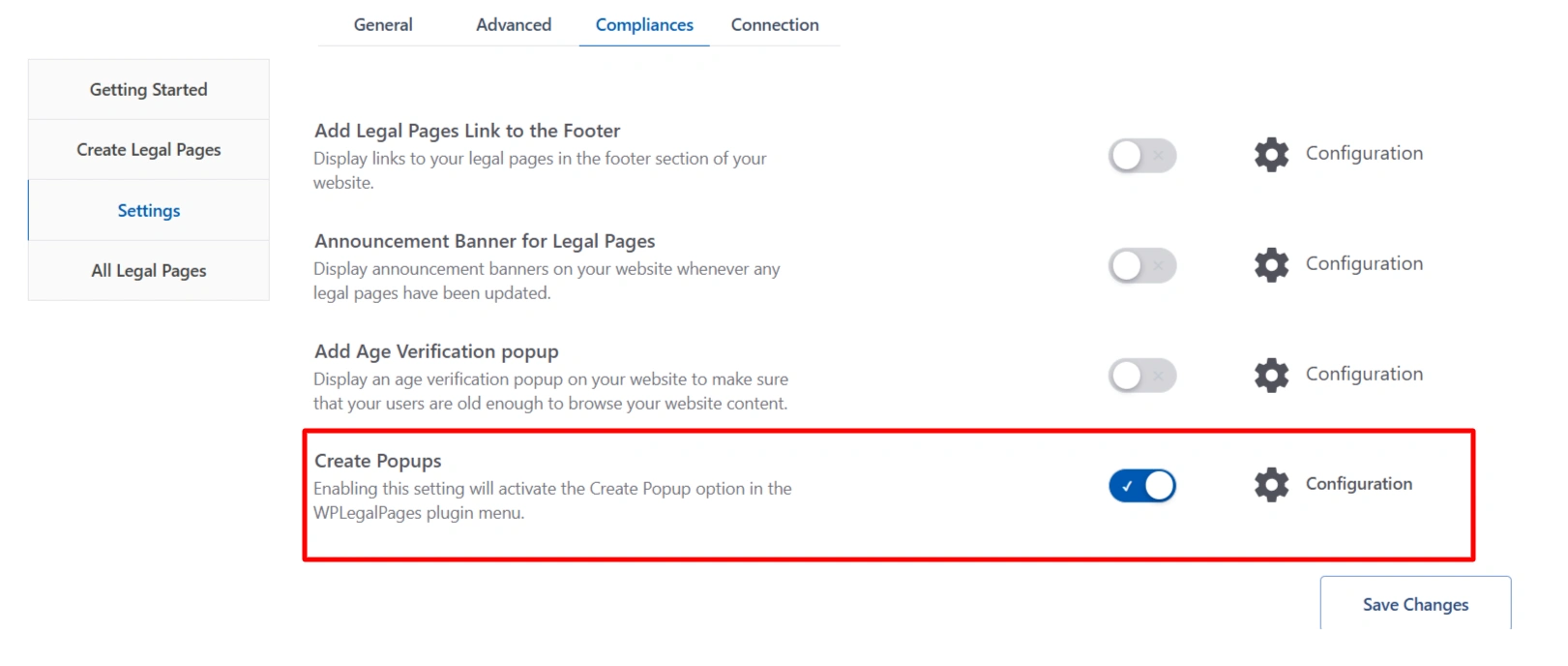
For websites giving information relating to sensitive health-related content, you may provide a pop-up disclaimer that users must consent to before they can continue.
This is especially useful for health or well-being programs or giving recommendations for supplements or exercise instructions, where harm may come from misuse.
FAQ
To generate medical disclaimers for your website, you can use privacy policy generators available in the market. We recommend using the WP Legal Pages plugin to generate a medical disclaimer, among many.
Medical disclaimers are not essential for every website, but for websites that provide health information to users or customers.
Although it is possible to use examples, copying directly from another website may not be suitable for your needs. It is more advantageous to use something that can be customized for your business, its audiences, and its own region, such as the WPLP Compliance Platform, which can actually generate disclaimers for you.
No disclaimer can guarantee immunity from lawsuits, but having a well-written medical disclaimer will substantially lessen your liability and aid your defense if an issue should arise.
Conclusion
Now you know what to include in a medical disclaimer, and you have seen many medical disclaimer examples. But if your website covers health-related topics, it wouldn’t be complete without having one.
A medical disclaimer is a simple but powerful way to protect your website and build trust with your audience.
Whether you use a template or a generator, make sure your disclaimer clearly sets expectations and limits liability. With tools like the WPLP Compliance Platform, drafting a medical disclaimer doesn’t have to be challenging.
By doing this, you demonstrate your concern for the welfare of your audience and go above and beyond the law.
Disclaimer: This article is for informational purposes only and does not constitute legal or medical advice.
If you’ve liked reading this article, check out our other engaging articles:
- Disclaimer vs Disclosure: Key Differences You Must Know
- Data Transparency: Definition, Benefits, and Tools
- Data Privacy Issues To Avoid
Want to create more legal pages for your website? Grab WPLP Compliance Platform Today!