Summary
The best privacy policy examples also use simple language, logical structure, and transparent explanations that help users understand exactly how their information is handled.
Writing a privacy policy from scratch can feel overwhelming.
You know your website needs one, but figuring out what information to include and how to present it clearly is often the challenging part.
The good news is that you do not need to start from a blank page.
Some of the world’s biggest companies have already set strong examples of how a privacy policy should be structured. By studying their approach, you can learn how to explain data collection, user rights, security practices, and legal obligations in a way that is easy for visitors to understand.
In this article, we’ll review 13 of the best privacy policy examples from well-known companies across different industries. You’ll discover what each company does well and what lessons you can apply when creating a privacy policy for your own website.
What Makes a Good Privacy Policy?
Before looking at the examples, it’s important to understand what separates a good privacy policy from a poor one.
The best privacy policies are not necessarily the longest. Instead, they are easy to navigate, written in plain language, and transparent about how personal information is handled.
A strong privacy policy typically includes:
- The types of personal information collected
- How the information is used
- Whether data is shared with third parties
- Cookie and tracking practices
- User rights regarding their data
- Security measures used to protect information
- Contact information for privacy-related requests
- Information about international data transfers, where applicable
As you review the examples below, pay attention to how each company presents these details.
Best Privacy Policy Examples to Learn From
Let’s look at some of the best privacy policy examples and the lessons they offer.
1. Hubspot – SaaS Privacy Policy
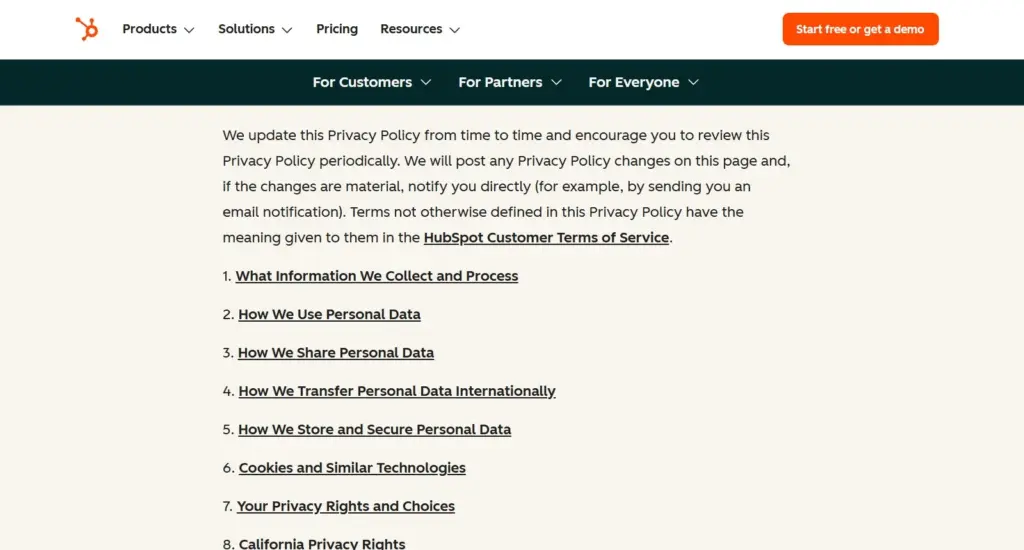
HubSpot is one of the most recognized names in the SaaS industry. Since the company handles customer relationship management, marketing automation, sales tools, and customer support software, it collects a significant amount of user information.
What makes HubSpot’s privacy policy stand out is its organization.
Rather than presenting visitors with a wall of legal text, the policy uses clear sections and navigation links that make information easy to find.
What HubSpot Does Well
- Clearly explains what information is collected
- Separates information for customers, visitors, and partners
- Provides detailed information about cookies and tracking technologies
- Explains international data transfers
- Makes user rights easy to understand
Key Takeaway
If your business collects different types of data from different audiences, consider organizing your privacy policy into sections just like HubSpot does. This makes the document easier to navigate and improves transparency.
2. Amazon – eCommerce Privacy Policy
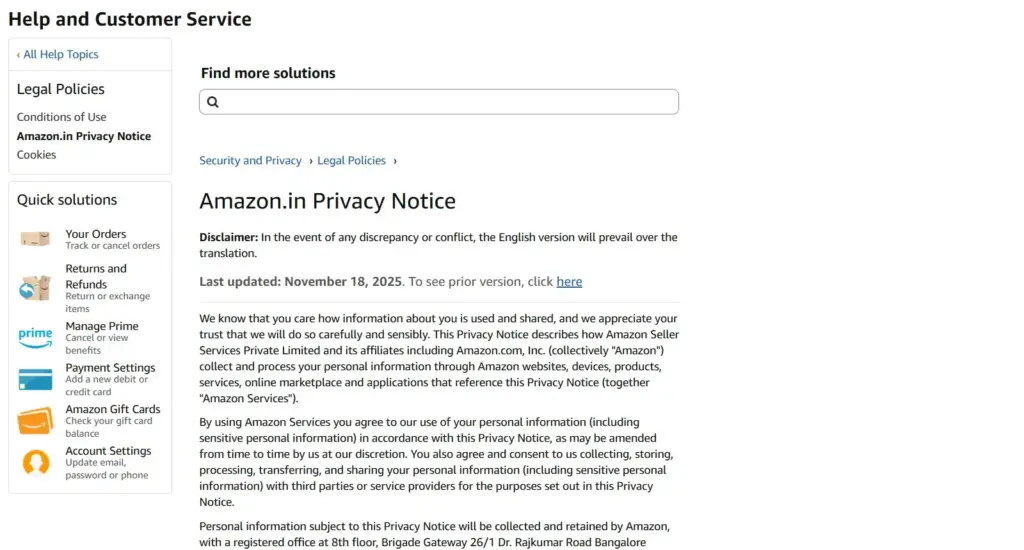
Amazon operates one of the largest ecommerce platforms in the world. As a result, its privacy policy covers a wide range of user interactions, from browsing products to completing purchases and interacting with Alexa devices.
Despite the complexity of its services, Amazon does a good job of explaining how customer data is used.
What Amazon Does Well
- Uses a question-and-answer format in several sections
- Explains why information is collected
- Details how customer information supports the shopping experience
- Provides examples of how data is shared
- Includes extensive cookie and advertising information
Key Takeaway
Your privacy policy should explain not only what data is collected but also why it is collected. Users are more likely to trust your business when they understand the purpose behind data collection.
3. Airbnb – Hospitality Privacy Policy
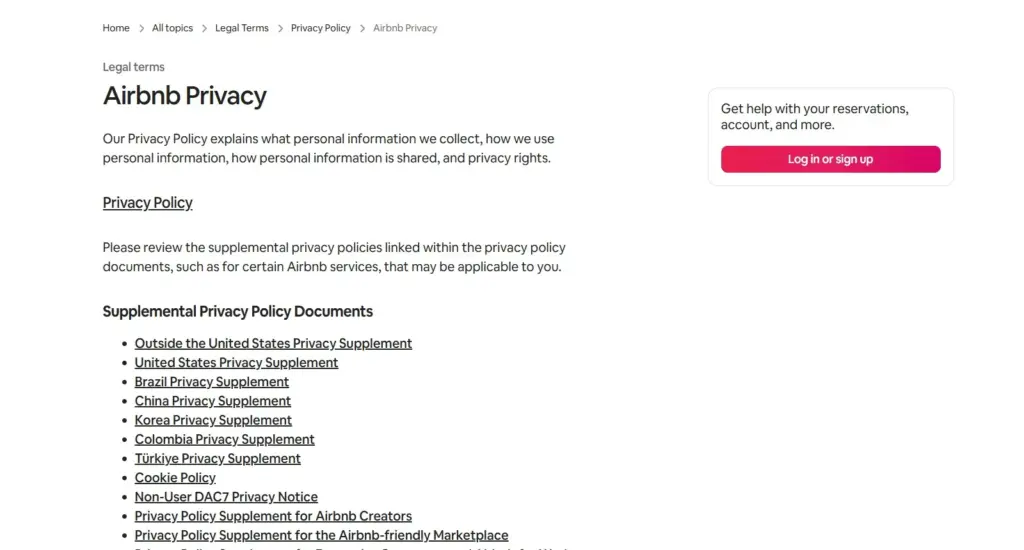
Globally dominant hospitality business Airbnb handles personal information from hosts, guests, and visitors. Because of this, its privacy policy needs to address many different scenarios.
One of the strongest aspects of Airbnb’s privacy policy is its focus on transparency.
The company clearly outlines what information is collected during bookings, account creation, communication, and payment processing.
What Airbnb Does Well
- Explains data collection in real-world scenarios
- Clearly defines user responsibilities
- Provides detailed information about third-party service providers
- Includes location data practices
- Explains international data transfers
Key Takeaway
Use real-world examples whenever possible. They help visitors understand how your privacy practices apply to their actual experience.
4. Meta – Social Media Privacy Policy
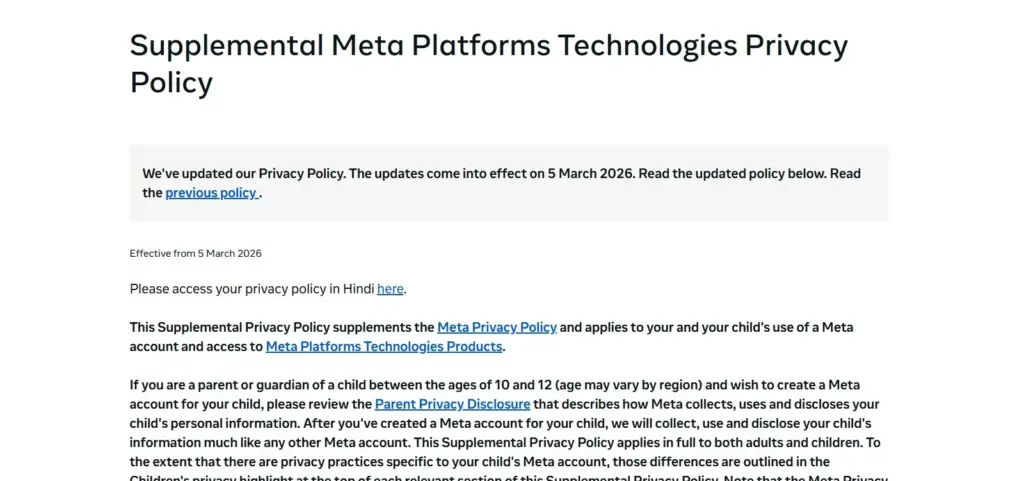
Meta manages some of the world’s largest social media platforms, including Facebook, Instagram, Messenger, and Threads.
With billions of users across its products, Meta handles an enormous amount of personal information. This makes its privacy policy one of the most comprehensive examples available online.
While the document is extensive, Meta uses layered explanations that allow users to either read a summary or explore additional details when needed.
What Meta Does Well
- Explains how data is collected across multiple platforms
- Provides detailed information about advertising practices
- Clearly discusses personalization and recommendations
- Offers extensive privacy controls for users
- Includes dedicated sections for user rights
Key Takeaway
Not every visitor wants to read a lengthy legal document. Consider using summaries and expandable sections to make important information easier to understand.
5. Udemy – Edtech Privacy Policy
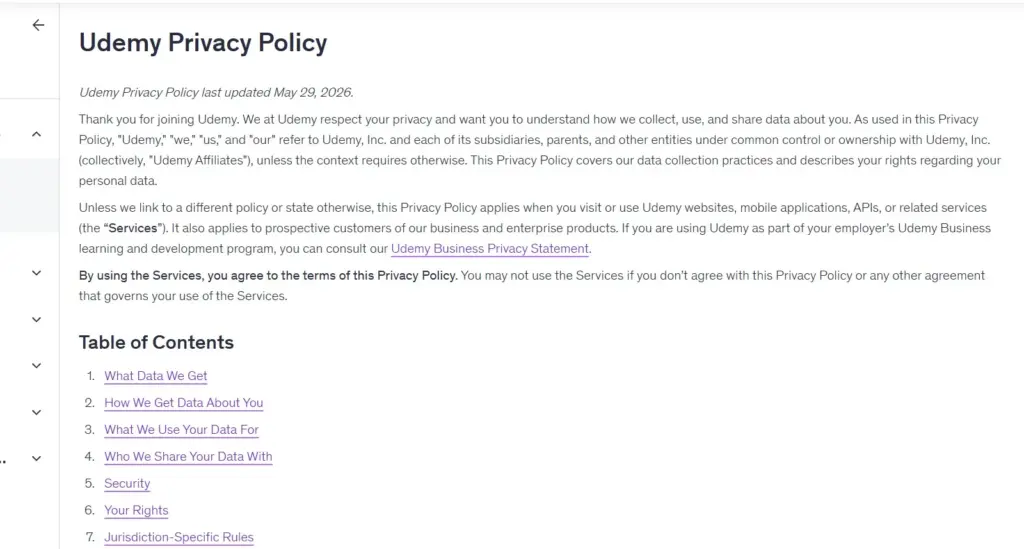
Udemy hosts thousands of courses and serves millions of learners worldwide.
The platform collects information related to course purchases, learning progress, account activity, and communication preferences. Its privacy policy does a good job of explaining how this information is used.
One aspect that stands out is the way Udemy separates different categories of data and clearly explains the purpose behind each one.
What Udemy Does Well
- Organizes information into logical categories
- Explains why each type of data is collected
- Clearly discusses marketing communications
- Provides details about payment processing
- Explains data retention practices
Key Takeaway
When collecting multiple types of information, group them into categories. This makes your privacy policy easier to read and understand.
6. Google – Search Engine Privacy Policy
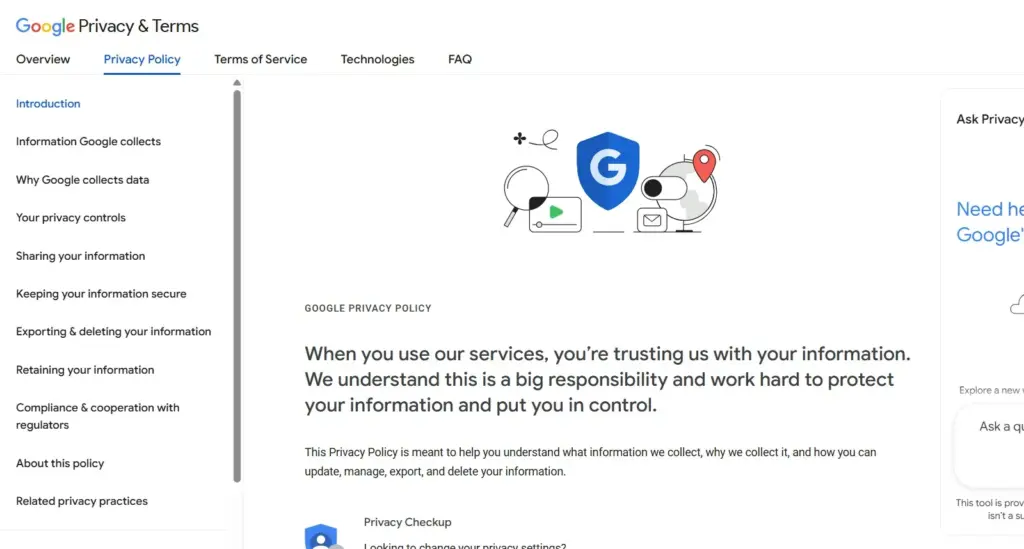
Google processes a massive amount of information through products such as Search, Gmail, YouTube, Maps, Android, and Google Ads.
Instead of creating separate privacy policies for every product, Google uses a centralized privacy policy supported by additional product-specific information.
The result is a document that remains detailed without becoming overwhelming.
What Google Does Well
- Uses simple language despite covering complex topics
- Explains how information improves products and services
- Includes visual examples and illustrations
- Provides extensive user controls
- Makes privacy settings easy to access
Key Takeaway
Complex privacy practices do not require complicated language. The simpler your explanations are, the easier they are for users to trust.
7. Shopify – CMS Privacy Policy
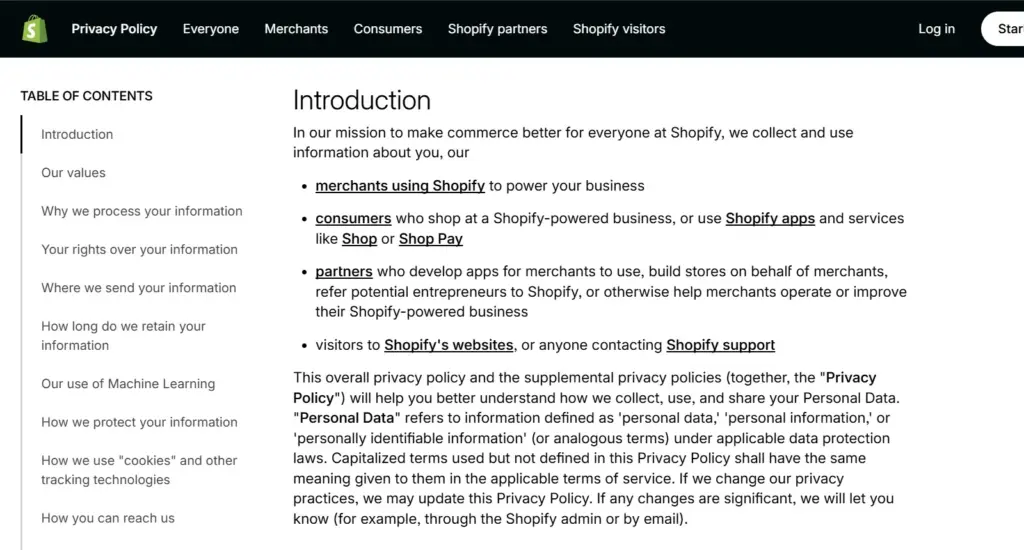
Shopify powers millions of ecommerce stores around the world.
Because it serves both merchants and shoppers, Shopify must explain how it handles data from multiple groups of users.
Its privacy policy is particularly strong when it comes to explaining the relationship between Shopify, store owners, and customers.
What Shopify Does Well
- Clearly defines the role of each party
- Explains how merchant data is handled
- Covers customer data processing in detail
- Provides information about integrations and apps
- Includes international privacy considerations
Key Takeaway
If your business involves multiple stakeholders, clearly define who is responsible for which data. This reduces confusion and improves transparency.
8. Tesla – Automobile Privacy Policy
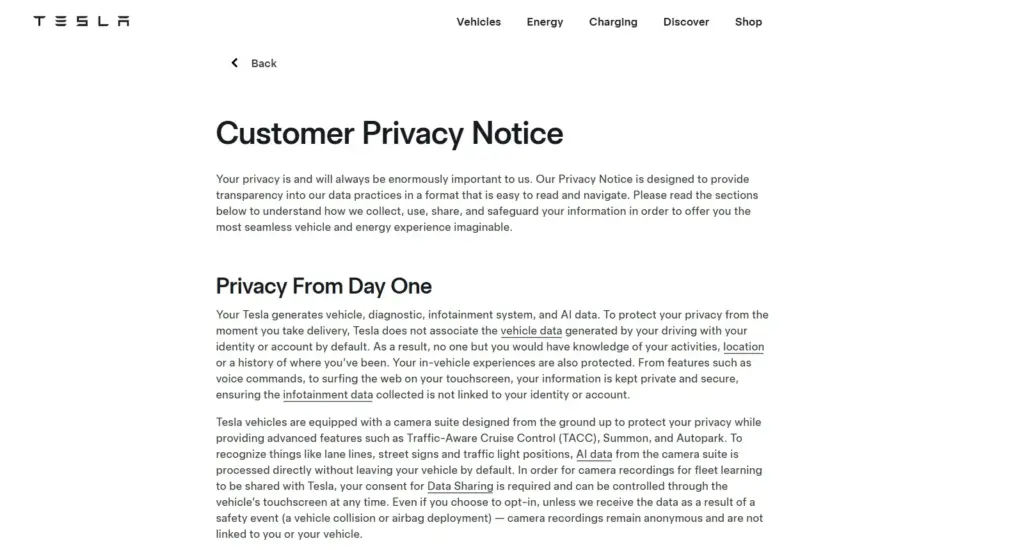
Tesla’s privacy policy differs from many traditional website privacy policies because it also covers connected vehicles, mobile applications, and related services.
As modern vehicles become more connected, explaining data collection practices becomes increasingly important.
Tesla does a good job of outlining what information is collected from vehicles and how that information is used.
What Tesla Does Well
- Explains connected device data collection
- Discusses vehicle telemetry data
- Covers mobile application usage
- Clearly outlines security practices
- Explains user choices and controls
Key Takeaway
If your product collects information through devices, applications, or software, your privacy policy should clearly explain these data collection methods.
9. Adobe – Multimedia Privacy Policy
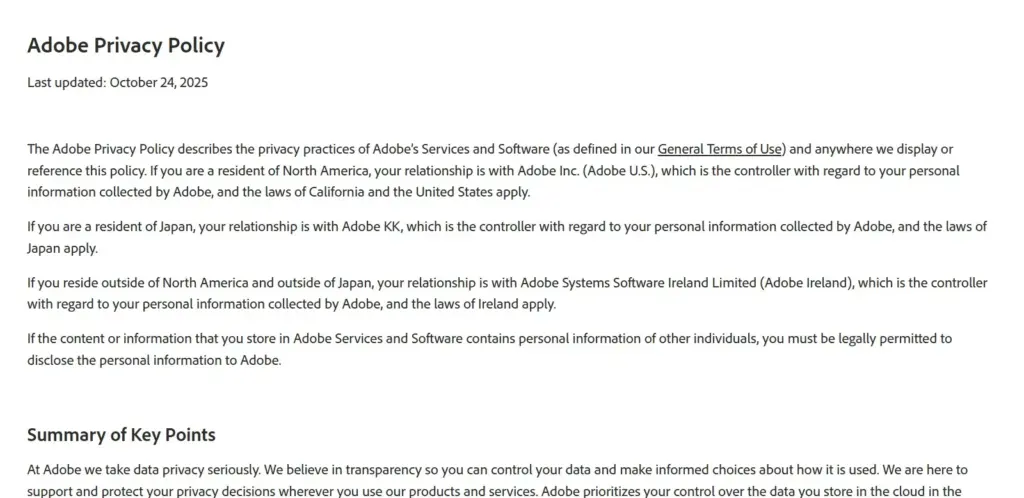
Adobe provides creative software, marketing tools, analytics platforms, and cloud-based services used by millions of professionals.
Its privacy policy balances legal compliance with readability by organizing information into clearly labeled sections.
The document also explains how Adobe uses information to improve products and personalize user experiences.
What Adobe Does Well
- Uses clear navigation and structure
- Explains product-specific data practices
- Covers marketing and analytics activities
- Discusses third-party integrations
- Provides detailed privacy rights information
Key Takeaway
A well-structured privacy policy improves user experience. Clear headings and navigation make it easier for visitors to find the information they need.
10. OpenAI – AI Privacy Policy
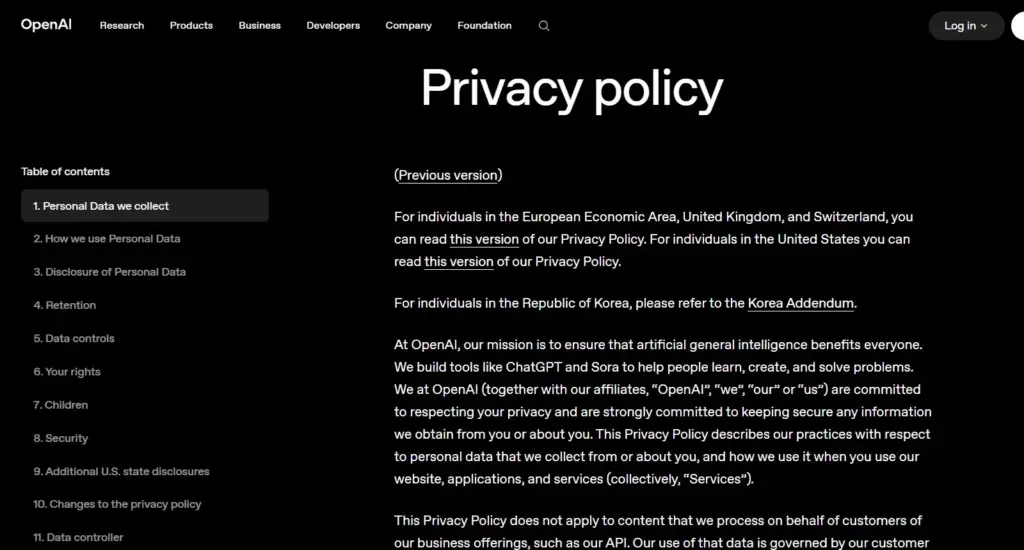
Since the launch of ChatGPT, OpenAI has become one of the most talked-about companies in artificial intelligence.
Unlike many traditional software companies, OpenAI handles user prompts, uploaded files, conversations, and account information. This creates unique privacy considerations that many businesses are only beginning to face.
OpenAI’s privacy policy stands out because it directly addresses how user content may be used, how users can manage their data, and the choices available regarding training and personalization.
What OpenAI Does Well
- Clearly explains what information is collected
- Addresses AI-specific privacy concerns
- Explains how user content may be used
- Provides controls for managing personal data
- Discusses data retention and deletion requests
Key Takeaway
If your website uses AI tools or collects user-generated content, explain exactly how that information is processed and whether it is used to improve your services.
11. Uber – Mobility Services Privacy Policy
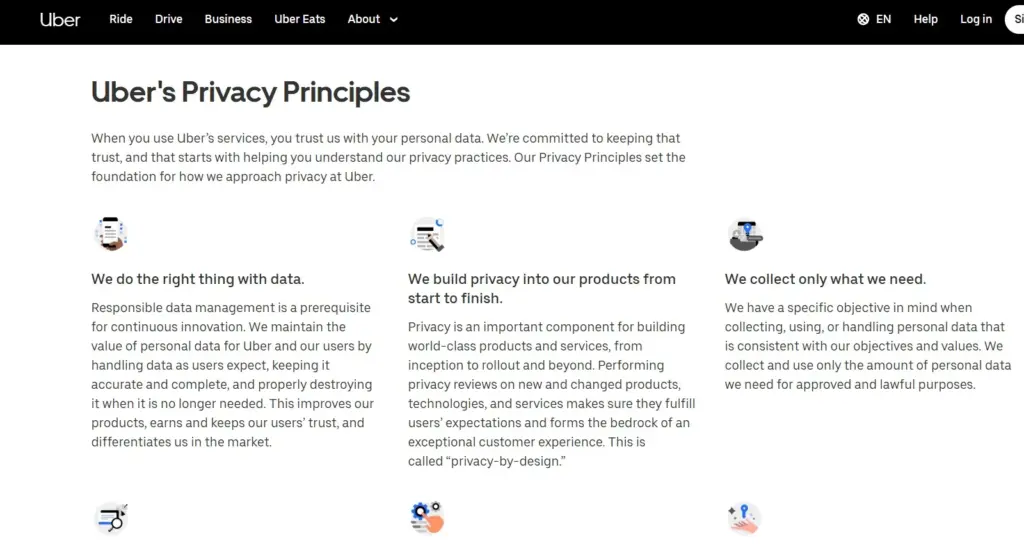
Uber operates in a highly data-driven environment.
The platform collects location information, ride history, payment details, device information, and communication records. Because of this, transparency is critical.
Uber’s privacy policy does a good job of explaining how different types of data support the services users expect from the platform.
What Uber Does Well
- Explains location data usage clearly
- Separates rider and driver privacy information
- Details third-party sharing practices
- Provides information about safety and security features
- Includes extensive user control options
Key Takeaway
If your business relies on location data or behavioral information, explain why it is necessary and how it improves the user experience.
12. Zara – Fashion Lifestyle Privacy Policy
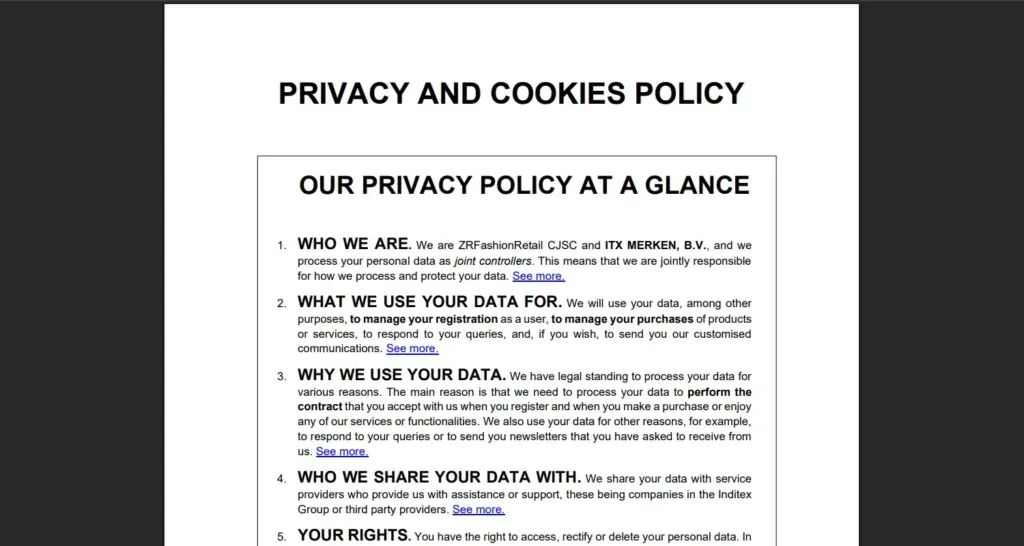
As one of the world’s largest fashion retailers, Zara collects customer information through its ecommerce website, mobile applications, and loyalty programs.
Its privacy policy is notable for its straightforward language and practical explanations.
Rather than overwhelming visitors with legal terminology, Zara focuses on making information accessible.
What Zara Does Well
- Uses simple and direct language
- Explains customer account information clearly
- Covers marketing communications in detail
- Discusses purchase and payment information
- Provides information about customer rights
Key Takeaway
Simple language often creates more trust than legal jargon. Your privacy policy should be easy for an average visitor to understand.
13. Netflix – Entertainment Privacy Policy
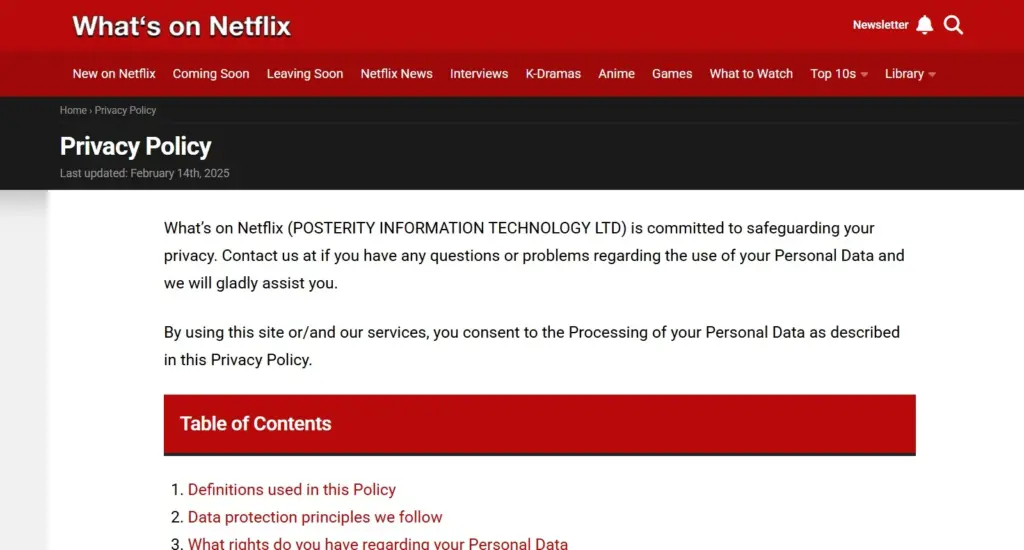
Netflix serves millions of viewers worldwide and collects information related to viewing habits, account activity, device usage, and payment details.
Its privacy policy effectively explains how this information is used to personalize recommendations and improve the streaming experience.
The company also provides detailed information about advertising, cookies, and user controls.
What Netflix Does Well
- Explains personalization clearly
- Discusses viewing and activity data
- Covers cookies and tracking technologies
- Provides information about account controls
- Makes privacy settings easy to find
Key Takeaway
If your business uses personal information to customize content or recommendations, be transparent about how personalization works and what data is involved.
Common Traits Shared by the Best Privacy Policy Examples
After reviewing these privacy policy examples, a few patterns become clear.
The best privacy policies may differ in design and structure, but they all share several important characteristics.
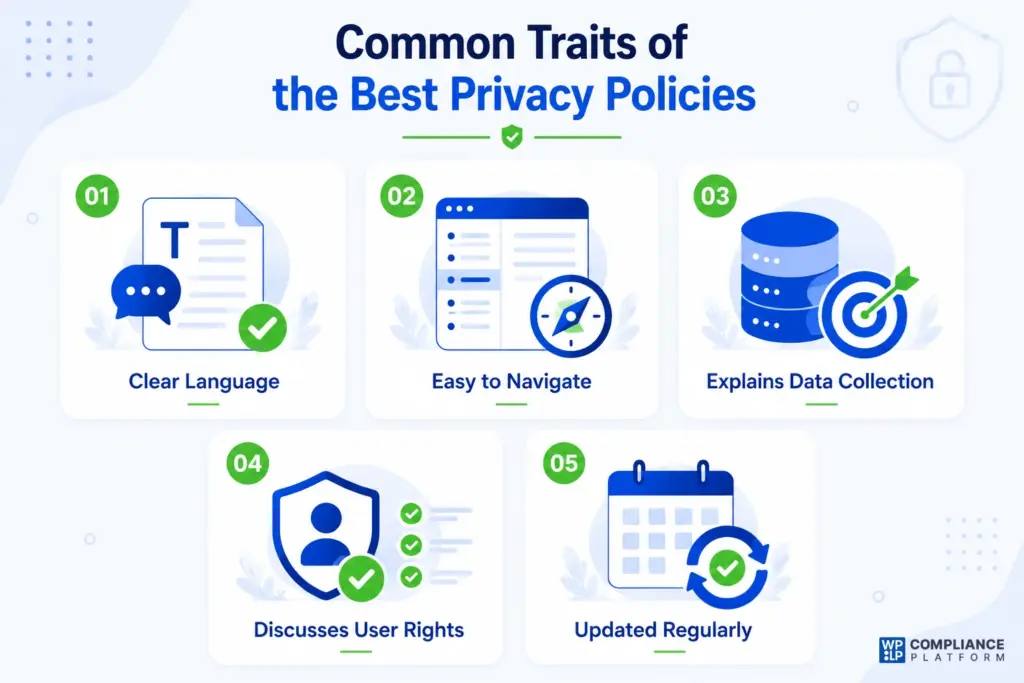
They Use Clear Language
Visitors should not need a legal background to understand your privacy policy.
The strongest examples explain complex privacy concepts using simple language and practical examples.
They Are Easy to Navigate
Long privacy policies are common, but they should still be easy to browse.
Most leading companies use clear headings, tables of contents, summaries, and navigation menus to improve readability.
They Explain Why Data Is Collected
Users are more comfortable sharing information when they understand the purpose behind data collection.
The best privacy policies clearly connect each data type with a business purpose.
They Discuss User Rights
Modern privacy laws require businesses to provide users with certain rights over their personal information.
Leading privacy policies explain these rights in a way that is easy to understand and act upon.
They Are Updated Regularly
Privacy regulations continue to evolve.
The best organizations regularly review and update their privacy policies to reflect changes in laws, technologies, and business practices.
Privacy Policy Checklist for Website Owners
Use this quick checklist when reviewing your own privacy policy:
✓ Types of personal information collected
✓ How information is collected
✓ Why information is collected
✓ Third-party sharing practices
✓ Cookie and tracking technologies
✓ User rights and privacy choices
✓ Data retention practices
✓ Security measures
✓ Contact information
✓ International data transfers
✓ Policy update procedures
If your privacy policy covers these areas clearly, you’re already ahead of many websites.
How to Create a Privacy Policy for Your Website
While there are various ways to create a privacy policy for your website, the three most standard ways and commonly preferred methods include:
- Self-Drafting A Privacy Policy Page
- Hiring A Legal Professional
- Using A Privacy Policy Generator
Each of these methods offers its benefits and challenges.
While self-drafting a legal page is inexpensive, it requires you to have sound knowledge of legal terms; however, if you plan to use AI bots while self-drafting, that is a whole different aspect of why you should not, which we have covered in our guide:
AI-Generated Privacy Policy: Are They Harming Your Website?
On the other hand, while hiring a legal professional can help you avoid learning legal technicalities, it’s costly, costing you a one-time drafting fee of more than $1000. Alongside, if there are specific changes in the laws, the average lawyer fees for privacy policy review go to at least $700.
In my opinion, using a privacy policy generator is the best method to draft a privacy policy for your website. They are basically easy-to-use tools that allow you to input information about your website or app and automatically generate a privacy policy document tailored to your specific data practices and legal requirements.
These generators typically walk you through a series of questionnaires. Based on your answers, the privacy policy generator drafts an appropriate privacy policy language and clauses.
While various privacy policy generators are available online, based on my experience, I found the WPLP Compliance platform provides the best solutions, mainly to WordPress users.
What is the WPLP Compliance Platform?
WPLP Compliance Platform is a robust set of two powerful plugins that help you fulfill all essential requirements, integrated within your website, that comply with global laws, including GDPR, CCPA, and others.
The plugins offered in the compliance platform are:
WPLP Legal Pages
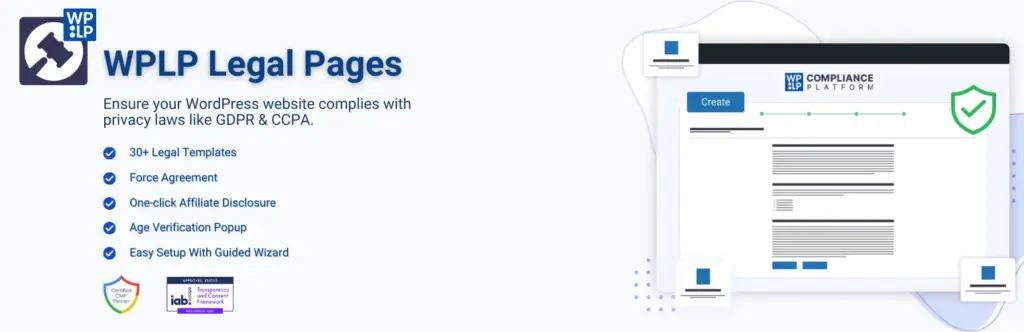
WPLP Legal Pages helps you generate legal pages for your website that adhere to global laws.
It boasts a library of over 35 essential legal pages, including a free privacy policy that users can create using their intuitive wizard.
Moreover, the plugin has a user-friendly interface, multi-language support, and many customization options in the legal page templates.
To learn how to create a privacy policy with the plugin, refer to:
Next, let’s check out the other plugin, WP Cookie Consent.
WPLP Cookie Consent
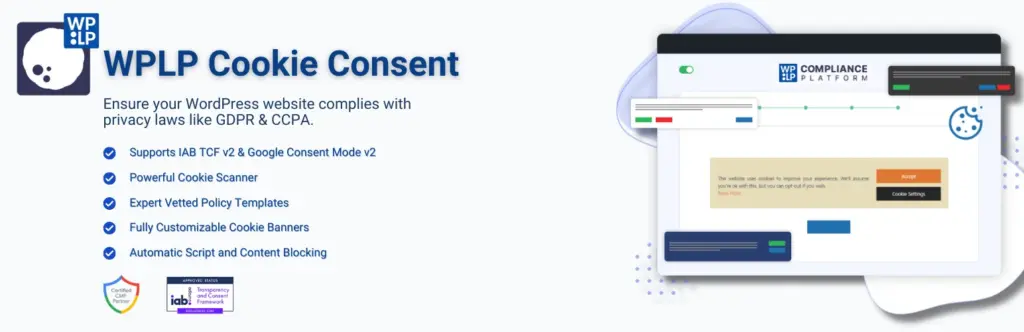
WPLP Cookie Consent, on the other hand, helps users quickly create cookie notices for their website that comply with data privacy regulations. It enables them to obtain user consent for cookies before placing them on visitors’ devices.
The plugin helps your business stay compliant with legal requirements and provides business owners with insights and analytics of user behavior.
Get Started with WPLP Compliance Platform
Getting started is simple:
- Install the WPLP Legal Pages plugin from your WordPress dashboard.
- Connect the plugin to your website.
- Launch the setup wizard.
- Generate the legal pages your website needs, such as a Privacy Policy, Cookie Policy, or Terms and Conditions page.
- Create and customize a cookie consent banner that supports major privacy regulations.
You can start with a 7-day free trial to explore the platform and its features.
The best part is that you do not need to provide your credit card details to get started.
Common Privacy Policy Mistakes to Avoid
Even well-intentioned website owners often make mistakes when creating privacy policies.
Here are some of the most common issues.
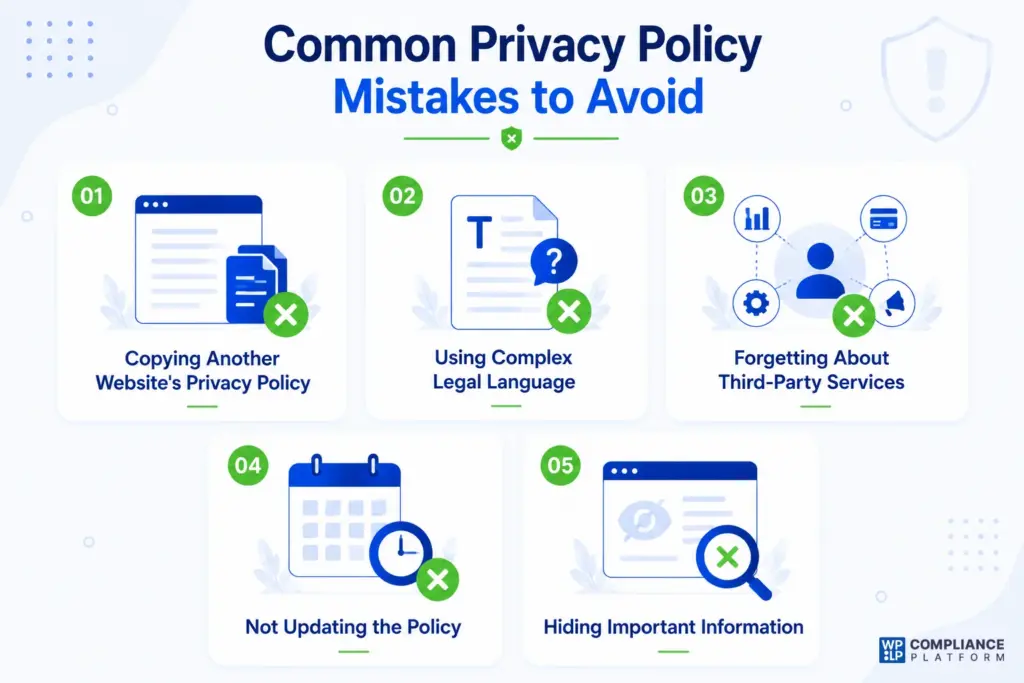
Copying Another Website’s Privacy Policy
A privacy policy should reflect your own data collection practices.
Copying content from another website may result in inaccurate or misleading information.
Using Complex Legal Language
Visitors should be able to understand your privacy policy without needing legal expertise.
Simple language improves transparency and trust.
Forgetting About Third-Party Services
Many websites disclose their own practices but fail to mention the services they rely on.
Analytics tools, payment processors, and marketing platforms should all be addressed where applicable.
Not Updating the Policy
A privacy policy becomes outdated when website practices change.
Regular reviews help ensure the document remains accurate.
Hiding Important Information
Important privacy information should be easy to find.
Avoid burying critical details inside long paragraphs of legal text.
FAQ
A privacy policy should detail data collection practices, data usage, data sharing, user rights, and security measures. It must also specify how users can manage their information and comply with legal requirements.
Yes, you can create your privacy policy. However, ensuring it meets legal standards and accurately reflects your data practices is essential. Using templates from the WPLP Compliance Platform or consulting legal resources can help.
Free privacy policies can be legitimate but may lack specificity and regulatory compliance. Reviewing and customizing free templates to suit your business needs and local laws is crucial.
Yes, there are free privacy policy generators available online, like the WPLP Compliance platform. It helps you create a basic policy but tailor it to your specific data practices and legal obligations.
Conclusion
The best privacy policy examples all have one thing in common: transparency.
Whether you’re reviewing policies from HubSpot, Amazon, Airbnb, Google, Shopify, or Netflix, the strongest examples clearly explain what information is collected, why it is collected, and how users can control their data.
When creating your own privacy policy, focus on clarity, honesty, and accessibility. Use simple language, organize information into clear sections, and make it easy for visitors to find answers to their privacy questions.
If you don’t want to create a privacy policy from scratch, tools like the WPLP Compliance Platform can simplify the process by helping you generate, manage, and update legal pages from a single dashboard.
A well-written privacy policy is more than a compliance requirement. It’s an opportunity to build trust with your audience.
If you found this article helpful, you should also consider going through the following blogs.
- Steps to create a cookie and privacy policy for your website.
- Difference between cookie notice and cookie policy.
- Essential legal pages every website must have.
Ready to create a privacy policy for your website? Generate a professional one with the WPLP Compliance Platform.