Summary
For example, a medical disclaimer warns users not to treat content as professional advice, while an affiliate disclosure tells users when a website earns commissions from recommendations.
Understanding the difference helps you stay compliant, build trust, and use both correctly on your website.
Most website owners confuse disclaimers and disclosures, but they serve different legal purposes. Understanding the difference can help you avoid compliance issues and build trust with your audience.
A disclaimer helps limit legal liability by informing users about the scope and limitations of your content. For example, if your website shares health, financial, or legal information, a disclaimer can clarify that the content should not be treated as professional advice.
A disclosure, however, promotes transparency. It informs visitors about affiliate relationships, sponsored content, paid partnerships, or any financial interest connected to the products or services you mention.
Both are important, but they address different compliance requirements. In this guide, we’ll explain what disclaimers and disclosures are, when you need them, and how to add them to your website correctly.
What is a Website Disclaimer and Why Does It Matter?
A website disclaimer is a statement or notice that helps limit liability and clarify responsibilities. It serves several purposes:
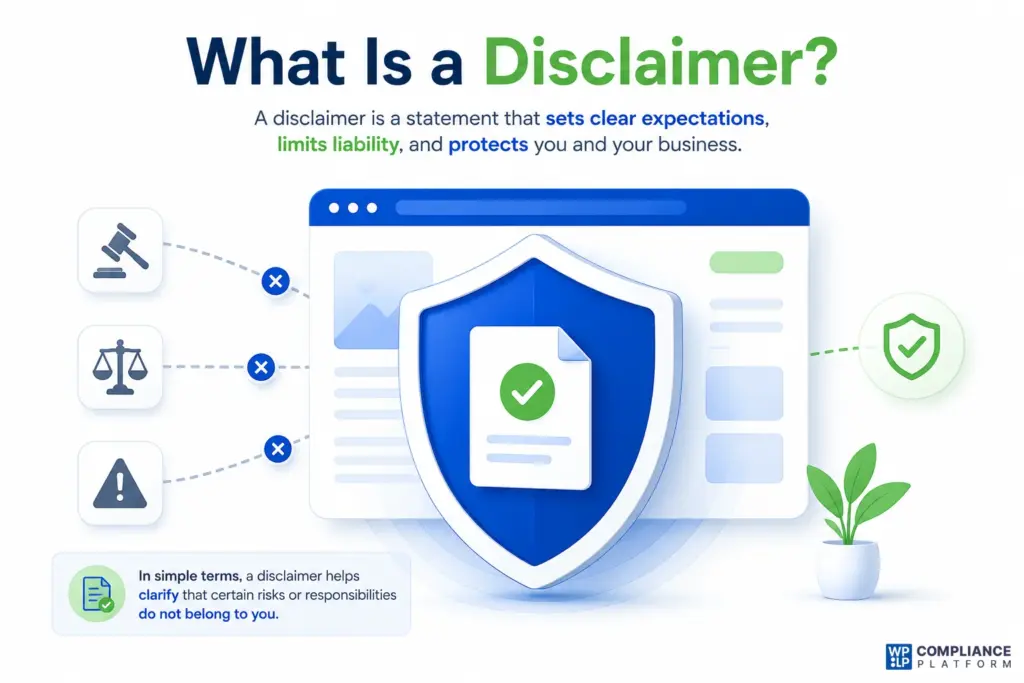
- It reduces legal risk, protecting against possible claims or damages.
- It explains the intentions behind the content or services.
- It provides crucial information about what to expect.
- It sets clear terms of use and responsibilities.
- It protects rights by limiting others’ liability.
- and it shifts the responsibility for loss or harm from one party to another.
What is a Disclosure Statement and Why is It Important?
Disclosure is the act of sharing facts or information with the public. It involves revealing new or previously hidden details. In business, disclosure means providing important information about a company to the public on time.
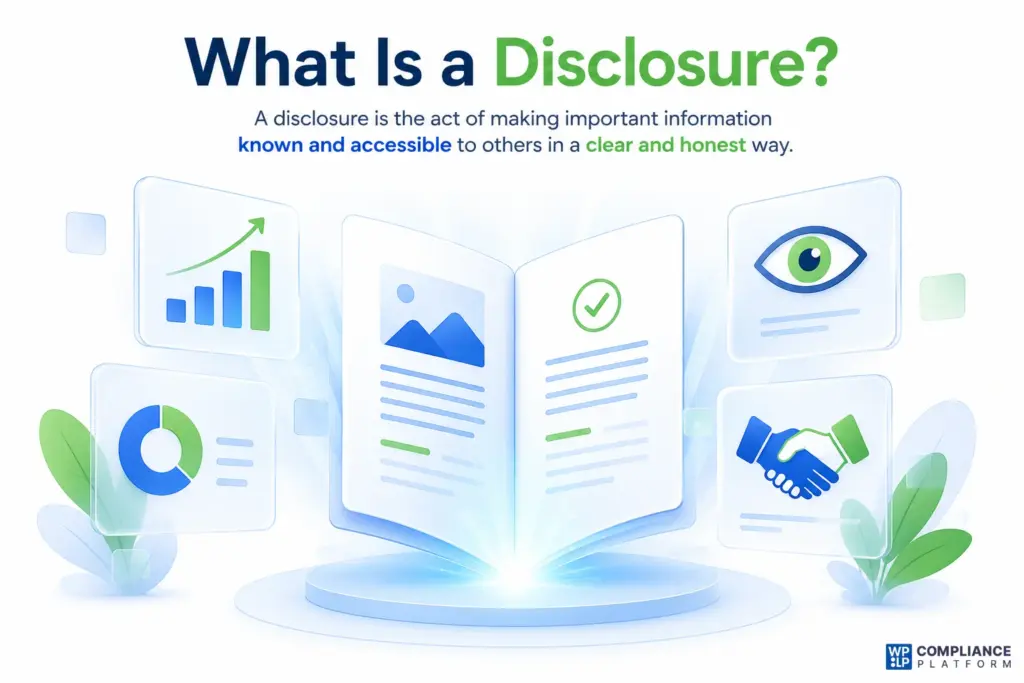
Below are the purposes of the disclosure statement:
- Transparency: To keep customers, investors, and other stakeholders informed with relevant information.
- Informing Decisions: To give investors and analysts the information they need to make decisions about buying a company’s stock or bonds. This includes both good and bad news, data, and insights about operations.
- Legal and Ethical Compliance: To follow laws, such as SEC regulations, which require companies to share their financial status, operational results, and management salaries.
- Building Trust: To be regarded as an important and informative part of engaging with or investing in a company. Good disclosure builds confidence in the business environment.
- Risk Assessment (Insurance): To provide information about risks to an insurer, which can help determine the premium.
Disclaimer vs Disclosure: What’s the Difference?
Let’s compare disclaimers and disclosures side by side to understand how they differ:
| Features | Disclaimer | Disclosure |
| Purpose & Intent | To limit liability and deny responsibility; to serve as a protective measure against potential legal claims. | To reveal information, ensure transparency, build trust, and ensure accountability. |
| Legal Implications | Protects against potential legal claims by clarifying boundaries and responsibilities. | Ensures compliance with regulations and prevents hidden agendas. |
| What They Address | States what a website does not guarantee and advises users about the restrictions of the website’s liabilities. | States what a website’s purpose is and provides users with information about the site. |
| Placement & Usage | Often in footers, terms and conditions, or specific contexts. | Placed where relevant to the information being disclosed. |
| Consequences of Not Using Them | Potential legal liability and financial damages. | Loss of user trust and potential legal penalties. |
| Modern Connotations | Primarily a protective measure designed to address potential legal issues preemptively. | Associated with transparency, honesty, and maintaining trust. Seen as essential for ethical business practices. |
| Required For | Medical, financial, and legal content | Affiliate marketing, sponsored content |
| Example | Not professional advice notice | This post contains an affiliate link statement |
Disclaimer vs Disclosure Examples for Different Types of Websites
Here are some examples showing how disclaimers and disclosures are used across different websites.
Disclaimer vs Disclosure Examples for Blogs and Content Websites
- Disclaimer
- Opinions Disclaimer: State that your opinions or those of guest authors do not reflect your company’s views.
- Errors and Omissions Disclaimer: Explain that you are not responsible for any mistakes or missing information in your content.
- No Liability Disclaimer: Clarify that you are not liable for the actions of others who post or share on your site or for content on linked websites.
- Copyright Disclaimer: Inform users that your website’s content is protected by copyright and explain how they can use it.
- Disclosures:
- Affiliate Disclosure: Disclose that you may earn a commission if users click on affiliate links and make a purchase.
- Sponsored Content Disclosure: State if you receive payment to promote a product or service in your content.
Disclaimer vs Disclosure Examples for Business and Marketing Websites
- Disclaimer:
- No Liability Disclaimer: State that you are not responsible for the results of using your app or website.
- Warranty Disclaimer: Protect your business from liability if your products or services are misused or fail to meet customer expectations.
- Earnings Disclaimer: If you mention earnings from your products or services, include a statement about those earnings.
- Disclosures:
- Affiliate Disclosure: Share any affiliate relationships that may earn you a commission.
- Testimonial Disclaimer: Address the possible bias in customer testimonials.
Disclaimer vs Disclosure Examples for Healthcare and Medical Websites
Disclaimers
- Disclaimers:
- Medical Disclaimer: State that your information is not medical advice. Recommend users seek professional medical help if needed.
- Health and Fitness Disclaimer: Warn users to consult a physician, registered dietitian, or certified personal trainer before starting any treatment, diet, or fitness program.
- Disclosures:
- Typically, you do not need disclosures unless you promote healthcare content for which you are paid.
Disclaimer vs Disclosure Examples for Finance and Investment Websites
- Disclaimers:
- Financial Disclaimer: Clarify that the information is not advice or recommendations. State that you do not endorse the products or services mentioned and are not liable for any losses from their use.
- No Guarantee Disclaimer: Assert that there is no promise of financial success.
- Disclosures:
- Include information about any potential biases or conflicts of interest when promoting financial organizations.
What Types of Disclaimers Can You Add to Your Website?
The following website disclaimers are important for protecting businesses and helping users understand the limits of the information or services provided:
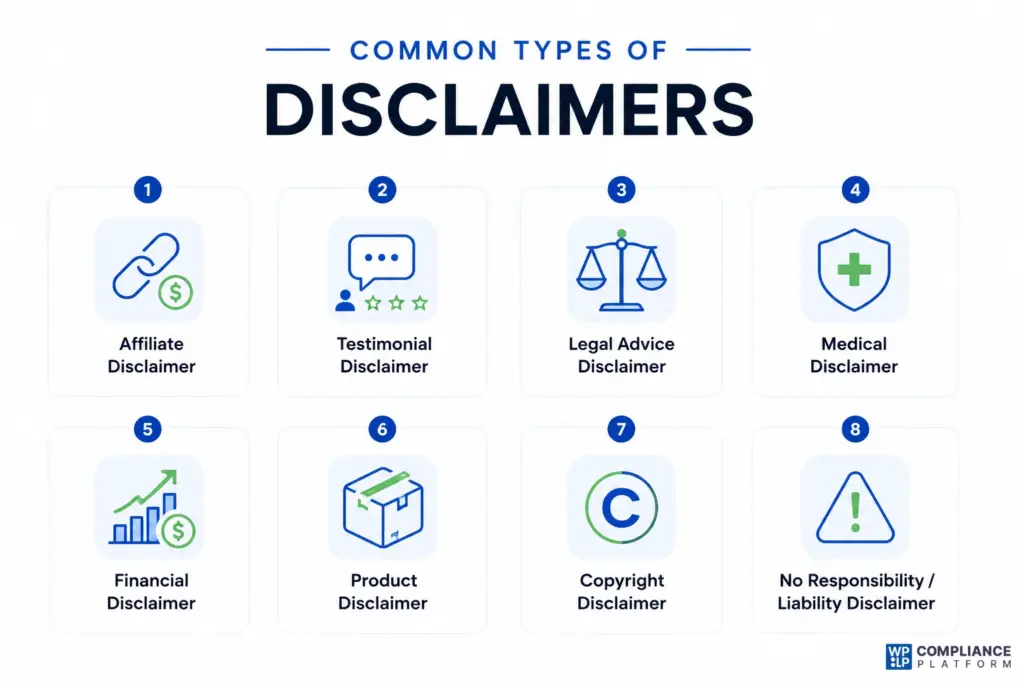
1. Affiliate Disclaimer
This informs users that the website may earn commissions from promoting products through affiliate links.
Example: “Some links on this website are affiliate links. This means we may earn a commission if you click a link and make a purchase, at no additional cost to you.”
2. Testimonial Disclaimer
This explains the potential bias of customer testimonials and their credibility.
3. Legal Advice Disclaimer
This states that the legal information provided is not direct legal advice, and the website is not responsible if someone relies on this content as legal guidance. This is crucial for attorneys and legal blogs.
4. Medical Disclaimer
This clarifies that medical information is for general knowledge only and is not a substitute for professional medical advice.
Example: “The medical information provided on this website is for educational and informational purposes only and is not intended as medical advice. Always consult a qualified healthcare professional before making healthcare decisions.”
5. Financial Disclaimer
This indicates that the financial information does not guarantee future results, and users should consult a financial advisor. A “Past Performance” disclaimer often states that past results do not guarantee future performance.
Example: “The information provided on this website is for informational purposes only and should not be considered financial advice. Please consult a licensed financial advisor before making investment or financial decisions.”
6. Product Disclaimer
This protects businesses from liability for the use of their products, including misuse or any injuries that may occur. It often mentions that the seller does not provide any warranties for the items.
7. Copyright Disclaimer
This informs users that the website’s content (text, images, video) is protected by copyright and sets rules for how to use this content.
Example: “All content published on this website, including text, images, graphics, and logos, is protected by copyright laws and may not be reproduced without permission.”
8. No Responsibility/Liability Disclaimer
This limits liability for any damages that may result from using products or services. It states that the website is not responsible for outcomes from using the app or website.
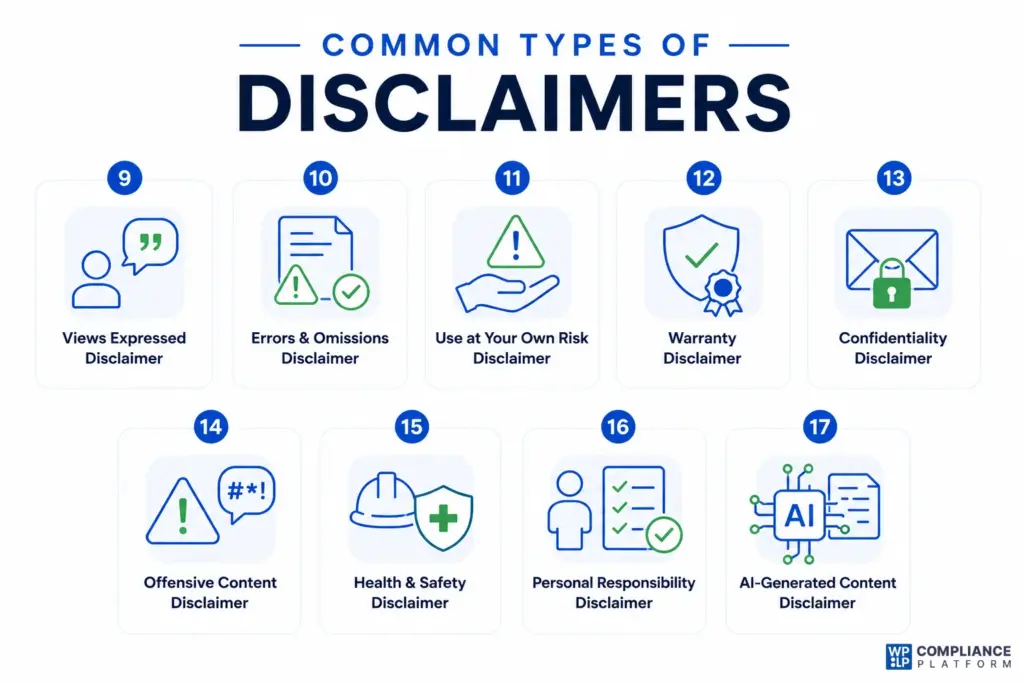
9. Views Expressed Disclaimer
This is used when experts share personal opinions relevant to their field, clarifying that these views are theirs alone and do not reflect those of their employer.
10. Errors and Omissions Disclaimer
This protects businesses if the website contains any errors or omissions that users rely on to their detriment.
11. Use at Your Own Risk Disclaimer
This is used for products that may be dangerous or risky. It states that the company is not responsible for any injuries that occur during use.
12. Warranty Disclaimers
These protect businesses from liability if their products or services do not meet customer expectations or if they are misused.
13. Confidentiality Disclaimers
Often used in emails, this alerts the recipient that the information is confidential and should not be shared.
14. Offensive Content Disclaimer
This addresses the potential presence of offensive material on the platform.
15. Health and Safety Disclaimers
These are used by companies in risky industries, highlight safety measures, warn about potential hazards, and limit liability in case of accidents or injuries. However, disclaimers cannot exclude liability for death or personal injury caused by negligence.
16. Personal Responsibility Disclaimer
This emphasizes that individuals are responsible for their actions, choices, and belongings.
17. AI-Generated Content Disclaimer
This disclaimer informs users that some or all content on the website may be created, edited, or assisted by artificial intelligence tools. It promotes transparency and helps readers understand how content is produced.
Example: “Some content on this website may be created or assisted by artificial intelligence tools. While we review content for accuracy, we recommend independently verifying important information before relying on it.”
When & Where Should You Use a Disclaimer on Your Website?
A disclaimer is vital for your protection if you run an online business.
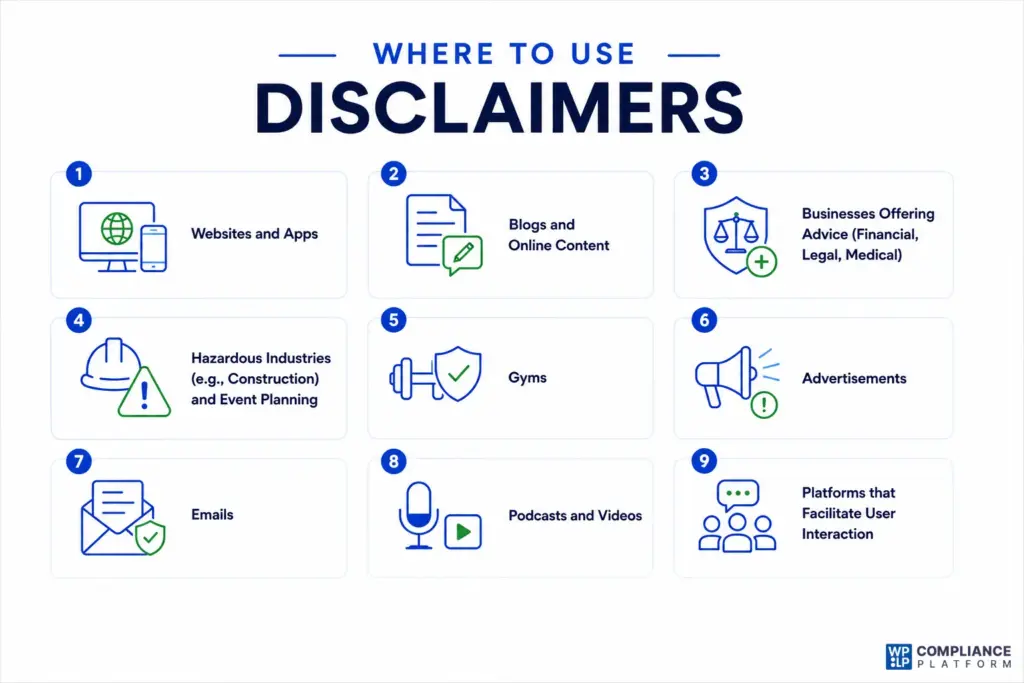
- Websites and Apps: You should display disclaimers on your website or app to protect your business from legal claims. Place them in the footer or header. Many companies also include them in their Terms and Conditions or Privacy Policy.
- Blogs and Online Content: Use disclaimers to explain that the information provided is for general information only. This helps protect your business if someone relies on the information and faces negative results.
- Businesses Offering Advice (Financial, Legal, Medical): Include disclaimers stating that the content is not professional advice. This protects your business if someone acts on your advice and suffers losses.
- Hazardous Industries (e.g., Construction) and Event Planning: Use disclaimers to highlight safety measures, warn about possible dangers, and limit liability if accidents or injuries occur.
- Gyms: A disclaimer can state that the gym is not responsible for personal belongings.
- Advertisements: Include disclaimers in the fine print of advertisements to inform the audience.
- Emails: Add disclaimers to the footers of emails.
- Podcasts and Videos: Disclaimers are also helpful in podcasts and video content.
- Platforms that Facilitate User Interaction: A disclaimer is helpful if your platform allows users to interact or share content.
What Types of Disclosures Can You Add to Your Website?
The following are some common types of disclosures.
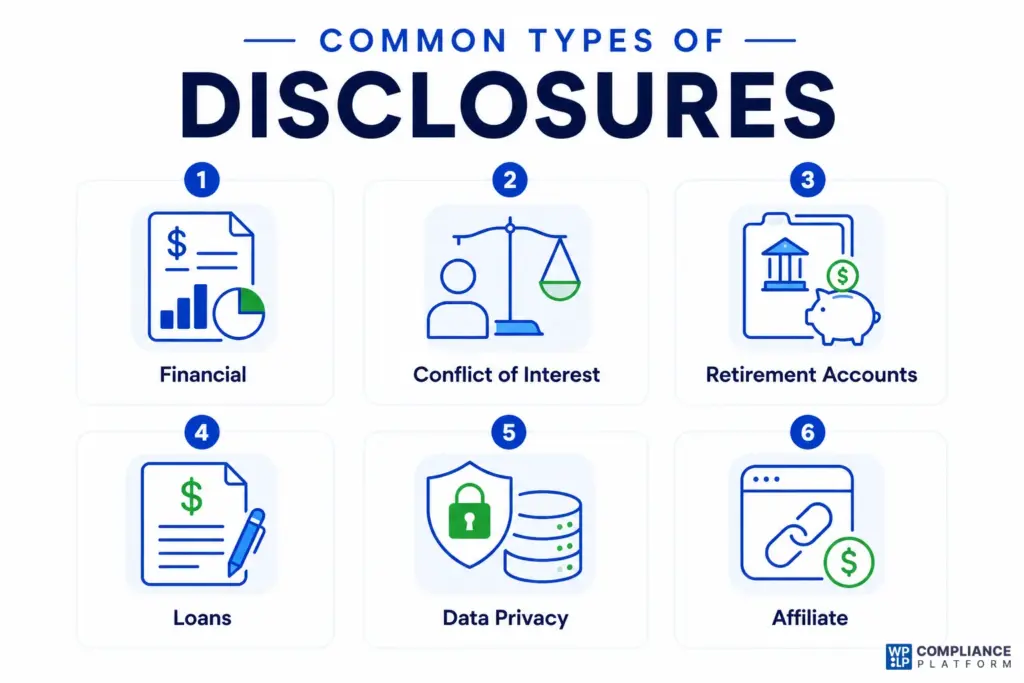
1. Financial Disclosures
These include annual reports (Form 10-K), quarterly reports (Form 10-Q), earnings announcements, and other regulatory filings. They clearly examine a company’s financial health, activities, and cash flow.
2. Conflict of Interest Disclosures
These refer to situations where a person’s personal interests might affect their fairness or responsibilities.
3. Retirement Account Disclosures
These explain the financial rules for retirement accounts in simple terms. They cover topics like who pays into the plan, contribution limits, penalties, and tax status.
4. Loan Disclosures
These outline the terms of a loan, including the interest rate, fees, loan amount, insurance requirements, prepayment options, and borrower responsibilities.
5. Data Privacy Disclosures
These explain how a company collects, uses, and protects user data.
6. Affiliate Disclosures
These inform visitors that a website earns a commission from affiliate links.
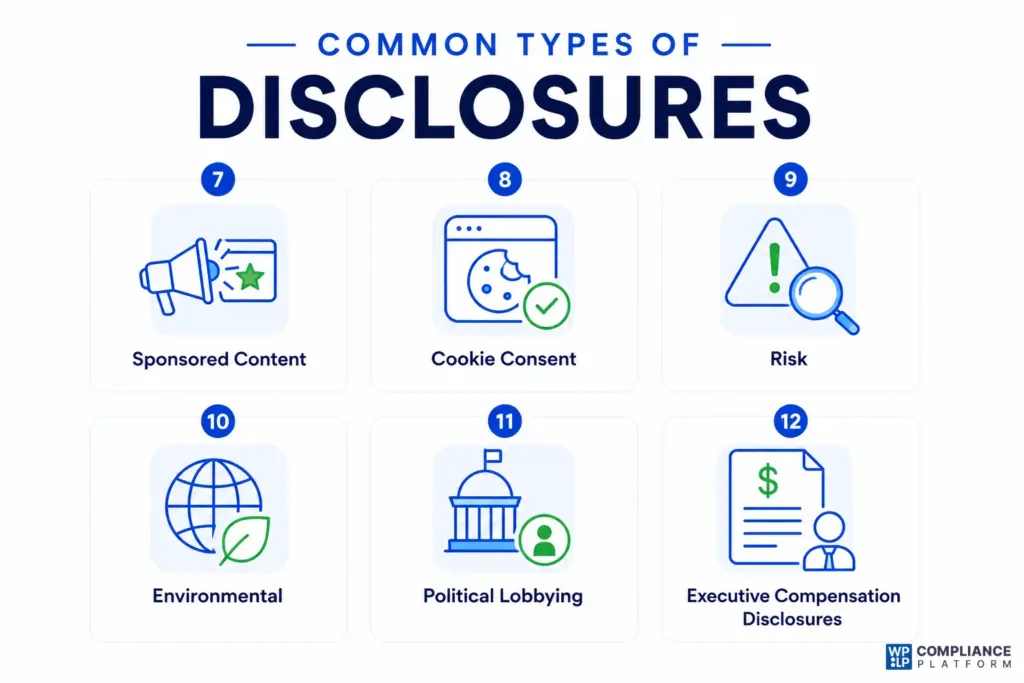
7. Sponsored Content Disclosures
These indicate when a sponsor has paid for or influenced content.
8. Cookie Consent Disclosures
These inform visitors that a website uses cookies and similar tracking technologies. They explain what information may be collected, why it is collected, and how users can manage their cookie preferences.
Cookie disclosures are commonly used alongside cookie consent banners and privacy policies to help websites comply with privacy regulations.
9. Risk Disclosures
These highlight potential risks a company might face, such as the unauthorized use of personal data that could harm its reputation.
10. Environmental Disclosures
These show how a company impacts the environment.
11. Political Lobbying Disclosures
These reports the expenses and activities related to political lobbying.
12. Executive Compensation Disclosures
These provide information about how much company executives are paid.
Legal & Ethical Importance of Disclosures
Disclosures are essential for legal and ethical reasons because they promote transparency, prevent hidden motives, and build trust.
Legally, disclosures help provide individuals with the critical information they need to make informed decisions.
Failing to disclose important facts can lead to serious consequences, like criminal charges, civil penalties, regulatory fines, legal action, and damage to a company’s reputation.
Ethically, disclosures create trust and show a commitment to honesty and transparency, essential for building confidence in business interactions and investment decisions.
In legal disputes, disclosures allow access to evidence supporting or undermining the parties’ claims.
Disclosures improve fairness, accountability, and integrity across various industries by presenting clear and accurate information.
What Does the FTC Require for Affiliate Disclosures?
If your website earns revenue through affiliate marketing, simply having an affiliate disclosure page may not be enough.
The Federal Trade Commission (FTC) requires affiliate disclosures to be clear, easy to understand, and placed where users are likely to see them before making a purchasing decision.
Some best practices include:
- Use plain language that users can easily understand.
- Place disclosures near affiliate links or product recommendations.
- Ensure disclosures are visible on mobile devices.
- Do not hide disclosures in footers or lengthy legal pages.
- Include disclosures on social media posts that contain affiliate promotions.
For instance, a statement such as:
“This post contains affiliate links. We may earn a commission if you purchase through these links.”
Why Are Disclaimers and Disclosures Important for Your Website?
Disclaimer and disclosures are important for making your website clear and legally compliant. Website Disclaimers help protect you from responsibility if someone uses your content and faces problems.
Disclosures build trust with your audience. When used correctly, both can strengthen your online presence.
Below are some compelling reasons to consider using them:
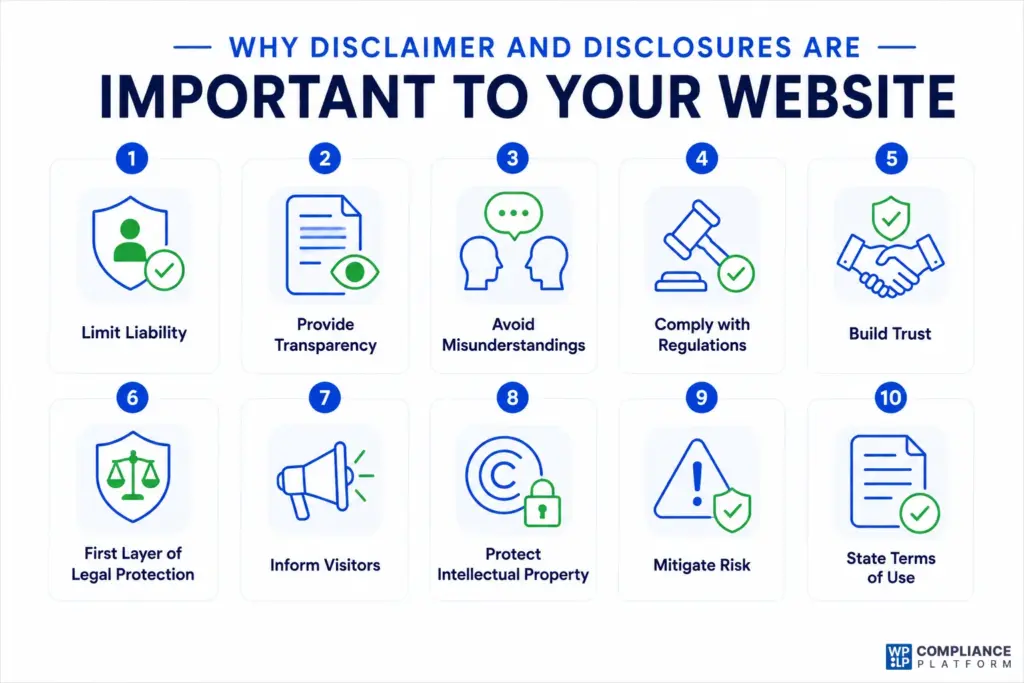
- Limit Liability: Disclaimers can help reduce your responsibility if someone suffers damages from your content. They act as a protective shield, making you less likely to be held accountable.
- Provide Transparency: Disclaimers and disclosures clarify your content and its purpose.
- Avoid Misunderstandings: A disclaimer can prevent confusion about your content’s meaning and goal.
- Comply with Regulations: Some laws require specific disclosures.
- Build Trust: Showing openness and honesty is essential for gaining your audience’s confidence.
- First Layer of Legal Protection: Legal disclaimers and strong terms and conditions provide your first line of defense by clearly stating your rules.
- Inform Visitors: Disclaimers can tell visitors about important details like copyright information, how often you update the site, and whether you give advice based on personal experience.
- Protect Intellectual Property: A disclaimer should protect your intellectual property, like copyrighted and trademarked material.
- Mitigate Risk: Disclaimers serve as warnings and help reduce risk.
- State Terms of Use: This is your chance to explain how people can use your information and outline your and their responsibilities.
Can a Disclaimer Protect Your Website From Lawsuits?
A disclaimer can help reduce legal risk, but it does not automatically protect a website or business from lawsuits.
Courts often consider factors such as the wording of the disclaimer, where it is displayed, whether users had a reasonable opportunity to see it, and the specific circumstances of the dispute.
Disclaimers work best when they are combined with properly drafted Terms and Conditions, Privacy Policies, and other legal agreements.
Think of a disclaimer as an important layer of legal protection rather than a complete legal shield.
Now that you know the importance of website disclaimers and disclosure statements, you must be wondering how to create one for your website.
We suggest using a privacy policy generator like the WPLP Compliance Platform, which can create essential legal pages in no time.
How to Add a Disclaimer and Disclosure to a Website
Adding a proper disclosure and disclaimer is essential to protect your website legally and maintain transparency with your audience.
Step 1: Figure Out Which Legal Statements Your Website Needs
Begin by determining what legal notices you require for your website. If you are publishing advice, selling products, or promoting brands, you might require a disclaimer. If you are generating revenue from affiliate links or sponsorships, you require a disclosure.
Step 2: Create Your Disclaimer or Disclosure
You don’t need to compose it from scratch. Use a reliable disclaimer generator to create professional-looking legal writing that is perfect for your website.
The WPLP Compliance Platform can help you create disclaimers, disclosures, privacy policies, terms and conditions, and other legal pages using professionally designed templates.
Generate Legal Pages with WP Legal Pages
WP Legal Pages is a free tool to create and manage your website’s disclosure and disclaimer pages.
With the customized pre-made templates, you can instantly draft a disclosure and disclaimer that actually meets all of your business needs.
WP Legal Pages offers more than thirty-five ready-to-use templates for a wide range of policies, allowing you to create various legal pages for your site.
The plugin includes templates for legal documents like refund policies, terms and conditions, privacy policies, disclaimers & disclosures, and many more.
In this article, we will show you the steps for creating an affiliate disclosure. Similarly, with the same steps, you can create one for a disclaimer.
Install the WP Legal Pages Plugin
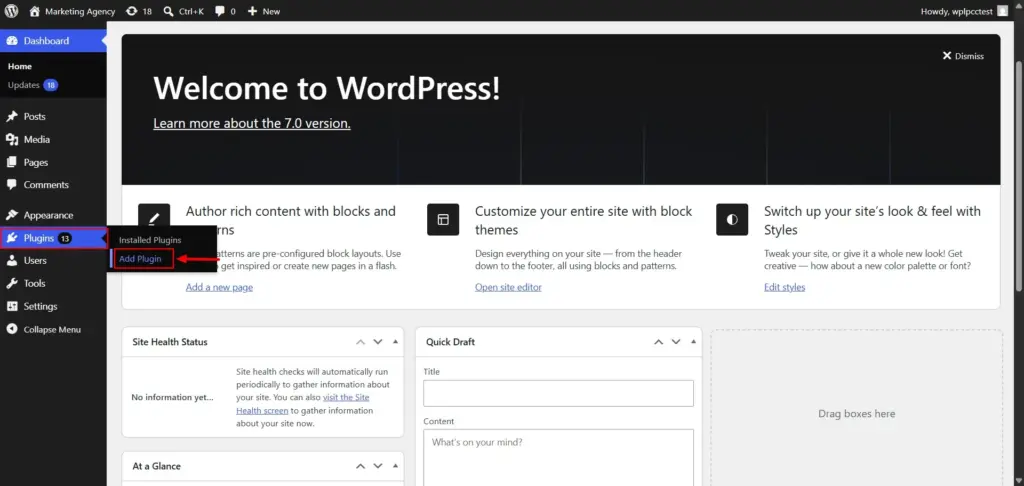
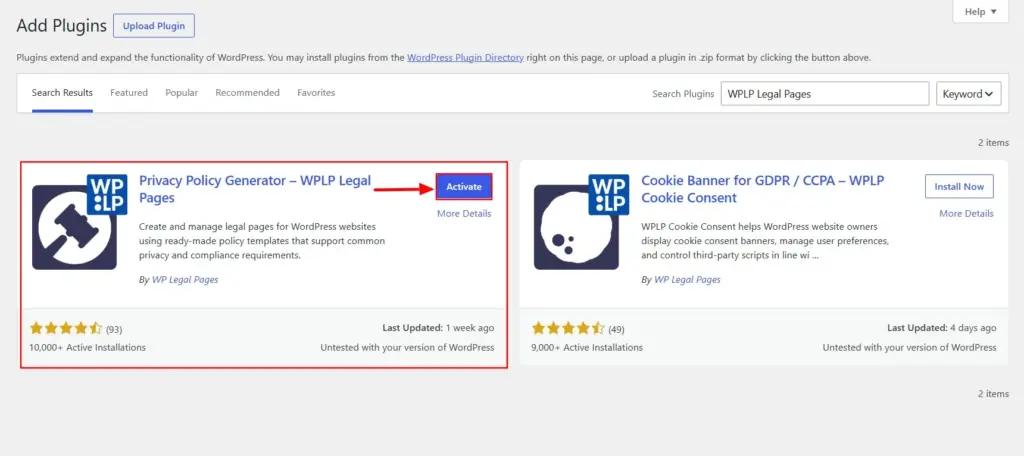
Navigate to your WordPress Dashboard and click on Plugins > Add New.
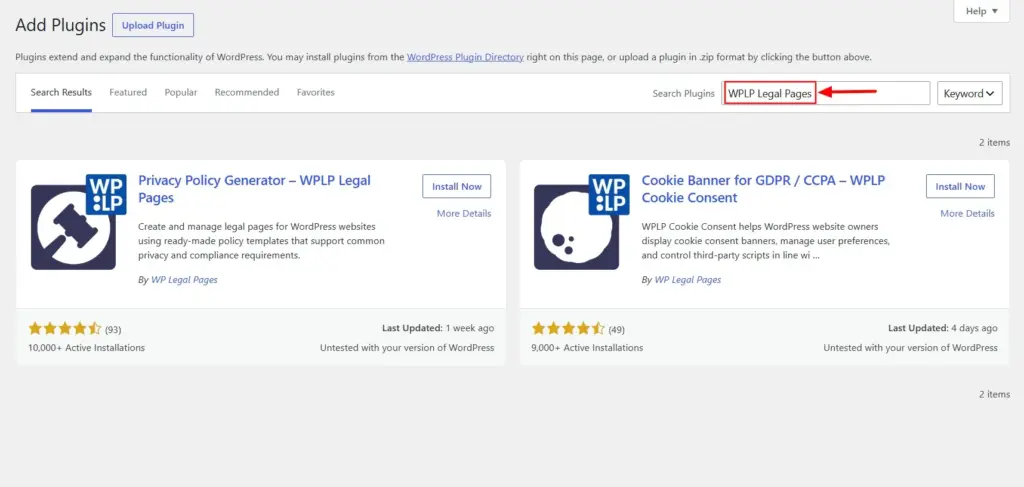
Search for WPLP Legal Pages in the search bar.
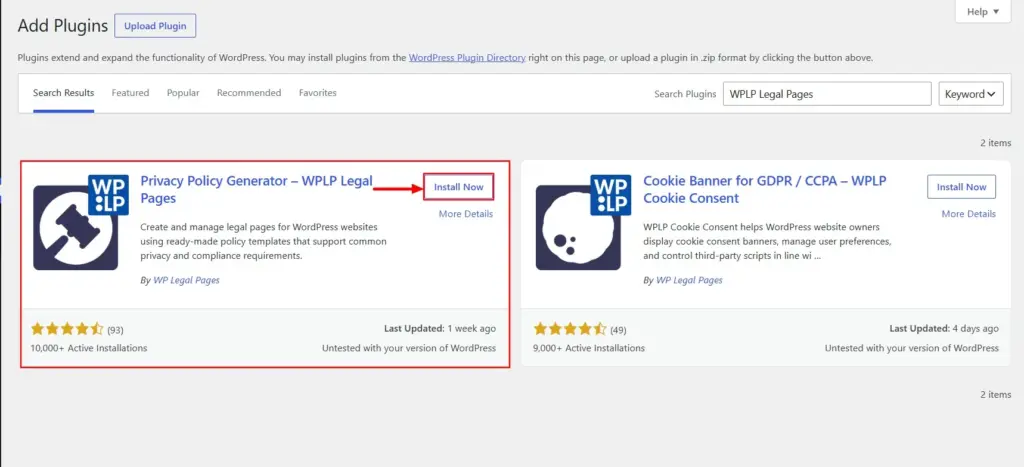
Click on the Install Now button.
Activate the WP Legal Pages plugin by clicking the Activate button.
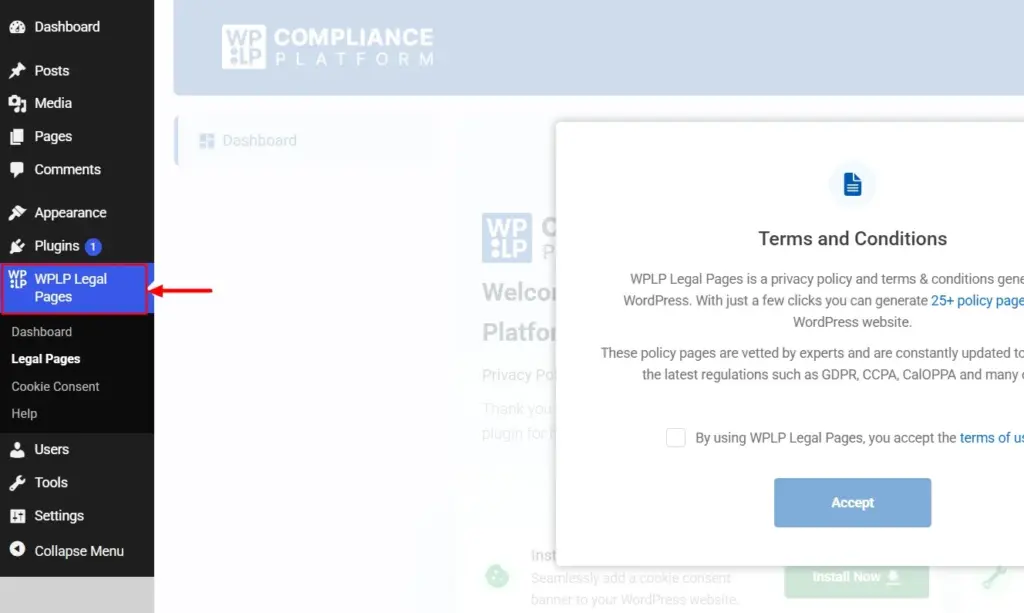
Set Up the WP Legal Pages Plugin
Once you have activated the plugin, you can access it directly from the Dashboard.
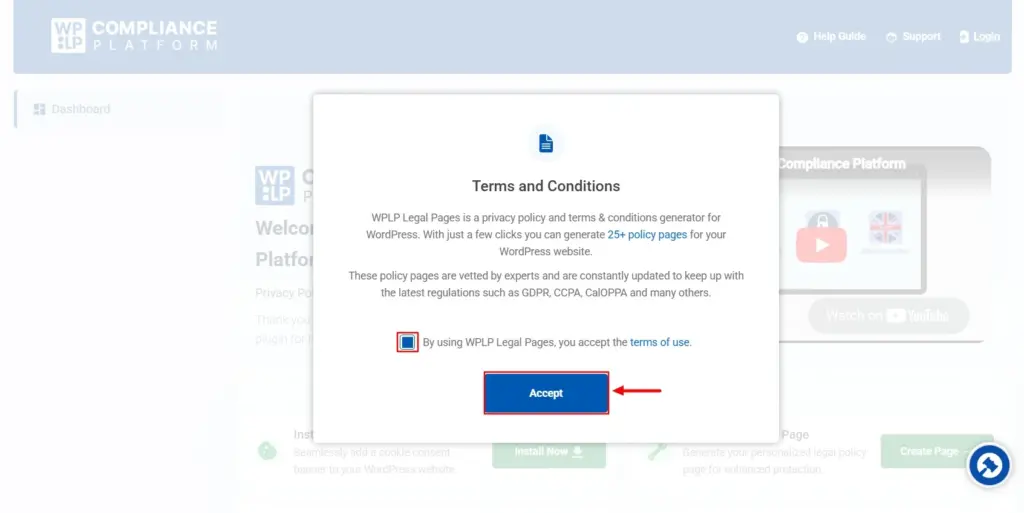
Next, accept the terms of use of the WPLegalPages plugin.
Create Your WP Legal Pages Account
Firstly, click the login button that you can see on the header
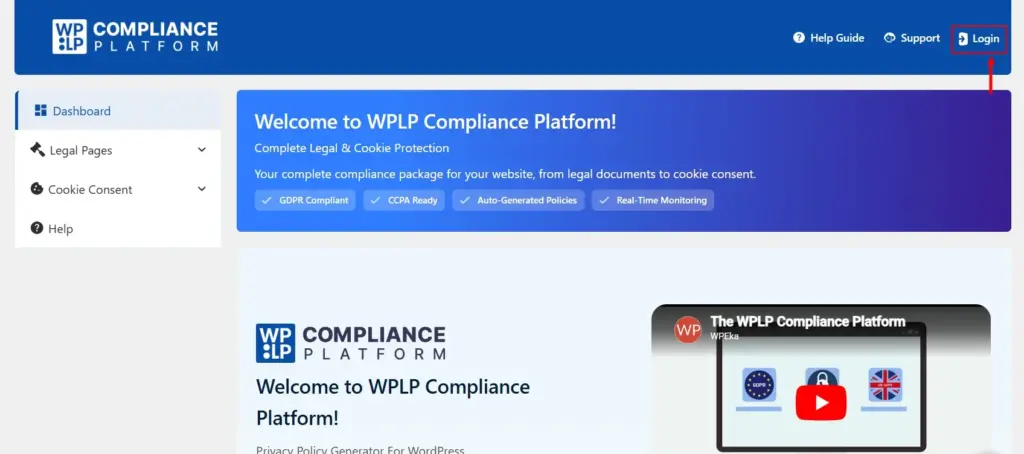
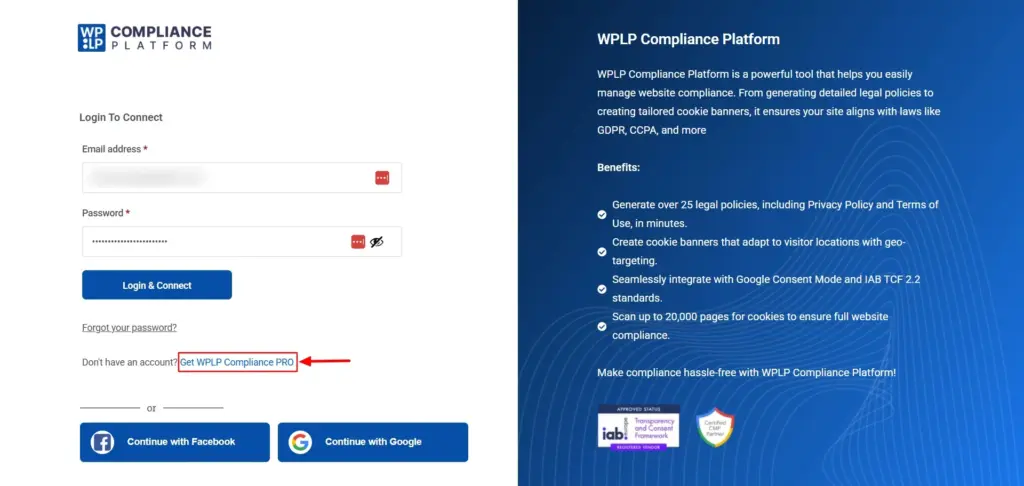
As you are a new user, you need to sign up before moving forward. So, click on the Get WPLP Compliance PRO.
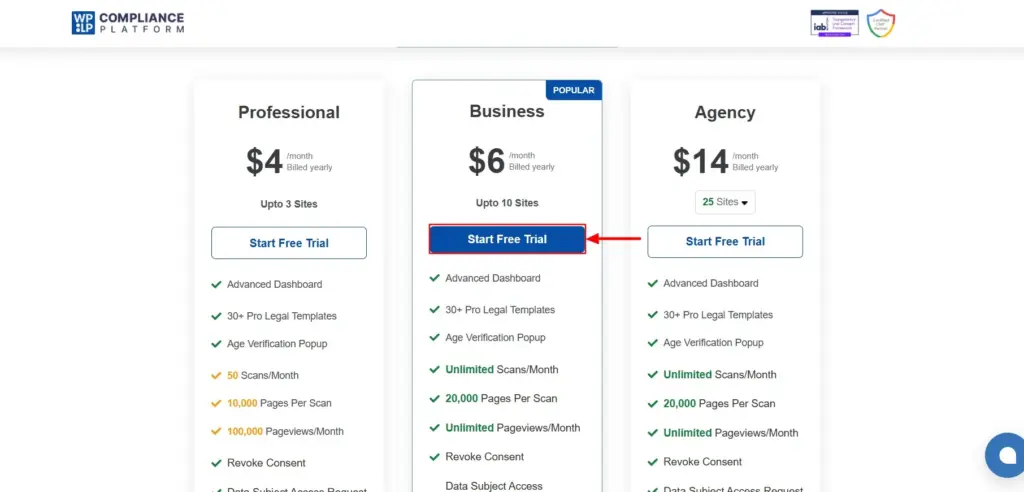
Now, you will land on a pricing page. Here, choose a plan that you think will better suit your business needs. And then, click on the Start Free Trial button.
The free trial is for 7 days. You’ll be able to access all our pro features during this period. Also, no credit card details will be asked from your end. So you can move ahead without second thoughts.
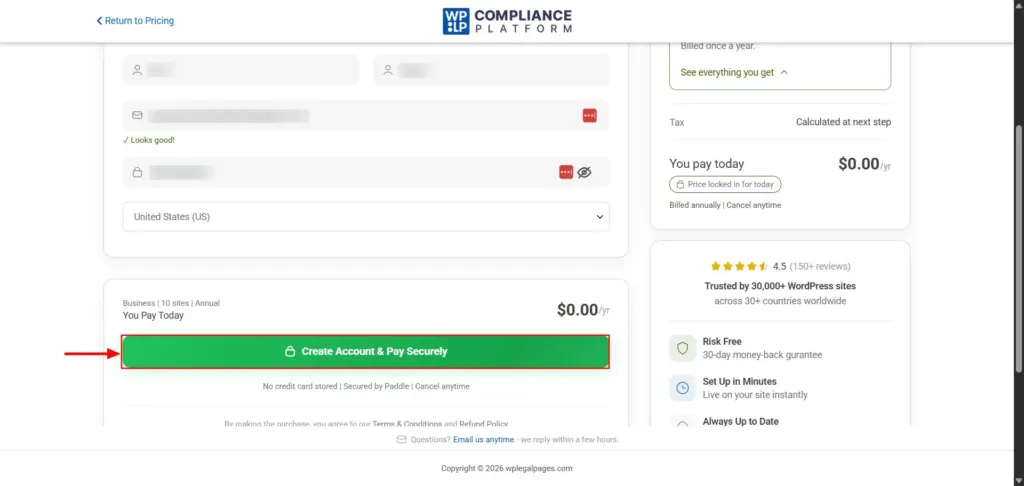
In the checkout page, you can fill in your basic details and click on the Create Account & Pay Securely button.
You can now see that your order is confirmed. Here, choose the My Account option so that you can see which
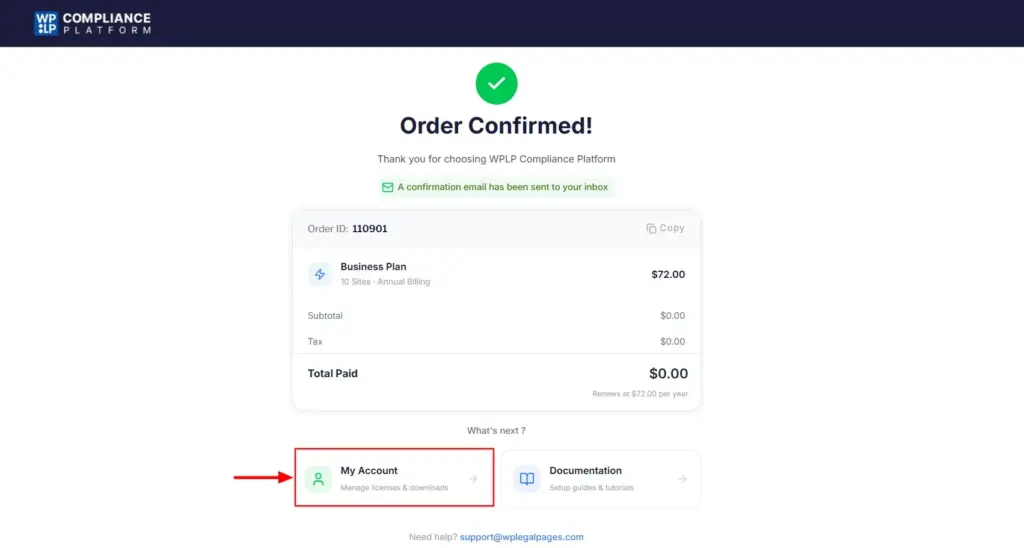
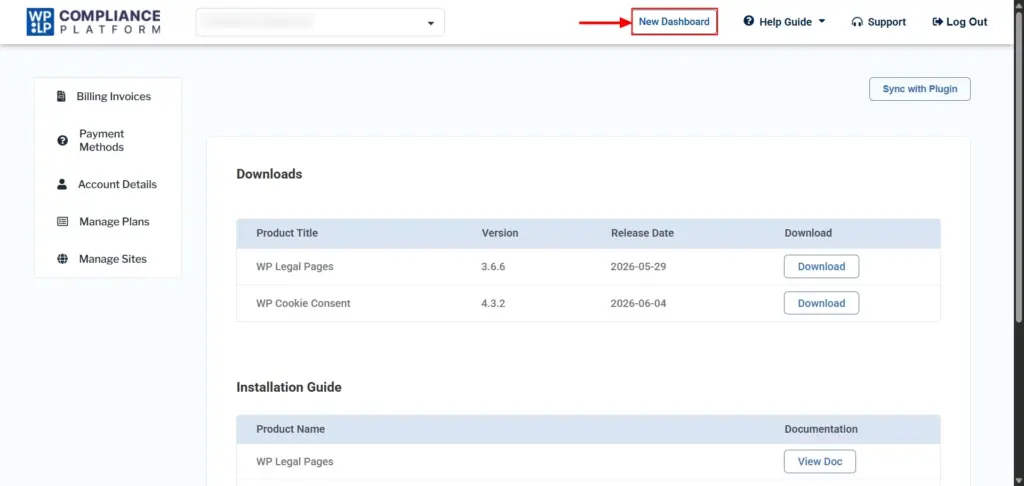
Here in the My Account page, you can see your invoices, the plans you have taken, and the sites that you are managing. Click the New Dashboard button, which will take you to the WPLP SaaS dashboard.
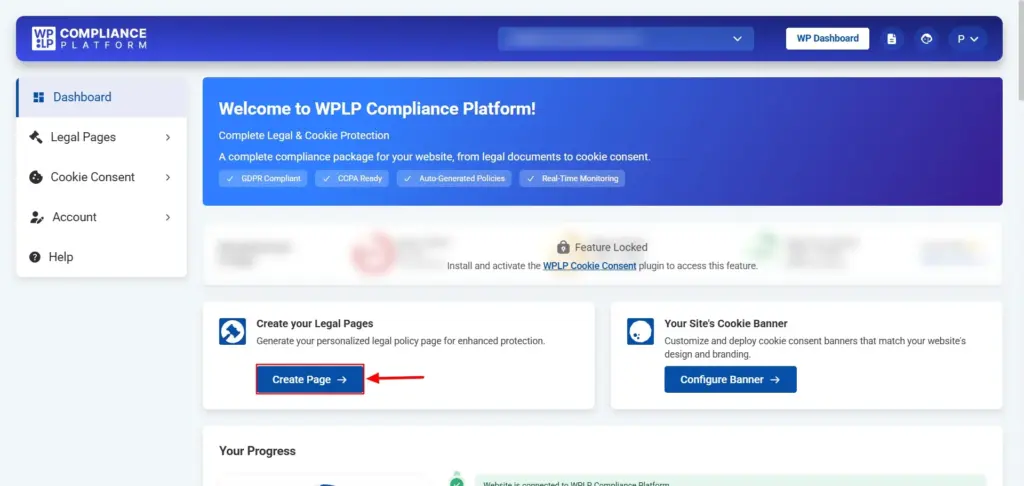
To generate a disclaimer and disclosure for your website, scroll down from the dashboard and click Create Page.
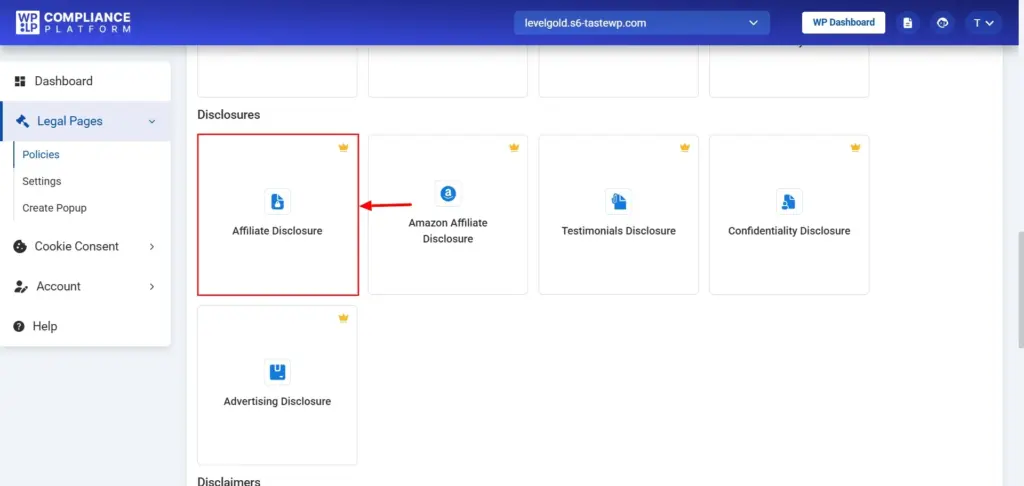
Create an Affiliate Disclosure Page
Now that you are on the dashboard, scroll down and choose the Affiliate Disclosure template.
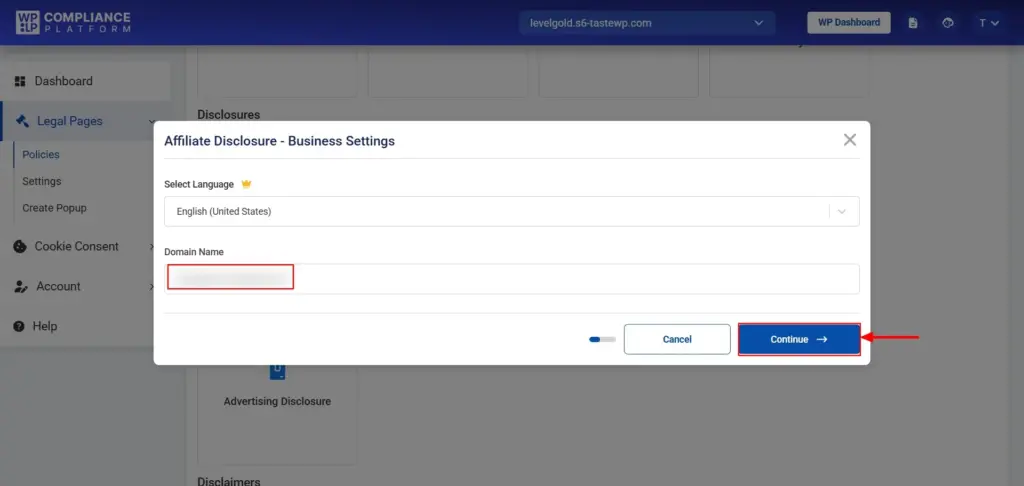
Fill in the essential details and click on the Continue button.
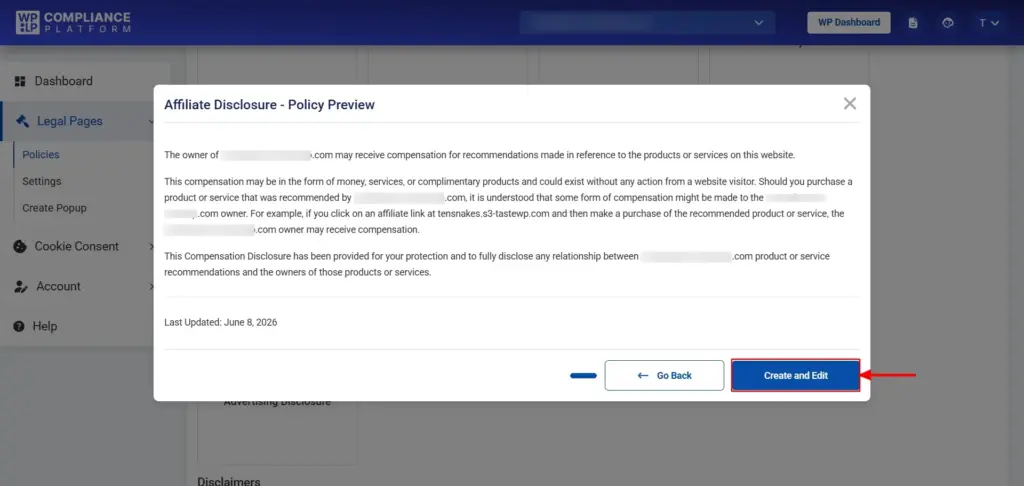
Now you will come across the template preview. You can edit it by clicking Create and Edit.
You can edit the disclosure template according to your needs and then click on the Publish button.
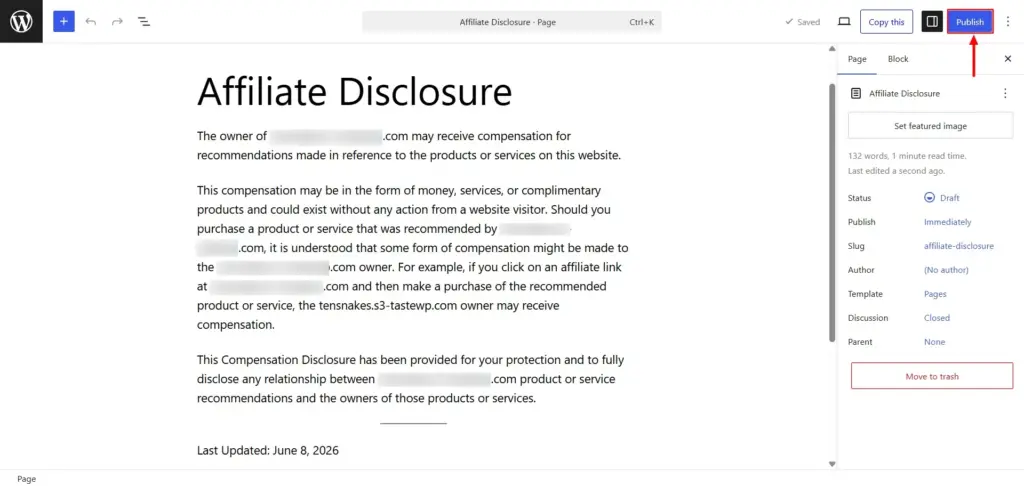
There you go; you have successfully created an Affiliate Disclosure for your website.
Step 3: Publish Your Disclaimer on Your Website
After obtaining the disclaimer, place it where visitors can easily notice it. Common locations are the footer of the website, a separate legal or disclaimer page, and even the end of blog posts where advice is provided.
Let’s check the settings of the Compliance tab.
From the plugin’s dashboard, click on Settings.
Once you are on the settings page, click on the Compliance tab.
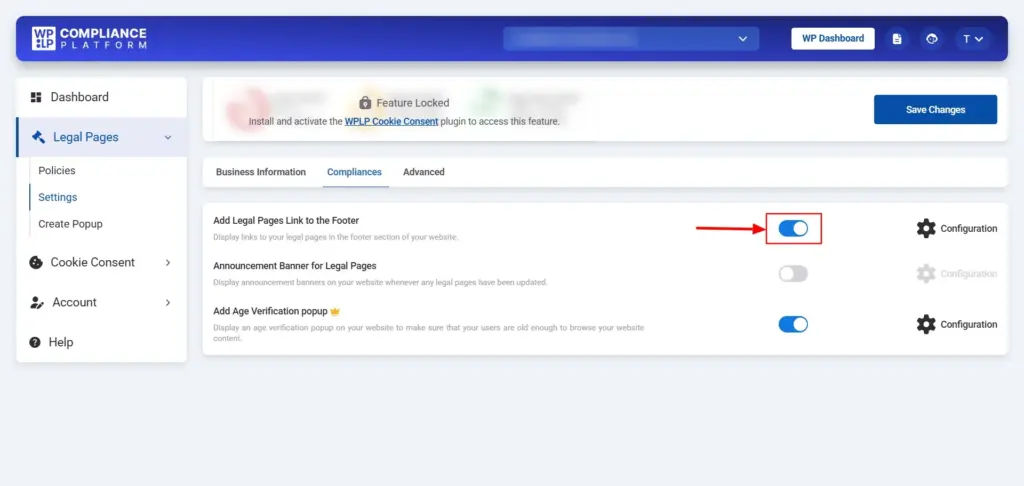
Now, go to the Add Legal Pages Link to the Footer section and toggle it on.
Then, click the Configuration button.
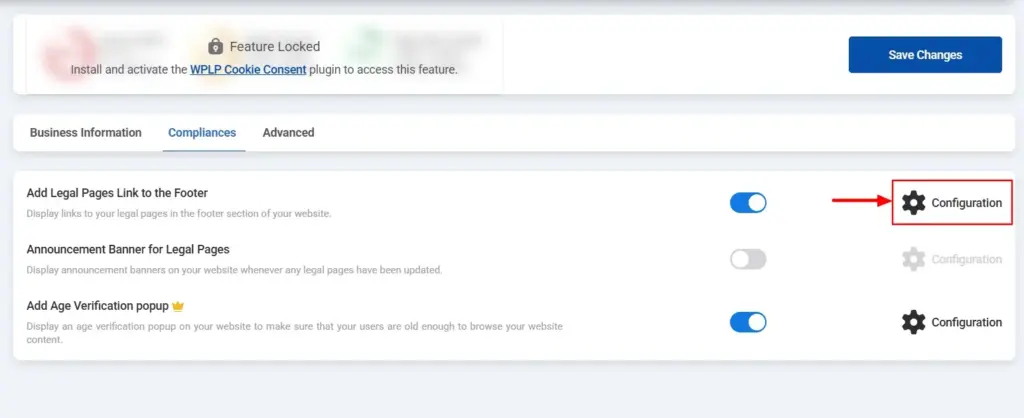
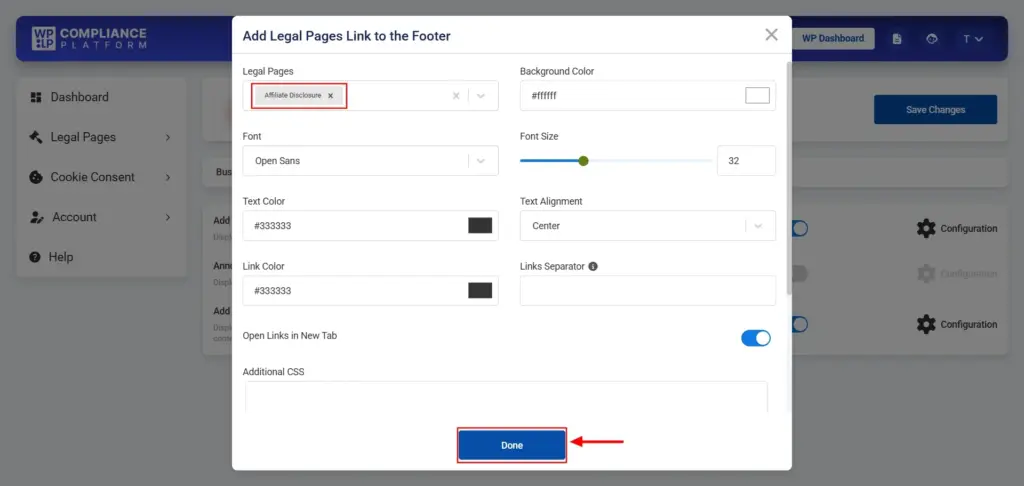
Once you are in the configuration tab, click on the drop-down box of Legal Pages and select the pages that need to be added to the footer (Affiliate Disclosure).
After choosing your page and choosing the color for background, font, text, and link, click on Done.
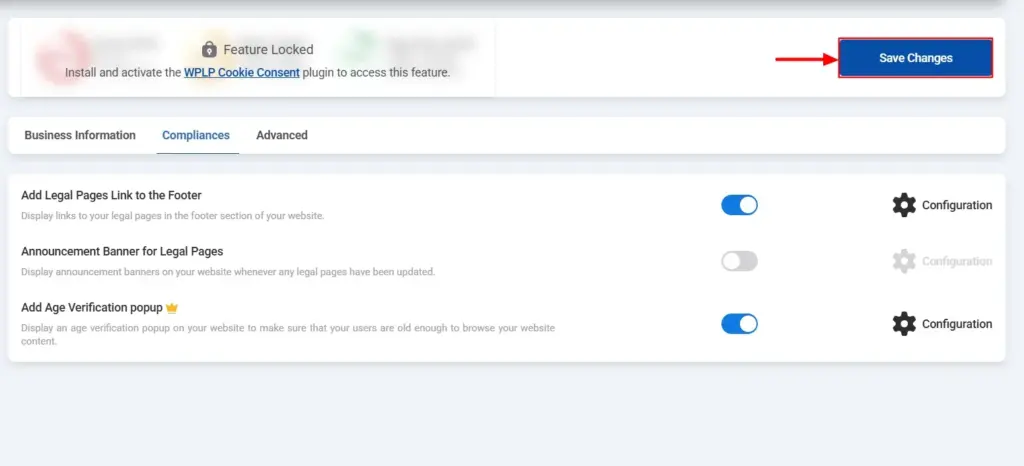
Now, go back to the settings and click on the Save Changes button without forgetting.
Step 4: Place Disclosures Where Visitors Can See Them
Disclosures must be put at the beginning of content that contains affiliate links, sponsored content, or paid reviews. This way, you are being truthful to your readers and in compliance with regulations such as the FTC guidelines.
Including these legal notices assists in establishing trust with your readers and protects your business from potential problems.
You can also change the order of the links using the Links Order feature. Follow the same steps mentioned above and, in the same section, scroll down and select the link order tab.
Rearrange them before other legal pages.
Best Practices for Website Disclaimers and Disclosures
There are only three major things that you need to keep in mind to make your disclaimers and disclosures clear, effective, and easy to find.
- Keep it clear: Use simple language so everyone can understand your disclaimers. Make sure they cover the right legal points.
- Show disclosures early: Place disclosures at the top of your content so users see them right away before they click or read further.
- Stay up to date: Review and update your disclaimers and disclosures regularly to follow current laws and regulations.
FAQ
Neither term has a formal legal meaning. A disclaimer and a disclosure serve different purposes, so one is not a “full” version of the other. A disclaimer helps limit liability or clarify responsibility, while a disclosure provides information that users should know before making a decision. Many websites use both because they address different compliance needs.
A disclaimer can be part of a legal document, but by itself, it is usually a legal statement rather than a standalone legal document. For example, disclaimers are often included in Privacy Policies, Terms and Conditions, websites, emails, and product packaging. While a disclaimer can help reduce legal risk, it is most effective when used alongside other legal agreements.
Start by identifying the risk or responsibility you want to address. Then explain it in clear and simple language. A good disclaimer should tell readers what the information is for, what it should not be used for, and where they should seek professional advice if needed. Avoid legal jargon and make sure the disclaimer is easy to find and understand.
You should use a disclaimer whenever your content, products, or services could be misunderstood or relied upon by others. Common examples include websites that provide legal, financial, medical, fitness, or educational information. Disclaimers are also useful when sharing opinions, testimonials, or user-generated content.
Not exactly. A warning alerts people to a specific danger or risk, while a disclaimer clarifies limitations, responsibilities, or legal obligations. Some disclaimers may contain warnings, but their main purpose is to set expectations and reduce the risk of misunderstandings. In many cases, a disclaimer explains what a business is and is not responsible for.
Not necessarily. Many businesses use disclaimer generators and legal templates to create disclaimers. However, websites operating in highly regulated industries may benefit from having legal documents reviewed by a qualified professional.
Final Thoughts
Understanding disclaimer vs disclosure is essential. Both help inform users but focus on different aspects of transparency and responsibility.
Disclaimers protect website owners from legal issues by explaining their limits and responsibilities. Disclosures build trust by providing information that may influence a user’s choices.
Website owners create a safe online space by using both disclaimers and disclosures. This not only protects their interests but also helps users make informed decisions.
Thus, knowing these key differences is essential for building a trustworthy and legally sound online presence.
If you liked this article, you might also like reading:
- Privacy Policy vs Privacy Notice: What’s the Difference
- DPA vs GDPR: Key Differences That Every Business Should Know
- Difference Between Disclaimer And Privacy Policy & How To Create Them
Need legally compliant disclaimers and disclosures?
The WPLP Compliance Platform helps you generate disclaimers, disclosures, privacy policies, terms and conditions, and other legal pages in minutes using professionally designed templates.
Start your 7-day free trial today and create the legal pages your website needs with confidence.