
15 Best Terms & Conditions Examples for Websites (2026)
Summary
It also covers major legal updates and provides a step-by-step guide to creating a free Terms and Conditions page using the WPLP Compliance Platform, along with its key features.
What Are Terms & Conditions? The T&C’s are contractual agreements between users and platforms through which it govern the expectations of users in relation to your platform. Normally, it provides a basis for establishing what is ok to do, limits our legal liability, protects our intellectual property and resolves disputes.
Using a generic or copied Terms and Conditions page that doesn’t actually protect your business?
Many of you rely on outdated templates that miss key clauses. If you leave them, you may face legal risks, compliance issues, and user disputes.
If you’re a website owner, SaaS founder, or online business, having the right Terms and Conditions is essential.
In this article, I’ll explore top real-world examples, key clauses to include, latest legal updates, and an easy way to create your own Terms and Conditions page.
- What are The Terms and Conditions?
- Why Terms and Conditions Are Important for Legal Protection and User Trust
- Top Terms and Conditions Examples
- 1. Walmart – Sample Terms of Use For Website
- 2. Apple – Terms and Conditions Example
- 3. Zara- Terms and Conditions Examples
- 4. Lamborghini- Sample Terms of Use For Website
- 5. The Walt Disney Disney- Website Terms of Use Example
- 6. Coca-Cola- Terms and Conditions Examples
- 7. IKEA- Website Terms of Use Example
- 8. Amazon- Sample Terms of Use For Website
- 9. Facebook- Terms and Conditions Examples
- 10. PayPal- Website Terms of Use Example
- 11. Target- Sample Terms of Use For Website
- 12. Sony Music- Terms and Conditions Examples
- 13. Instagram – Website Terms of Use Example
- 14. Shutterstock- Sample Terms of Use For Website
- 15. Hamleys- Website Terms of Use Example
- What To Include In a Website Terms and Conditions Page
- Major Updates Relevant to Terms & Conditions
- 1. Anti-Misleading & Transparent Pricing (UK DMCC Act – April 2026)
- 2. Prohibited Terms in Consumer Financial Contracts (US Regulation AA – 2026)
- 3. New “Acceptable Use” and Child Safety Clauses for Apps (iubenda)
- 4. Online Dispute Resolution Clause Update (EU)
- 5. Data Transparency & Sharing Rights (EU Data Act)
- 6. India’s Digital Personal Data Protection Act (DPDPA)
- How To Create Terms and Conditions Page for Free
- Conclusion
What are The Terms and Conditions?
The agreement for terms and conditions explains the relationship between the website user and the service provider. It acts as a guide for using the company’s products or services and can also be referred to as terms of use, terms of service, or general conditions.
Its primary objective is to make the terms of service transparent and easy to understand. When it comes to end-of-season commerce sales, terms and conditions often affect the discount applied to a purchase.
Check out this compliance platform comparison page to learn about various legal page plugins that offer the best features.
Why Terms and Conditions Are Important for Legal Protection and User Trust
While you aren’t legally obligated to put a terms and conditions agreement on your website or mobile app, having one available on your app or website may help you by adding to your potential legal protections.
In the case of a disagreement, having a Terms and Conditions (T&C) page on your website is crucial for both legal protection and building user trust. Here’s why:
Legal Protection
- Defines Rules & Expectations: T & C clarify what users can or cannot do on your website. This reduces potential misuses, abuses, and misunderstandings.
- Limits Liability: Enables you to disclaim liabilities, such as content errors or downtime of the service, and protects your business from legal claims.
- Protects Intellectual Property: Declare ownership of content as well as logos and trademarks, and minimize risk of unauthorised use of your IP.
- Establishes Governing Law: Specifies which jurisdiction’s laws apply and how disputes will be resolved.
Establishes Trustworthiness with Users
- Demonstrates Transparency: Shows your business is clear and honest about how it operates.
- Defines Expectations: Helps users understand what they agree to and what to expect.
- Encourages Responsible Use: Outlines acceptable behavior for a better user environment.
- Increases Professionalism: Formal policies make your website or app appear legitimate and organized.
Top Terms and Conditions Examples
Here’s a list of all the best terms and conditions examples available online.
1. Walmart – Sample Terms of Use For Website
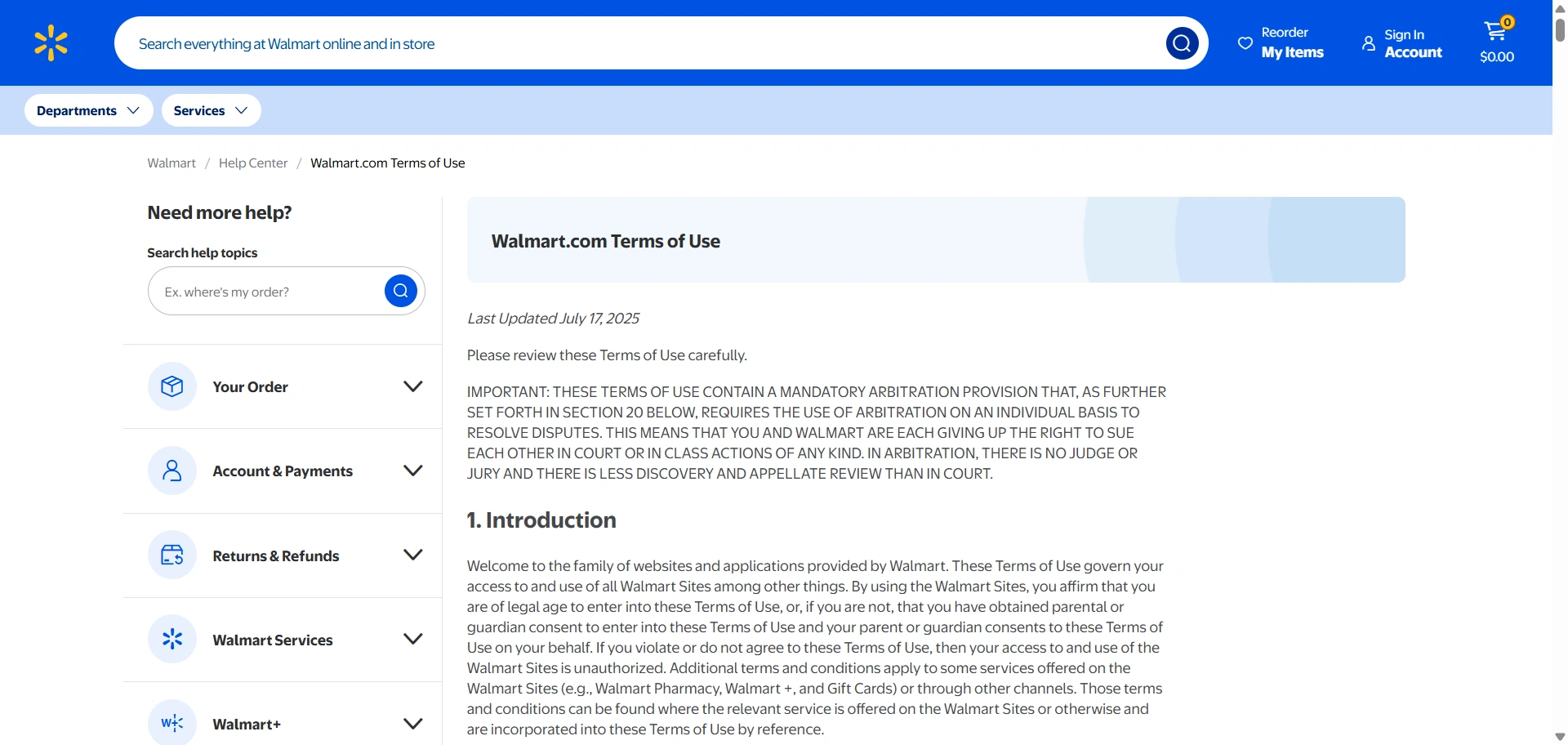
From Walmart’s terms and conditions examples, this big retail chain’s terms of service template is simple and follows the website’s design. It has lengthy, detailed terms and conditions and many applicable user clauses.
Our Take: The T&C is well written for retail stores that do large amounts of transactions each year. Walmart made a change to its terms & conditions in late 2025, with the intent of being in compliance with new U.S. auto-renewal transparency requirements.
2. Apple – Terms and Conditions Example
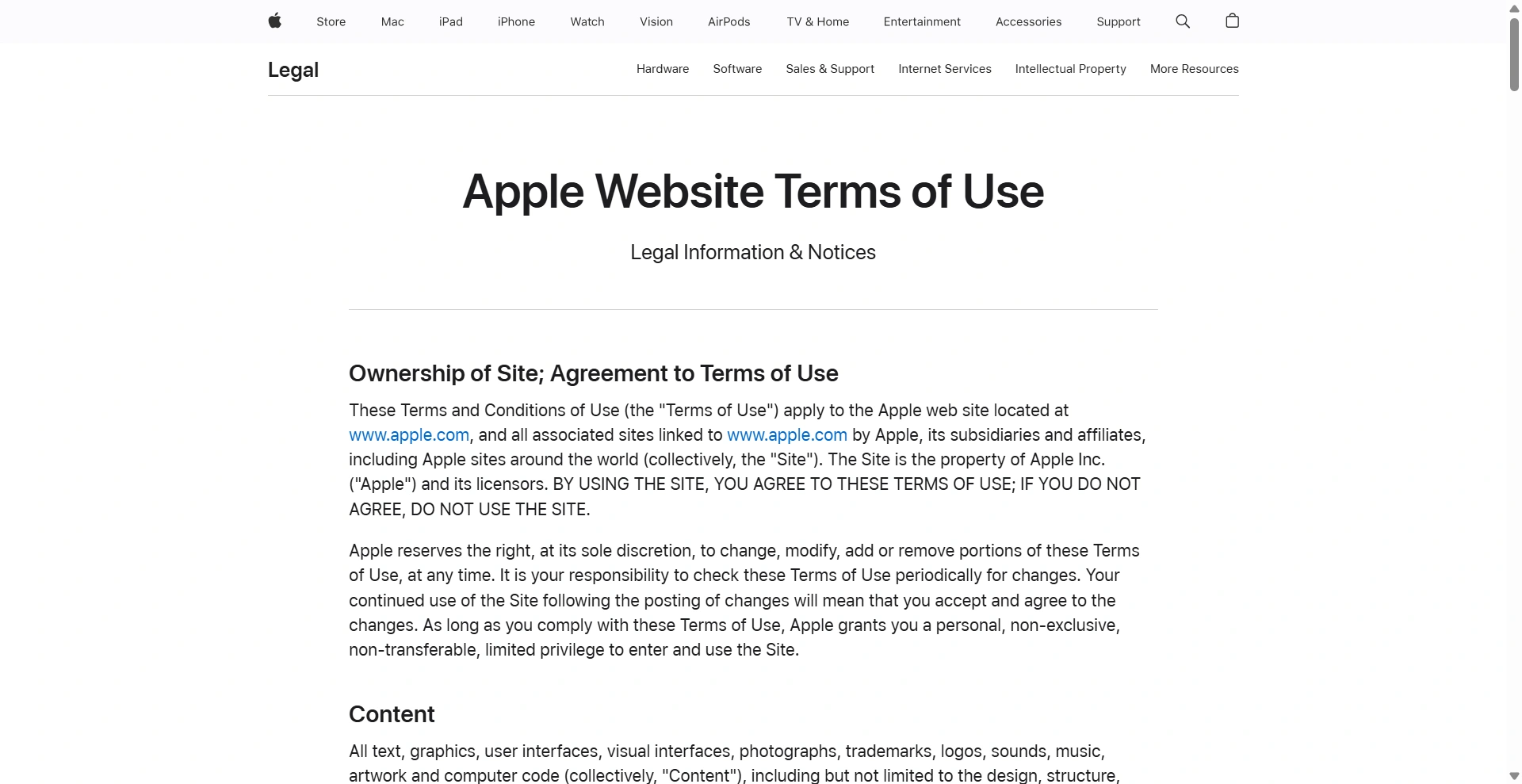
The agreement is easy to read despite being comprehensive, clearly defines user responsibilities, and includes solid liability safeguards. Overall, it balances legal protection with a clean, user-friendly structure that aligns well with its brand.
Our Take: Apple’s T&C aligns well with brand-driven businesses that value clarity and control. The agreement is well-structured, easy to navigate, and places significant emphasis on intellectual property and user responsibility.
3. Zara– Terms and Conditions Examples
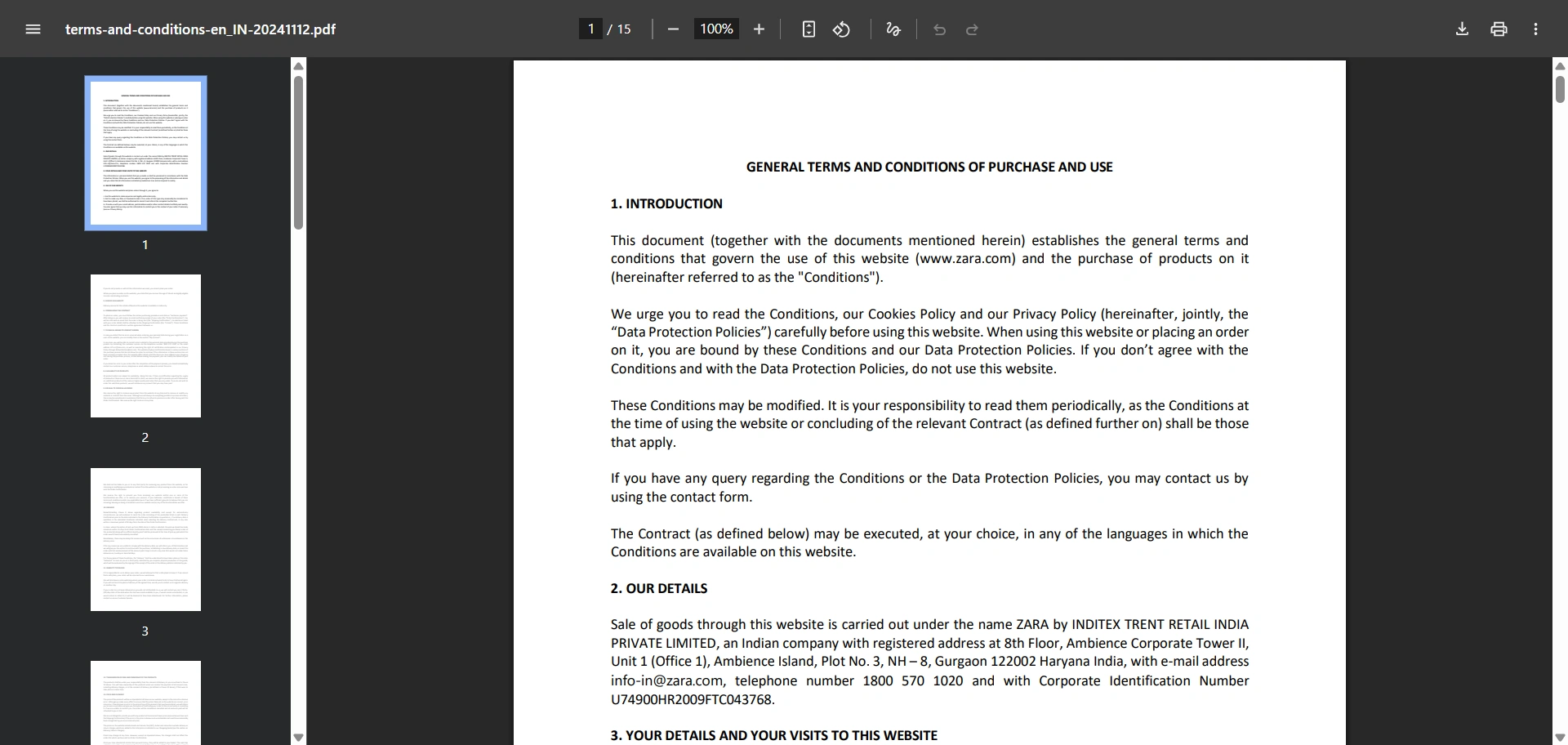
Zara, a famous clothing brand for youngsters, divides its terms and conditions into sections that address various subjects, including order refusals and dispute resolution.
However, the part of this legal agreement that describes how consumers should use the website and app or how not to is the most important.
Our Take: Zara’s dispute resolution section is particularly well-drafted and has been updated to reflect EU ODR changes (the EU ODR platform ceased accepting new complaints in March 2025).
4. Lamborghini– Sample Terms of Use For Website
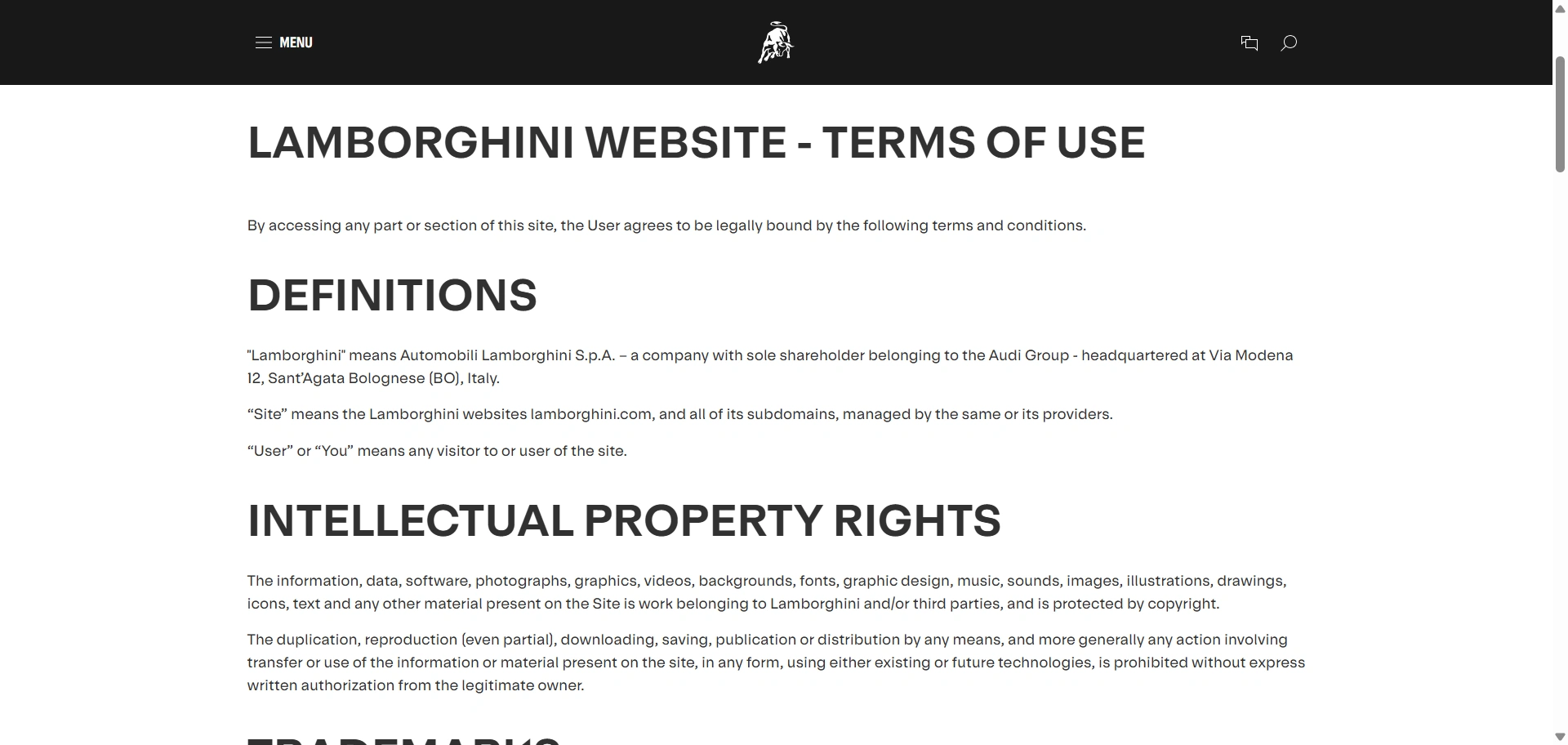
The well-known carmaker Lamborghini has detailed terms and conditions describing its trademarks, intellectual property rights, and other topics.
These terms, broken down into fourteen categories, give consumers clear and understandable information about their expectations and rights while interacting with users.
Our Take: The gold standard for IP-heavy brands. If your business relies on trademarks, design rights, or exclusive digital content, Lamborghini’s 14-section IP framework is worth modelling.
5. The Walt Disney Disney– Website Terms of Use Example
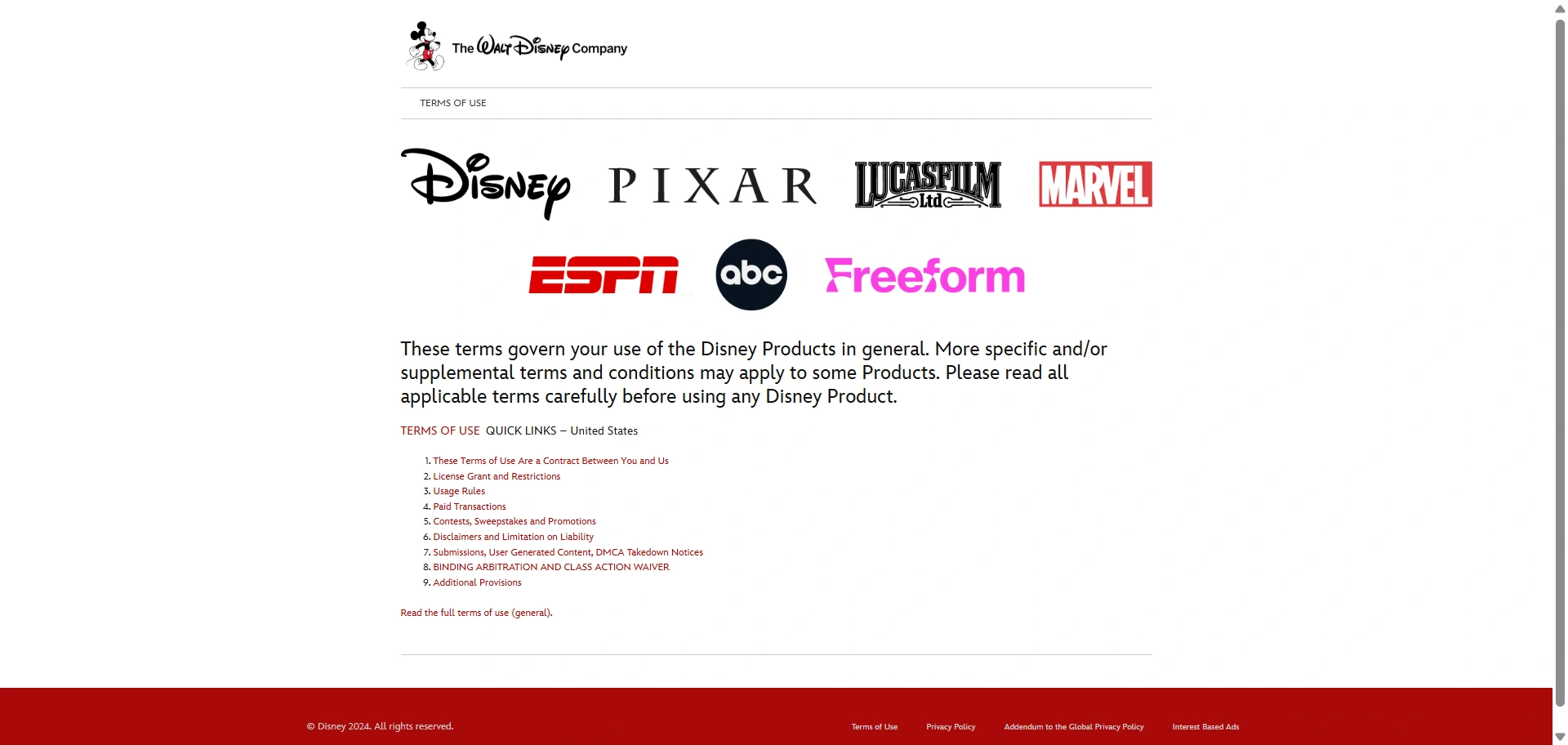
Disney’s terms and conditions template is specific and is available in 39 languages. It includes nine sections for different Disney products.
Our Take: Demonstrates how to build a single T&C framework that scales globally across multiple products and languages. Overkill for small businesses, but a masterclass in multi-jurisdiction compliance.
6. Coca-Cola– Terms and Conditions Examples
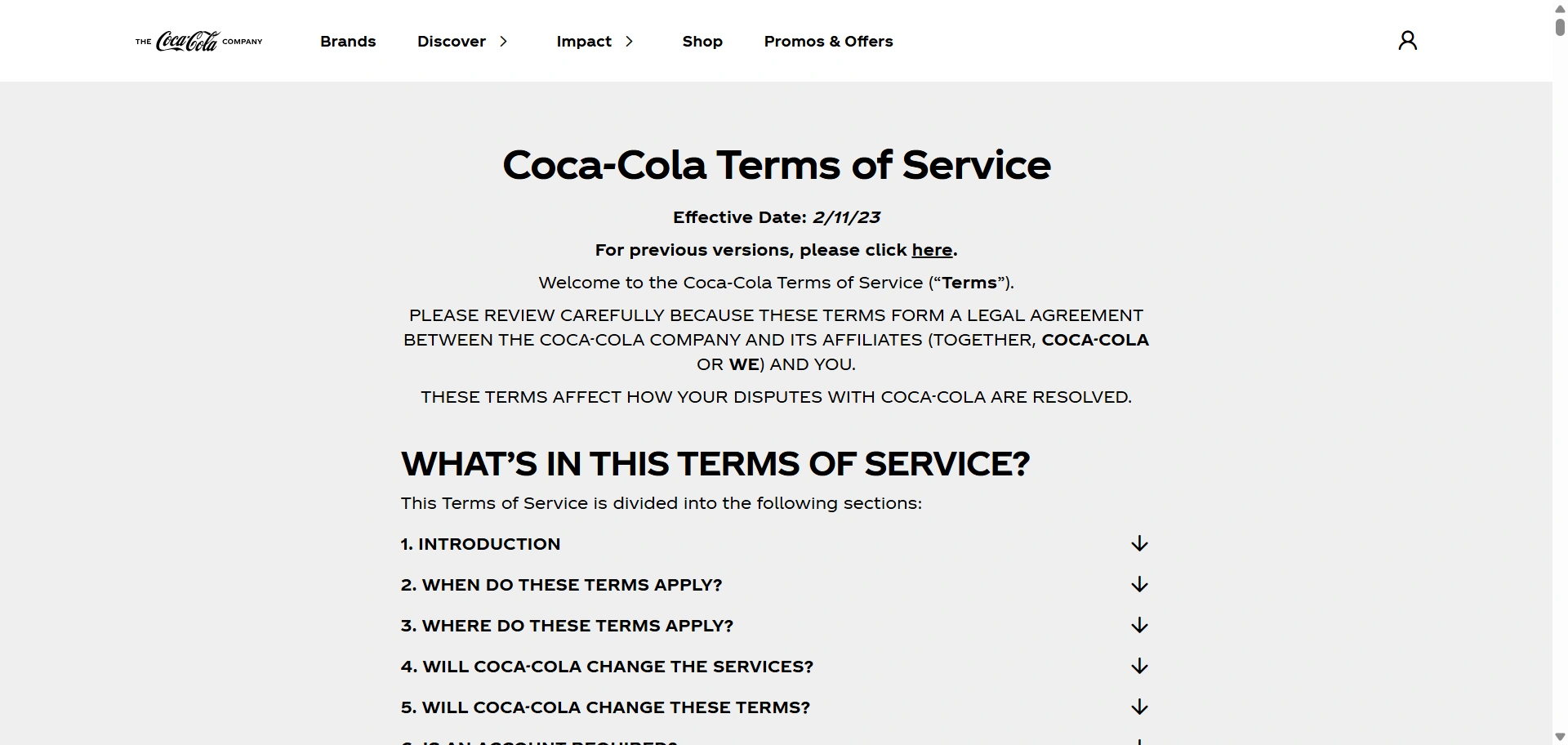
Among all the terms and conditions examples, you can refer to Coca-Cola’s terms of use template for its simple and easy way of writing. They have broken the terms and conditions into smaller blocks to help with readability and to make it more accessible.
Our Take: Best-in-class for readability. Coca-Cola’s short-block approach one idea per paragraph is the format we recommend to every client who asks how to make their T&C actually get read.
7. IKEA– Website Terms of Use Example
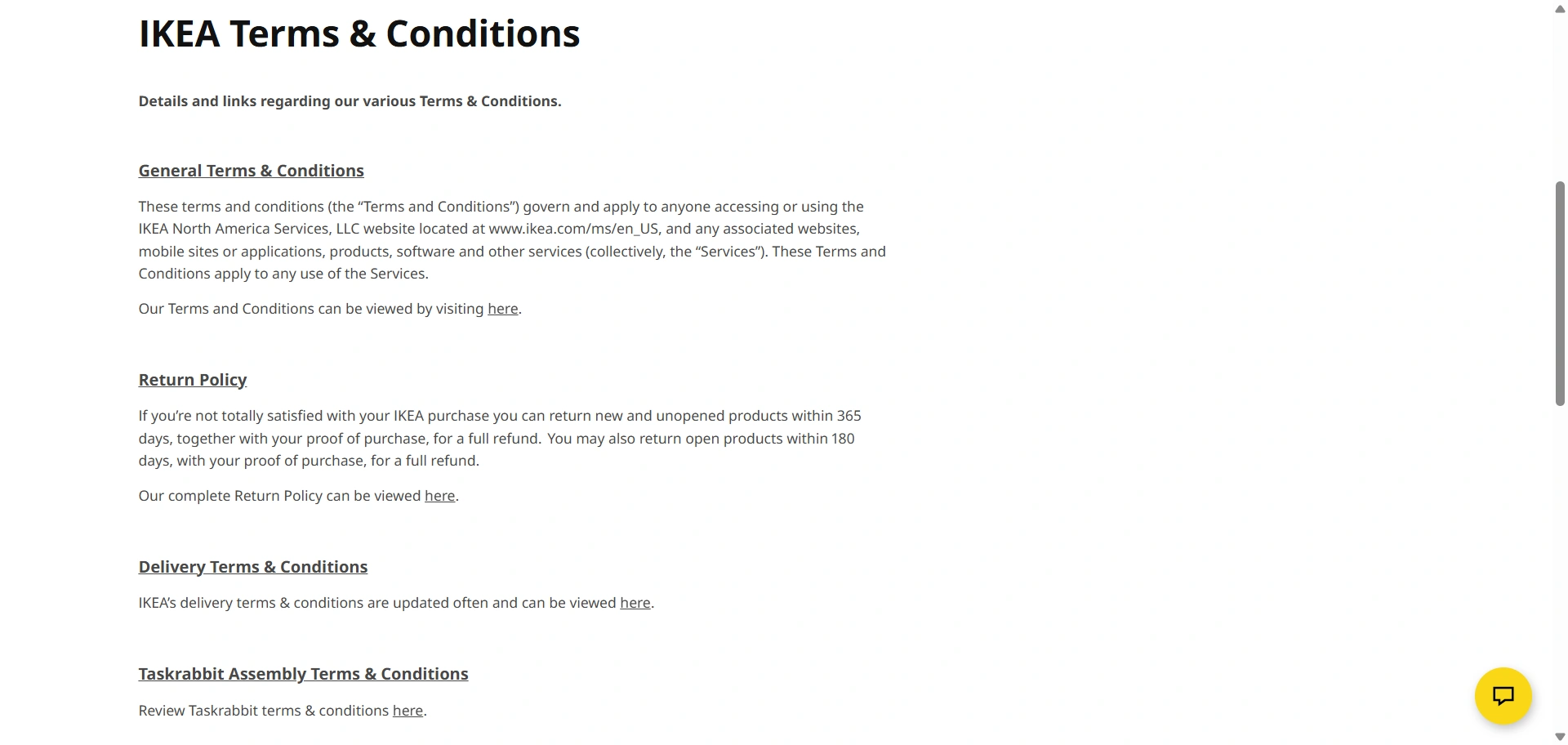
The Ikea terms and conditions page is brief. If you manage a website with a transactional setup, you can take inspiration from IKEA’s terms and conditions.
Our Take: Perfect benchmark for product-only eCommerce stores. Concise and focused though we’d recommend adding a user data rights clause to align with the EU Data Act (2025).
8. Amazon– Sample Terms of Use For Website
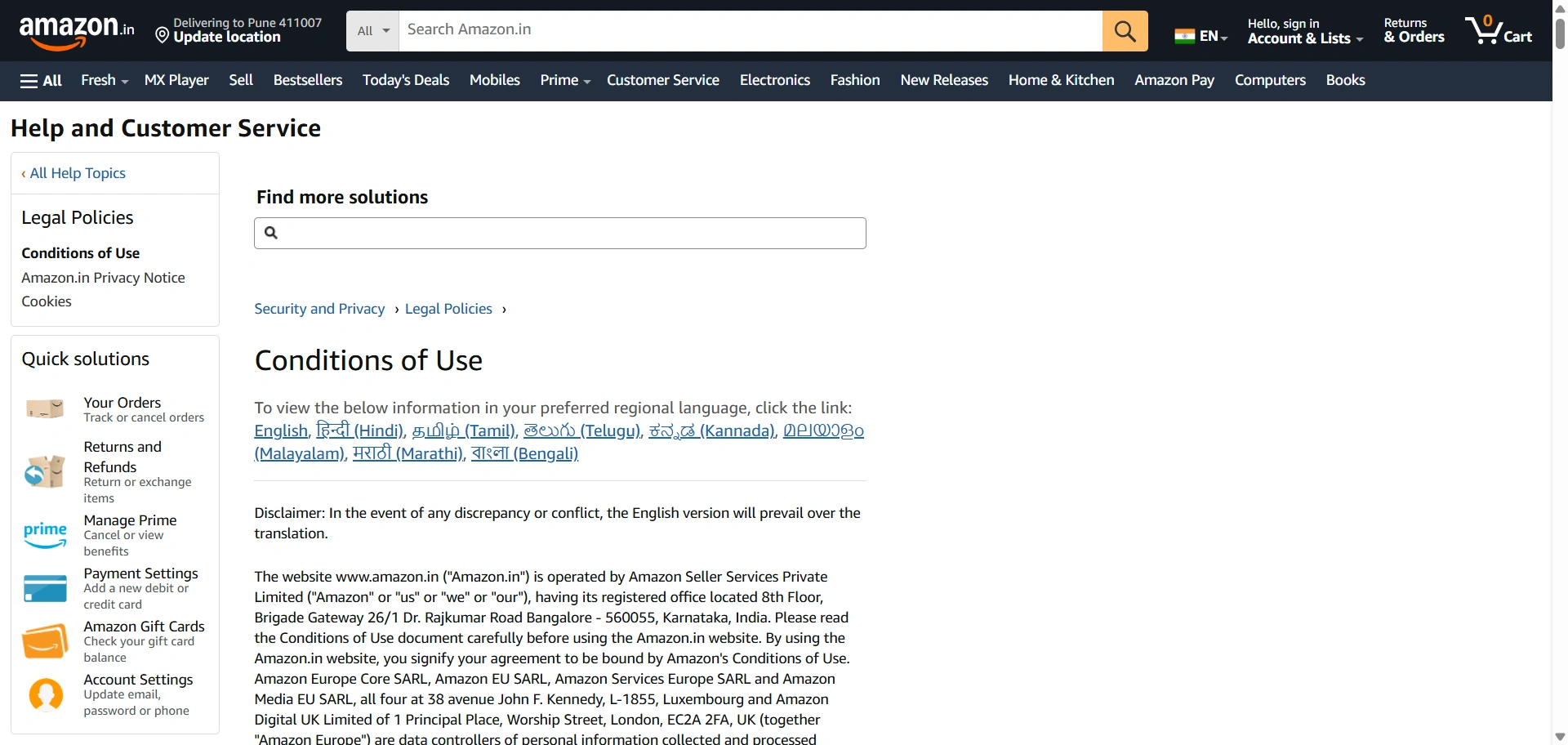
In comparison with other terms and conditions examples, Amazon’s terms of use discuss copyright, trademark, license, access, return, refunds, title, and more. If you run an e-commerce website, we recommend looking at this T&C document.
Our Take: The most comprehensive eCommerce T&C in this list. Mine specific sections returns, IP, access termination rather than copying the whole document. Amazon updates its T&C frequently, so check the current version for 2026 changes.
9. Facebook– Terms and Conditions Examples
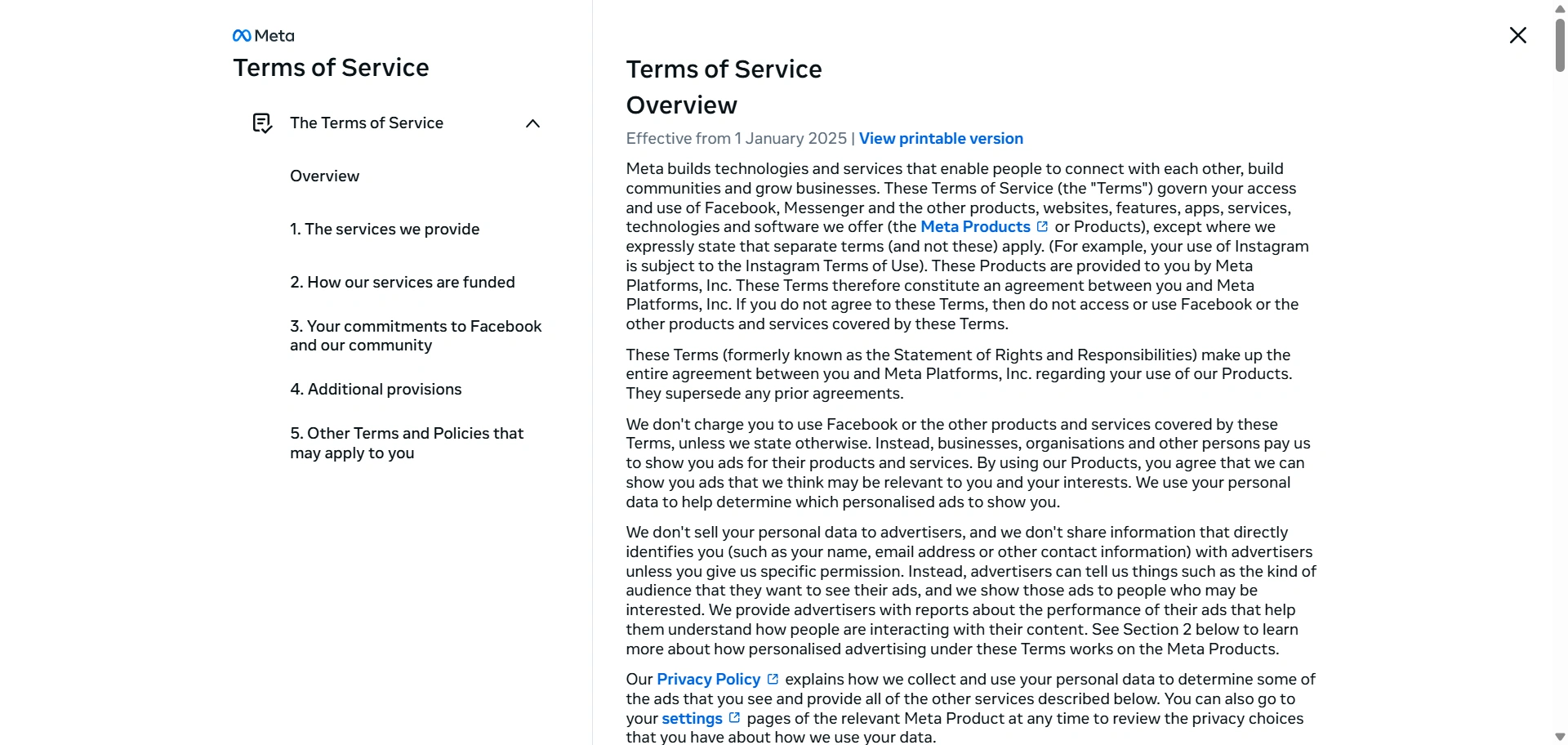
Facebook’s website’ terms and conditions are refreshing, showing that you don’t need a lengthy page of terms and conditions. It writes these terms and conditions documents to provide users with clear information about their rights and what they can expect.
Our Take: Study how Meta explains the IP licence it takes over user-generated content it’s transparent and plainly written. A useful template if your platform hosts user posts, photos, or videos.
10. PayPal– Website Terms of Use Example
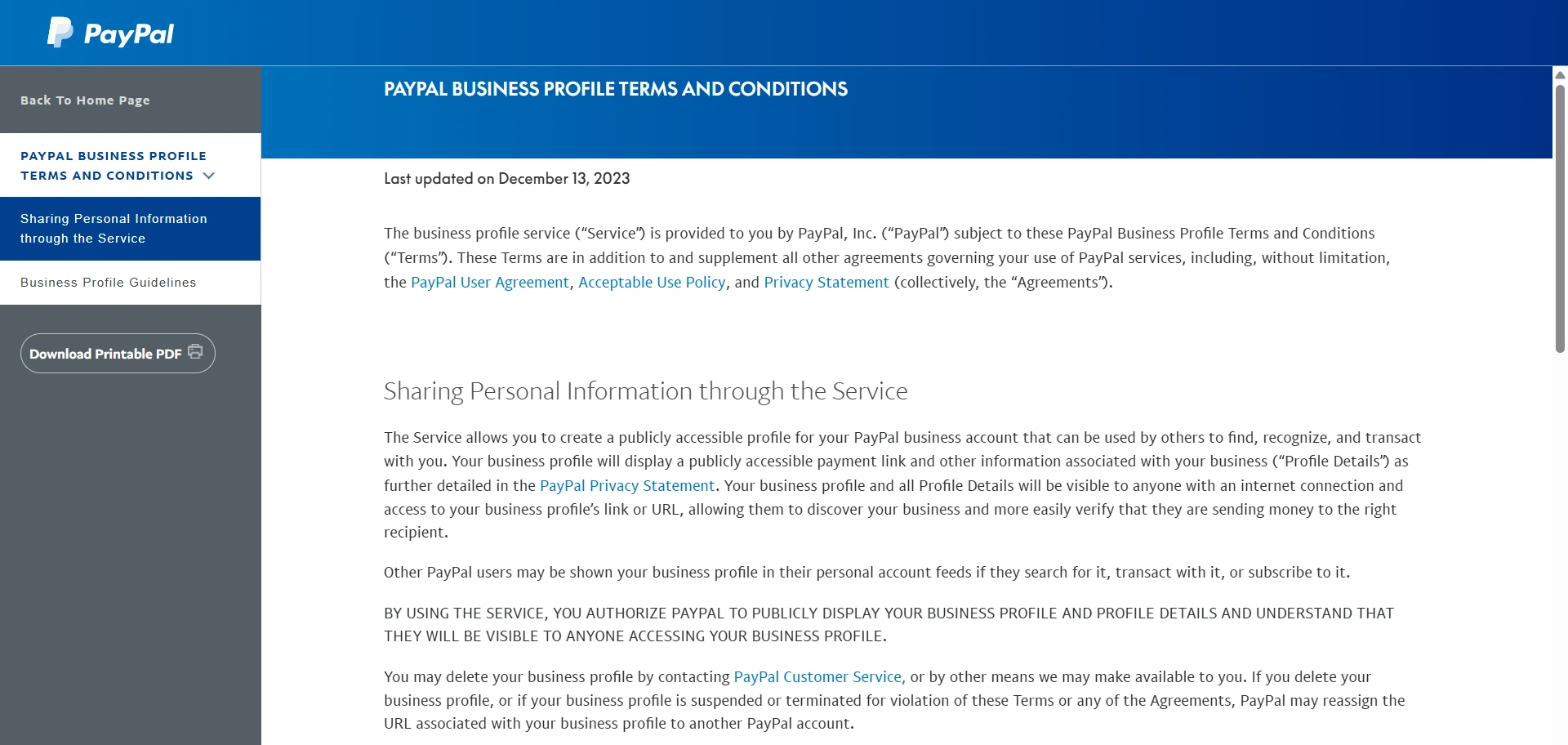
PayPal’s terms of service do not contain extensive content like the other terms and conditions examples; instead, it displays short and up-to-the-point content. The point covers a detailed description of using the service and what customers can expect from PayPal.
Our Take: Essential reading if your site processes payments. PayPal’s dispute escalation and chargeback policy sections are the clearest we’ve seen in any payment provider’s T&C.
11. Target– Sample Terms of Use For Website
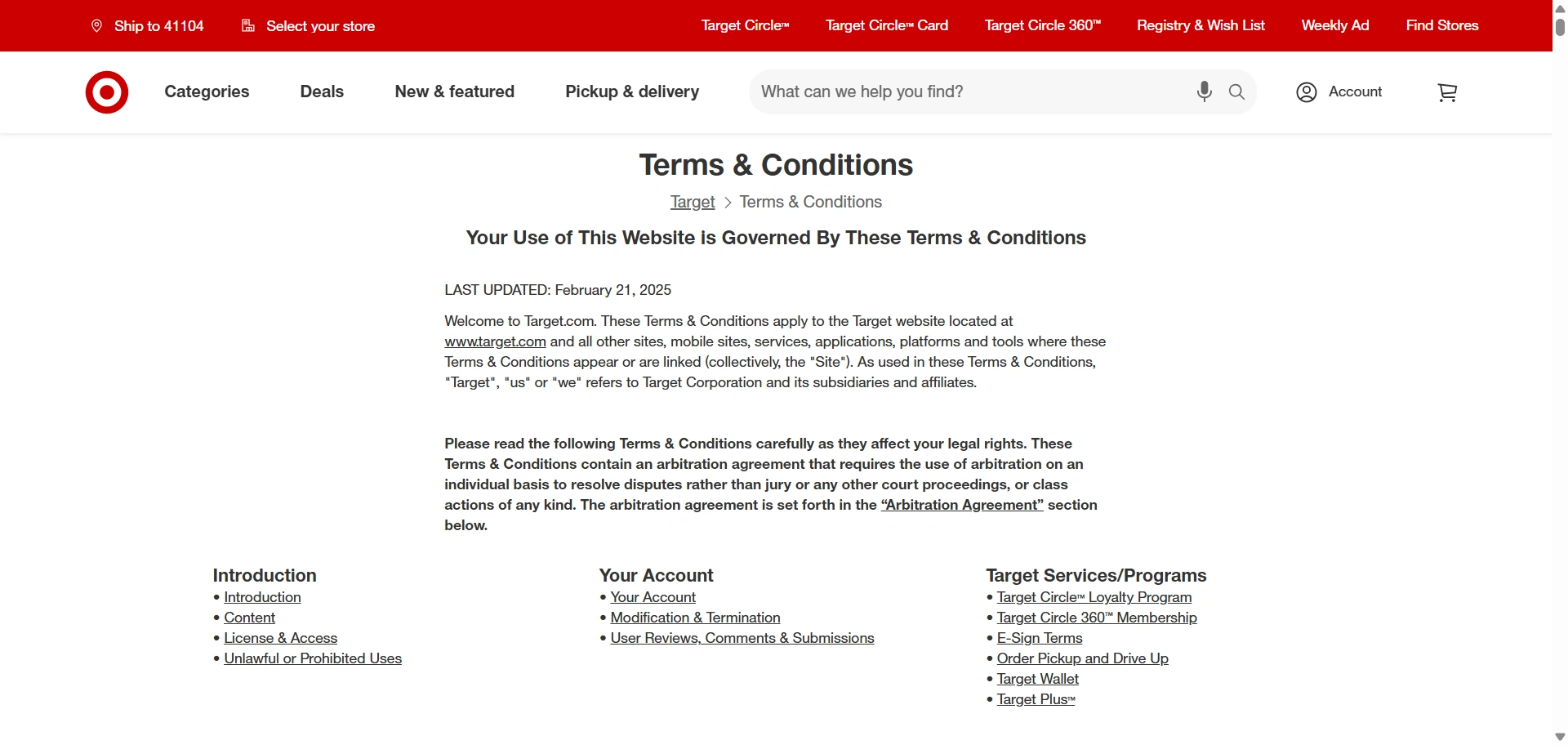
The acceptable usage policy can be found on Target’s terms & conditions page. They are a retailer based in America; the page includes jump links near the top to help users navigate between sections.
Most importantly, the page serves the purpose of informing users of the actions they need to take as a visitor and/or Member on the site and protecting Target from possible legal issues.
Our Take: Copy Target’s jump-link navigation for any T&C over 1,000 words. It dramatically improves user experience and signals to courts that the terms were genuinely accessible.
12. Sony Music– Terms and Conditions Examples
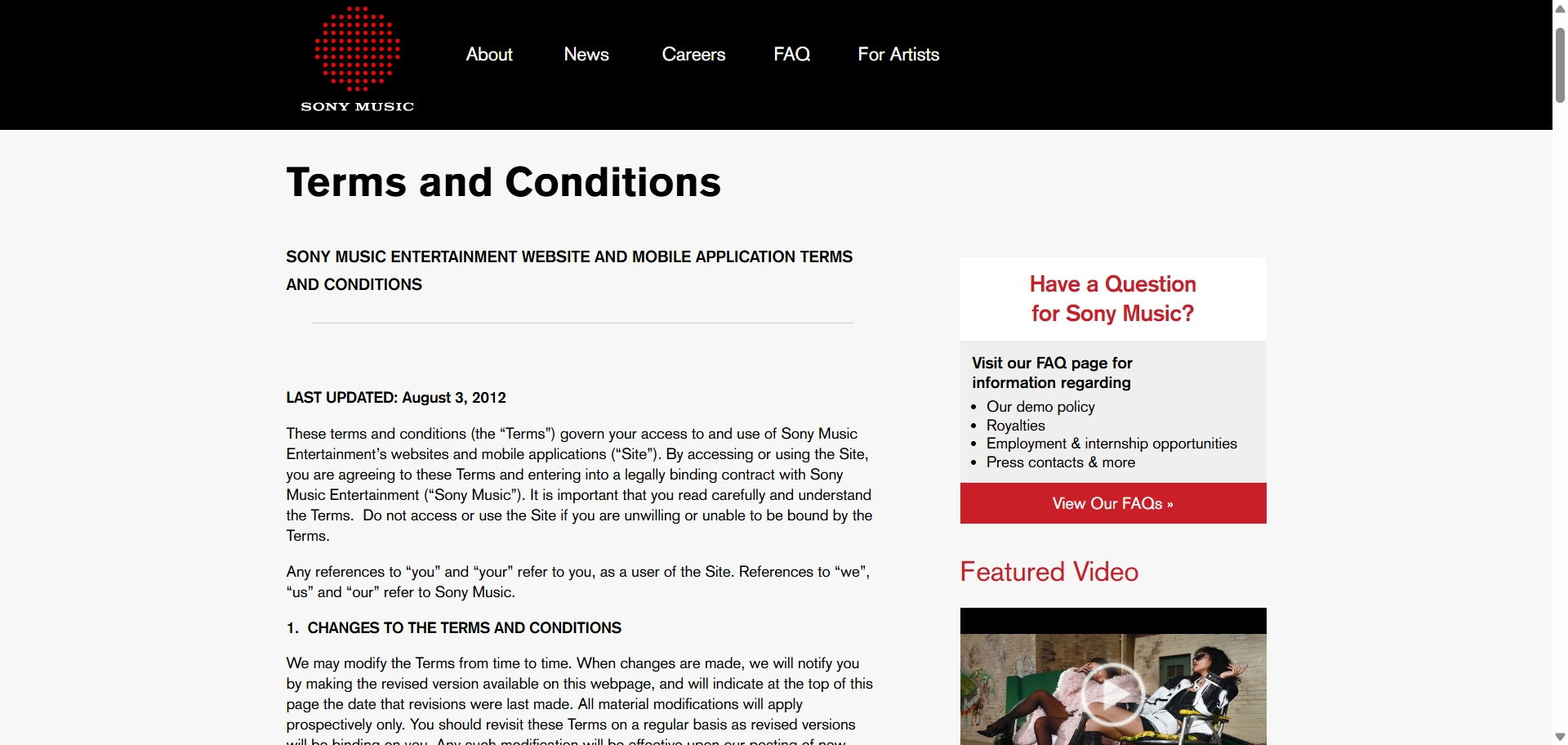
The terms and conditions for Sony are very similar to the way Spotify lays things out; however, the format of Sony’s terms and conditions is very cluttered and not appealing at all. But yes, it does provide the answer that you are looking for.
Our Take: Legally thorough but hard to navigate. The IP and content licensing depth is worth studying but reformat using Hermès’ structural approach before adapting for your own use.
13. Instagram – Website Terms of Use Example
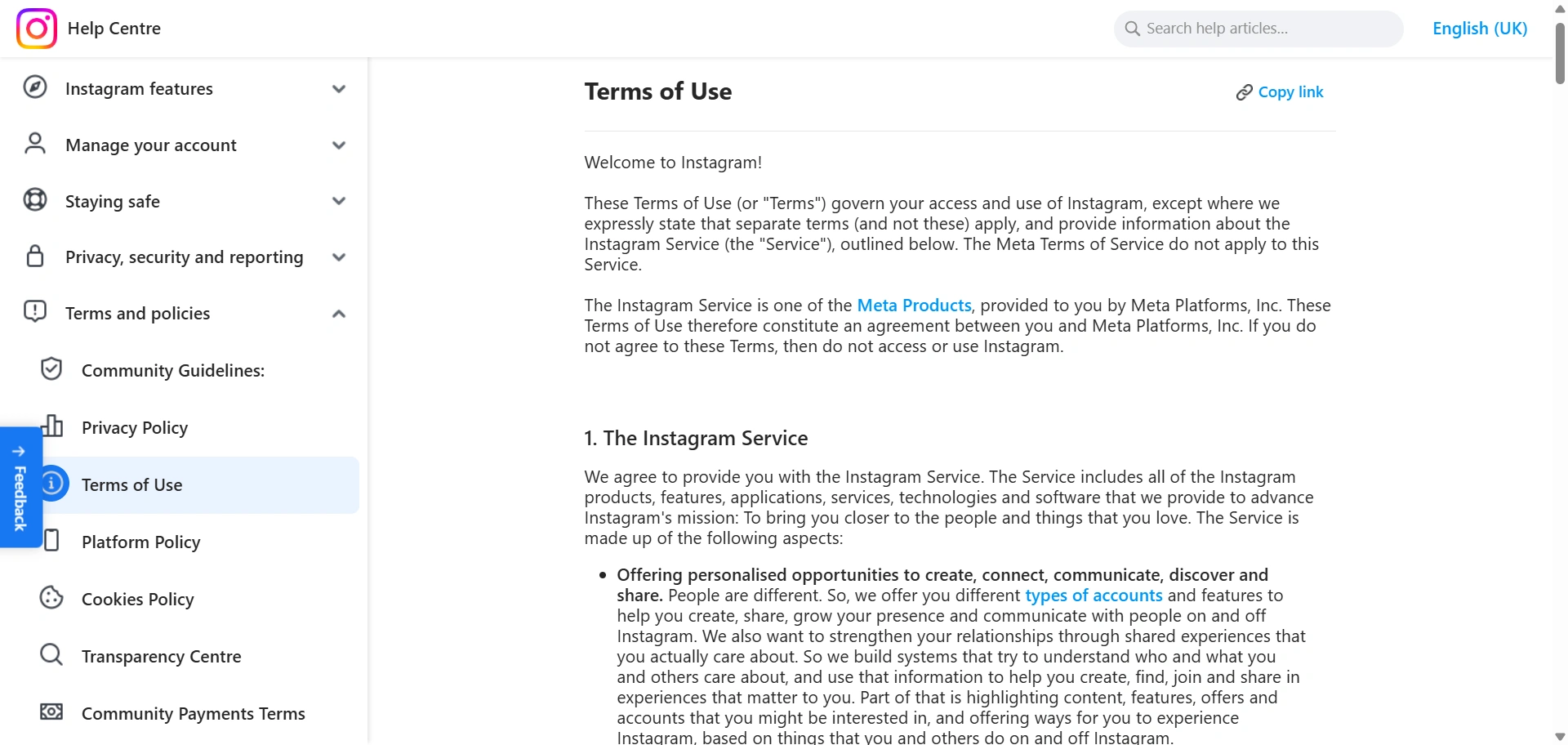
Instagram’s Terms and Conditions are very clear and precise. As a company with a total worth of trillions of dollars, Instagram strives to give its platform users the best possible experience. The Terms and Conditions detail Instagram’s Privacy Policy, as well as what Instagram has committed to providing as part of a user’s membership on their platform.
Our Take: Best example for social and community platforms. Instagram’s content ownership and privacy integration sections are regularly updated check the current version for Meta’s 2026 AI training disclosures.
14. Shutterstock– Sample Terms of Use For Website
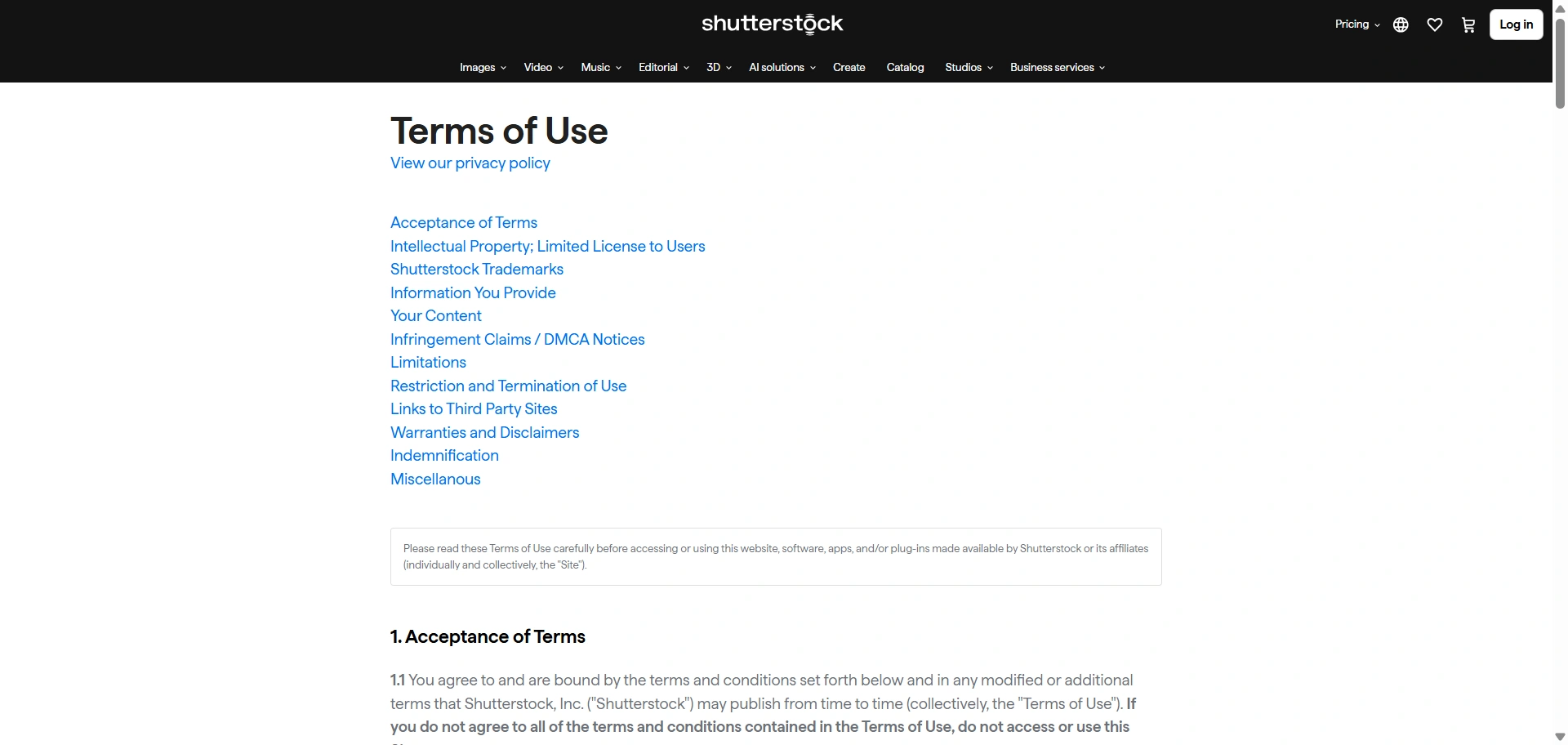
The Shutterstock website is a great resource because it deals with many cases involving intellectual property and user-generated content. The terms of use, which contain twelve sections, are organized in such a way that you can understand both your rights as a user and what is expected of you by Shutterstock.
Our Take: The best T&C in this list for platforms dealing with user uploads, licensed images, or any creative content. Shutterstock’s 12-section structure balances legal depth with genuine readability.
15. Hamleys– Website Terms of Use Example
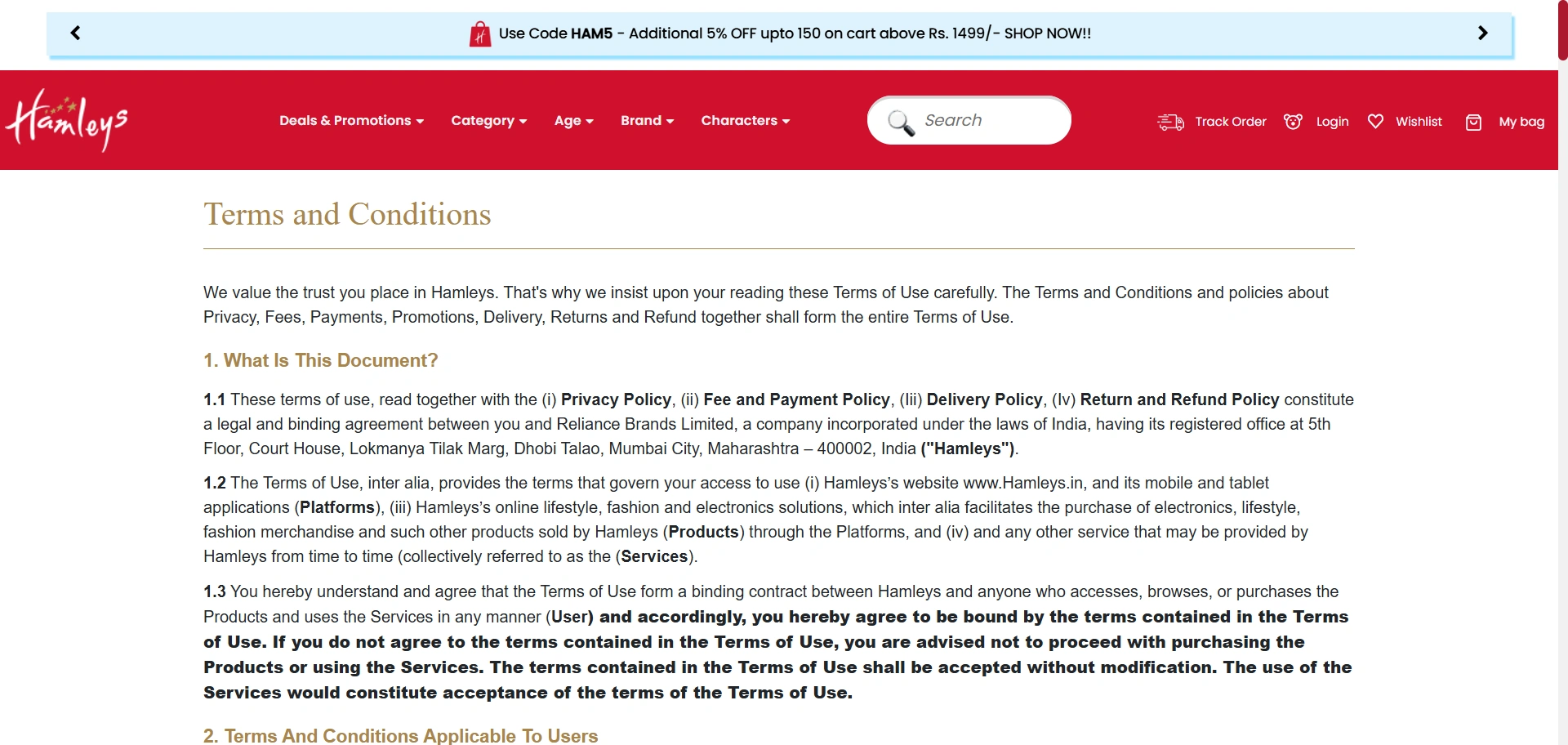
Hamley’s website terms and conditions stand out the best because they include transferring rights and obligations, circumstances outside of the company’s control, refund policies, warranty information, liability, and more.
The document describes users’ rights and how they can utilize the service, even though it contains legalese.
Our Take: Excellent coverage of force majeure and warranty two clauses many small businesses overlook. A strong reference if you sell physical goods and need thorough consumer rights coverage.
What To Include In a Website Terms and Conditions Page
We understand the terms and conditions format from the above examples of terms of use, but are you aware of what is included in the terms and conditions documents?
In your T&C, you can provide guidelines and restrictions about how users can access and use your mobile app and website.
The following list of clauses should be kept in mind while creating a terms and conditions agreement for your online store:
1. Introduction Clause
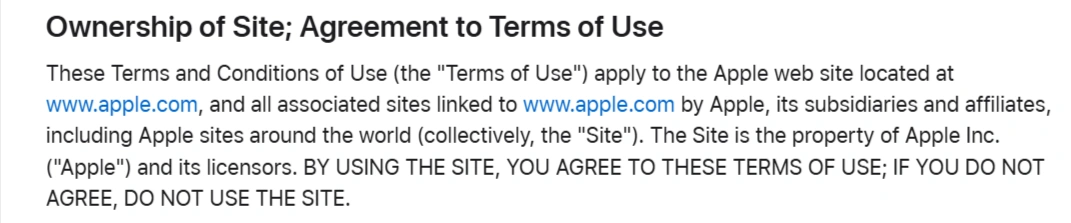
An introductory clause for your terms and conditions should let users know what is being covered, who you are, and to whom they apply.
Within this clause, you should note that anyone using your service must comply with the terms, and that continued use of your platform constitutes acceptance of the terms. This is known as implied acceptance and is standard practice in most website terms and conditions documents.
2. Intellectual Property
Intellectual property (IP), in terms of use, typically refers to the legal terms that protect a company’s creations and define how users can use them. Usually, the terms say that the IP in question, such as software, content, trademarks, etc, is owned by the company, and that users may use it only under a very limited, non-dark commercial license.
The terms will generally provide some restrictions and maybe obligations with respect to user-generated content, as they often want a very broad license to the IP from all users and generally agree that they will retain ownership of any user-generated intellectual property.
IP terms of use are particularly important when you need to restrict a user to prevent them from misusing, abusing, or diluting the company’s IP, and to legally protect and define the company’s assets. Simply put, IP terms of use provide a legal basis to enforce any infringement of a company’s IP rights.

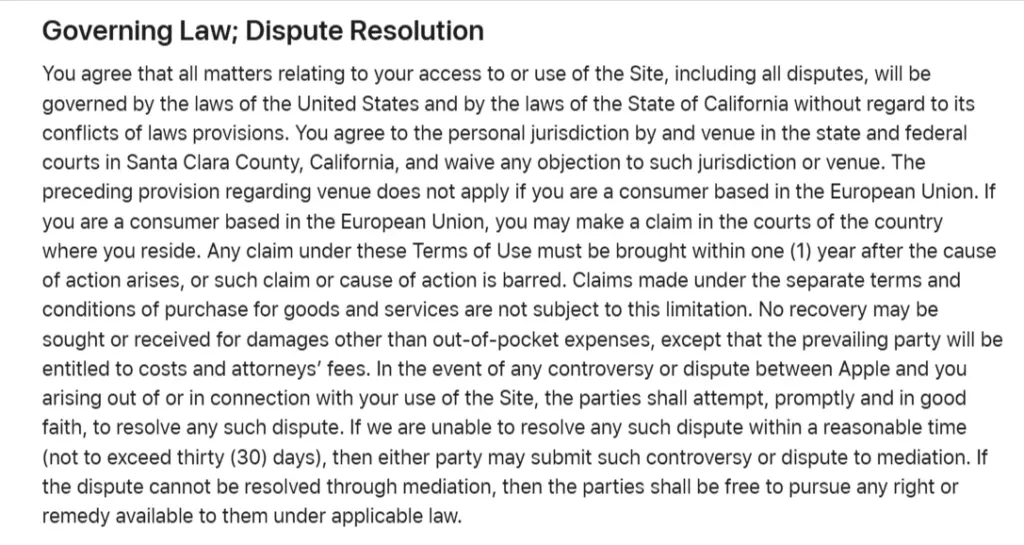
3. Governing Law
Users shall be informed of which laws apply to the agreement using a Governing Law clause. The nation where your business is based, or the nation from which you run your website and mobile application, should be the source of these regulations.
4. Effective Date
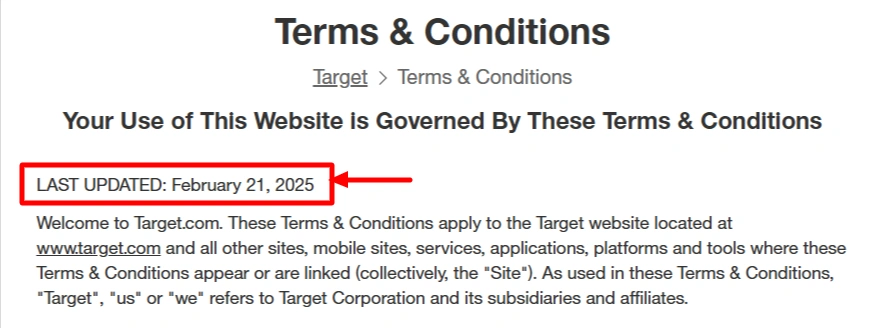
You should add an effective date close to the beginning of the agreement so that users will know when it was last updated.
Just keep it nice and simple. Each time you amend your agreement, change the effective date.
5. Content Clause
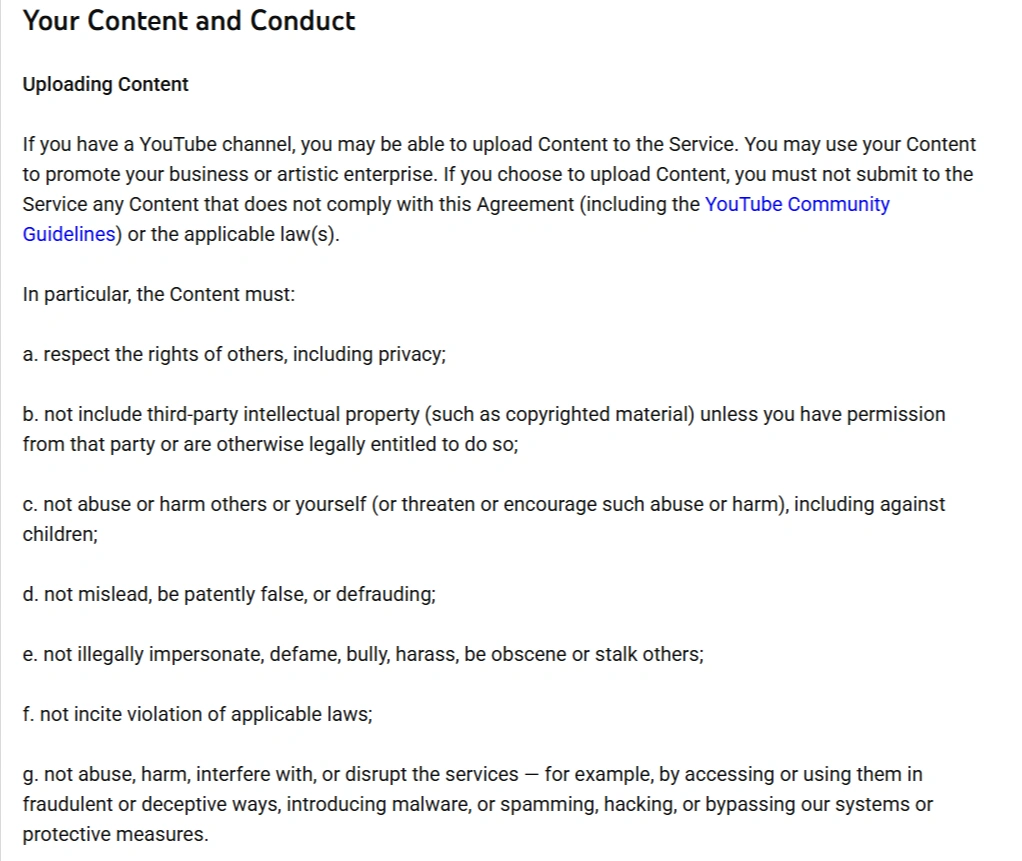
If your website or mobile app allows users to upload and share content with others, it is essential to include a content clause. This clause informs users that they have the right to the content they have created.
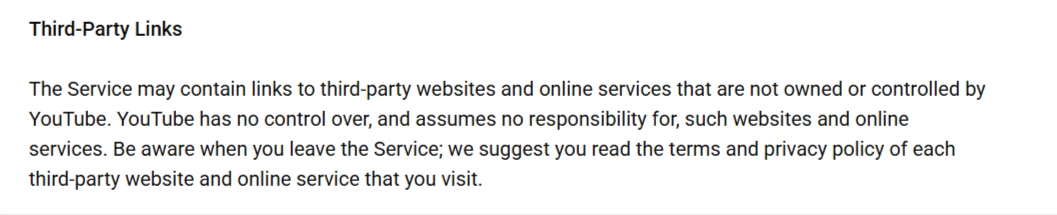
6. Third Parties Clause
If your website has links to external sources, you should put in a third-party clause in your terms and conditions agreement indicating that you are not responsible for the content of sites you link to.
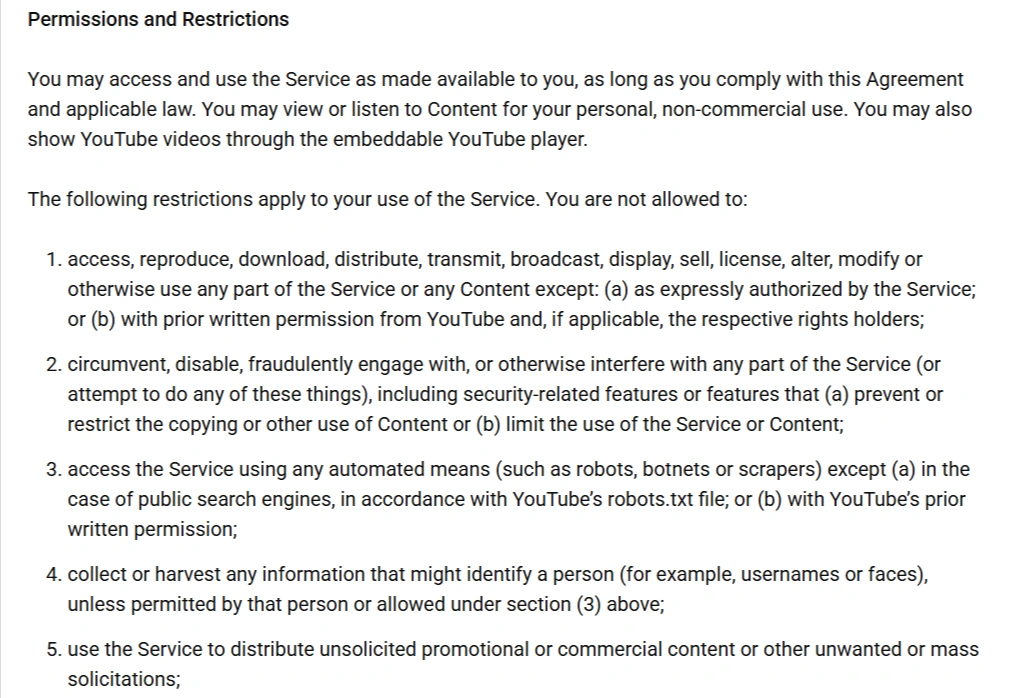
7. Prohibited Activities And Restrictions Clause
You should also add a section to your Terms and Conditions that lays out things that users cannot do and seeks to prohibit abuse of your site.
Usually, this will prohibit a user from:
- Revealing another user’s personal information (e.g., usernames, passwords)
- Advocating violence
- Posting materials that are discriminatory, abusive, threatening, pornographic, or otherwise offensive
- Engaging in illegal acts
- Sending junk mail, spam, or chain letters
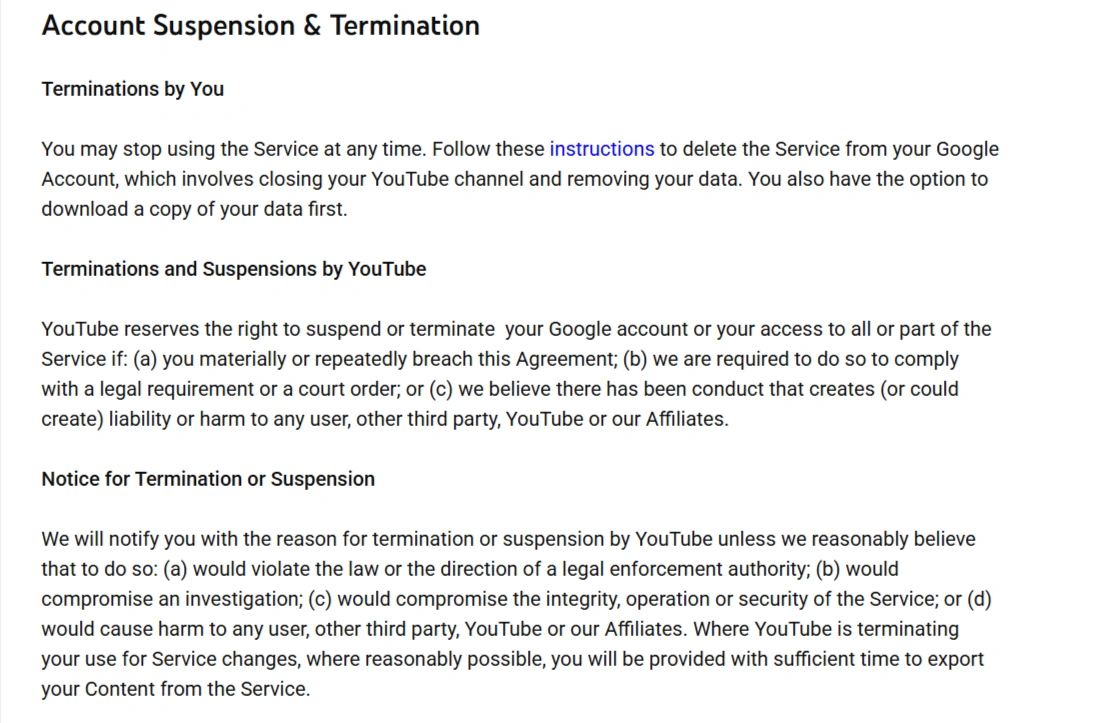
8. Suspension and Termination Clause
Having a Suspension and Termination clause in your Terms and Conditions will help protect your site or app from abusive or non-compliant users. A Suspension and Termination clause should lay out your right to suspend or terminate user accounts that violate your terms, as well as to remove associated content.
It is also helpful to detail how users can delete their own accounts or terminate a subscription, particularly in a Software-as-a-Service (SaaS) environment.
9. Pricing and Payment Terms Clause
A Pricing and Payment Terms provision in your Terms and Conditions helps set expectations on how customers will be charged and what payment methods will be accepted.
This provision should describe how you price your services or products, how often you bill clients, what payment methods you will accept, and any other material transaction terms.
When drafting your Pricing and Payment Terms, be as specific as possible to avoid misunderstandings. At the same time, use flexible terms such as “as available” for services and “as provided” for products. This wording helps protect your business from unreasonable claims, such as a customer arguing that you failed to state an item was discontinued.
Being clear about your payment terms also promotes transparency and is one more way to protect your business if there’s ever a dispute.

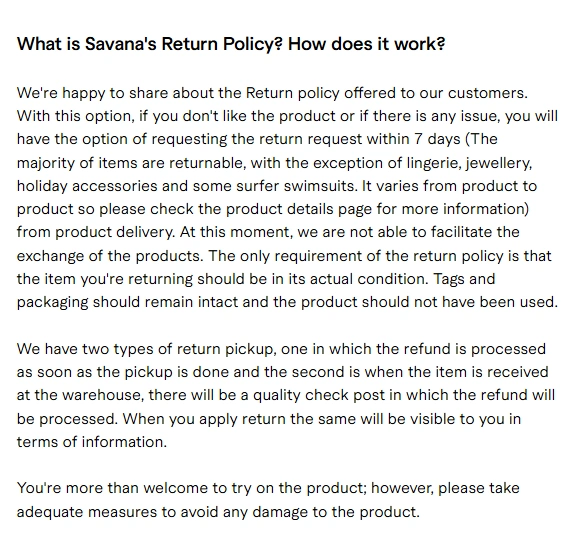
10. Returns And Refund Policy Clause
A Returns and Refund Policy provision sets out the terms on which customers may request a return or refund. This provision should make it clear the eligibility requirements.
It should also state the timescale for when to ask for a return or refund. It must explain how refunds are processed. Finally, it should specify any products or services that are not eligible for return or refund.
By articulating the expectations surrounding returns and refunds, you protect your business from disputes. Ensuring customers have a clear understanding of their rights.
Having this clause in your Terms and Conditions also builds trust and transparency, which is especially helpful for eCommerce and service-oriented businesses.
Major Updates Relevant to Terms & Conditions
1. Anti-Misleading & Transparent Pricing (UK DMCC Act – April 2026)
The UK’s Digital Markets, Competition and Consumers Act (DMCC) became law in April 2025, introducing new enforcement powers and transparency obligations. Now,
- “Drip pricing” is now plainly illegal. All compulsory charges (shipping costs, fees) must be shown to the consumer in full.
- Fake or misleading reviews are not allowed – your terms and conditions must include an undertaking that the reviews are real, and it must disclose how you moderate reviews.
- Subscription and auto-renew transparency must be fair (clear, cancellation options), as a term that is enforceable. There are draconian auto-renewal methods that could be classed as an unfair term.
2. Prohibited Terms in Consumer Financial Contracts (US Regulation AA – 2026)
Regulatory AA speaks to unfair provisions in consumer finance contracts, specifically in the case of one-sided or hidden provisions in click-through contracts.
Provisions that are buried in fine print or are not otherwise conspicuous (e.g., requiring a number of clicks to access the provision) may be challenged as being unfair.
3. New “Acceptable Use” and Child Safety Clauses for Apps (iubenda)
As of March 2025: The terms need to have explicit clauses related to exploiting or abusing children, particularly in the case of a dating, social or app of some sort, in adherence to app store guidelines (i.e. Google Play).
4. Online Dispute Resolution Clause Update (EU)
As of March 2025, it will be clearer than ever that the EU platform for consumer dispute resolution will cease to accept new complaints after March 20.
5. Data Transparency & Sharing Rights (EU Data Act)
Users are given rights to access and share their own IoT data via the new EU Data Act, which also mandates fair and non-discriminatory terms for data access and portability. The terms must include:
- User rights to access, share and migrate data
- Protection against unfavourable terms for SMEs
- Interoperability of data access penalties of up to €20 million or 4% of global turnover are available.
6. India’s Digital Personal Data Protection Act (DPDPA)
DPDPA establishes significant new obligations including:
- Explicit consent for specific reasons (not blanket consent).
- Enhanced protections for minors.
- Parental consent for collecting data from anyone under 18.
- Fiduciary obligations relating to data like DPIAs and appointing a Data Protection Officer if applicable.
- Also, penalties for violation may be as much as ₹500 crore (~$60M).
How To Create Terms and Conditions Page for Free
Now that you know the best terms and conditions examples and what should be included, let’s see how to create one for your website.
Are you considering hiring a lawyer to create a T&C for your website? If so, it can be time-consuming and expensive. That is where a tool like WPLP Compliance Platform comes in. It is a free privacy policy generator that helps you create legal pages for your website.
It helps create essential legal documents such as terms and conditions, privacy policies, affiliate disclosures, and more. This platform offers a comprehensive solution to ensure legal compliance.
Its user-friendly interface allows even those without legal experience to create legal documents that can be customized to their website or business requirements. The platform offers around 30+ legal policy templates.
The following section will examine the WPLP Compliance Platform’s main features in more detail.
Key Features of WPLP Compliance Platform
- Announcement Banner for Privacy Policies: This banner appears whenever your legal pages are updated or changed.
- Age Verification Popup: This popup ensures that visitors to your website are of legal age to view the content.
- The Cookie Consent Bar informs visitors about the cookies you use and the information you collect.
- Quick Setup Wizard: The guided wizard user interface simplifies the process by assisting you as you add the necessary elements to your policy pages.
WPLP Compliance Platform makes creating and managing legal documents on your WordPress website easier.
Creating a Free Terms and Conditions Page Using WP Legal Pages
To install the plugin, follow these simple steps:
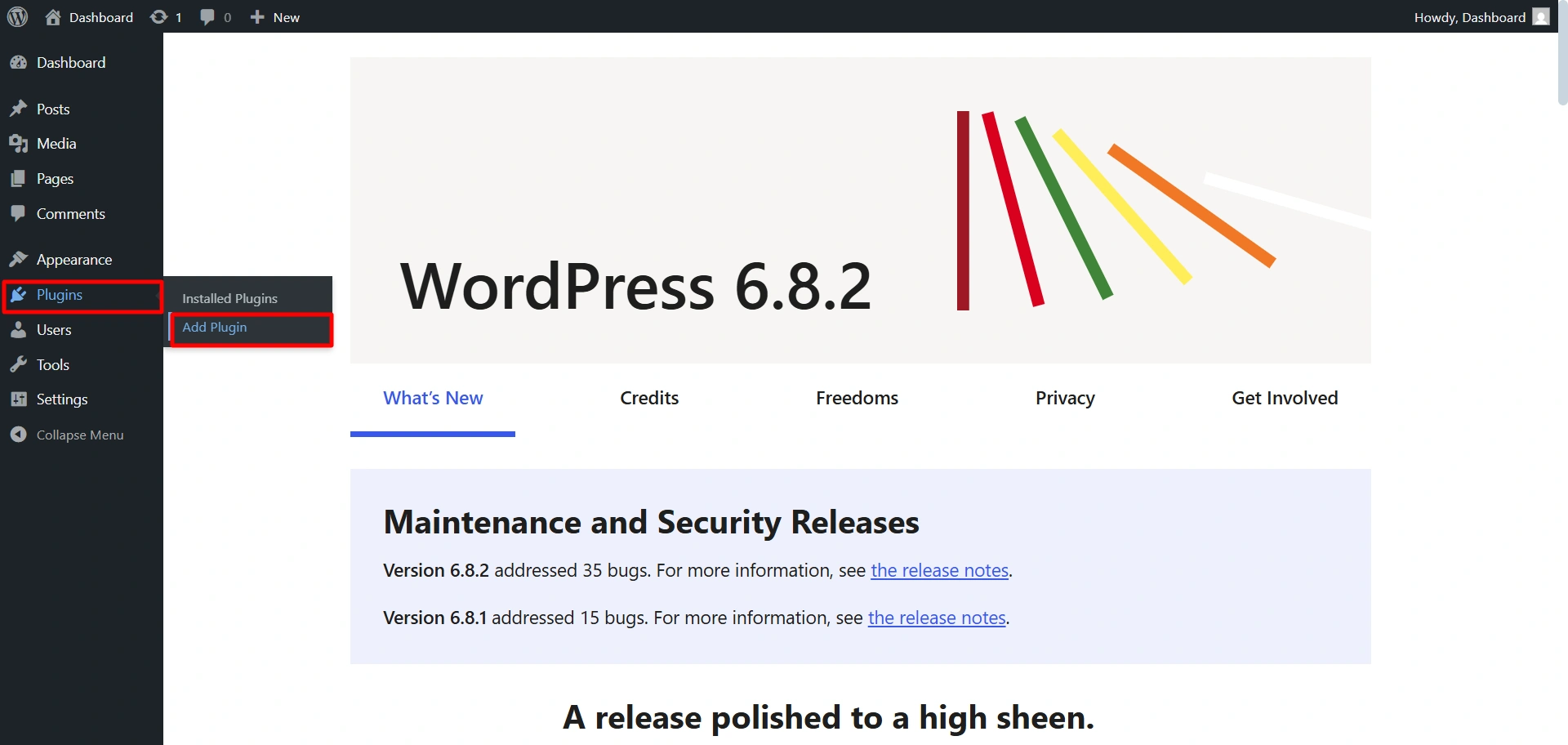
Head over to your WordPress dashboard. Hover over Plugins and click on the Add New menu.
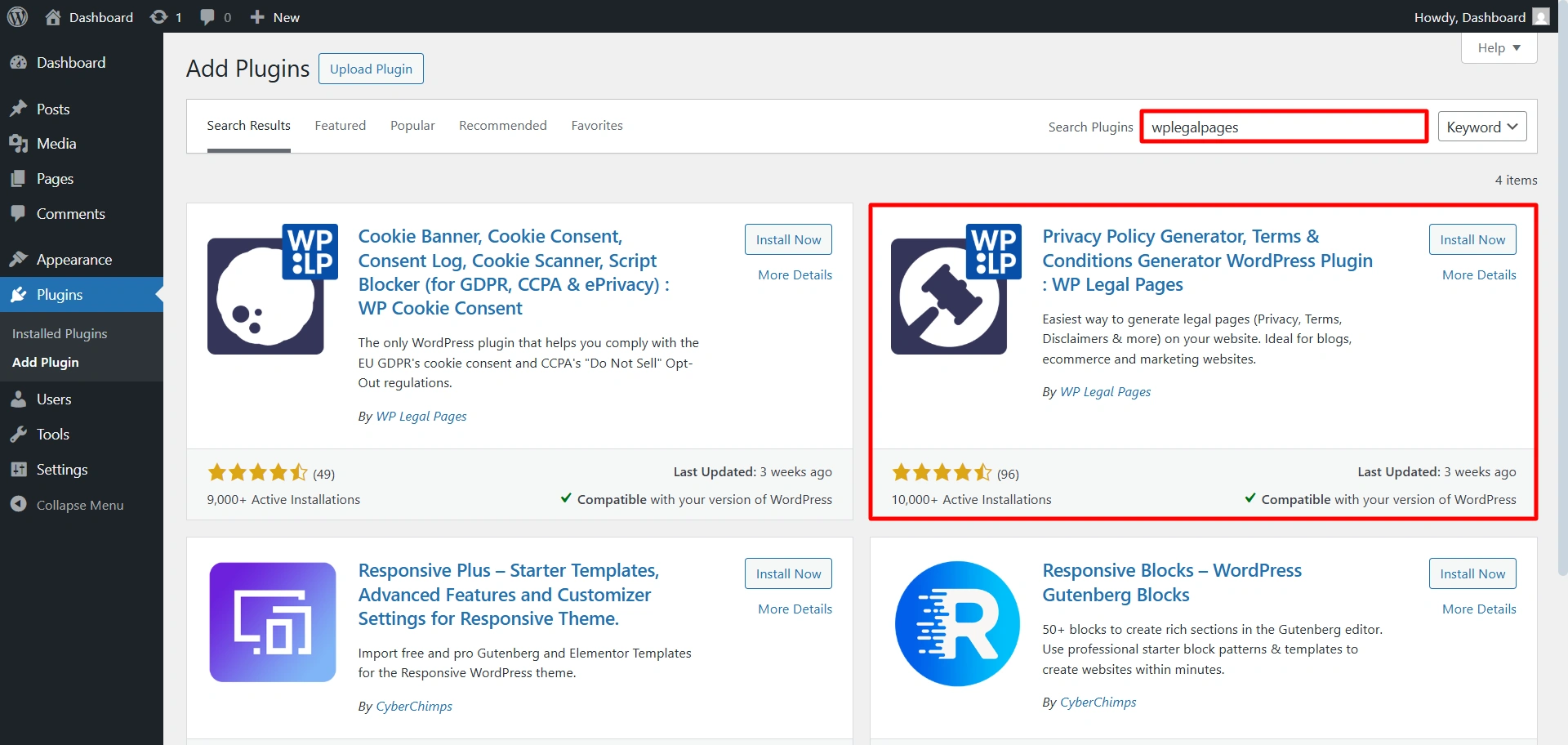
Search for Wplegalpages in the search bar above. Click on the Install Now button, and after that, activate it.
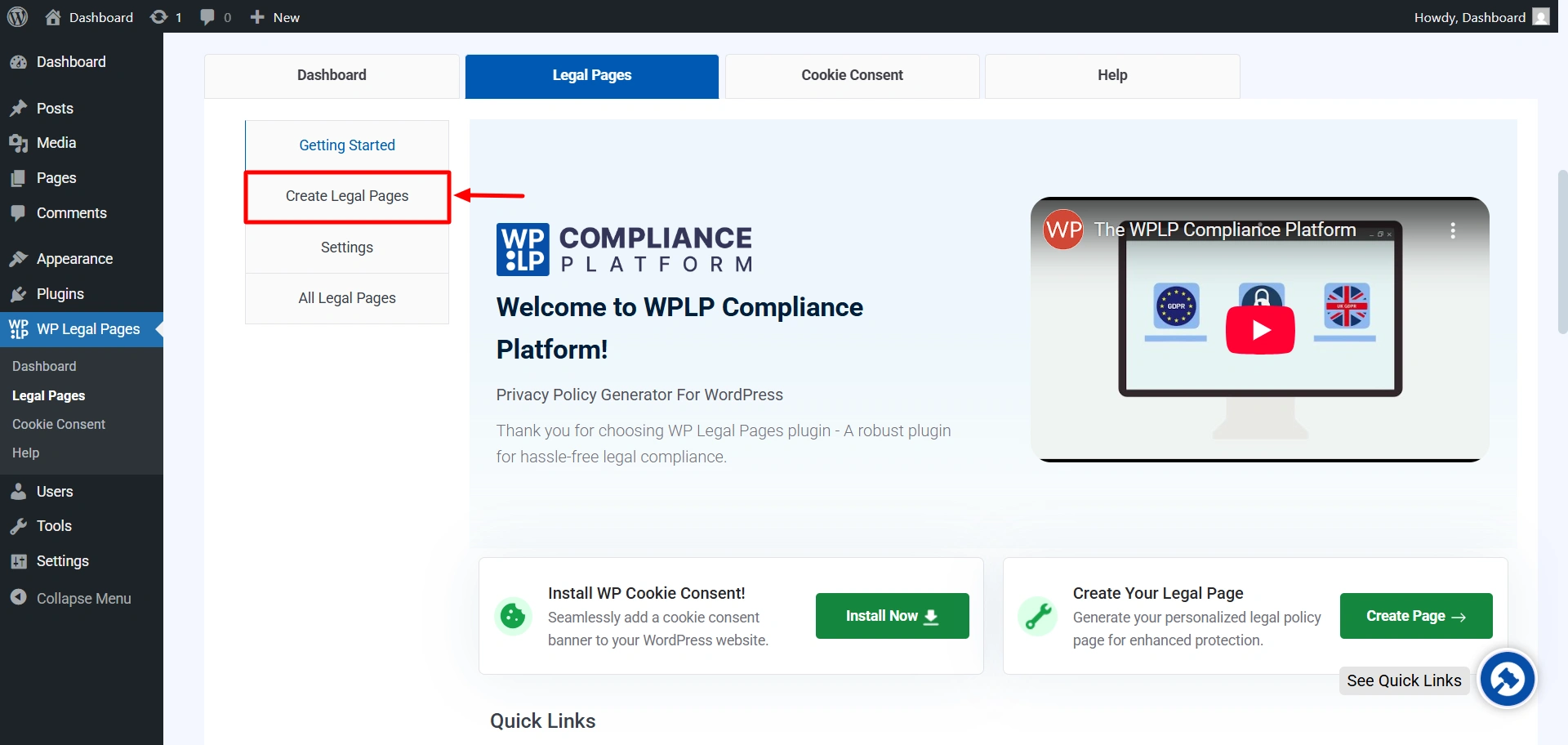
Click on WP Legal Pages, and then click on Create Legal Pages, and generate your legal pages.
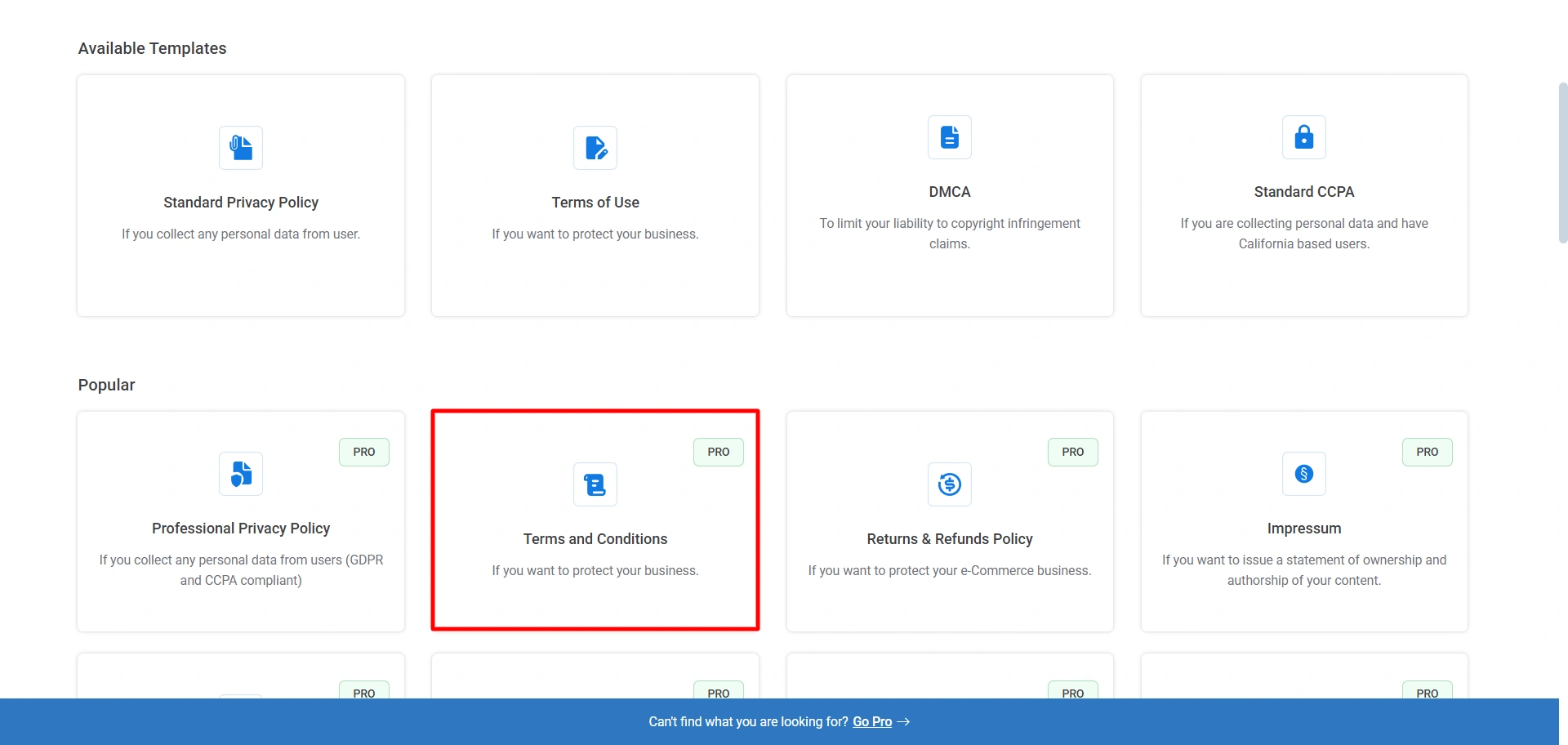
This will open the WPLegalPages wizard. From the WPLegalPages wizard, choose the Terms and Conditions template and click the Create button.
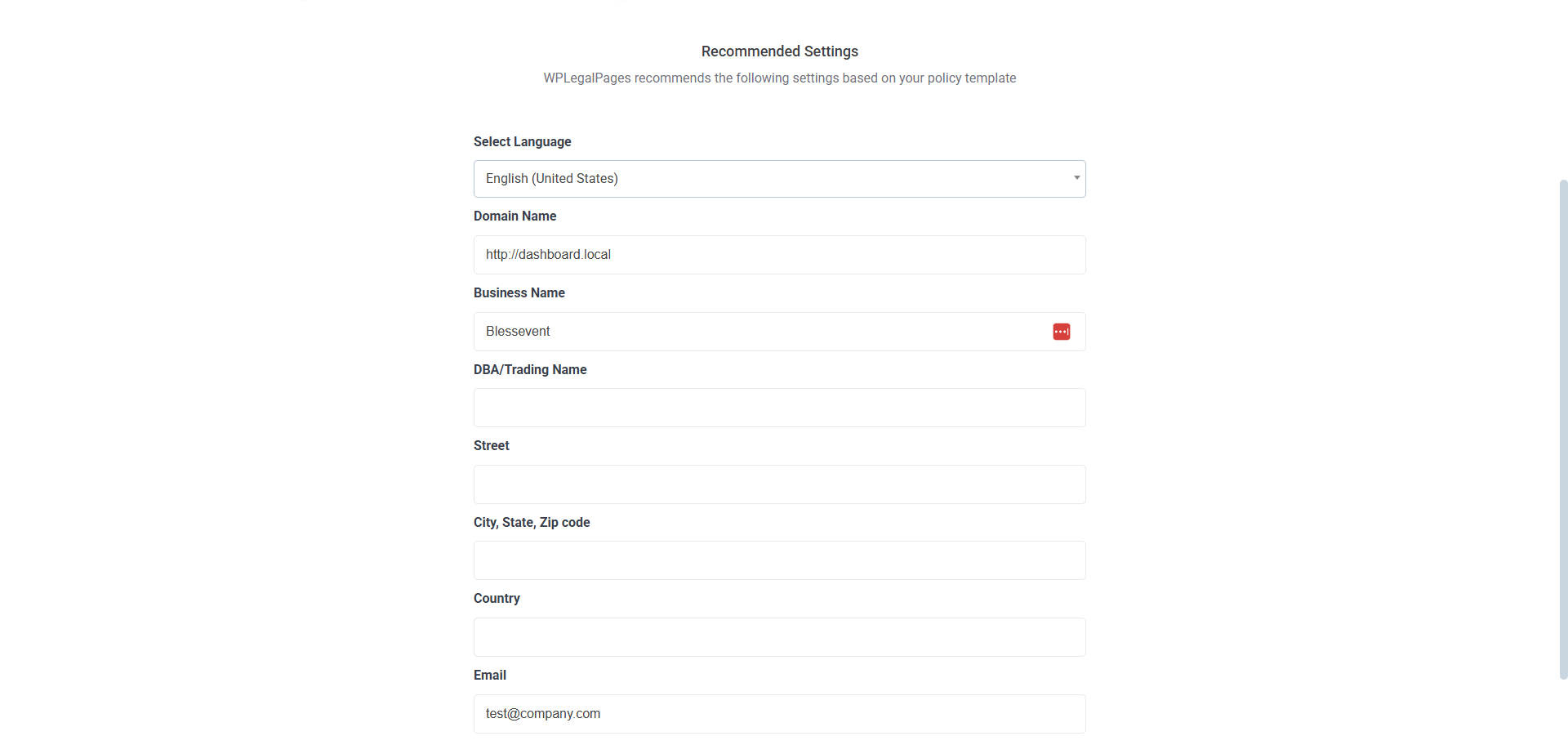
Create an account if you are a new user to activate the Pro plan, or continue with your existing account. Next, fill in the recommended details and click the NEXT button.
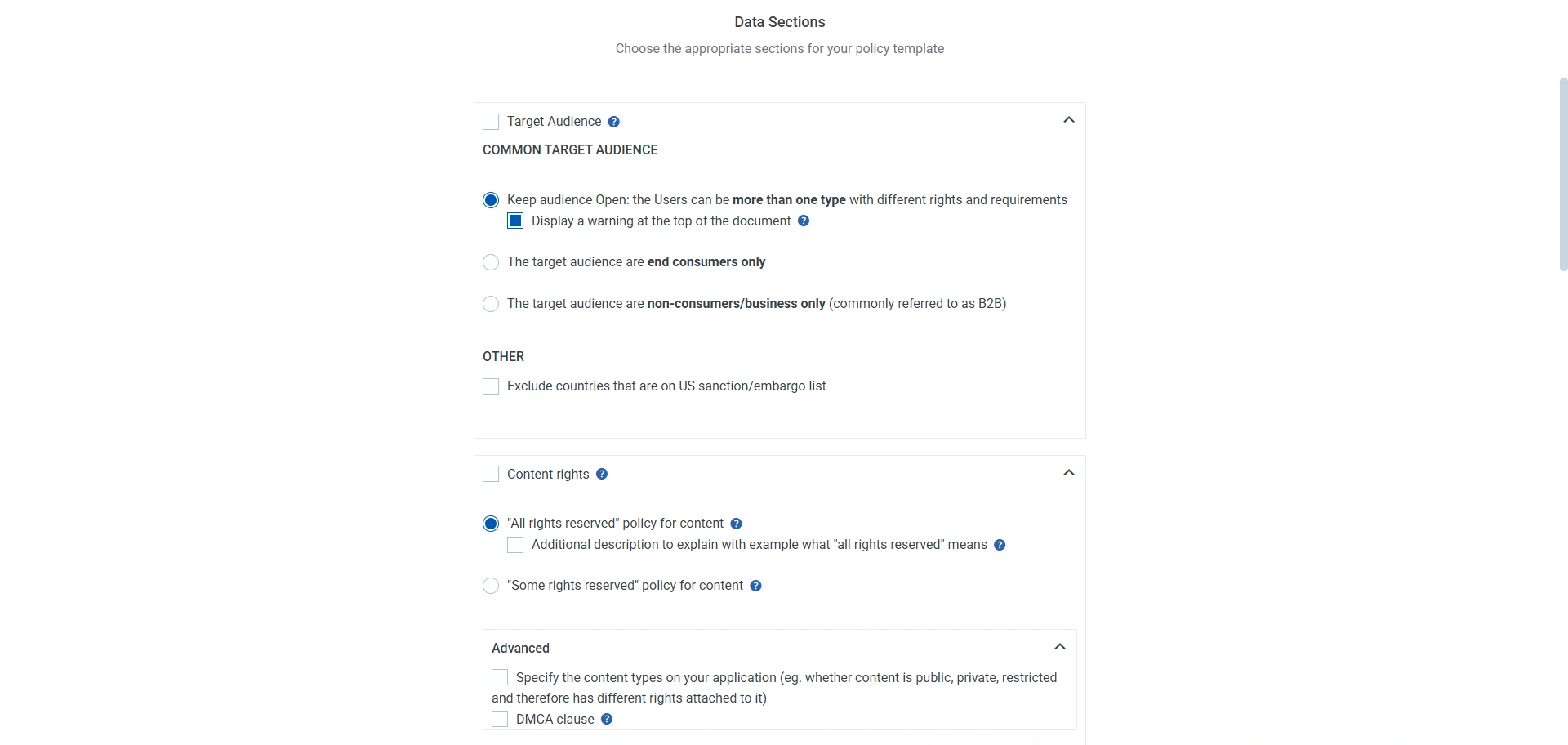
Now, choose the appropriate sections for your page and fill in the details. Scroll down to see all the options. Once done, click the Next button.
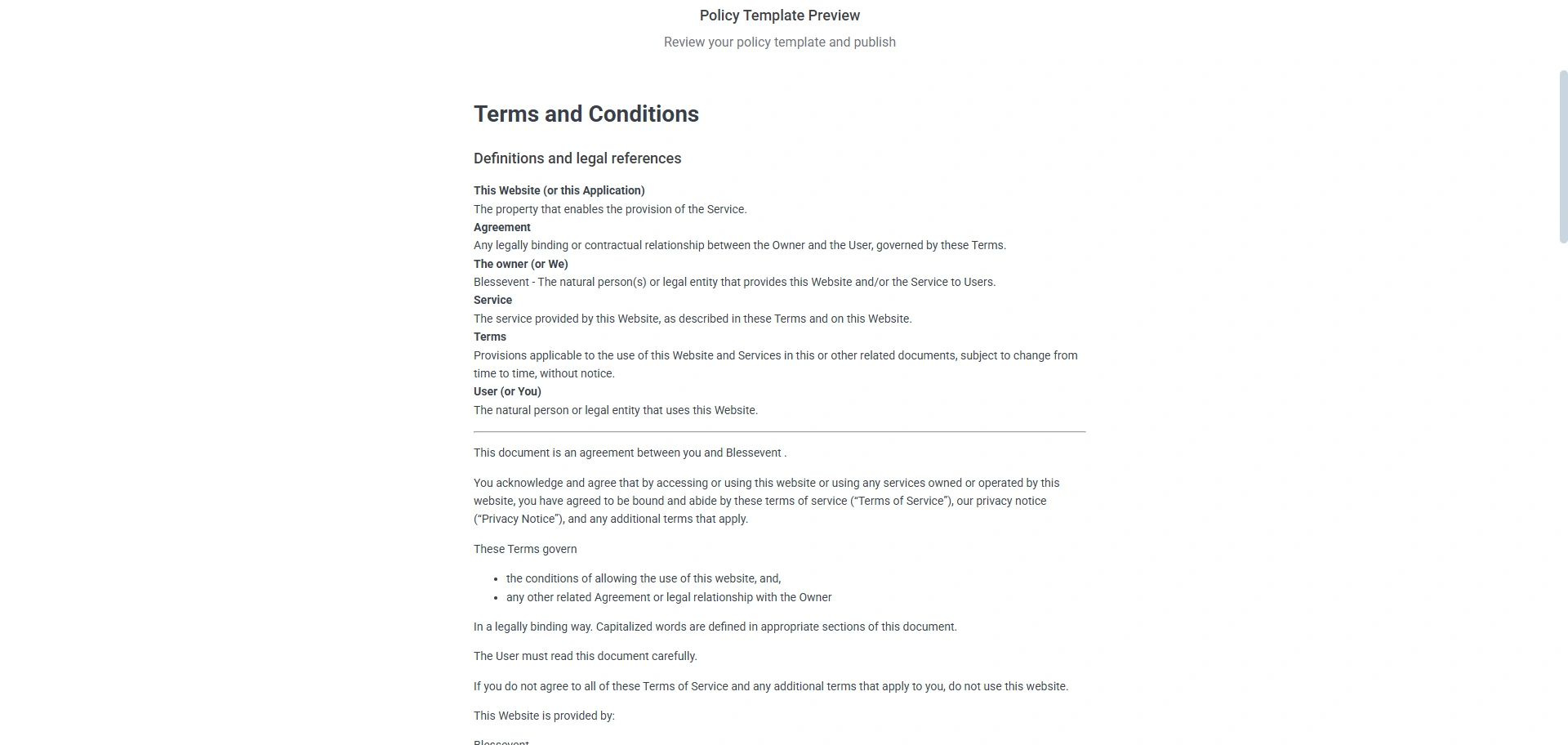
You can now check the preview of the terms and conditions page. Once reviewed, click on the Create and Edit button.
This will open the WordPress editor. Review all the details in the editor again and click the Publish button.
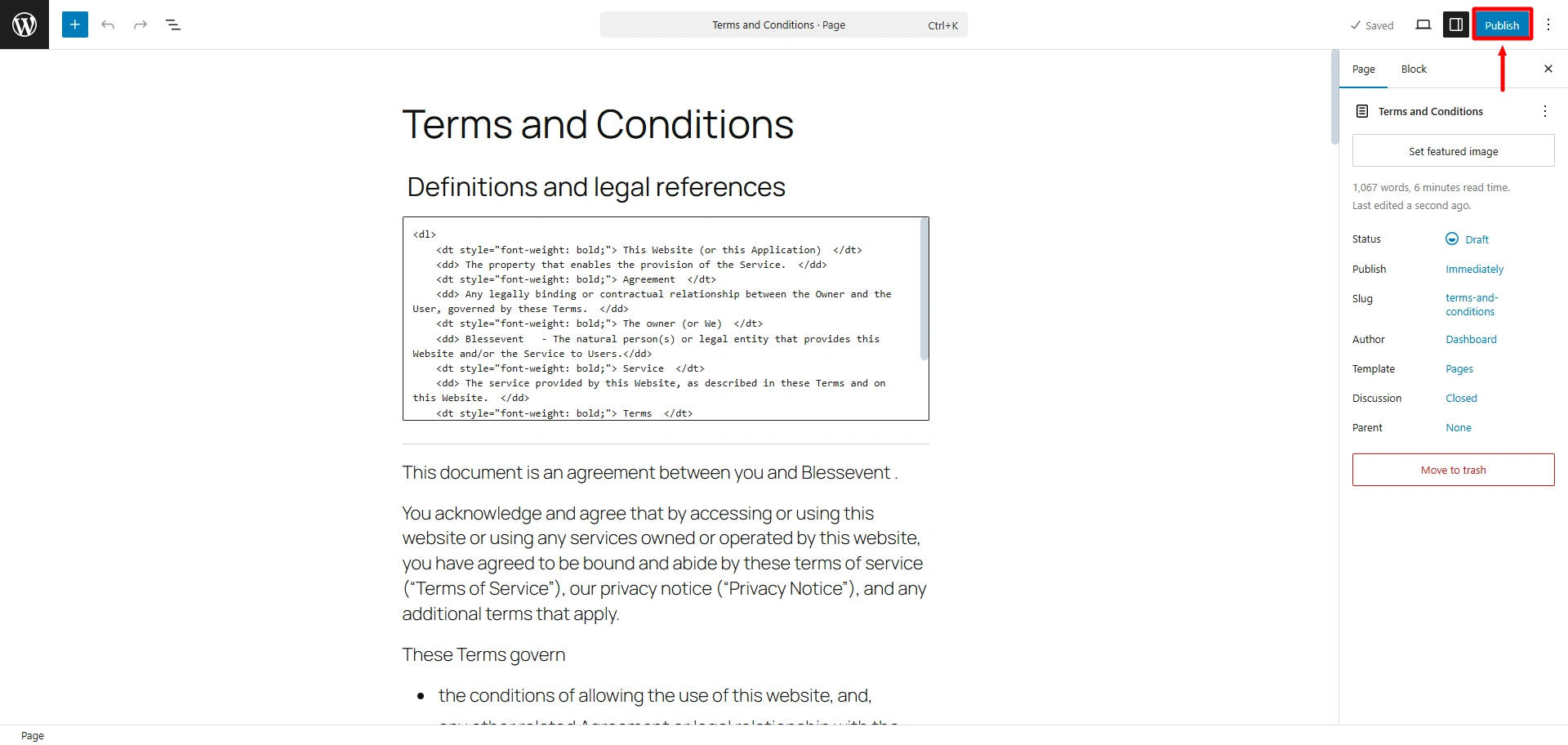
That’s it! You have now successfully created a terms of use page for your website.
Conclusion
In this post, we have provided terms and conditions examples to assist you in making decisions and gathering ideas as you create your terms and conditions for your work.
Any business must have a terms and conditions page on its website. These pages build user trust while legally safeguarding your company. The terms and conditions page contains a contract between you and your users. It includes all of the users’ guidelines to prevent breaking corporate policies.
We suggest using the WPLP Compliance Platform to establish any legal pages. Key legal pages for your website can be created with the plugin’s assistance. Among its more than 30 templates, terms and conditions is one that you can use to create a terms and conditions page quickly.
If you’ve liked reading this article, check out our other engaging articles:
- Understanding Privacy Statements and Simplifying Compliance
- Best Terms And Conditions Generators – A Detailed Review
- Digital Markets Act: What Website Owners Need to Know
Want to create more legal pages for your website? Grab the WPLP Compliance Platform now!
Disclaimer: This article is for informational purposes only and does not constitute legal advice. Laws and regulations may vary by jurisdiction and are subject to change.