
How to Create a Privacy Policy For An Educational Website
Summary
WP Legal Pages simplifies the process with an easy-to-use plugin for WordPress sites. Displaying the policy prominently enhances user confidence. Use a privacy policy generator to create a compliant policy efficiently.
Have you ever wondered why you need a privacy policy for educational websites?
Consider an entire student’s record, which contains grades, attendance, and even personal learning preference, falling into inappropriate hands.
Scary, isn’t it? That is exactly why a privacy policy for an educational website is mandatory.
In the digital learning world, where data is collected, stored, and sometimes shared with students, the real question is not whether you need a highly meaningful education privacy policy but how to make one that protects your users.
Making a privacy policy for educational websites goes beyond legalities and establishes trust between the students, parents, and teachers.
Here in this article, let’s have a look at how we can make a privacy policy for an education website.
- What is Privacy Policy?
- Dynamic Privacy Policy Requirements
- Global Privacy Laws Affecting Educational Websites
- Modern Tracking & Technology Disclosures (Often Missed)
- Why an educational website needs a Privacy Policy
- How to Create a Privacy Policy for Your Education Website
- Where Should You Display Your Educational Website’s Privacy Policy?
- FAQ
- Conclusion
What is Privacy Policy?
A privacy policy for an educational website is just another word for a document clarifying how your site collects, uses, and protects the personal data collected from its users, particularly students.
Because schools or Universities deal with sensitive information, an education privacy policy is vital. It explains what data is collected (like names, ages, grades, and online activity), how it is used (for teaching, communication, and understanding learning processes), and who has access to it.
Because certain laws respect FERPA and COPPA, a detailed privacy policy for schools is necessary. Thus, understanding how to create a privacy policy for an educational website is mandatory.
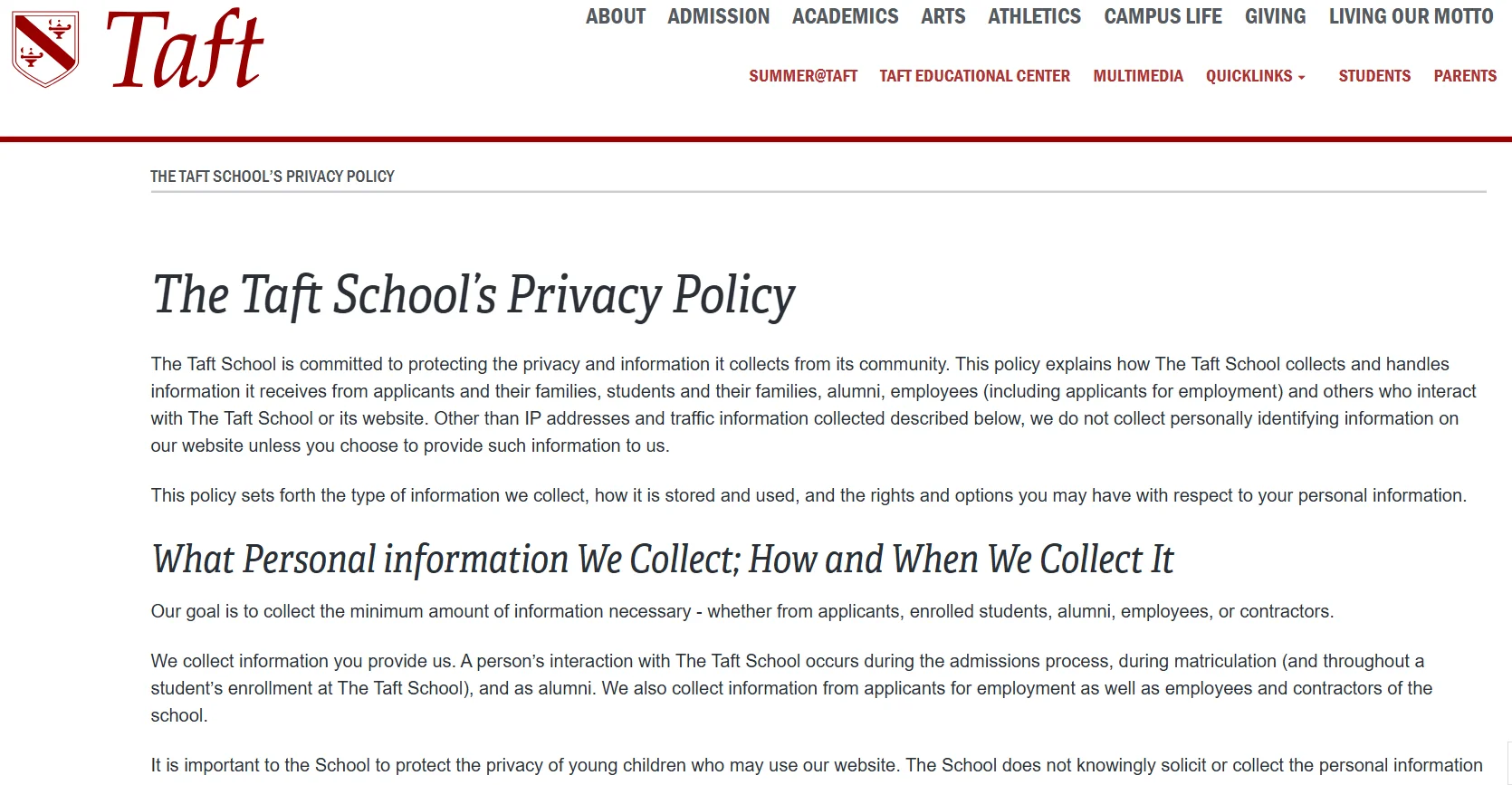
Here is Taft’s Educational Privacy Policy Example
Dynamic Privacy Policy Requirements
Privacy policies should be updated with the upcoming laws. Businesses should comply with the laws that apply to their postcode.
A modern privacy policy must accurately reflect requirements under major regulations, including:
- GDPR (European Union): Requires clear transparency about data collection, a lawful basis for processing, and detailed user rights such as access, rectification, erasure, and data portability.
- CPRA (California): Expands consumer rights under the CCPA by requiring disclosure of whether personal data is sold or shared, providing opt-out mechanisms, and explaining how sensitive personal information is handled.
- APRA & Australian Privacy Act: Emphasize stronger data security practices, accountability for third-party processors, and clearer breach response obligations, especially for organizations handling financial or sensitive data.
- DPDP Act (India): Focuses on consent-based data processing, purpose limitation, and mandatory grievance redressal mechanisms, making transparency and user communication essential for Indian audiences.
Why This Matters for Website Owners
If your website serves users from multiple regions, a single generic privacy policy is no longer sufficient. Different laws grant different rights, impose different disclosure standards, and require region-specific language. Failing to address these differences can result in:
- Non-compliance with local regulations
- Increased risk of fines or regulatory action
- Loss of user trust due to unclear or misleading disclosures
To remain compliant, your privacy policy must dynamically include applicable user rights by jurisdiction, so users clearly understand which rights apply to them. Region-specific disclosure and updated references ensure your policy stays aligned with laws.
Global Privacy Laws Affecting Educational Websites
When you run an educational website, you have to follow privacy rules from all over the world. These rules help protect people’s information.
Important Privacy Laws are:
1. GDPR (Europe)
The General Data Protection Regulation says that if anyone in Europe uses your website, you must protect their data. It’s about being clear and transparent about what data you collect and letting people control their information.
So, if your website has European users, you must ensure your education privacy policy follows GDPR law.
2. COPPA (USA)
This law protects kids under 13 in the United States. You need their parents’ permission to collect data from young kids. Therefore, any privacy policy for school websites geared toward younger children must heavily consider the Children’s Online Privacy Protection Act.
3. FERPA (USA)
This law protects students’ school records in the United States. Parents have the right to see and control their kids’ records. This is very important when considering the need for a good education privacy policy within the United States.
Understanding how to make a privacy policy for an educational website compliant with these global laws is vital. All you need to know is the rules of where your users live, and make sure your educational website follows them.
Modern Tracking & Technology Disclosures (Often Missed)
Most privacy policies still focus only on cookies, but modern websites rely on advanced tracking and automated technologies that go far beyond basic analytics. Privacy laws now require businesses to clearly explain all technologies that collect, analyze, or influence user data, not just traditional cookies. Here are a few modern tracking and technology disclosures that your privacy policy page must include if you use them.
1. AI-Powered Tools
Many websites use AI-driven features such as chatbots, recommendation engines, or automated decision systems. These tools may collect personal data like names, email addresses, conversation history, browsing behavior, or inferred preferences.
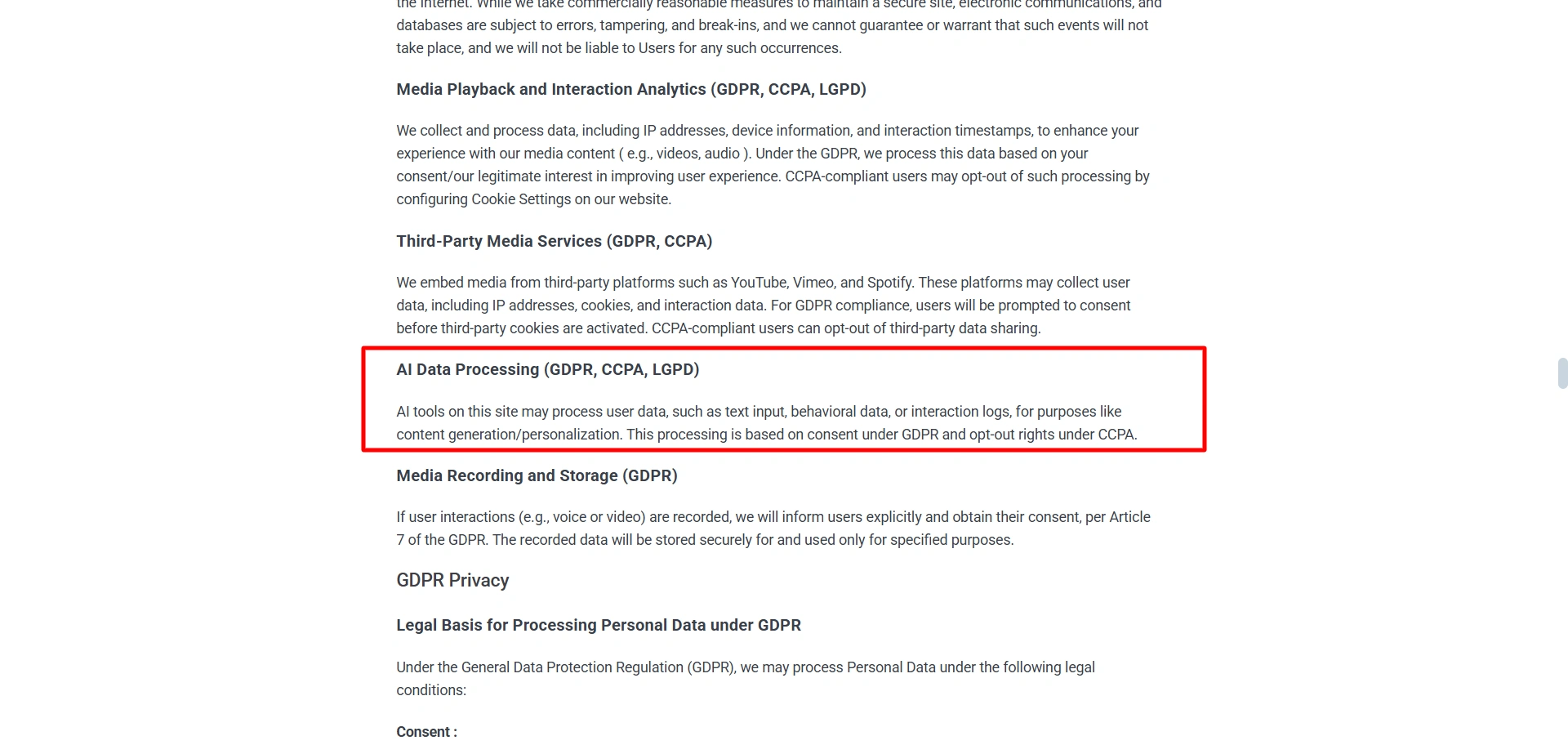
Your privacy policy should clearly state what information the AI collects, how it is used to provide responses or recommendations, and whether human review is involved. Transparency is especially important because AI systems can influence user decisions or process data at scale.
2. Heatmaps & Session Recordings
Behavioral tracking software uses heatmaps and session recordings to log the interactions of users with your website and provides useful insights for improving user experience.
A privacy policy that meets compliance requirements must disclose that behavioral tracking is used on the website, explain the purpose for using this technology and indicate whether any sensitive data collected from the website will be hidden from view or anonymized.
3. Advanced Analytics & Personalization Tools
Analytical platforms these days will do more than count website visitors. They can also conduct user profiling, perform A/B tests, personalize website content, and predict user behaviors. All of these functions could include multiple forms of user identification, user activity and behaviour over time, and user preferences.
You must include an explanation in your policies as to how user profiling or personalization occurs, what type of data is collected and when it is collected, and how users may opt out of these services if required by law.
Failing to disclose these tools creates a serious compliance gap. Regulators increasingly expect transparency around AI and behavioral tracking, and missing disclosures can lead to investigations, penalties, or loss of user trust. A well-written privacy policy ensures users understand how their data is handled and demonstrates that your website is taking privacy compliance seriously.
Why an educational website needs a Privacy Policy
School websites gather information on students, such as their names, age, grades, and what they do on the website. It helps the website provide improved learning, but it needs to be guarded. That’s why there should be a privacy policy on every school website. It informs people what information is gathered and why.
A privacy policy must simply state:
- What information is gathered by the site
- Why does the site requires that information
- Who can view or access the information
- How the information is secured
Having a privacy policy keeps students’ personal information secure. It also reassures parents, teachers, and students that they can use the website safely. Most of all, it assists the website in complying with special regulations that guard children’s information online, such as COPPA and FERPA.
How to Create a Privacy Policy for Your Education Website
Now that you know why privacy policy for educational websites is essential, let’s create an education privacy policy for your website.
However, creating a privacy policy for an educational website can be a lot of work. This is where a privacy policy generator like WP Legal Pages comes in.
This plugin will simplify your life and save time by quickly creating a privacy policy for educational websites.
You can create a legally compliant education privacy policy by following the steps below.
WPLP Compliance Platform – Legal Pages Generator for WordPress Sites
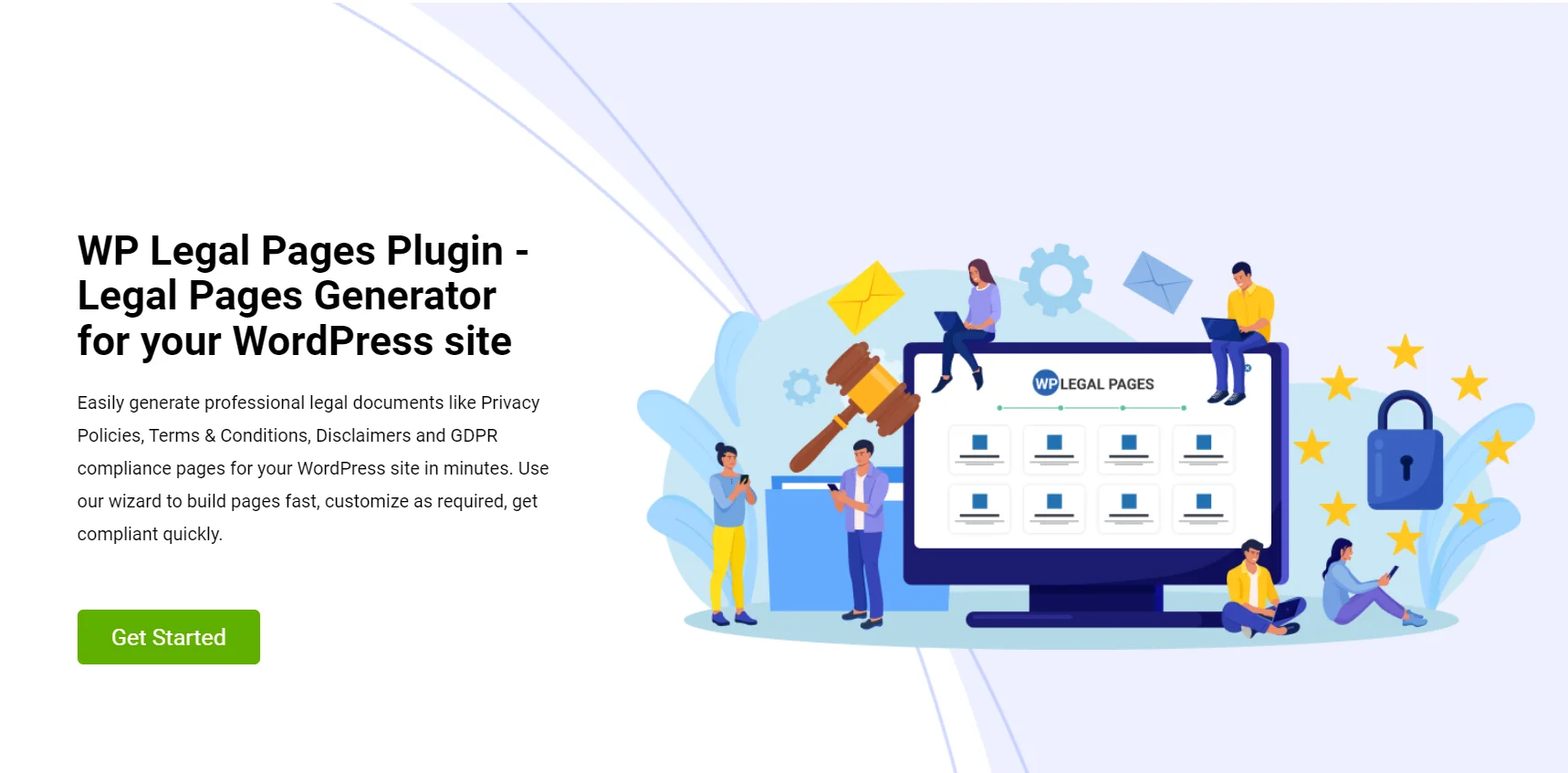
WPLP Compliance Platform provides an easy solution for creating legal documents for your WordPress websites. You can create documents like Privacy Policy, Disclaimer, and Terms and Conditions within a few moments.
It has built-in wizards that guide you through quickly creating your legal pages for your website. The whole process is straightforward. You will not have issues creating legal documents with WPLP, even as a newcomer.
This helps establish trust among users, avoid fines and legal proceedings, and save you time.
Let’s discuss how to create a privacy policy for an educational website using the WP Legal Pages plugin.
Step 1: Installing WP Legal Pages Plugin
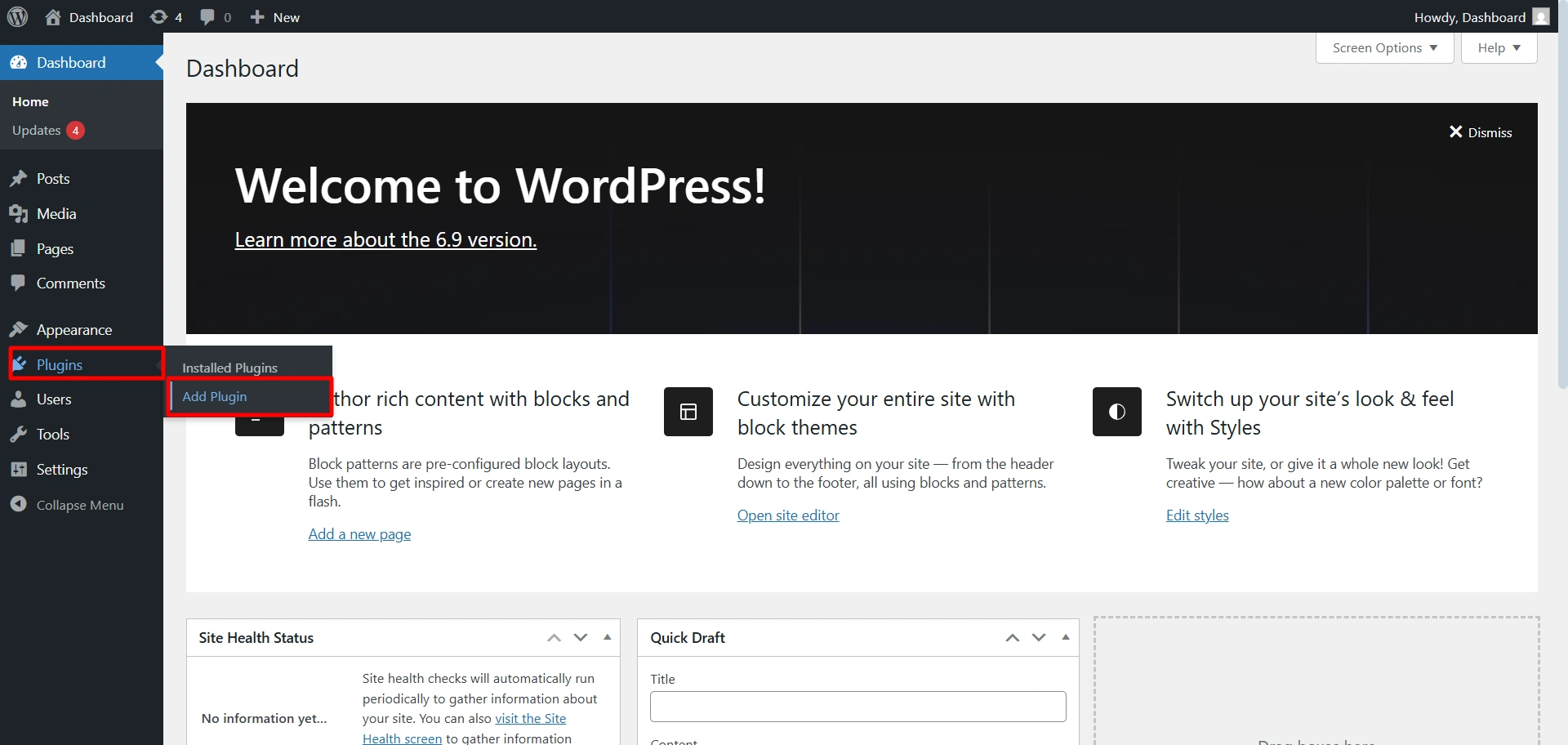
From your WordPress Dashboard, click on Plugins > Add New.
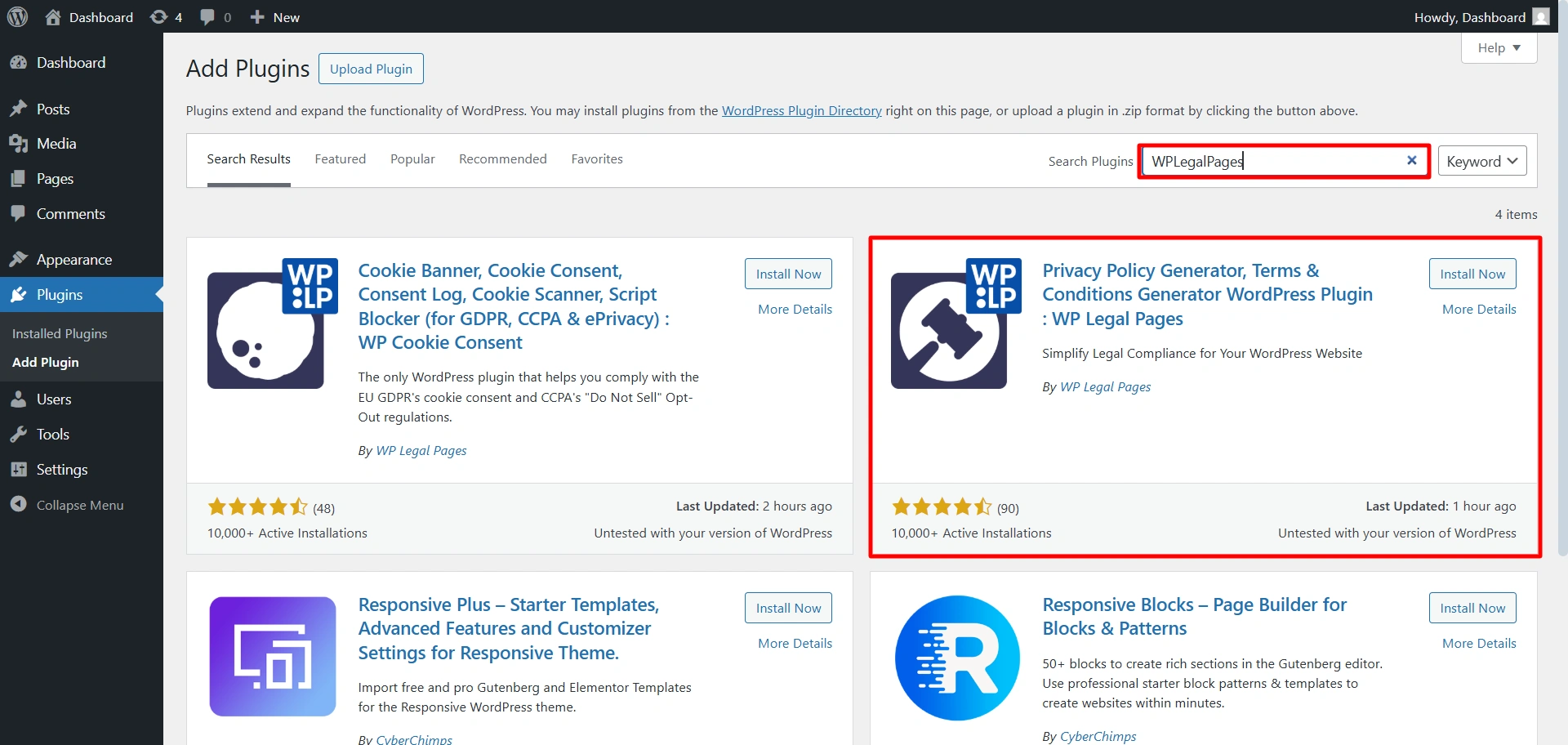
Search for WPLegalPages in the search bar. Click on the Install Now and Activate it.
Step 2: Configuring WP Legal Pages Plugin
Once you have activated the plugin, you can access it directly from the Dashboard.
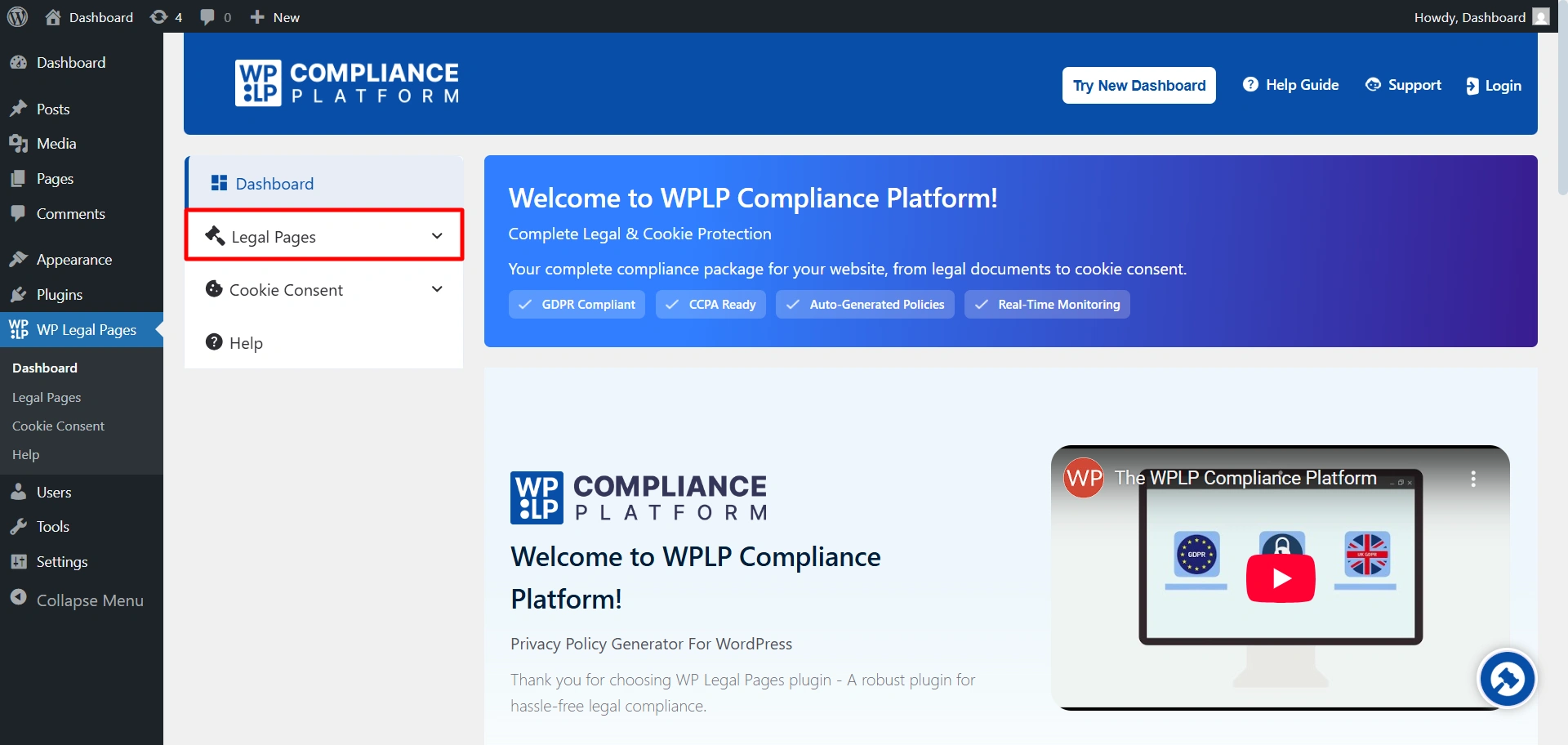
Step 3: Create an Account with WP Legal Pages Plugin
To generate legal pages for your website, scroll down from the dashboard and click Create Page.
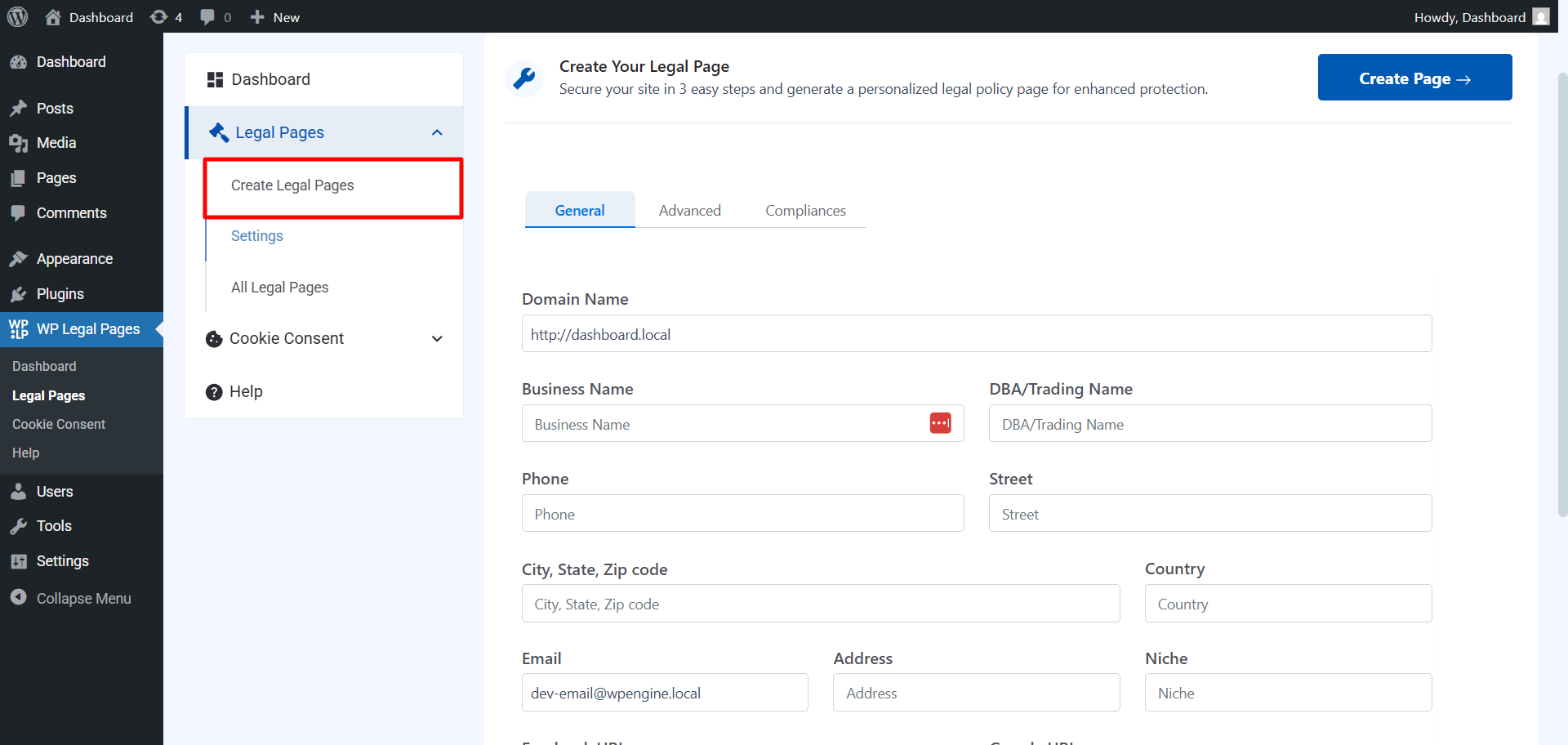
This will open the WPLegalPages wizard. From the WPLegalPages wizard, choose the Privacy Policy template and click the Create button.
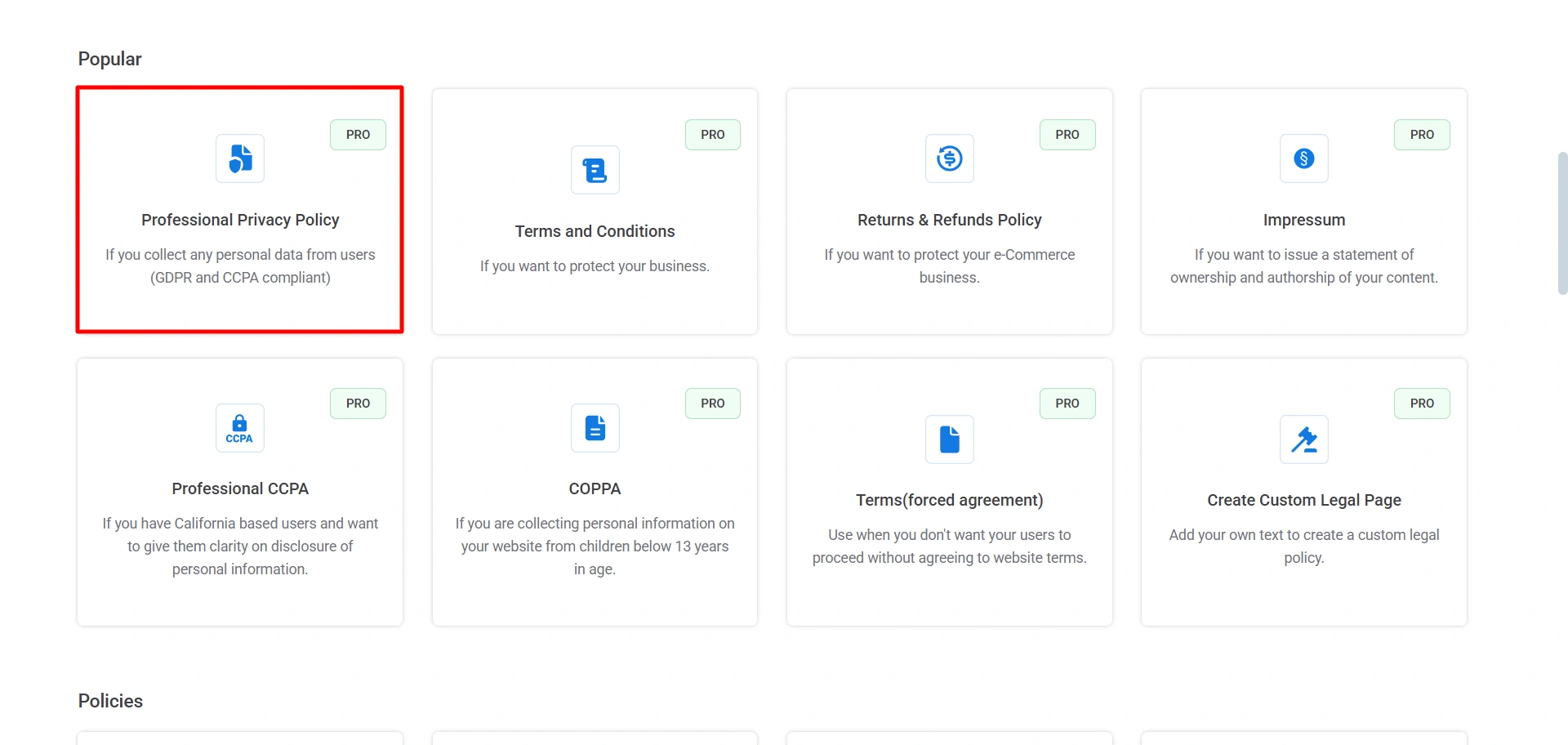
Once you click Create, a pop-up will appear, asking you to create a new account. Click on New? Create an account.
Once you Sign up, your account will automatically connect to your site, and you can start creating legal pages for your website.
That’s it. You have created an account and can now start creating your website’s Legal Pages. Let’s see how we can create a privacy policy for educational websites.
Step 4: Making a Privacy Policy for Educational Website
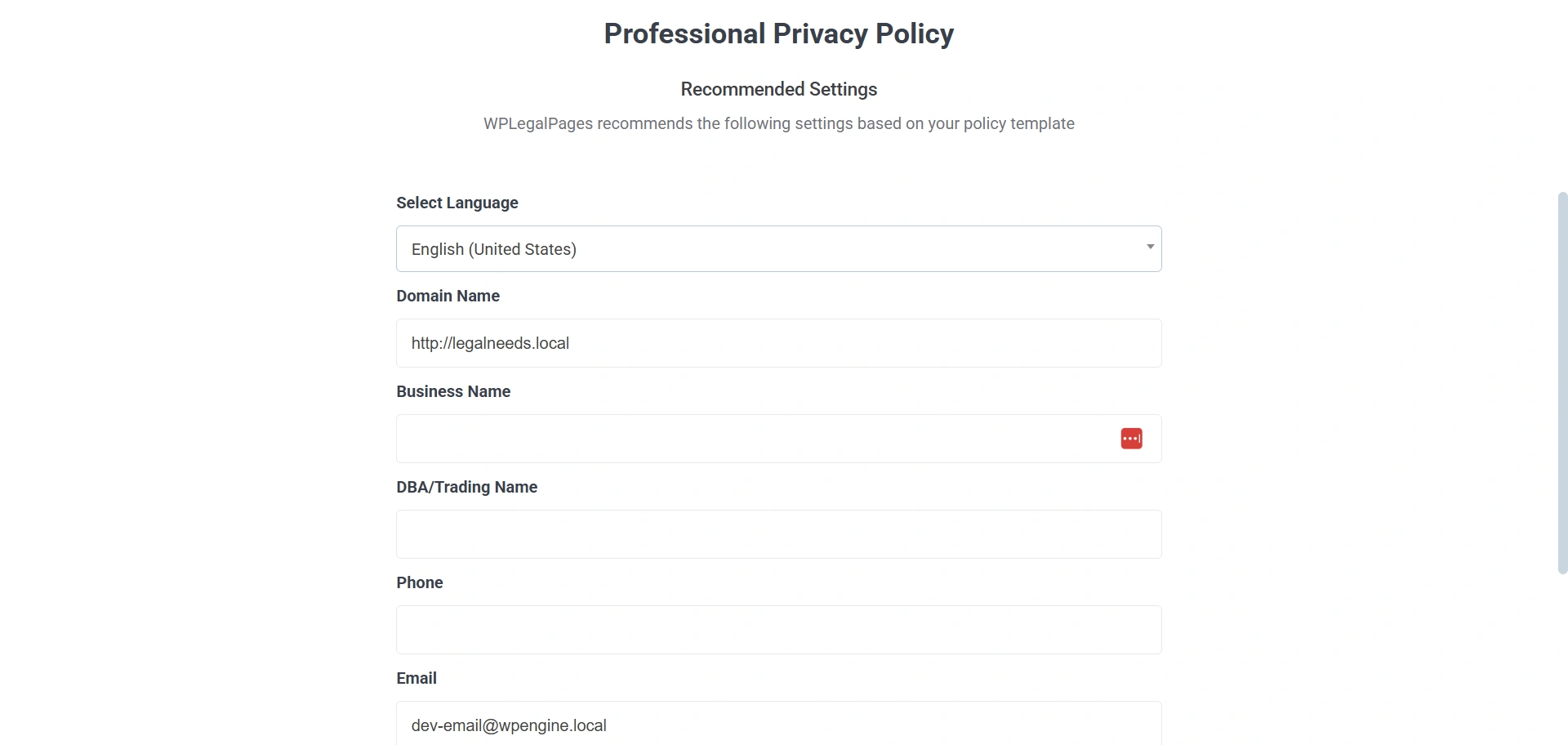
Fill in the Basic Details and click Next.
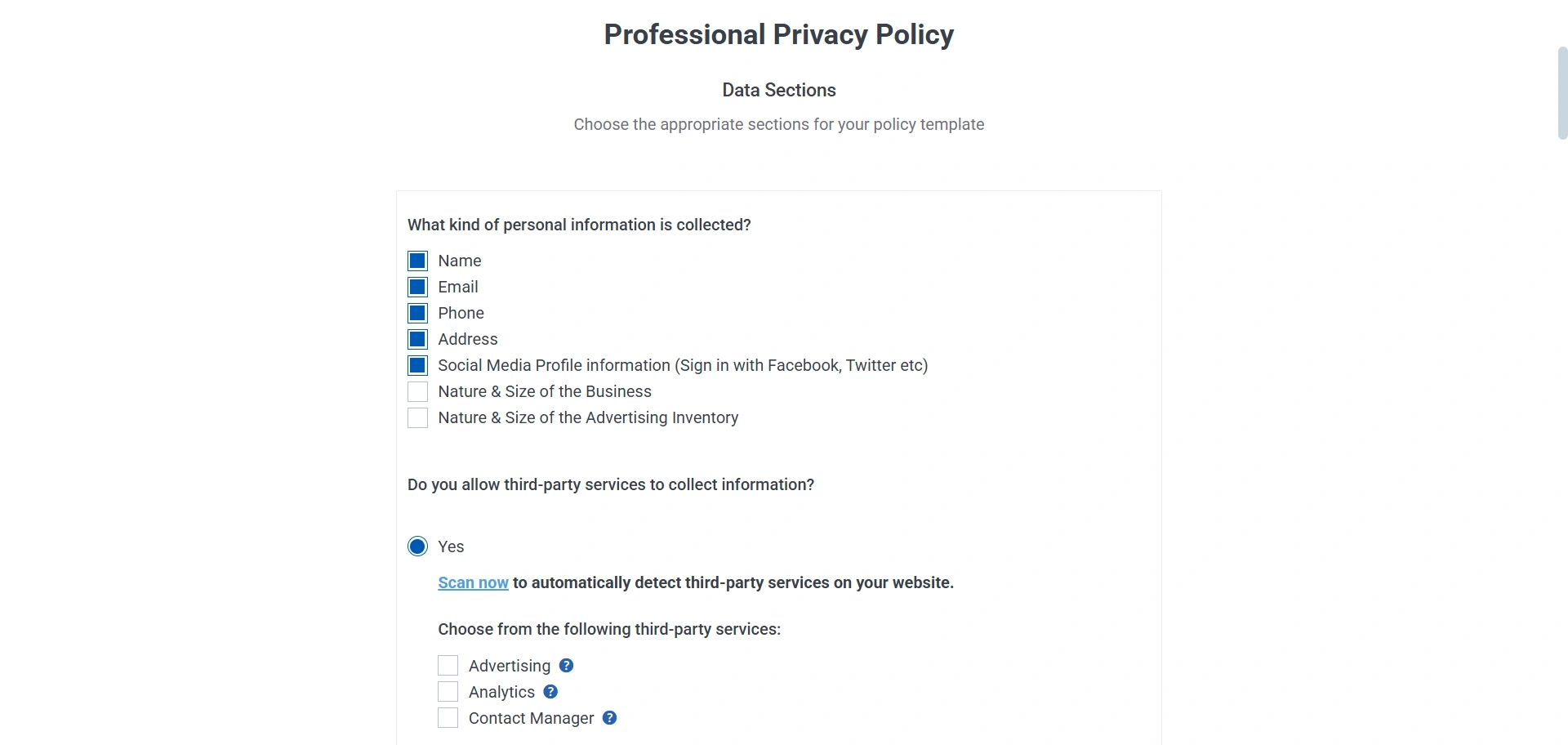
Select the appropriate section for your legal policy, then click Next.
That’s it! Your Education privacy policy is ready.
Click the Create and Edit option to edit or add additional information to your privacy policy.
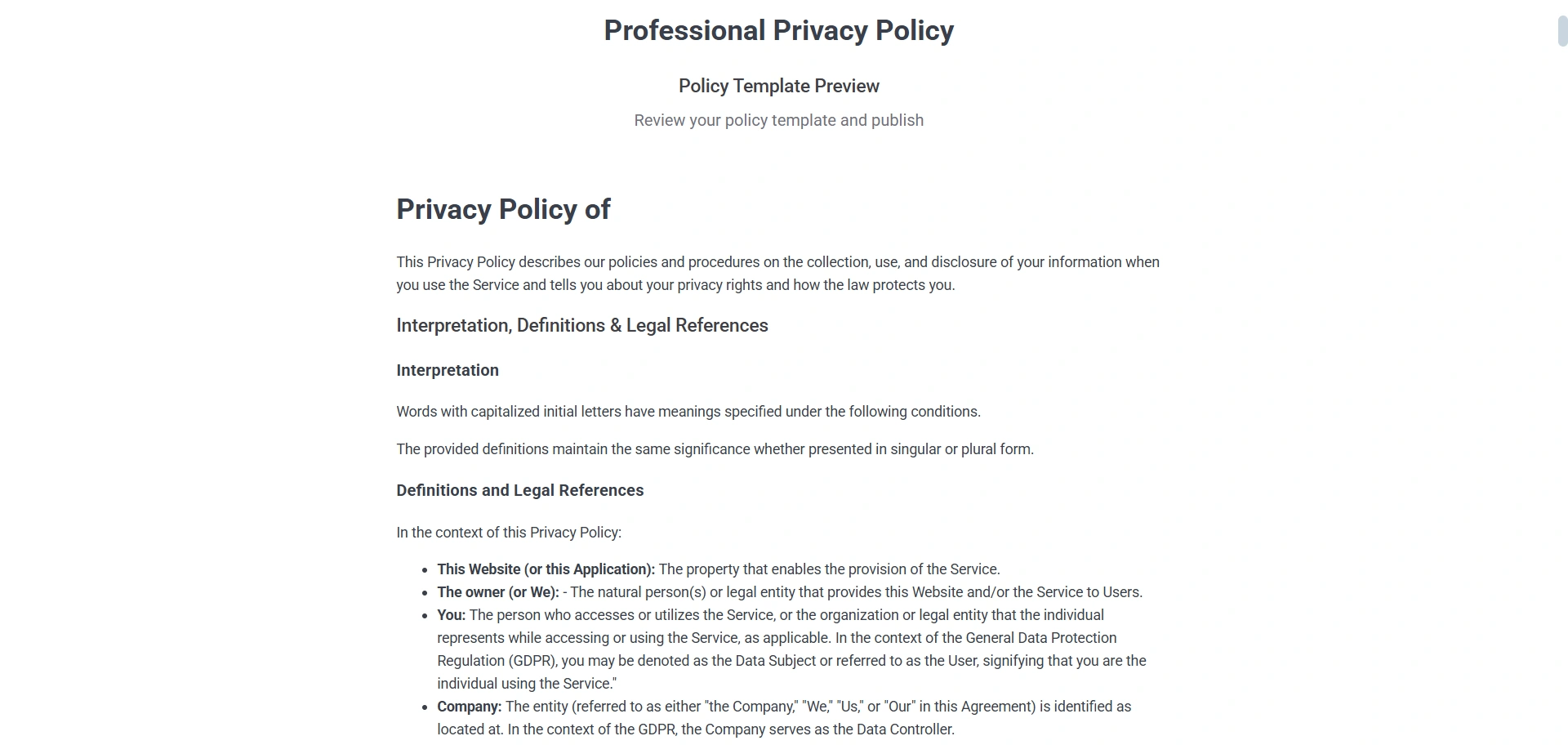
After you have made the necessary changes, click on Publish.
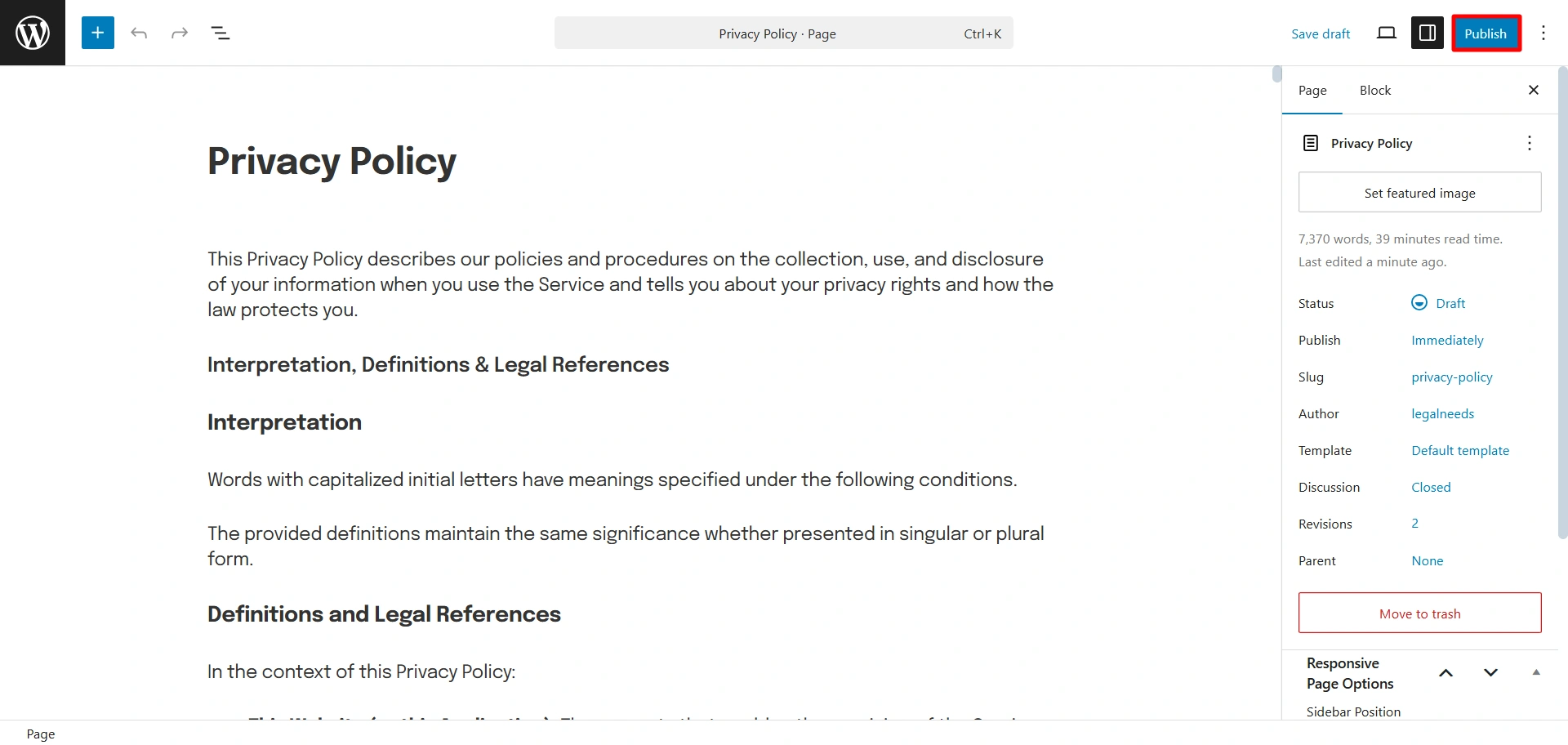
That’s all! Your Standard Privacy Policy is ready with just a few clicks.
Note: This is a basic privacy policy template covering essential clauses. For a more comprehensive policy with additional legal protections, consider using our Professional Privacy Policy Template in the Pro version of the plugin.
Where Should You Display Your Educational Website’s Privacy Policy?
Ensure the privacy policy for educational websites is prominently displayed on your educational website so that users can always see it.
Include your privacy statement in the footer of all websites to ensure visibility. Adding a link to your privacy policy here is advisable.
You can include a link to your privacy policy anywhere on your educational website where data is collected, such as the bottom, sites where new users create accounts, payment screens, marketing or e-commerce forms, etc.
FAQ
Yes, you can write your privacy policy for an educational website with the help of WP Legal pages plugin.
To create a free education privacy policy, use the standard privacy policy template available from the WP Legal Pages Plugin.
You can use any legal privacy policy generator to create an education privacy policy for your website.
Your school website needs a privacy policy, a legal requirement in many countries.
Yes, free privacy policy generators are ideal for creating privacy policies for education websites because they can create any policy within minutes.
Conclusion
If you have an education website, you should take into account not just data privacy legislation but also consumer and child protection legislation, as these may impact your privacy policy.
Make sure your policy satisfies all transparency and notice obligations. This means you should clearly state what information you are collecting, why you are collecting it, and how users can assert their privacy rights.
You may use a free template from WP Legal Pages Privacy Policy Generator to create the ideal privacy policy for your education site.
If you found this article informative, you can explore our other published articles:
- How to Create a Blog Privacy Policy – A Detailed Guide
- How To Create a Privacy Policy For Real Estate Website
- Creating a Privacy Policy For Travel Website
Want to make a privacy policy for your education website? Grab the WP Legal Pages plugin now!