
Privacy Compliance Trends Websites Should Prepare for in 2026
Summary
The article explains the transition to a proof-based accountability model, growing risk of AI and global fragmentation of privacy laws, and identifies how first-party data and user experience with privacy continue to be important.
Additionally, the article provides actionable steps and a consolidated approach for website owners to maintain their audit-ready and compliant status through 2026.
Privacy enforcement is gaining momentum globally. As a result, upcoming 2026 regulations are exposing outdated consent and data practices on many websites.
The regulators are now demanding proof of compliance instead of just assurances. Many websites that believe they are compliant today will struggle to provide proof once they face increased regulatory scrutiny.
In this guide, we will discuss the key privacy compliance trends that are happening in 2026 and how to prepare your website for enforcement before it is too late.
- Why 2026 Will Be a Turning Point for Website Privacy Compliance
- Trend #1 – From Cookie Consent to Full Consent Lifecycle Management
- Trend #2 – Increased Focus on Proof, Logs, and Audit Trails
- Trend #3 – AI-Driven Data Collection Will Trigger New Compliance Risks
- Trend #4 – Global Privacy Law Fragmentation Will Continue
- Trend #5 – First-Party & Zero-Party Data Must Still Be Lawful
- Trend #6 – Privacy UX Will Matter as Much as Legal Accuracy
- How Websites Can Start Preparing
- Where a Compliance Platform Fits in a Future-Ready Setup
- FAQ
- Conclusion
Why 2026 Will Be a Turning Point for Website Privacy Compliance
By 2026, regulators will closely evaluate how websites comply with privacy legislation in practice. The focus will shift to how websites implement and prove compliance in real-world environments.
Here are the key points that will be considered while evaluating any website:
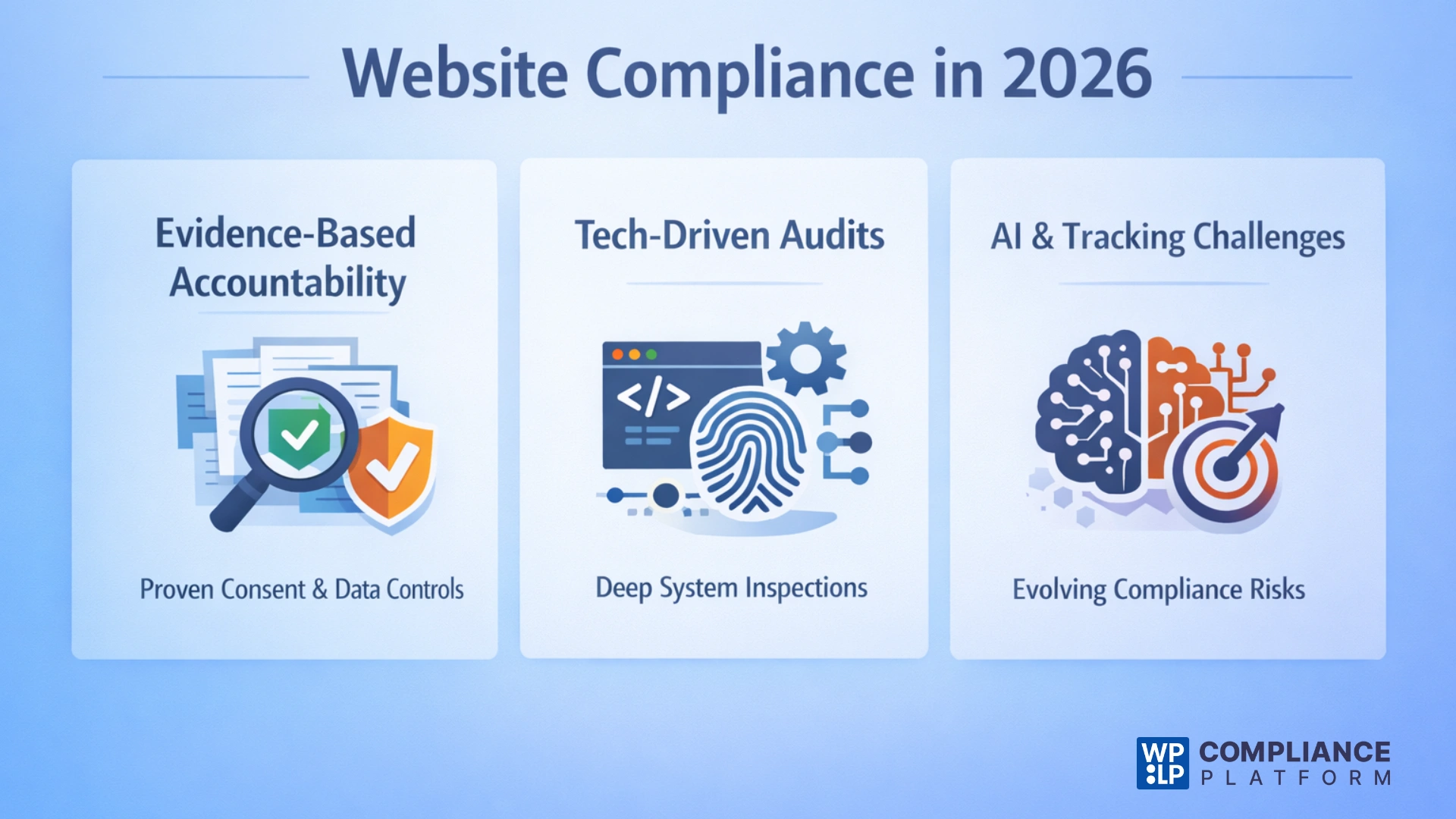
1. From checkbox compliance to evidence-based accountability
Banners and policies will no longer be sufficient for privacy compliance. Regulators will verify evidence related to consent, data handling, and user rights are being enforced within and across systems, workflows, and tools.
2. Regulators Will Assess Actual Implementations, Not Intentions
Regulators will be increasingly technical when determining compliance checks. They will audit information from analytics configurations, tracking scripts, consent signals, and back-end data flow. Non-compliance will now depend on how tools function rather than what information is stated in the website’s privacy policy.
3. Marketing technology outpacing the privacy laws
Personalized, behavioral tracking, and most importantly, AI-based technology are evolving faster than privacy regulations for websites. Many organizations overlook hidden compliance gaps until they are discovered through the enforcement process or via audits.
As a result, the compliance trends of 2026 are going to reward those websites that are able to demonstrate operational compliance. On the other hand, websites will be penalized for their continued reliance on generic or check-box type setups.
Trend #1 – From Cookie Consent to Full Consent Lifecycle Management
For a long time, cookie consent banners were viewed as the last step of consent. Once a user clicked “Accept,” the process was complete. However, this is no longer adequate.
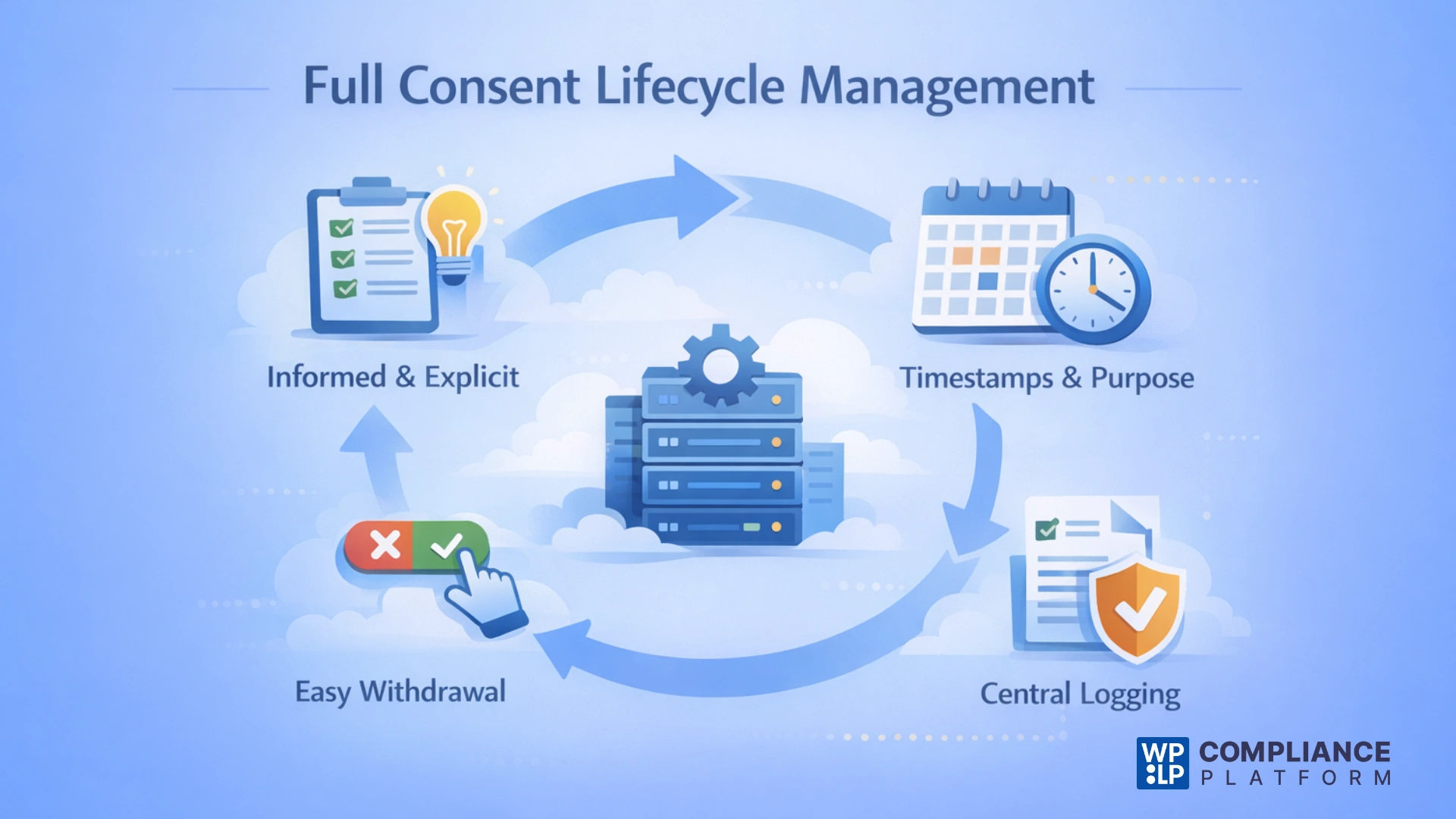
The trend in consent management has shifted to encompass the entire lifecycle of consent, not just the moment consent was taken. It is no longer sufficient to simply log the date and time of consent and link it to the purpose of use. Compliance requires that all valid consents be explicit, informed, and provide for withdrawal at any time.
From a regulatory viewpoint, a valid consent must be:
- Clear and specifically informed.
- Logged with specified timestamps.
- Clearly defined for the purposes for which it was given.
- Easily withdrawn.
- Maintained for auditing purposes.
As an example, imagine that in 2026, a regulator contacts your organization requesting proof that a specific user consented to analytics tracking 18 months earlier. Additionally, they want to know if the consent remained valid at the time of data processing.
Most websites would face difficulties in providing this information if they did not have a central record-keeping capability.
For this reason, the focus of future discussions has shifted away from cookie banners. Instead, it will be dedicated to creating and implementing the necessary infrastructure.
This means that organizations must store consent logs centrally, map consents to appropriate purposes, and ensure that withdrawals of their consent are promptly reflected across all tools.
Consent is thus no longer a single moment in time, but rather a long-term relationship between the website and the users.
Trend #2 – Increased Focus on Proof, Logs, and Audit Trails
The trend towards user consent is increasing demand for documentation as evidence. Regulators have shifted towards documentation to demonstrate compliance.
Consent logs, policy acceptances and user preference history will become accepted forms of legal evidence in the future. For an audit, dispute or investigation, the authorities can ask the site to provide documentation of when and how each user provided consent for specific data uses.
Additionally, there are numerous other examples, including:
- Consent for marketing communications via email and text.
- Acceptance of updates to privacy policy.
- Opt-in and opt-out history.
- Regional requirements for consent.
If an organization does not have appropriate procedures in place to log and audit user consent, it puts them in a negative position. Even if consent was collected correctly, if an organization cannot confirm that at the time it was collected, it will be viewed as non-compliant.
Therefore, as part of preparing for compliance, organizations need to identify how they will obtain reliable, historical consent data.
If an organization does not store data centrally, it significantly increases the risk associated with privacy compliance. Centralized logging and retention policies are not optional, they have become a foundation upon which organizations must build.
Trend #3 – AI-Driven Data Collection Will Trigger New Compliance Risks
Websites are beginning to incorporate tools that use AI at an unprecedented rate. Chatbots, recommendation algorithms, personalization tools, and AI analytics provide users with a fast and interactive experience. However, this increases more complicated privacy issues.
In contrast to traditional methods of data collection, implicit data collection will occur with AI. Implicit data consists of the contextual information derived from interactions, query history, and the user’s behavioral pattern.
Lack of adequate disclosure is a major concern. It is because many websites that utilize AI do not disclose how user data will be processed, stored or reused. As privacy laws continue to evolve, the lack of disclosure will create increased regulatory scrutiny of websites that utilize AI.
Another issue lies in automated decision-making. An AI’s recommendation algorithm, for example, may result in “different content, pricing, or experiences. In many regions, users receive information related to this automated processing, including the ability to question the basis of the algorithm.
From a practical standpoint, a website should begin revising their privacy notices to address AI-assisted processing. Further, the websites’ consent procedures should state clearly what type of data is required for AI processing and is separate from regular website data.
Treating AI as an ordinary web feature will not endure in the future under current regulations.
Trend #4 – Global Privacy Law Fragmentation Will Continue
Even with continuing talk about harmonization, it is anticipated that global privacy laws in 2026 will remain fragmented. Rather than coming together, differences in scope, definitions and enforcement priorities between regional and national privacy frameworks still remain.
In the United States, privacy laws continue expanding, with different levels of consent requirements, different user rights and thresholds for applicability. Other areas around the globe continue to modify their approach to data protection, consent and cross-border transfers.
For websites with international customers, this fragmented landscape complicates compliance. One consent experience may not work for all jurisdictions. Compliance now requires website operators to consider region specific consent behaviours, disclosure requirements and enforcement expectations.
As a result, online operators are fast learning that “one-law compliance” is becoming less effective.
Modular compliance frameworks must be developed that can adapt dynamically depending on a user’s location. These frameworks include region aware consent banners, localized policy documents and flexible preference management systems.
Trend #5 – First-Party & Zero-Party Data Must Still Be Lawful
Digital marketing teams frequently assume that first-party data is compliant by default. Despite being a better option than third-party cookies, first-party and zero-party data still create legal obligations.
Therefore, the collection of these two types of data does not eliminate legal obligations such as consent, transparency and purpose limiting, which must be adhered to regardless of who collects the data.
Users should have complete knowledge and understanding of how their data will be used. The data should not be repurposed for reasons other than those indicated at the time of collection.
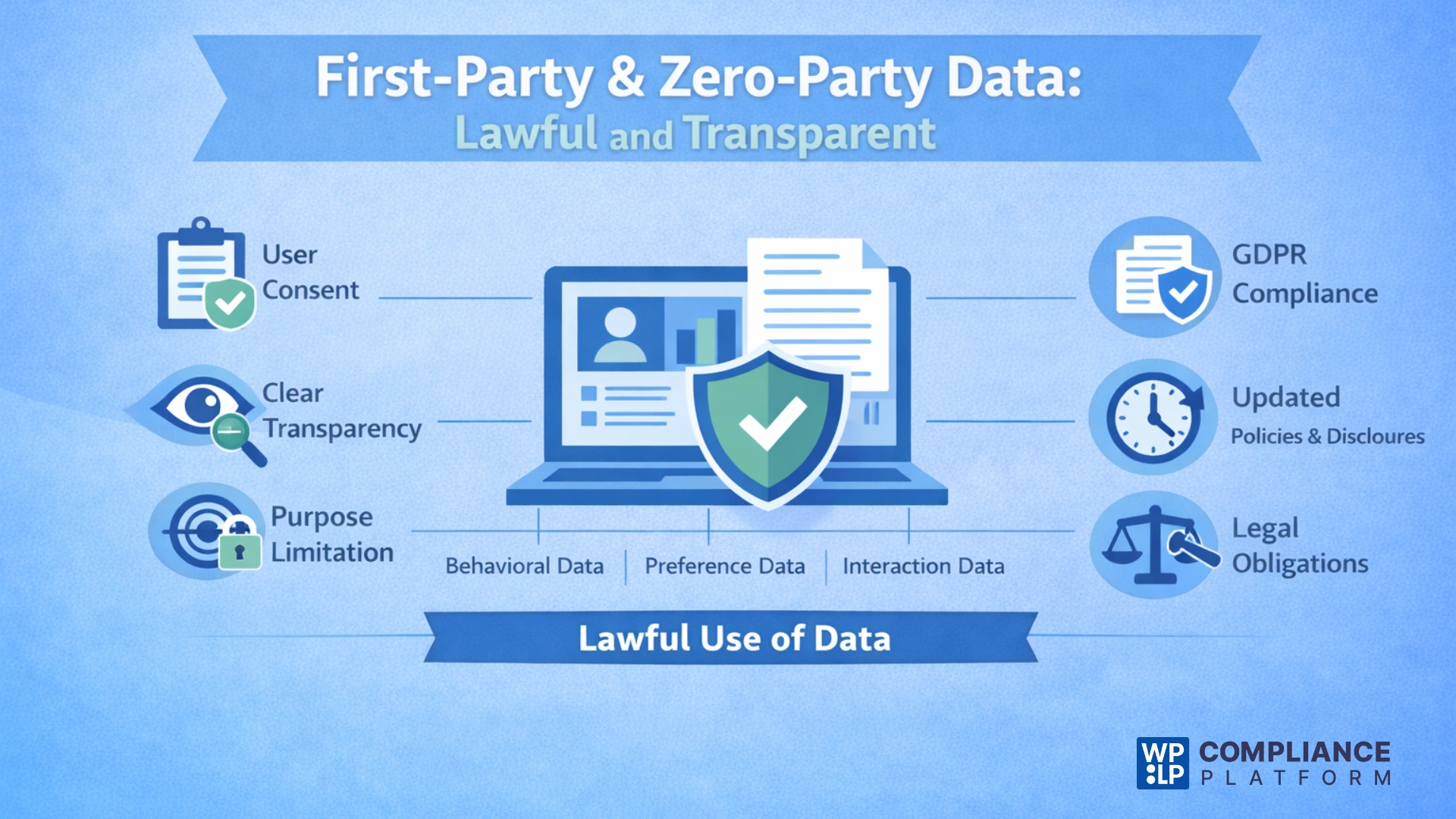
As time goes on, the consumer and regulation expectations for transparency keep growing. They want clarity on how, where and when behavioral data, preference data and interaction data is being held and utilized.
Additionally, a company that does not update its consent process, would be at risk of violation, if it were to begin to significantly increase its use of first-party data without updating its disclosures and processes.
In 2026 and beyond, GDPR-style legislation will shape the compliance success of companies based not only on the ownership of data, but also on the lawful use of that data.
Trend #6 – Privacy UX Will Matter as Much as Legal Accuracy
Privacy compliance is no longer simply about what is written in a privacy policy. There has been a shift toward user experience regarding enforcement by regulators. Because user experience has become the most used and frequently cited enforcement area.
Regulators also have been taking a closer look at what are called dark patterns. These are design strategies used to induce a user to provide consent based on manipulation.
For example, consent banners that create an environment where acceptance is more prominent than rejection and make consent a requirement to access content, are being scrutinized more closely.
Effective privacy UX should include:
- A clear and understandable presentation of user choice.
- An equal balance of acceptance and rejection on a user’s option to provide consent.
- Design choices without deception or manipulation.
- A respect for user autonomy.
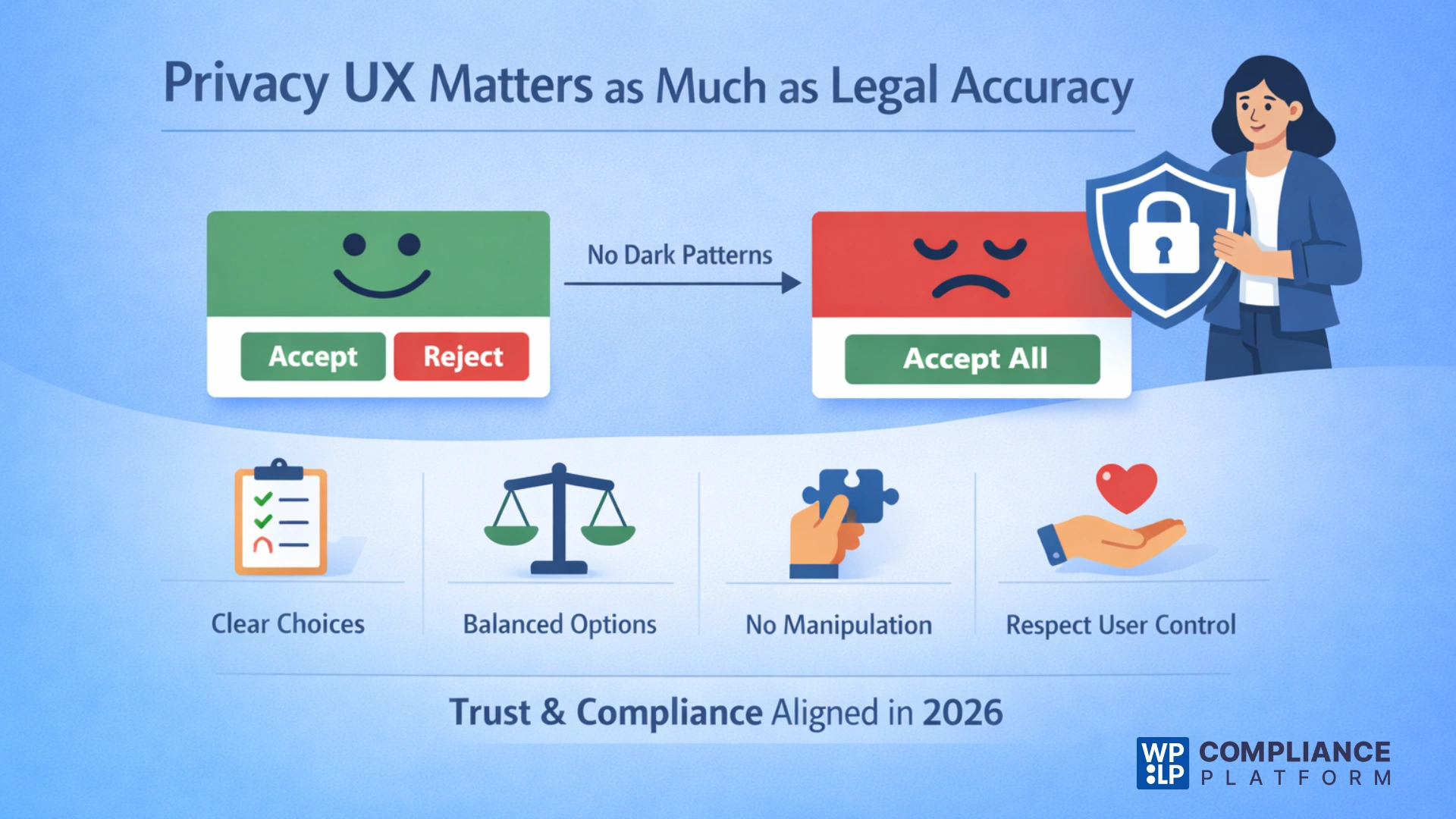
From a strategic perspective, UX also impacts trust. Users are more likely to interact with or buy from a brand that respects their choices. Compliance will be very closely aligned with UX, in the year 2026.
How Websites Can Start Preparing
You do not have to achieve a perfect level of privacy compliance by 2026 overnight. But must take incremental and measured steps toward your overall goal.
Below is a basic list you can use as a starting point:
- Audit current consent flows for all pages/tools.
- Determine whether all consent logs are in one place and available for access.
- Review the methods AI tools utilize to gather and process user data.
- Revise your privacy policy to include current and future intended uses of your data.
- Evaluate the user experience (UX) for ease of understanding and fairness.
- Ensure that regionally, all consent preferences are being respected equally
Rather than trying to keep pace with each new regulation that arises, it is better to develop a robust infrastructure that can change as regulatory environments change.
Where a Compliance Platform Fits in a Future-Ready Setup
With the increased complexity in privacy requirements, managing numerous state and national laws will no longer support a manual process. Disconnected applications increase issues for sites that operate over multiple jurisdictions.
Due to this, it is important to create a centralized process for protecting users’ privacy. Platforms such as the WPLP Compliance Platform support the consent logs in one location.
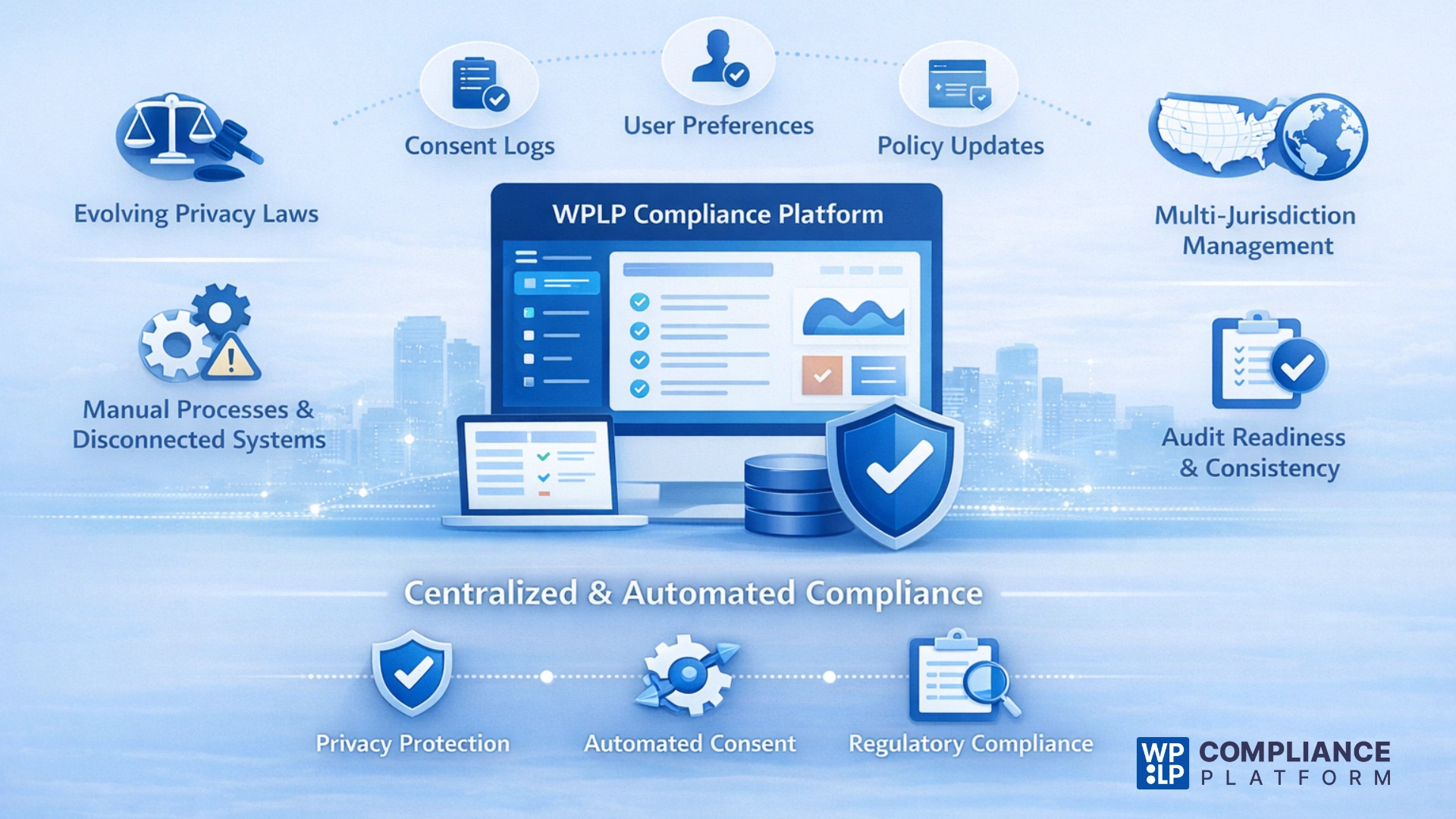
This allows sites to update their privacy policies when new legislation updates occur. It also provides the ability to manage the consent preferences of users across multiple jurisdictions in an automated manner.
By eliminating the need for a manual process to manage and maintain consent logs, centralizing and standardizing the execution of laws and regulations will improve consistency and prepare the sites for future audits.
FAQ
In 2026, regulators will require documented, real-world proof of how websites collect, manage, and respect user consent.
No, websites need to maintain a complete consent lifecycle, including logging, auditing, and withdrawal.
AI collects implicit data, which creates new privacy law obligations regarding transparency, consent, and disclosure.
Will collecting first-party and zero-party data automatically make an organization compliant?
No, collecting first-party and zero-party data still requires valid consent, clearly defined purpose limitations, and transparency in disclosure.
Regulators are becoming more aggressive when it comes to cracking down on deceptive design practices.
Regulators will expect websites to demonstrate operational privacy compliance through documented consent logs, audit trails, lawful AI data usage, and user-friendly consent experiences.
Conclusion
Website privacy compliance is beginning its next stage. In 2026, compliance will not be measured using intentions and checklists, but by systems, documentation, and user-centric design methods.
Organizations that prepare early will minimize the chances of last-minute disruptions, reduce enforcement risk, and be better equipped to answer regulatory inquiries. Most importantly, they will foster the trust of users who have become much more aware of how their data is collected, used, and protected.
Instead of approaching compliance from a deficit perspective, forward-looking organizations will look to leverage compliance for a strategic advantage.
In 2026, the terms trust, transparency, and accountability will serve to differentiate resilient websites from vulnerable websites. Organizations that think ahead will be best positioned for future success.
If you enjoyed this, then consider reading:
- How to Create a Cookie Policy For Your Website
- What is Privacy Management: Why It Matters for Your Business?
- From GDPR to AI Regulations: The Next Big Shift in Data Privacy
Disclaimer: This article is only for information purpose. It does not content any legal advice.