
What is DMCA? Digital Millennium Copyright Act Guide
Summary
It helps website owners avoid legal risks with “safe harbor” protections if they follow compliance steps. The law remains important today for handling issues like AI-generated content, deepfakes, and content theft online.
Imagine someone copying your content, video, and image online. What will you do about it?
This is where the Digital Millennium Copyright Act (DMCA) comes into play.
The DMCA is a copyright law that was enacted in the United States in 1998 to address the challenges arising from the digital age.
The primary objective of the DMCA is to update and adapt copyright laws to the digital environment, safeguarding the rights of creative content while promoting innovation and creativity.
In this guide, you’ll learn what DMCA is, how it works, and how to protect your website from copyright theft.
- What is DMCA?
- What Are The Requirements of The Digital Millennium Copyright Act (DMCA)?
- Who Must Comply With The Digital Millennium Copyright Act (DMCA)?
- The DMCA and ‘Safe Harbor’ Exemptions
- How Does The Digital Millennium Copyright Act Work?
- How DMCA Applies to Modern Digital Challenges
- Do you need a DMCA policy?
- DMCA vs copyright vs trademark
- Why is DMCA Law Important?
- How to file a DMCA takedown notice (step-by-step)
- Real examples of DMCA in action
- What is a DMCA Takedown Notice?
- Introducing WPLP Compliance Platform
- Conclusion
What is DMCA?
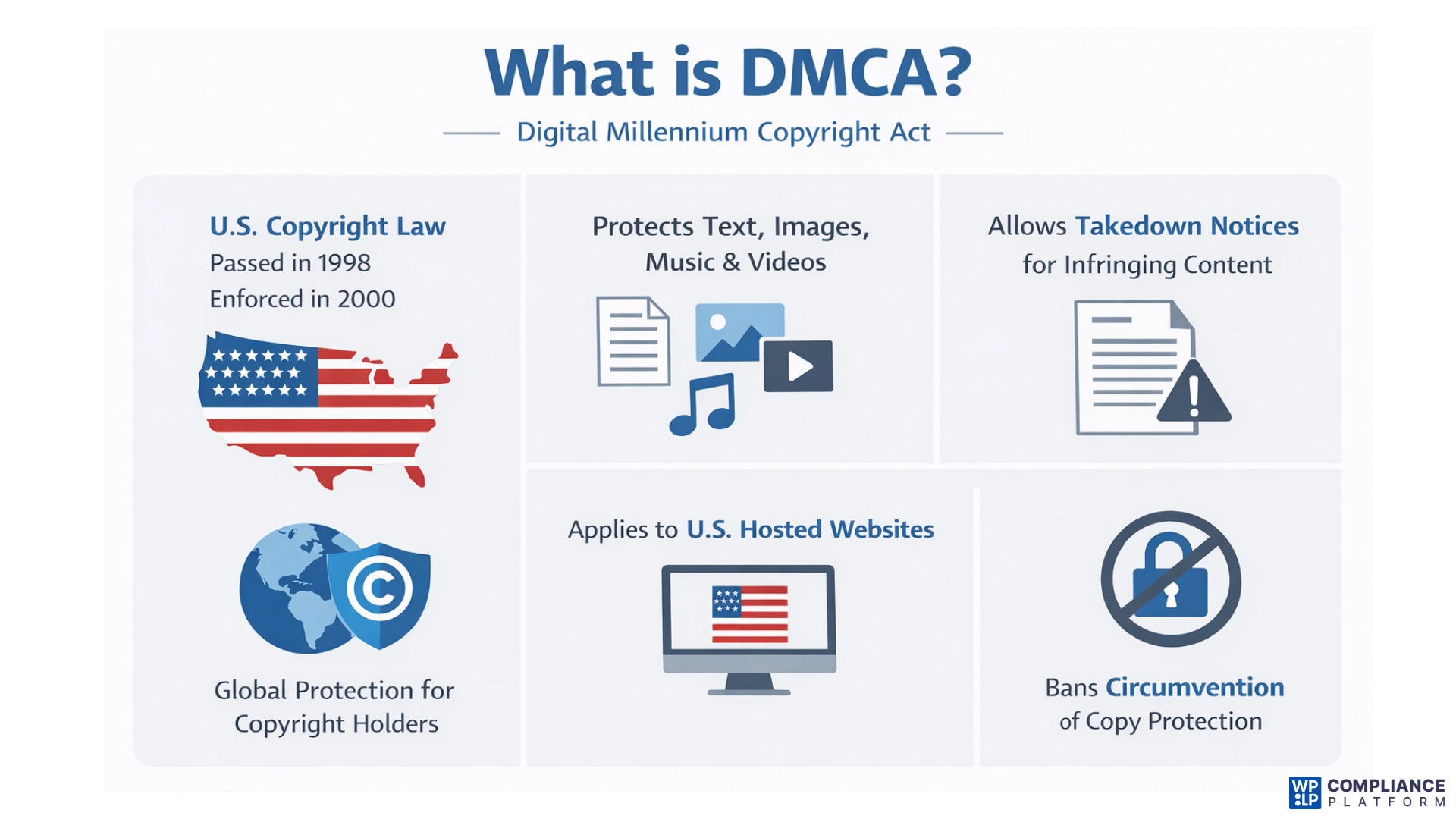
A US copyright law called the Digital Millennium Copyright Act (DMCA) aims to strike a balance between users’ and owners’ rights to digital media copyright.
It was passed in 1998 and put into effect in 2000 with the goal of modernizing American copyright laws to comply with the demands of two international treaties that the World Intellectual Property Organization (WIPO) had approved.
In order to claim their copyright and have infringing works deleted from a website, copyright holders can follow the reasonably simple structure provided by the DMCA. Additionally, it defines severe penalties for copyright violations.
All forms of content, including text, photos, music, and videos, are protected by the DMCA. However, as the DMCA is a US legislation, it is only applicable to US-hosted websites.
The DMCA can still protect the copyright holder, even if they are based outside of the country.
It is against the DMCA to create or distribute software or hardware that can be used to bypass copy protection laws.
What Are The Requirements of The Digital Millennium Copyright Act (DMCA)?
A few obligations under the DMCA include removing infringing content and responding to takedown notices. To ensure compliance with the DMCA, your company has to:
- Refrain from using or hosting any content that is protected by copyright laws without obtaining the necessary permissions or licenses.
- It is recommended to establish procedures for notice and takedown. These procedures help in removing infringing content from a website or platform.
- Takes immediate action against any content that infringes on intellectual property rights.
- It is important to have a Repeat Infringer Policy in place that can be reasonably enforced. (A repeat infringer is a user who has multiple copyright complaints lodged against their content within a given period of time)
Who Must Comply With The Digital Millennium Copyright Act (DMCA)?
If an online service provider (OSP) permits user-generated content, it should think about having a DMCA policy. By doing this, your company will be able to reduce its exposure to lawsuits for copyright infringement.
Any website, including search engines, content hosting sites, and internet service providers, that hosts user-generated content is considered an OSP under the DMCA.
You probably don’t need a DMCA Policy, for instance, if the sole original content on your website is either your own or written by writers you work with.
To safeguard yourself from content posted by users or other third parties, you must have a DMCA policy in place if any section of your website includes their content. If someone shares copyrighted content on your website, you could be held liable.
The DMCA and ‘Safe Harbor’ Exemptions
According to the “safe harbor” provisions of the DMCA, Online Service Providers (OSPs) are protected from liability under certain circumstances. If users of your website upload or transmit content that is protected by copyright, you will not be held responsible as long as you meet the safe harbor requirements and designate an agent with the U.S. Copyright Office.
The owner of copyrighted material has the right to file a complaint and initiate a lawsuit if they discover that someone is using their work without their consent. However, service providers enjoy protection from liability under the DMCA through an exemption provision.
How Does The Digital Millennium Copyright Act Work?
A copyright owner can send takedown notices to services or individuals distributing their copyrighted works using the DMCA. The service or individual, assuming a violation of their copyright, must comply with the takedown request or face legal action.
It acts as an anti-piracy enactment, making it illegal to circumvent copy protection intended to prevent pirates from duplicating digital copyrighted works and selling or distributing them freely. In addition, according to the act, it would be illegal to manufacture or distribute tools or techniques for circumventing copy controls.
How DMCA Applies to Modern Digital Challenges

The DMCA remains highly relevant in addressing new forms of content misuse.
One of the most significant modern changes, or rather developments, is the rise of AI-generated content. AI tools have the ability to scrape websites. So, what they do is, they reuse copyrighted text or generate content that closely resembles original work.
This one is also technically counted as copied content. You see, DMCA wasn’t originally designed for AI, but it’s still used by original content owners to report unauthorized use of their material.
Not just AI, there is one more growing concern other than AI: Deepfake content. Content like videos, images, or audio that completely replicate real individuals without permission can violate copyright. It’s not just that, it’s also ethically wrong.
Certainly, in cases like these, DMCA notice takedown notices can be issued to the platforms that copy and host this content.
Web scraping has also become very advanced these days. Automated bots can extract large volumes of content from websites. If this involves copyrighted material, website owners can use DMCA notices to request removal or restrict access.
These modern use cases show that while the technology has changed, the DMCA continues to be a practical tool for protecting digital rights.
Do you need a DMCA policy?
Not every website needs a DMCA policy, but many do. Here’s a quick breakdown:
- Blog Websites: If you allow comments, guest posts, or user submissions and yes, you need one.
- Marketplaces Websites: Sellers can upload unauthorized product images. A DMCA policy protects the platform owner.
- Saas platfomrs: users can upload or share files, your platform is an OSP and should have a policy in place.
- Communities: Forums and communities thrive on user content, this makes a DMCA policy critical.
DMCA vs copyright vs trademark
These three terms are often confused. Here’s the difference at a glance:
DMCA: A US law that provides the legal procedure (takedown notices, safe harbor) to enforce copyright online.
COPYRIGHT: Protects original creative works (text, images, music, video) automatically upon creation. No registration needed.
TRADEMARK: Protects brand names, logos, and slogans. Must be registered and is unrelated to DMCA enforcement.
Why is DMCA Law Important?
The Digital Millennium Copyright Act (DMCA) is one of the most significant laws affecting the internet and technology today. Most of the services we rely on wouldn’t exist without the DMCA’s safe harbors from copyright liability.
That includes YouTube, Wikipedia, and your community blog. However, the DMCA has both supported private censorship and hindered privacy, security, and competition.
Purpose of the Digital Millennium Copyright Act
While it may seem complex, fulfilling the DMCA policy for your website is worth the time and resources you spend on it. This is because the DMCA law plays a significant role in supporting your business for the following reasons.
- Prevention of Stealing Content from Your Website:- You spent considerable time and money crafting a content-rich website with the help of WordPress experts. You hire the most reliable SEO agency to boost your website ranking. However, does your business hold a system to track, monitor, and resolve copyright infringement? If not, you should consider implementing one. This is because detecting copyright infringement cases as early as possible is necessary to maintain your competitive edge online. One main reason others steal content from your website is because of the high performance of your site from an SEO perspective. If they are copying from your site, it could result in a drop in your SEO rankings.
- Protect Yourself from Copyright Infringement: Suppose you are running an eCommerce marketplace where others can market their products using your site. What would you do if a seller added a copied product image? Will you be accountable for it? This is another significant aspect of the DMCA. It can protect your business from copyright infringements and potentially expensive lawsuits.
How to file a DMCA takedown notice (step-by-step)
Filing a DMCA notice is straightforward when you follow these steps:
- Identify the copied content. Note down what has been copied and note all URLs and the URL of your original content.
- Find the hosting provider. Use a WHOIS lookup tool (like whois.domaintools.com) to identify who hosts the infringing website. You’ll send the notice to them.
- Draft your takedown notice. Your notice must include your contact details, a description of the original copyrighted work, the infringing URL, and a good faith statement. Many hosts have a standard form check their abuse or legal page.
- Submit to the hosting provider. Email or submit your notice through their official DMCA/abuse channel. Most hosts are legally required to respond promptly.
- Submit to Google for deindexing. Even if the page stays live temporarily, you can request Google remove it from search results via Google’s Search Console removal tool. This limits its visibility immediately.
- Track the response. Hosts typically act within a few days. If they don’t respond or refuse, you may escalate to legal action. Keep records of all correspondence.
Real examples of DMCA in action
- Food Blogger: DMCA Notice
A food blogger sees that another food blogging site has taken and posted all their recipe articles without any changes to the text. The food blogger sends a DMCA notice to the infringing company’s hosting provider, and the infringing content was removed from the hosting server within 48 hours!
- Music Copyright: YouTube Claim
A musician finds that someone has taken their original track and included it in a YouTube video without their permission. The YouTube Content ID system (which uses DMCA principles) automatically identifies the video and flags it for copyright infringement; the copyright owner can choose to remove the video, mute its audio, or collect ad revenue from it.
What is a DMCA Takedown Notice?
A DMCA takedown notice is an official notification sent to the company, search engine, or web host notifying them that the material they are hosting infringes on a copyright. Sending a DMCA takedown notice is a procedure that anyone can do.
To have an infringing web page removed from a service provider’s network, the copyright owner must give notice to the service provider with
- URL of the website where you found the copyrighted content, describe the content you believe is infringing, and provide any other relevant information.
- Sufficient information to recognize the copyrighted works.
- Statement of the accuracy of the notice and, under penalty of perjury, that the accusing party is entitled to act on behalf of the owner.
Now that you know what copyright is and what is its importance. Let me introduce you to the WP Legal Pages plugin, which helps to create a Cookie notice page for your website.
That can help you create a copyright notice for your website. The plugin will also help you with all the legal pages required for your website.
Introducing WPLP Compliance Platform
WPLP Compliance Platform is a one-stop shop for all your website’s legal needs, including crucial pages like DMCA notices, ensuring compliance with the law.
To ensure compliance with laws and standards, various legal documents are necessary in addition to the DMCA notice. Notice such as a legal disclaimer, terms and conditions, a privacy policy, and a cookie policy.
We suggest using the WPLP platform to create a legal page for your website.
WPLP offers user-friendly interface that comes with a set of important features. You don’t have to be an expert in law to use the plugin. It also provides customization tools to help you tailor your copyright text to meet your unique needs.
You can create a DMCA policy manually or use tools like WPLP Compliance Platform to simplify the process. WPLP provides a DMCA template you can fill in and publish to your WordPress site in minutes, alongside other required legal pages like a privacy policy, cookie policy, and terms and conditions.
Installing and Using WPLP
Let’s walk you through how to easily install and configure the WPLP plugin with this user-friendly guide.
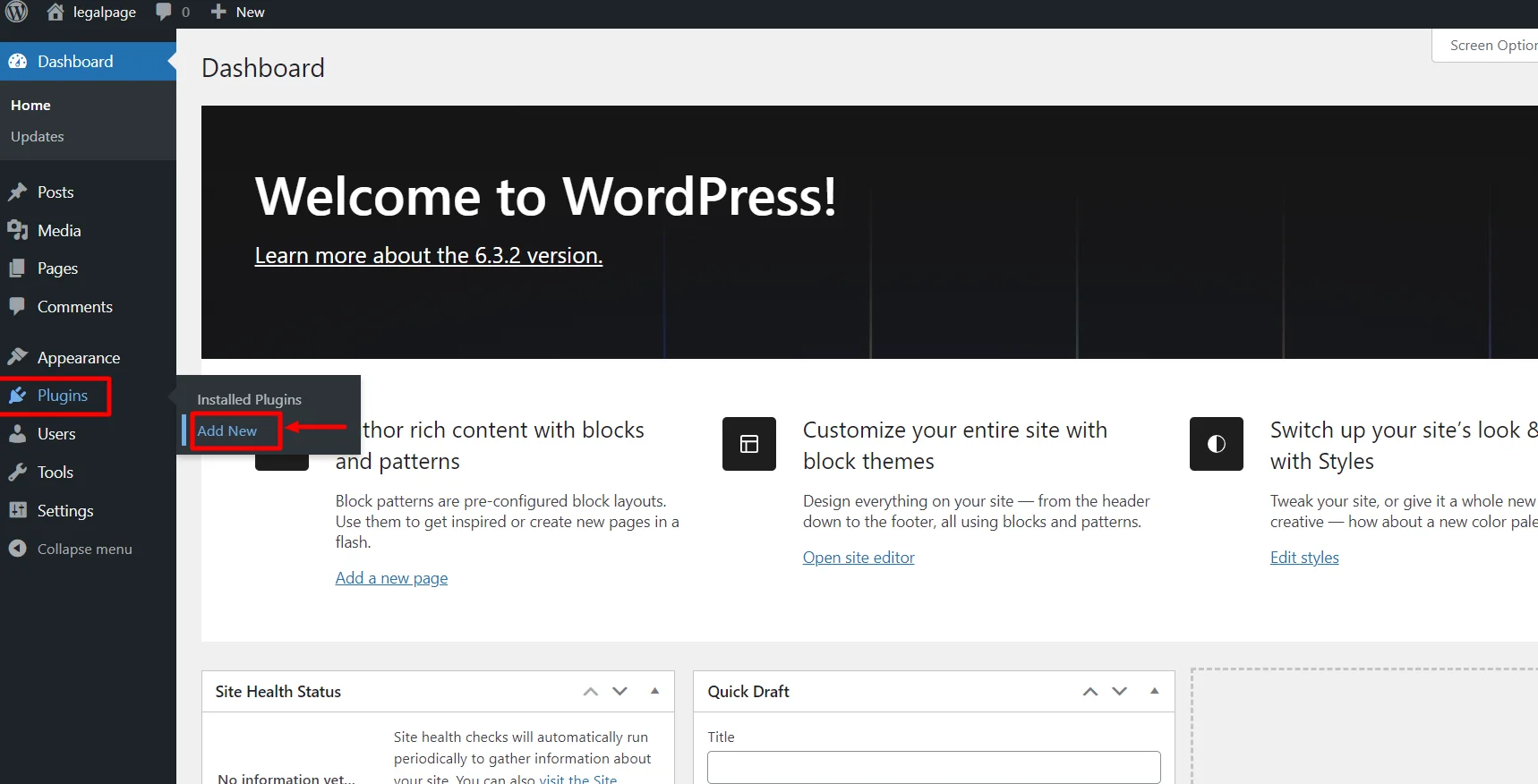
From the WordPress Dashboard, select Plugins > Add New.
In the Search Bar, type WPLegalPages. You can easily install WP Legal Pages by finding them in the search results and clicking the Install Now button.
Once the plugin is installed, activate the plugin by clicking the Activate button.
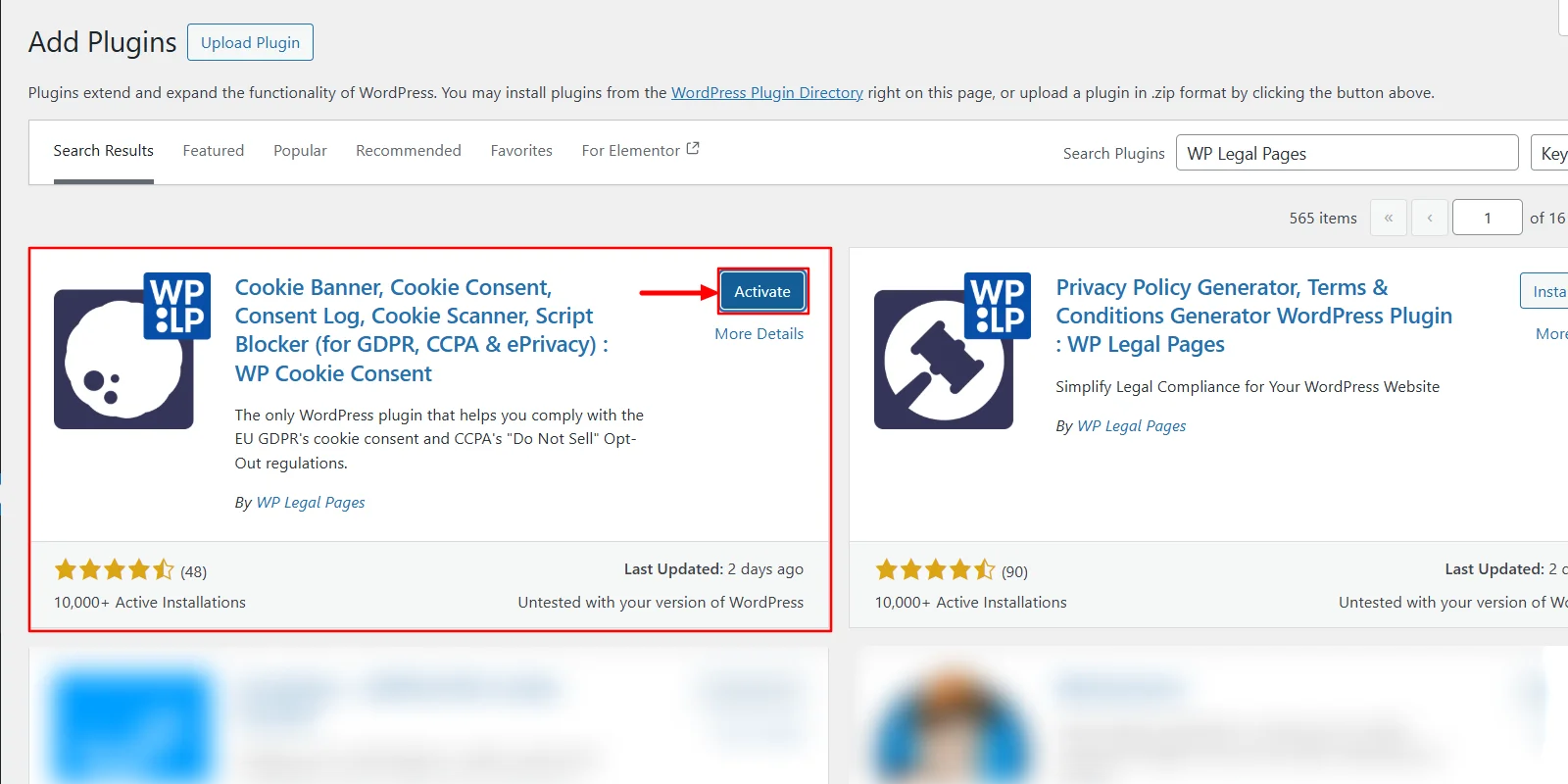
You’ve installed the plugin and can find it in your WordPress dashboard.
Click the Accept button to access the plugin settings and start creating your legal pages.
From the WPLegalPages menu, click the Create Legal Page button to create a new legal page.
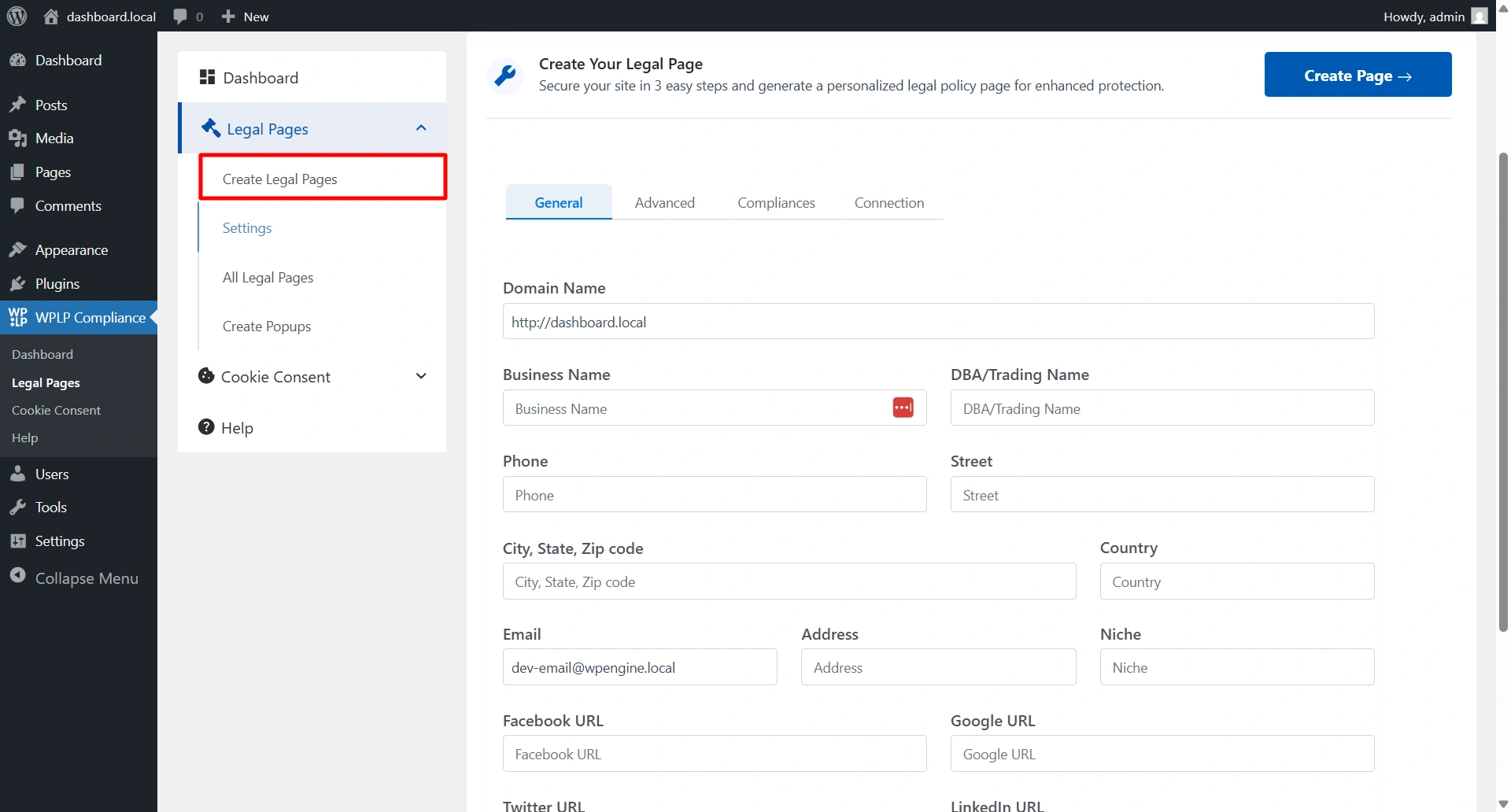
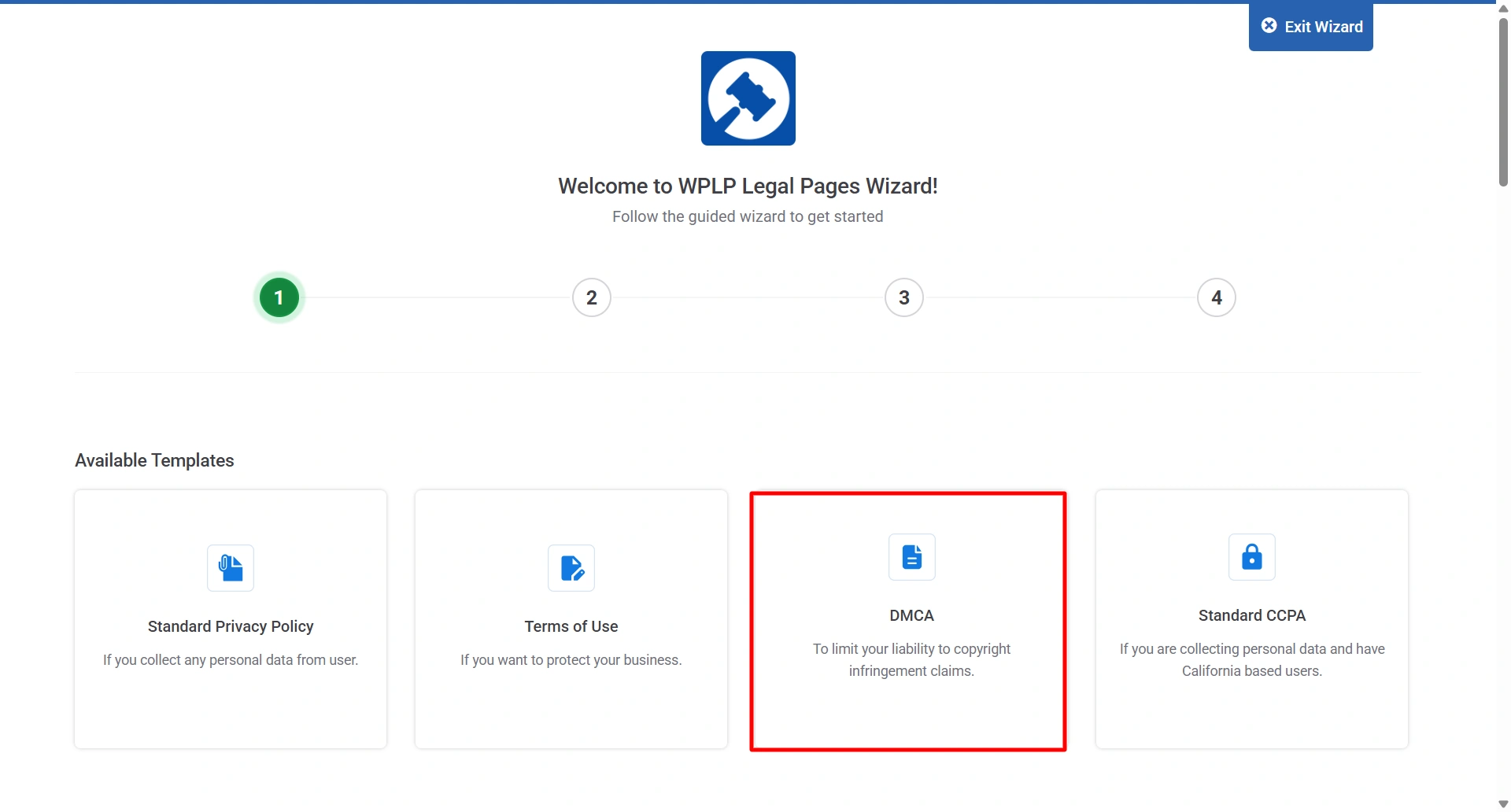
Once you click the Create Legal Page button, you’ll be directed to the WPLegalPages setup wizard.
Now, select the DMCA template from the list of available templates to create a copyright notice.
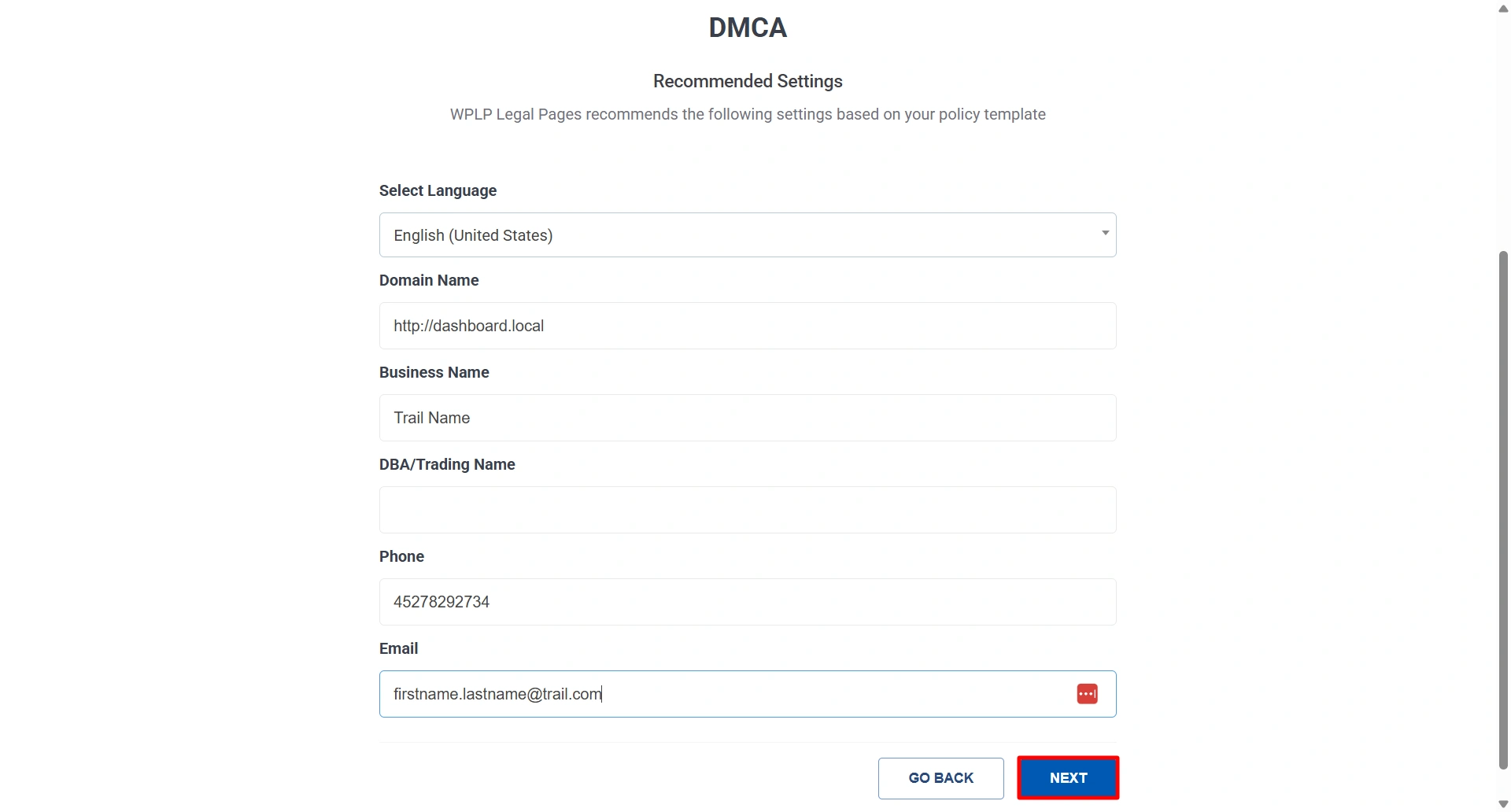
Fill in your basic details and click the Next button when finished.
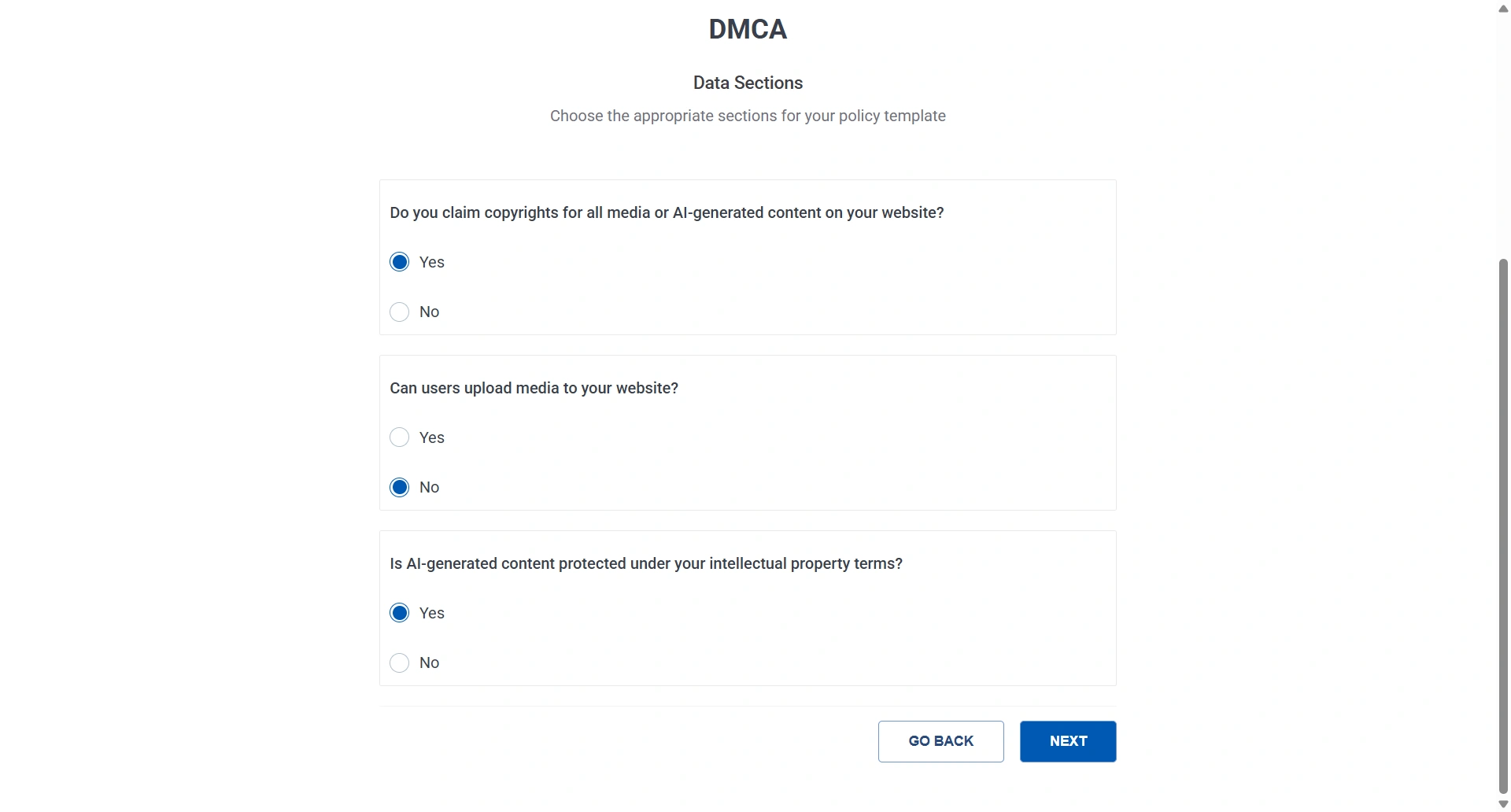
Select the right chose from the data section.
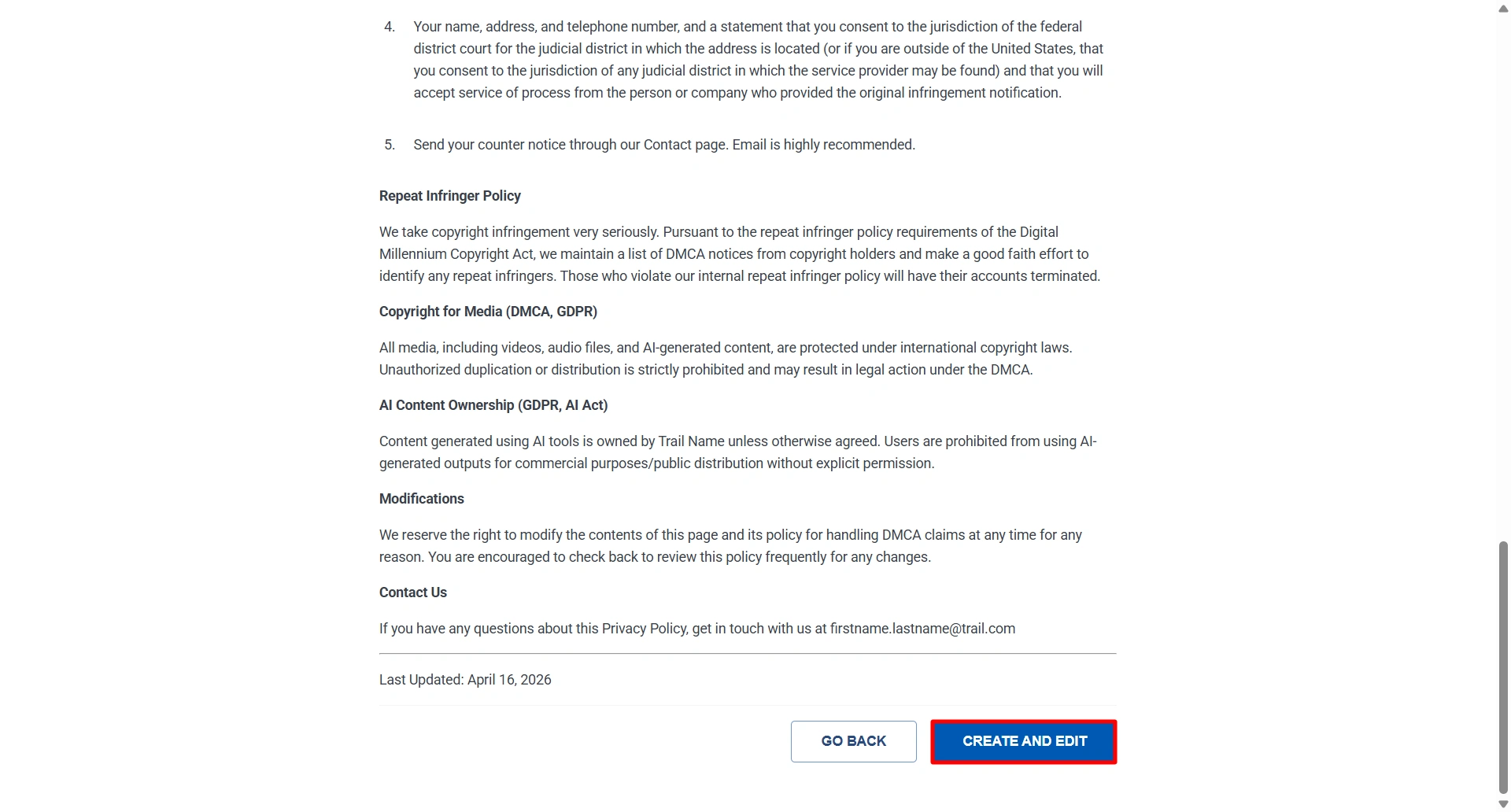
Your copyright notice template preview is now ready. Next, click on the CREATE and EDIT button.
Make the necessary changes and click on Publish.
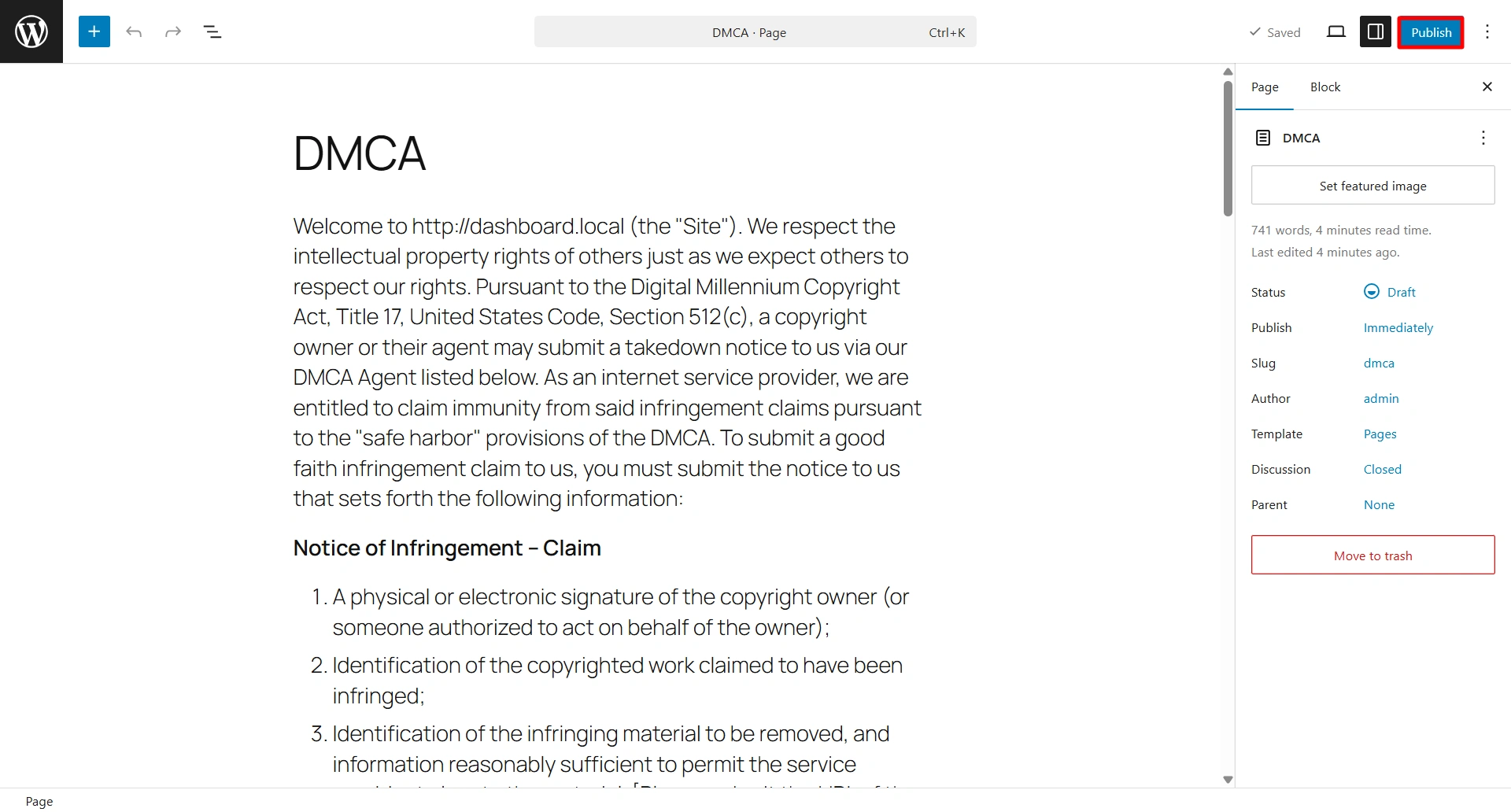
The copyright policy is now live on your website.
Conclusion
The DMCA is one of the most powerful tools you have to protect your content online.
If you’re a blogger, business owner, or platform operator, understanding how to use the DMCA properly can save you from content theft, SEO damage, and legal risk.
From filing a takedown notice to maintaining a compliant DMCA policy, the steps are straightforward and the protection is well worth it. Start by auditing your site today to ensure you’re covered.
We recommend using WPLP Compliance Platform to create a DMCA notice for your website. The DMCA notice on your end will help to protect your website content from infringements.
Disclaimer: This article is for informational and reading purposes only and does not constitute legal advice.
I hope you enjoyed reading this article. Don’t forget to check our other engaging articles.
- The Ultimate Guide To Creating Medical Disclaimers Effortlessly
- Adding Impressum Page to Your Website Using WP Legal Pages
- What’s the ePrivacy Directive? Everything You Need to Know!
Are you excited to create legal pages for your website and gain the trust of your visitors? Grab WPLP Compliance Platform now!