Summary
The guide also provides a detailed overview of the legal principles behind consent log retention period and how regulators evaluate whether the retention period is reasonable.
You’ll also learn practical frameworks for deciding how long to keep consent logs, how to manage retention across multiple laws and regions, and the operational best practices needed to stay compliant.
Collecting user consent is easy, but retaining it is difficult. Many website owners either delete consent logs too early or lose proof of compliance, creating legal and security risks.
The issue is not effort, but clarity.
Most privacy laws do not set fixed retention timelines. They expect clear, well-reasoned decisions.
This guide helps website owners and teams understand what regulators actually expect, how they assess “reasonable” retention, and how to build a practical, audit-ready consent log retention strategy without guesswork.
There is no fixed legal retention period for consent logs. Under GDPR and similar laws, consent records must be kept only as long as necessary to demonstrate lawful processing and defend against legal claims.
What Is Log Retention?
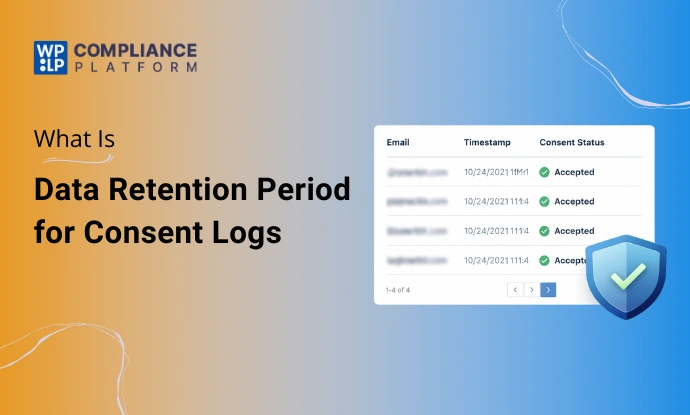
Log retention refers to how long an organization keeps records or logs before securely deleting them. For example, in relation to consent logs, log retention refers to the period during which organizations retain records showing when and how users provided or declined consent to the organization, forming the basis of consent logging requirements.
GDPR does not specify a fixed retention period for consent logs. Rather, they contain a Storage Limitation Principle. Under this principle, organizations must keep logs of personal data (including records of consent) only for as long as they need them for the purpose for which the data was collected.
Once that purpose is fulfilled, such as when proof of consent is no longer required for continued data processing, organizations should delete or anonymize the logs.
Organizations typically govern consent log retention period through their existing data retention policies.
In practice, many organizations treat consent log retention period like other data retention activities by documenting how long logs are required for legal, audit, or compliance purposes and reviewing them regularly to reduce unnecessary risk and support ongoing privacy compliance.
What Is a Data Retention Period?
A data retention period defines how long an organization keeps personal data before deleting, anonymizing, or archiving it. Organizations set this period based on legal, regulatory, business, or operational needs.
Under privacy laws like GDPR, CCPA/CPRA, and other global data-protection regulations, organizations are required to follow the storage limitation principle.
This means personal data should be kept only as long as necessary for the purpose it was collected and not indefinitely.
For example:
- User account data is typically retained while the account remains active.
- Transaction records may be stored for several years to meet tax or legal requirements.
- Consent logs are retained to prove lawful consent during audits, investigations, or disputes.
When data retention periods expire and the data is no longer needed, organizations must properly erase it to limit compliance or security risks.
A defined data retention period helps demonstrate ongoing compliance with regulations and reduces your organization’s risk of non-compliance.
It helps protect user privacy by avoiding unnecessary data retention and establishes clear internal standards for your organization’s use of its data.
Do Privacy Laws Define a Fixed Retention Period for Consent Logs?
A common misconception is that privacy laws set a fixed number of months or years for keeping consent logs. In reality, most privacy laws do not specify an exact retention period for consent record retention GDPR, or similar global regulations.
Instead, laws focus on whether your data retention period decision is reasonable and defensible.
Rather than exact timelines, regulators look at:
- Necessity: Does the documentation of consent continue to be required for lawful processing and/or to comply with legal requirements?
- Accountability: If questioned, can you demonstrate and provide proof of when and how consent was obtained?
- Audit Readiness: Are the consent logs maintained such that they can be retrieved accurately during an audit or investigation?
Retention must be documented, risk-based, and linked to identifiable legal obligations such as audit cycles, regulatory inquiries, or statutory limitation periods.
As long as you can justify and document your retention period, regulators are more likely to consider it compliant.
Legal Principles That Govern Consent Log Retention
Consent log retention is guided by core principles set out in major privacy laws such as GDPR, CPRA, and similar regulations worldwide.
These principles don’t usually set a fixed time limit, but they define how long consent records should be kept and how they must be handled.
Here are the key principles explained simply:
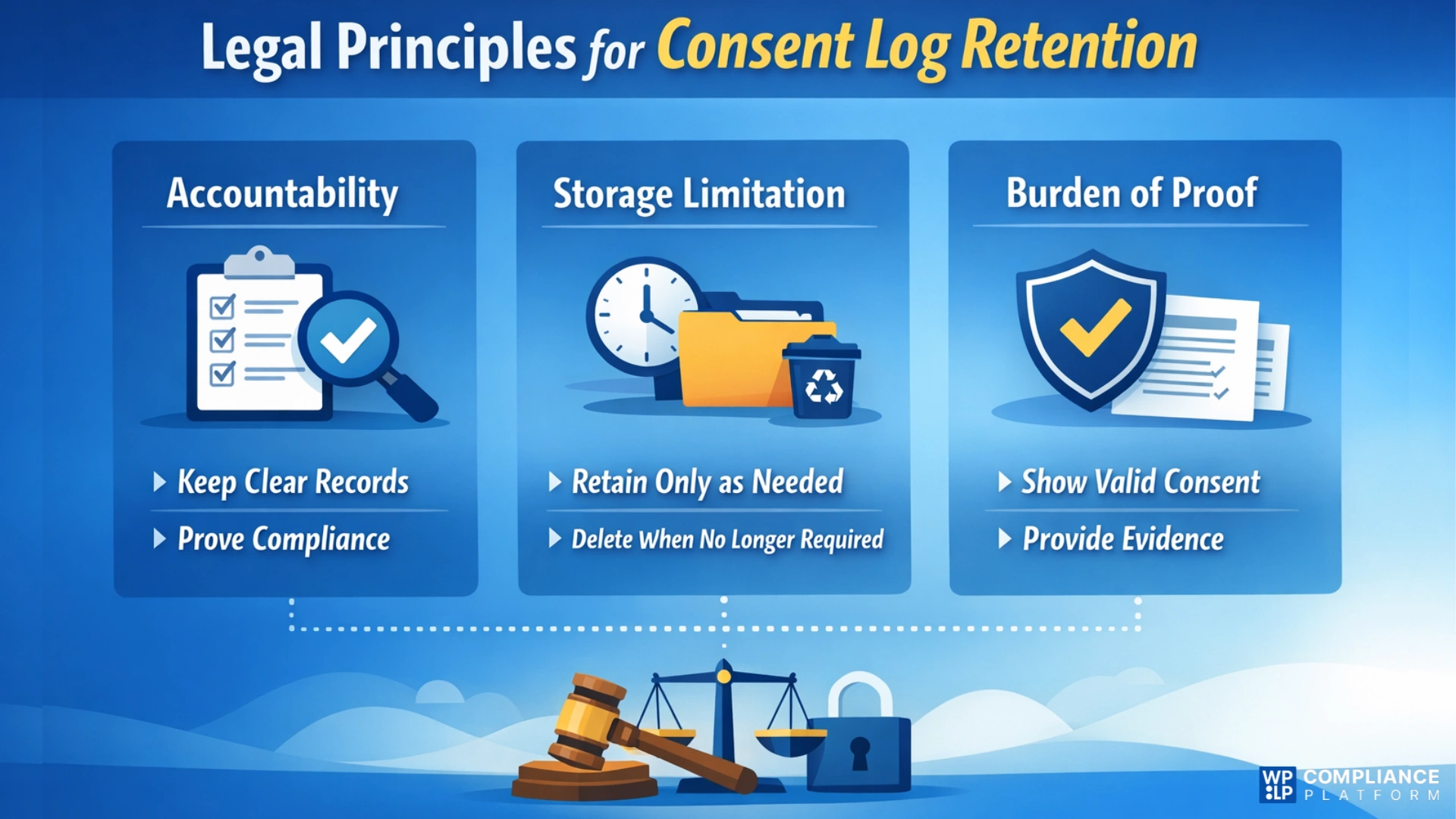
1. Accountability Principle
Organizations must comply with privacy laws under the Accountability Principle. For consent logs, an organization must maintain accurate records documenting the time of consent collection as well as how it was collected and what it covers.
If a regulator, auditor, or authority requests proof of compliance, the organization must produce the logs in a timely manner.
2. Storage Limitation Principle
To comply with storage limitations, the organization must store only the data required for the purpose.
Organizations use consent records to demonstrate lawful data processing, not to justify ongoing processing. Once the reason for consent ends, they must delete or anonymize these records to minimize legal and security risks.
3. Burden of Proof
Privacy laws place the burden of proof on the organization, not the user. Therefore, organizations must be able to demonstrate that they reasonably and respectfully obtained valid consent from each individual.
If someone files a complaint, you will need a consistent record to present to the auditor. You must record the consent, which will help you in the retention period.
How Regulators Assess Whether Your Retention Period Is Reasonable
Regulators don’t usually expect a fixed number of months or years for consent log retention. Instead, they look at whether your decision is reasonable and defensible based on how your organization operates and the risks involved.
Below are the key factors regulators commonly consider during audits, investigations, or complaints.
Key Factors Regulators Look At
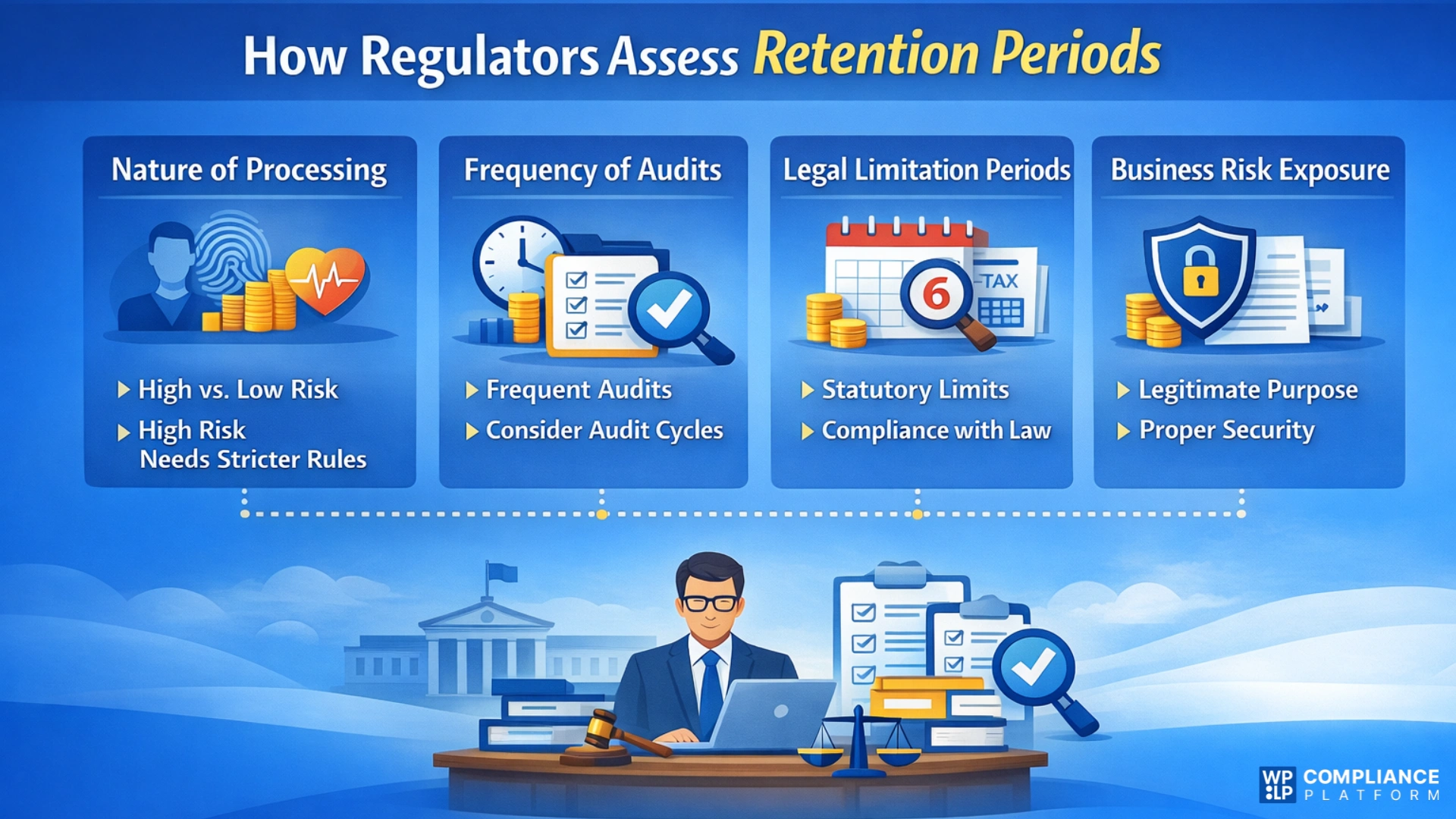
1. Nature of the Processing
The regulator clearly distinguishes between high-risk and low-risk processing before assigning data retention periods. For high-risk data like health information or biometric data, the rules are stricter.
The actual personal data should usually be kept for a shorter time, but regulators may allow the consent record to be stored longer if it is well-protected, so the organization can prove it had permission to process the data.
2. Frequency of Audits or Disputes
Regulators take a practical approach when looking at how often an organization is audited or faces complaints. Industries like FinTech, Insurance, and large digital platforms are reviewed more frequently, so regulators usually accept longer retention of audit records, including consent audit logs retention.
This is especially true for Significant Data Fiduciaries (SDFs) under India’s 2025 DPDP Rules, which require annual independent audits. Regulators understand that consent logs must be kept at least long enough to cover the audit cycle.
If logs are deleted every six months while audits happen once a year, it creates a gap that makes it hard to prove compliance.
3. Legal Limitation Periods
Many countries do not prescribe a strict timeline but expect retention to align with legal limitation periods. In many EU jurisdictions, civil limitation periods range from three to six years.
In countries such as India, large platforms generally follow a three-year inactivity rule, but the 2025 DPDP Rules allow organizations to retain data when they need it for legal compliance.
Regulators typically accept retention when organizations clearly link it to a specific legal obligation, such as tax or litigation requirements. Without a documented legal basis, retention becomes much harder to defend.
4. Business Risk Exposure
Regulators allow retention for legal claim defense, but only when the retention purpose is specifically defined and appropriately documented.
Companies cannot simply keep user data indefinitely, as it could lead to future lawsuits. Instead, an organization should retain only the most necessary data to show it is in compliance with applicable laws, such as consent date stamp(s), the user’s IP address, or other user ID, and a copy of the privacy policy that the individual accepted.
Security is another critical factor in consent retention. Even if a retention period appears reasonable on paper, retaining consent logs in an unencrypted or poorly controlled environment can invalidate that justification and undermine its defensibility as a business practice.
How Long Should You Keep Consent Logs? Practical Frameworks
There is no single fixed time for keeping consent logs. Regulators expect organizations to use common sense and clear reasoning when defining how long to keep consent logs, not random time limits.
The best approach is to set retention periods based on your actual legal duties and business risks.
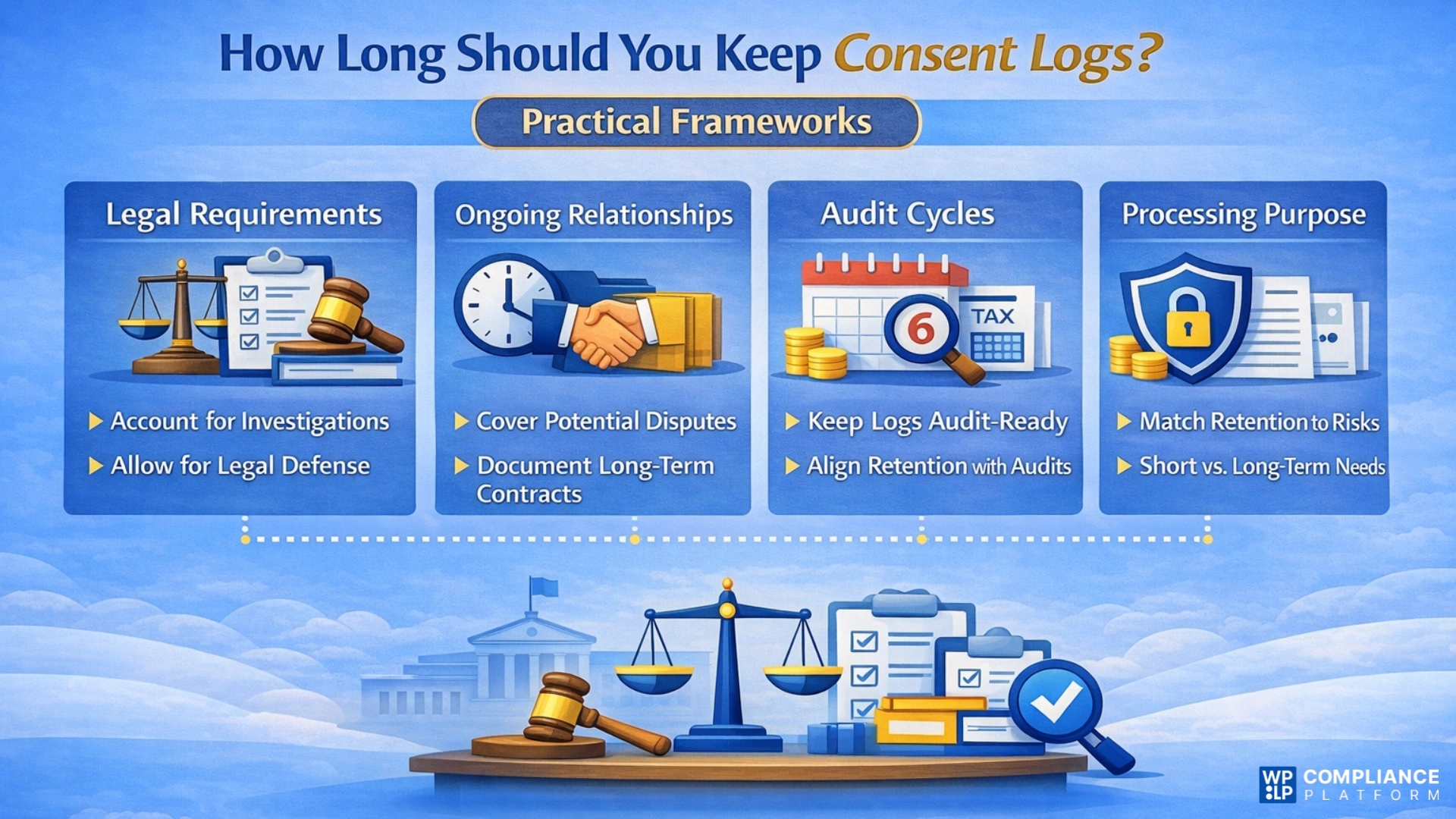
When you decide how long to keep consent logs, align retention with a few key factors:
- Legal limitations for retention of consent logs depend on the need to respond to regulatory investigations, allegations, and legal actions that may take place within the permitted time frame, and to the extent that contracts require an ongoing or continued relationship with your organization.
- If a user has a contractual or ongoing relationship with your company, you may need to retain an individual’s consent logs beyond the termination of that relationship to address potential future disputes.
- If your industry is regularly monitored, make sure you have sufficient time to keep your customers’ consent logs up to date before their next scheduled audit.
Don’t rely on a fixed time period. Instead, look at how that data is used. For short-term processing, like a one-time newsletter signup, shorter retention usually makes sense because the risk window is small.
For long-term user relationships, such as SaaS platforms or ongoing tracking, longer retention is reasonable since complaints or investigations can arise years after consent was first given.
Managing Consent Retention Across Multiple Laws and Regions
As a global organization, you have to deal with the varying privacy laws in each region you operate in, but the same accountability principles are applied by regulators across all the jurisdictions you operate in.
It doesn’t matter what jurisdiction you are in. All of the regulators will expect you to demonstrate that the consent has been obtained and handled in accordance with the relevant law.
Retention periods may vary, but regulators expect you to outline the reasons for retaining consent logs for specific periods. If you use retention periods that have not been justified, this will increase compliance risk and raise red flags during audits or investigations.
To avoid this, aim for consistency. Using very different retention periods across regions without justification makes policies harder to defend and signals weak data governance.
That’s why you should rely on centralized consent record-keeping. It helps maintain uniform practices, stay audit-ready, and respond quickly when regulators request proof. Instead of managing fragmented local policies, follow a unified retention framework and make small, documented adjustments only where local law requires it.
This approach is easier to manage, easier to audit, and far easier to defend if regulators question how and why retention decisions were made.
Operational Best Practices for Consent Log Retention
To turn these legal principles into something that actually works day to day, follow four industry-standard practices. These help move consent retention from theory into a reliable system.
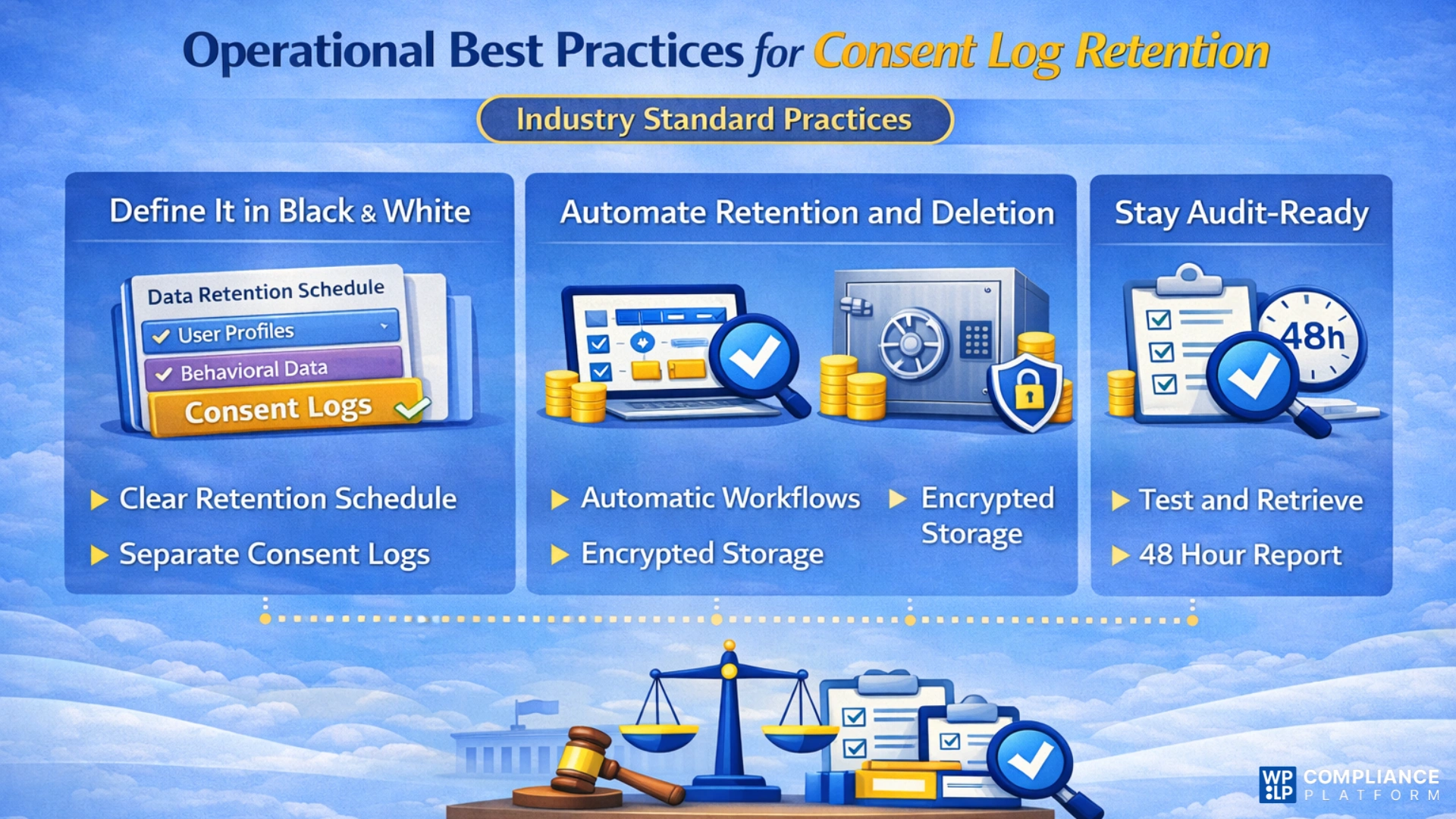
1. Define It in Black and White
Keep your internal Data Retention Schedule organized by creating a separate category for “Consent Logs”, different from other types of user profiles and from behavioral data.
This distinction matters.
Consent logs exist to prove compliance, not to power features or analytics. When they are mixed with user profiles, they tend to be over-retained or misused. Clear categorization removes ambiguity and makes enforcement much easier.
2. Automate Retention and Deletion
You should limit manual deletions as much as possible, as that is when errors can occur. You should use automated retention workflows instead.
An example of this would be after a certain set amount of time, you would move the consent logs into encrypted cold storage for a specific period, then delete them entirely after the retention period has passed.
If you are using an automated system, retention policies will be enforced consistently, regardless of changes to data volume or the application.
3. Secure the Vault
Since consent logs have a high level of sensitivity, you should handle them as you would any other legal document. The data remains encrypted when not in use, has very strict access controls surrounding it, and can only be accessed by members of the DPO, legal, or compliance teams.
Having too many people with access means that even a reasonable amount of time can create a security risk and reduce the level of accountability associated with them. Keep the number of individuals allowed access to the logs limited to a few people.
4. Stay Audit-Ready
Don’t assume the system works. Test it. To ensure the system performs as required, conduct periodic validation tests. Make sure that you evaluate it first.
At least once a year, confirm your ability to produce a complete consent history report for a given user or identifier within a reasonable amount of time, such as 2 days.
If the ability to retrieve this report is slow and/or unreliable, then you are not compliant with applicable regulations and are merely taking possession of data without any true control over it.
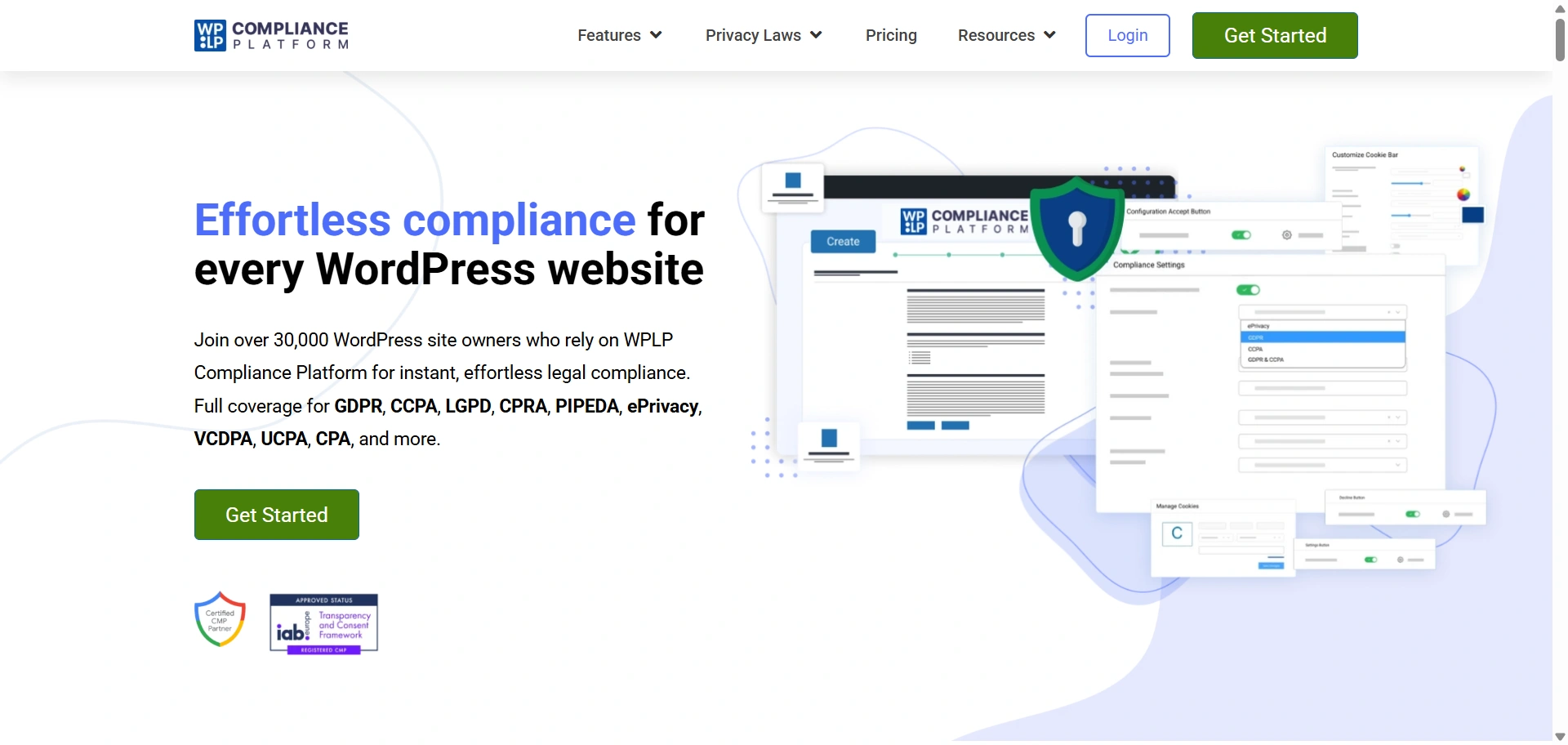
To make all of this manageable in practice, rely on tools that are built specifically for compliance workflows. The WPLP Compliance Platform helps streamline consent log management and retention workflows.
Instead of treating consent logs as scattered technical data, WPLP helps organizations organize, store, and manage consent records in a structured way that aligns with the documented data retention period.
Centralizing consent data makes it easier to separate consent logs from user profiles, control access, and quickly retrieve records during audits or complaints.
WPLP also supports consistent retention handling, which reduces the risk of accidental over-retention or premature deletion.
Most importantly, WPLP turns retention into a repeatable process rather than a manual task. That means when regulators ask how consent is logged, stored, and retained, you are not scrambling for explanations. You can show a system that’s already designed around accountability, security, and audit readiness.
FAQ
No. You should keep a record of the withdrawal as proof of compliance, even after consent is revoked.
No fixed minimum exists, but logs should be kept long enough to demonstrate compliance and handle legal or regulatory requests.
Not immediately. Retain them for compliance or legal purposes and delete them once the retention period ends.
Possibly. Different privacy laws have different requirements, so retention policies may need to vary by region.
Key Takeaways for Website Owners
- There is no fixed legal timeline. Under GDPR and similar laws, consent logs should be retained only as long as necessary to demonstrate lawful processing, respond to audits, or defend against legal claims. Many organizations align retention with statutory limitation periods, often between three and six years.
- If organizations can effectively demonstrate a clear connection between retaining the consent log and an audit, litigation risks, or regulatory reasons, then keeping the consent log longer is generally acceptable.
- Automating retention, deletion, and access control reduces human error and strengthens audit readiness.
- WPLP Compliance Platform is built for compliance workflows and centralized consent management, making it easier to enforce retention policies and respond confidently to regulatory inquiries.
If you like the article, consider reading these articles:
- How to Add Terms of Use with WPLP Compliance Platform
- Major Data Breaches & Cybersecurity Lessons for Website Owners
- Do I Need A Privacy Policy For My Website? – A Beginner’s Guide
Disclaimer: This article is for informational and reading purposes only and does not constitute legal advice.