
Everything You Need to Know About Consent Management (2026)
Summary
It also highlights best practices for cookie compliance, explains how consent management platforms function, and shows how WPLP handles consent end to end to help websites stay compliant and user-focused.
Every website collects data, but not every website does it correctly.
Privacy laws now require businesses to clearly inform users, obtain consent, and respect their choices before collecting personal data. This is where consent management becomes essential.
In this guide, you’ll learn what consent management is, how global privacy laws affect your website, the different types of consent banners, and how you can handle consent end-to-end to keep your site compliant and trustworthy.
- What is consent management
- Global Consent Management Laws
- What Are the Different Types of Consent Banners
- Cookie Blocking vs Script Delay
- What Is Google Consent Mode v2 (GCMv2) and How Does It Work With IAB TCF
- Best Practices for Consent Management and Cookie Compliance
- What is a Consent Management Platform
- How does a Consent Management Platform work
- How Does WPLP Handles Consent Management
- FAQ
- Conclusion
What is consent management
Consent management is the process of collecting, managing, and recording user permissions for how their personal data is used on a website or app.
Consent management allows people to know what types of information companies and businesses will be collecting from them (i.e., cookies, usage statistics, advertising, targeting, etc.) and provides them with the ability to accept, decline, or customize how they want that information collected.
It also ensures that the company’s data-collection tools are blocked until they receive consent from the individual, that the individuals can revoke or modify their consent, and, most importantly, that the individuals’ records of consent are kept securely so that the company can meet the requirements of the various global privacy laws (e.g., GDPR, CPRA/CCPA).
Global Consent Management Laws
Consent Management laws specify how businesses and websites should obtain, use and store users’ Consent before accessing or processing their own Personal Data. These laws apply based on where your users are located, not just where your business operates.
General Data Protection Regulation (GDPR)
In 2018, the European Union established the General Data Protection Regulation (GDPR). Many of these regulations have become the standard practice for Consent Management in jurisdictions around the world.
If your website targets (or tracks) users from the European Union, you must obtain valid consent to collect any Personal Data from them, even if it is for Analytical, Advertising or Cookies purposes.
Under the GDPR, consent must be:
- Explicit consent: Users must actively opt-in, no pre-checked boxes or implied consent.
- Purpose-specific consent: Consent must be collected separately for analytics, marketing, functional cookies, etc.
- Informed consent: Users must clearly understand what data is collected and why.
- Freely given consent: Access to your site cannot be forced in exchange for consent.
- Easy withdrawal: Users must be able to change or revoke consent at any time.
The WPLP Compliance Platform automatically enforces these rules by displaying compliant cookie banners, blocking scripts until consent is granted, and allowing users to manage their preferences at any time.
European Data Protection Board (EDPB)
The European Data Protection Board provides official guidance on how GDPR consent should work in real-world scenarios.
Its guidelines clarify that:
- Cookie banners must offer real choices
- Pre-checked boxes are not valid consent
- Consent must be recorded and provable
These guidelines ensure the consistent application of GDPR rules across the EU.
Data Privacy Regulations Around the World
Many nations around the world have established their own unique privacy policies, each providing a specific framework for businesses regarding the collection, handling, and protection of user consent.
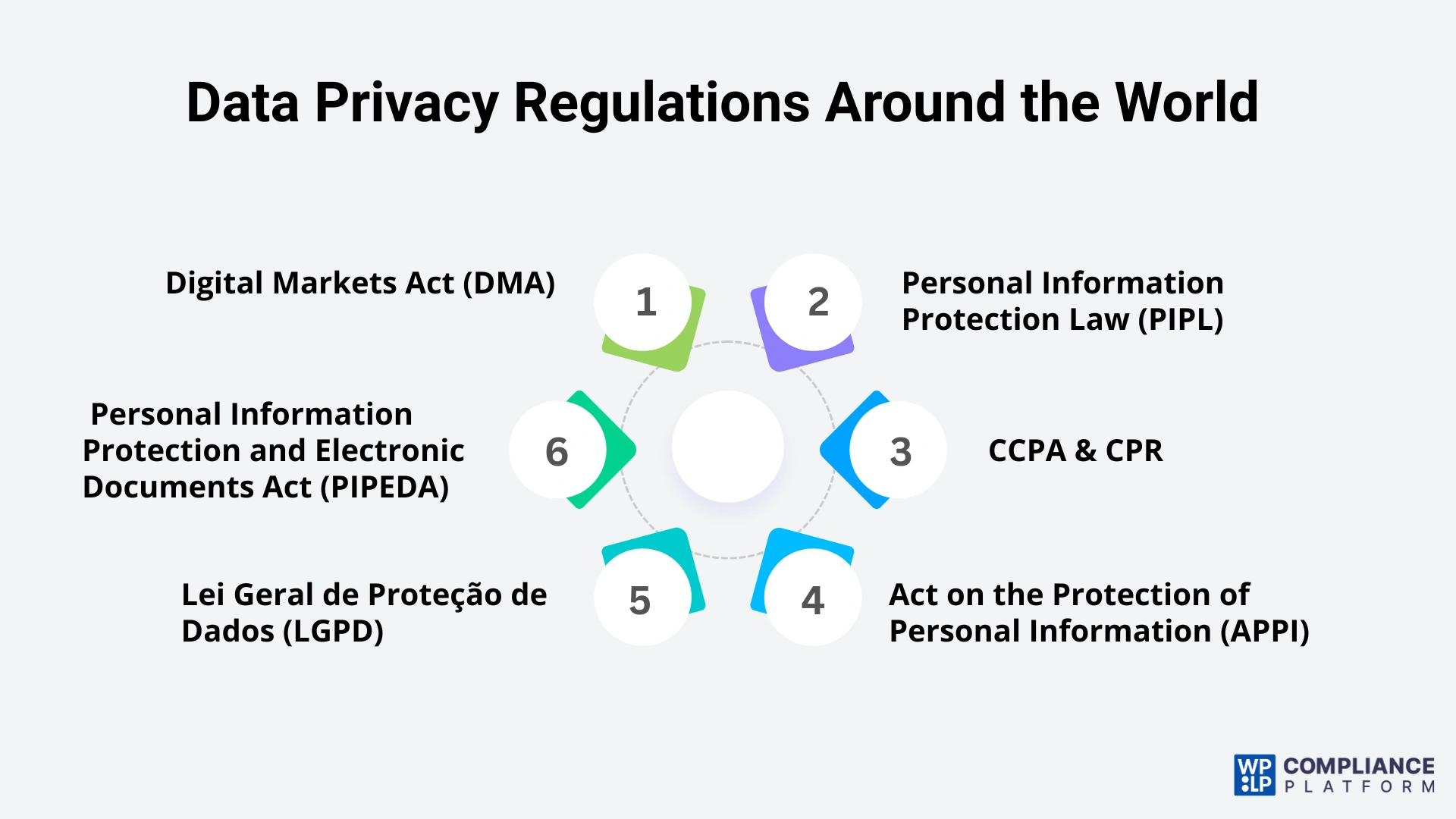
1. Digital Markets Act (DMA) – European Union
which applies specifically to “gatekeeping” platforms that are deemed to operate within the European Union (EU) mandates that explicit user consent must be obtained before any use of their data for targeted advertising or for combining data across multiple services.
2. Personal Information Protection Law (PIPL)– China
China’s PIPL requires consent to be voluntary, explicit, and informed. It also mandates separate consent for processing sensitive personal information, sharing data with third parties, and transferring personal data outside China.
3. CCPA & CPRA – United States (California)
In the United States, the California Consumer Privacy Act (CCPA) and the California Privacy Rights Act (CPRA) require businesses to obtain explicit consent before collecting or using sensitive personal information. These laws also require that businesses provide opt-out options for consumers. The consumer must also have the option to click a link provided on the business’s website that states, “Do Not Sell or Share My Personal Information.”
4. Act on the Protection of Personal Information (APPI)– Japan
Japan’s APPI requires consent for certain situations, such as sensitive personal data and the transfer of data to a third party, but does not require consent in all cases of the processing of personal data.
5. Lei Geral de Proteção de Dados (LGPD) – Brazil
Brazil’s LGPD requires organizations to collect consent that is freely given, informed, and unambiguous. Organizations must request consent for a specific purpose, allow users to withdraw it at any time, and apply additional protections when processing children’s personal data.
6. Personal Information Protection and Electronic Documents Act (PIPEDA) – Canada
Canada’s PIPEDA requires organizations to obtain meaningful consent. This means users should reasonably understand what data is being collected, why it is collected, and how it will be used or shared.
What Are the Different Types of Consent Banners
Consent banners are the first point of interaction between users and your data practices.
The most common types include:
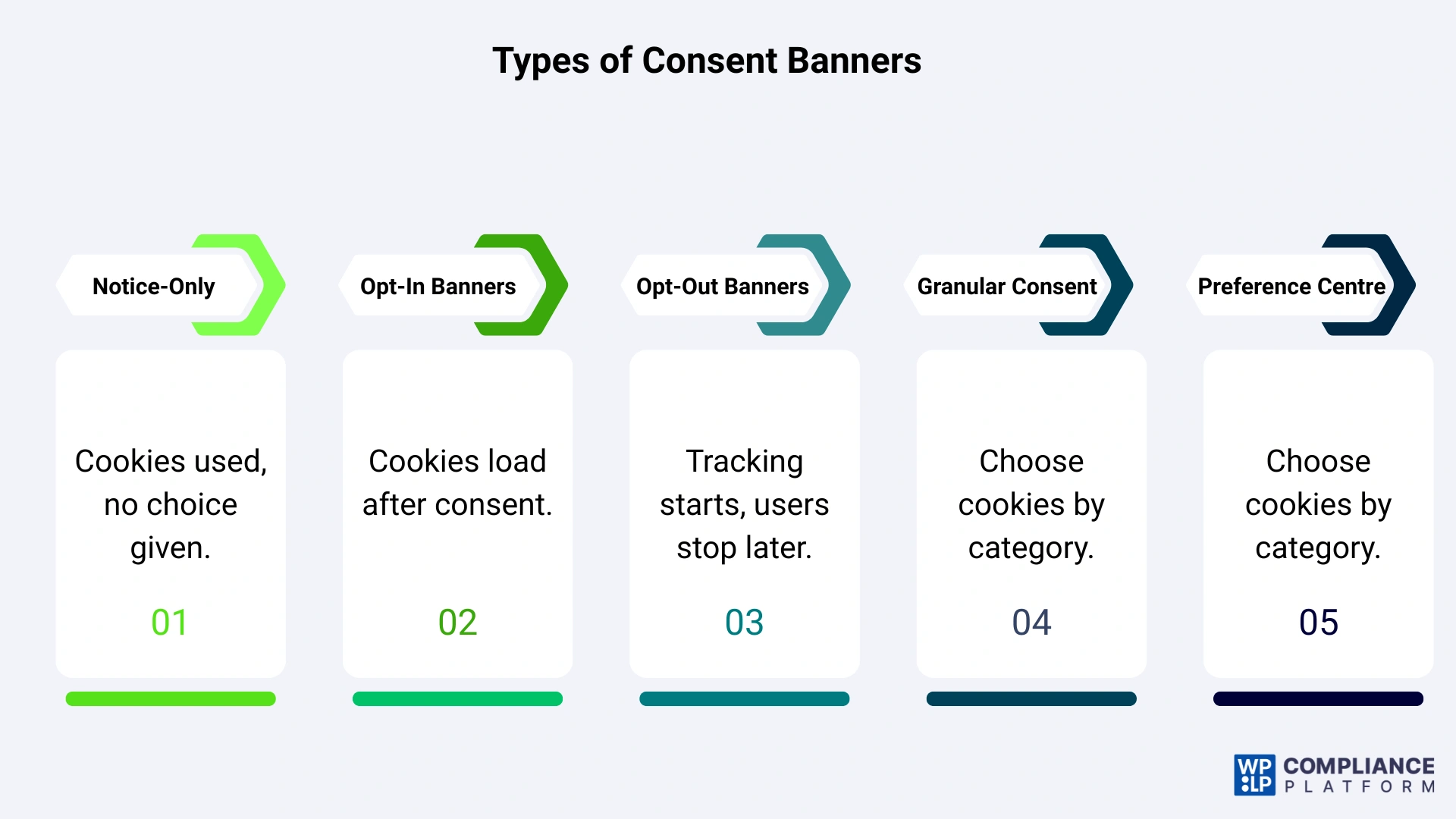
- Notice-Only Banners: Notice banners let you know that cookies have been used, but don’t give you the option to decline or customize the cookies used on your website. This approach is largely non-compliant under modern privacy laws like GDPR, as it assumes consent without requiring clear user action.
- Opt-In Banners: The use of opt-in banners is a privacy first model that is a requirement for compliance with laws such as the GDPR and LGPD and ensures data is protected by default.
- Opt-Out Banners: Opt-out banners allow tracking to start immediately, but give users a way to stop it later. Common under CCPA/CPRA, this model is more business-friendly but faces increasing regulatory scrutiny.
- Granular Consent Banners: Granular banners let users choose which cookie categories they allow, such as analytics or marketing. Regulators favour this approach because it ensures consent is specific and user-controlled.
- Preference Centre Banners: Preference centre banners usually provide information on cookies and vendors and enable users to change or withdraw consent at any time. Therefore, preference centre banners promote transparency and continue to uphold compliance over the long term.
Cookie Blocking vs Script Delay
The two methods Cookie blocking and script delay are used to prevent tracking before a user gives consent.
Cookie Blocking: This method prevents a website from placing small text files that is cookies, onto a user’s browser until they have clicked “Accept.” While this keeps the browser’s storage clean of tracking IDs, it is often reactive. It essentially tries to stop the result of tracking rather than the tracking itself.
Script Delay: It is more comprehensive approach that prevents the actual tracking code (such as Google Analytics or Meta Pixel scripts) from ever executing in the first place. Instead of allowing the code to run and then attempting to block the cookies it creates, the system keeps the entire script paused until the user grants consent.
While both help with compliance, script delay is often more reliable because many tracking tools set cookies as soon as scripts load. Effective consent management usually combines both approaches.
What Is Google Consent Mode v2 (GCMv2) and How Does It Work With IAB TCF
Google Consent Mode v2 (GCMv2) and the IAB Transparency and Consent Framework (TCF) work together to help websites manage user consent in a privacy-compliant way.
IAB TCF acts as the common language of consent. When a user interacts with a cookie banner, the Consent Management Platform (CMP) records their choices and converts them into a standardized TC String that tells advertising vendors what the user has allowed.
The GCMv2 determines how Google Analytics and Google Ads will behave according to the GCMv2’s use of specific signals regarding whether cookies can be set, personal data sent and whether ads can be personalized. The combination of the two systems provides for the TCF consent to be passed from the CMP to Google and for GCMv2 to modify Google tags automatically.
Even if a user denies consent, GCMv2 can send anonymous, cookieless signals to Google for basic measurement. This allows websites to maintain useful insights while still respecting user privacy.
Best Practices for Consent Management and Cookie Compliance
To stay compliant and maintain a positive user experience, websites should follow these consent management best practices:
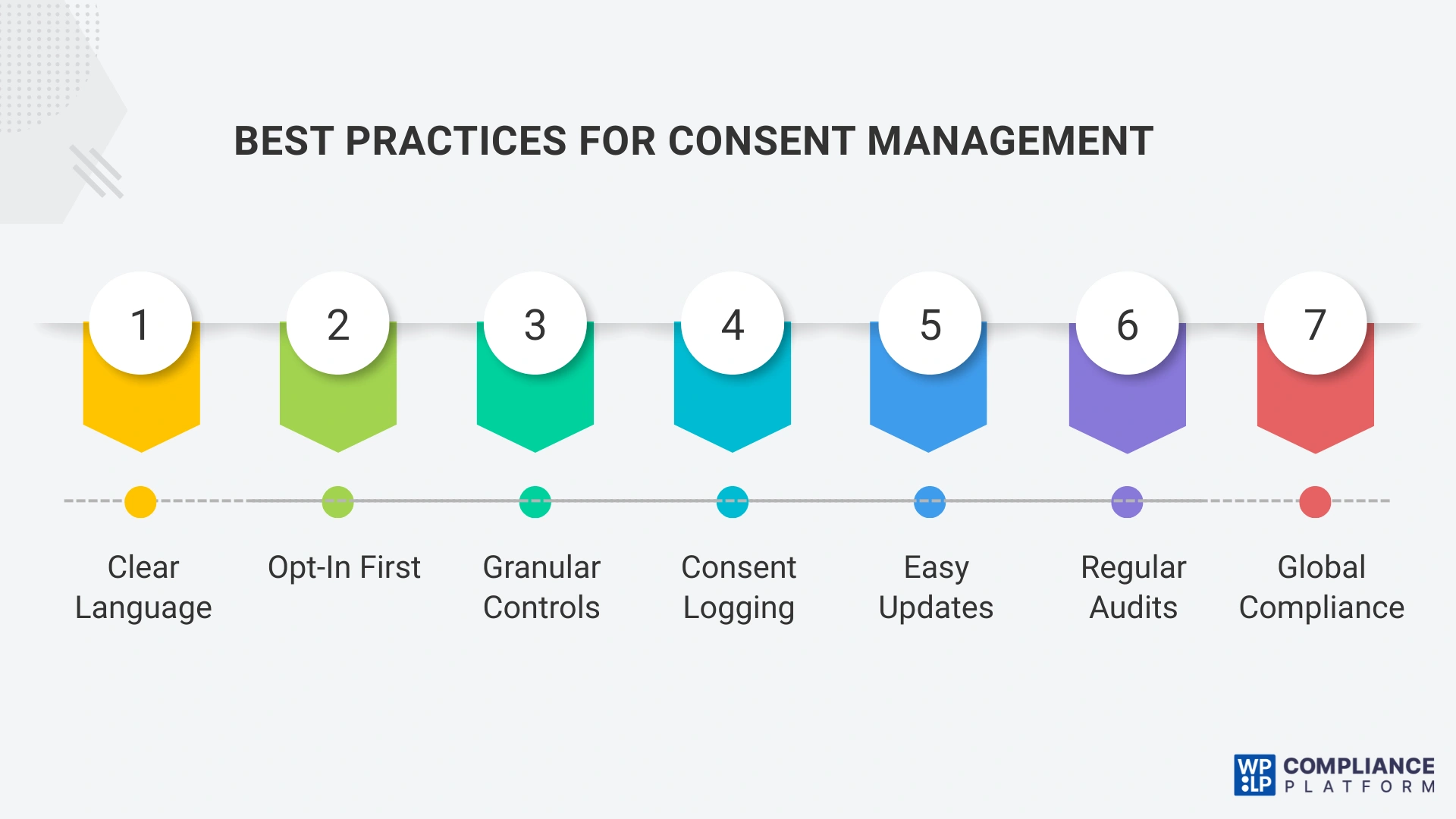
- Use clear, simple language: Explain what data you collect and why, so users understand it easily.
- Opt-in for non-essential cookies: Only activate analytics or marketing cookies after users agree, ensuring GDPR and LGPD compliance.
- Provide granular controls: Let users choose which types of cookies to accept.
- Log and store consent: Keep secure records of user decisions for audits and compliance.
- Allow preference updates: Users should be able to change or withdraw consent anytime.
- Audit cookies and scripts: Regularly check scripts to ensure they comply with consent settings.
- Ensure global compliance: Support GDPR, CCPA/CPRA, LGPD, and other regional regulations.
What is a Consent Management Platform
Consent Management Platforms (CMPs) offer a manageable way to obtain, maintain, and organize user consent for data usage in compliance with laws such as GDPR, CCPA/CPRA, and LGPD.
By providing branded cookie notices that meet regulatory requirements and allow users to easily provide, change, and remove consent, CMPs make it possible for organizations to provide all necessary information regarding their data collection practices.
CMP acts as a centralized repository that automates the tracking and recording of consent history. “Audit trail” is essential for demonstrating legal compliance during regulatory inquiries or when fulfilling data subject access requests (DSARs).
Ultimately, by streamlining these complex legal requirements and utilizing tools like A/B testing to optimize opt-in rates, a CMP helps businesses mitigate legal risks while building long-term digital trust with their audience.
How does a Consent Management Platform work
A Consent Management Platform (CMP) helps businesses collect, manage, and store user consent for data processing in compliance with global privacy laws like GDPR, CCPA, and LGPD.
These platforms ensure websites obtain user permission before collecting personal data, giving individuals control over how their information is used.
CMSs allow websites to provide users with cookie banners and pop-up windows when they visit a site, allowing users to be informed of what personal data will be collected and giving them options to accept, reject or customize their consent preferences.
Once users select their preferences, the CMP records and stores the consent data, ensuring compliance with privacy laws.
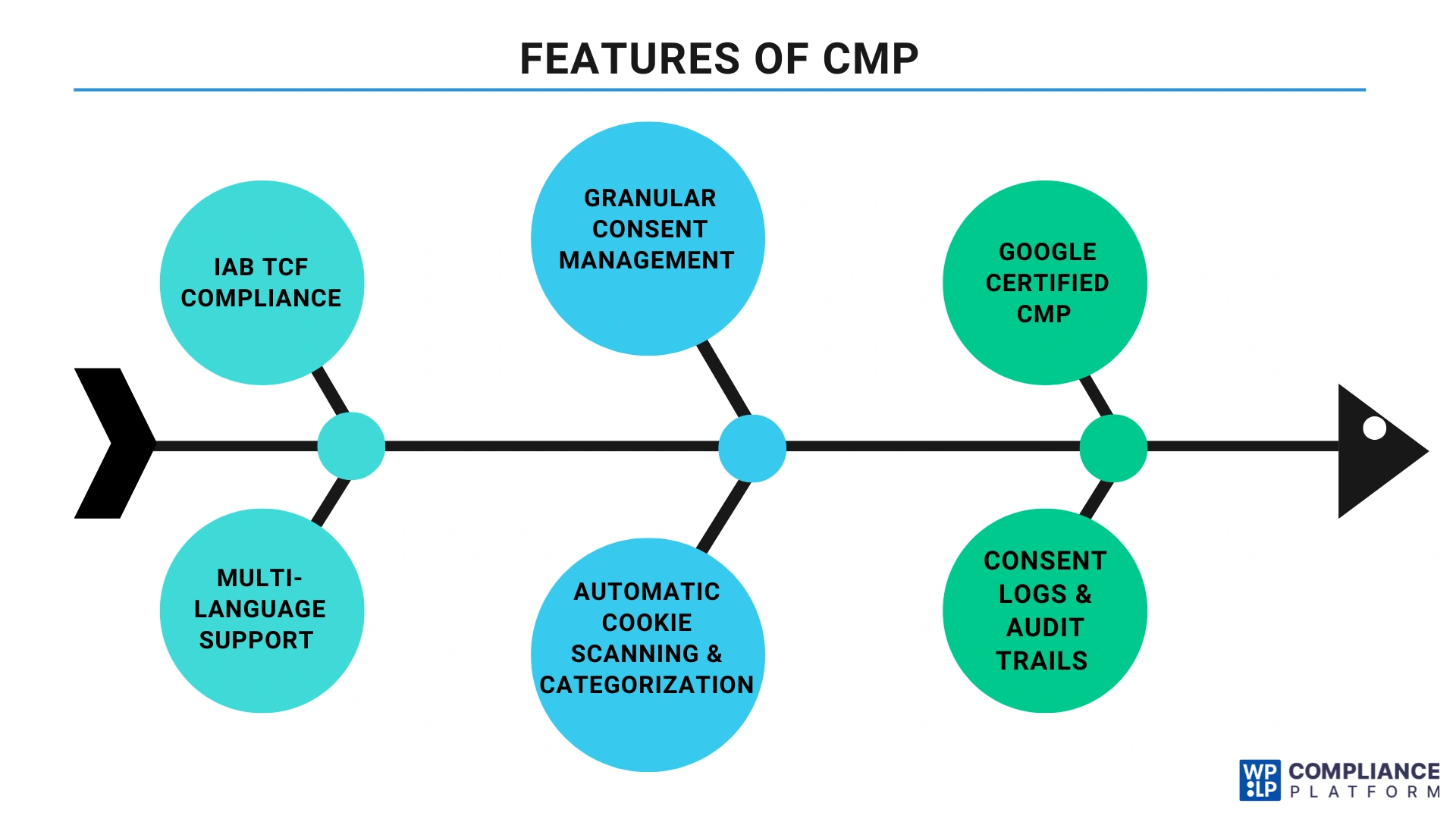
A good CMP offers various features to help businesses comply with privacy regulations and manage user consent effectively. Key features include:
How Does WPLP Handles Consent Management
WPLP Compliance Platform is a WordPress-native compliance platform that manages consent through automated legal documents and advanced cookie enforcement.
How WPLP manages the consent:
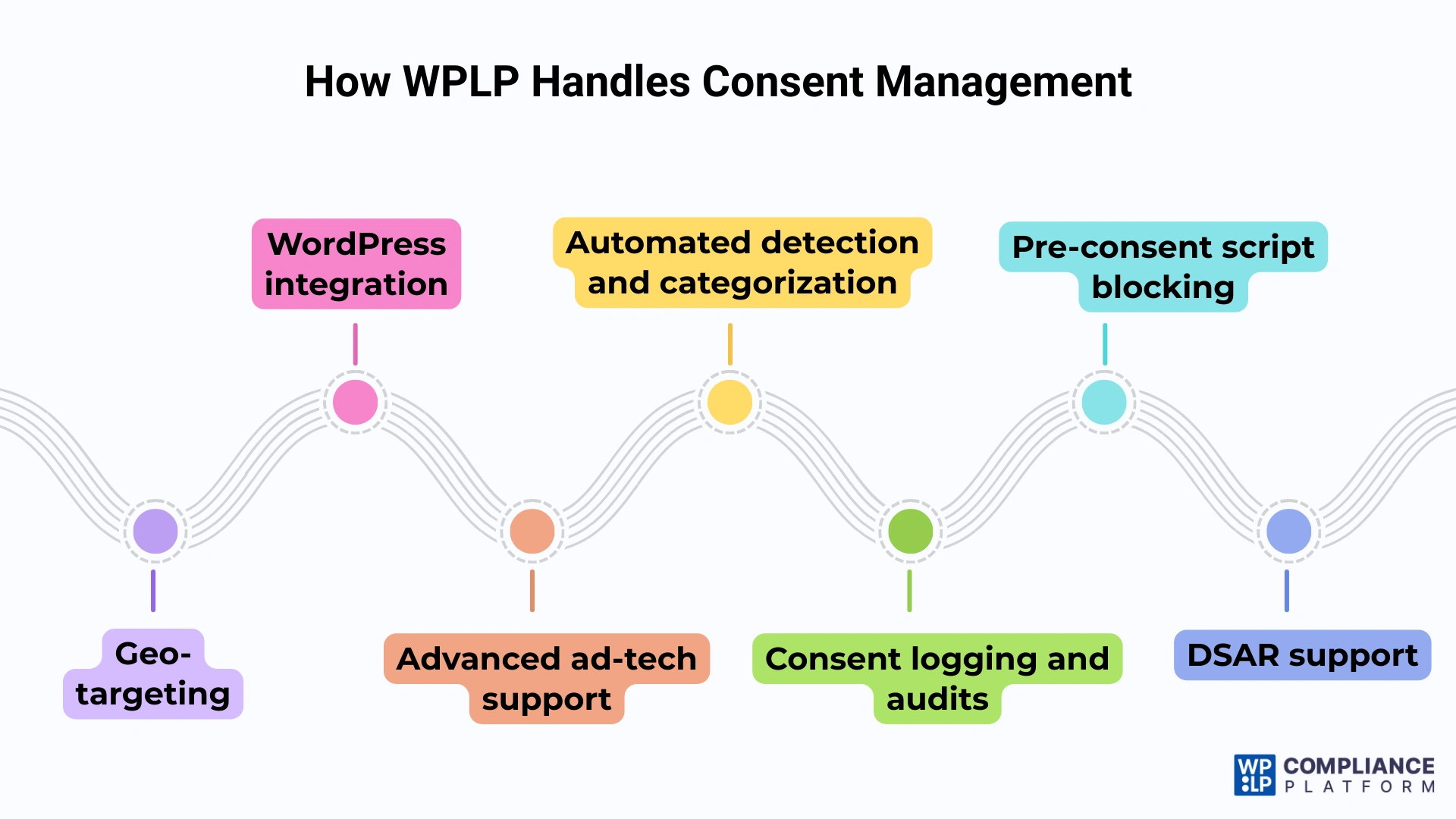
- WordPress integration: Works directly inside the WordPress dashboard, making setup, management, and monitoring simple.
- Automated detection and categorization: The cookies and trackers on your website are scanned, automatically placing them into categories such as Necessary, Analytics, and Marketing.
- Pre-consent script blocking: All non-essential scripts are blocked until the user gives consent and the site is GDPR-compliant with its collection of data.
- Geo-targeting: Geo-targeting is a feature of CookieConsent that allows website owners to display different consent banners based on the visitor’s geographic location.
- Advanced ad-tech support: Natively supports Google Consent Mode v2 and IAB TCF 2.2 to send accurate consent signals to Google and other ad vendors.
- Consent logging and audits: Stores user consent decisions with timestamps and anonymized IDs to maintain an audit-ready consent trail.
- DSAR support: Includes built-in tools for Data Subject Access Requests, allowing users to access or delete their data as required by privacy laws.
FAQ
A cookie consent manager is a software tool that allows website owners to display a banner informing website visitors about the use of cookies and to collect their consent.
Key features include cookie consent banners, geo-targeting, consent logs, Google Consent Mode v2 support, GPC handling, and customizable user interfaces.
You may not need a CMP if your website doesn’t use cookies or collect data that requires user consent. However, a CMP will assist you in efficiently managing your website’s compliance.
A well-optimized CMP will not impact performance significantly, such as WPLP Compliance Platform cookie consent, which is lightweight and does not affect the performance of the website.
Conclusion
One of the most significant global data privacy regulations is getting user consent. Complying with laws using manual techniques is time-consuming, expensive, and dangerous. The organization can benefit from implementing the Privacy framework.
Given the increasing frequency and strictness of consent violation enforcement, it is advisable to have a consent management platform early in the compliance process. This will prepare your company for current and future global data privacy laws.
We recommend using the WPLP Compliance Platform to help you comply with consent management and protect your users’ data.
If you liked reading this article, don’t forget to read our other engaging articles:
- How to Add a Cookie Banner To Blog Website – A Beginner’s Guide
- Uncover Cookie Analytics: What Are Analytical Cookies?
- GDPR Cookie Consent Banner Examples
Are you excited to create a cookie banner for your website? Grab WPLP Compliance Platform now!
Disclaimer: This article is for informational and reading purposes only and does not constitute legal advice.