Summary
It highlights general areas of non-compliance, such as order checkout, payment processing, and third-party integration. Additionally, it provides an outline of actions WooCommerce stores can take to increase their standards for using, gathering, and maintaining customer data in accordance with the law.
This includes conducting audits, managing consent, and keeping accurate documentation.
Is your WooCommerce store truly compliant with privacy laws?
As a WooCommerce business owner, it is your responsibility to be aware of these sensitive activities, email communications with customers, and interactions via third-party plugins. As a WooCommerce business owner, it is your responsibility to be aware of these sensitive activities.
This article will help WooCommerce store owners and their teams identify potential areas of non-compliance. Let’s see where most stores go wrong and how to fix the compliance issues.
WooCommerce is not privacy-compliant by default. Store owners are responsible for ensuring compliance with GDPR, CCPA, and other applicable laws.
What Personal Data WooCommerce Stores Actually Collect
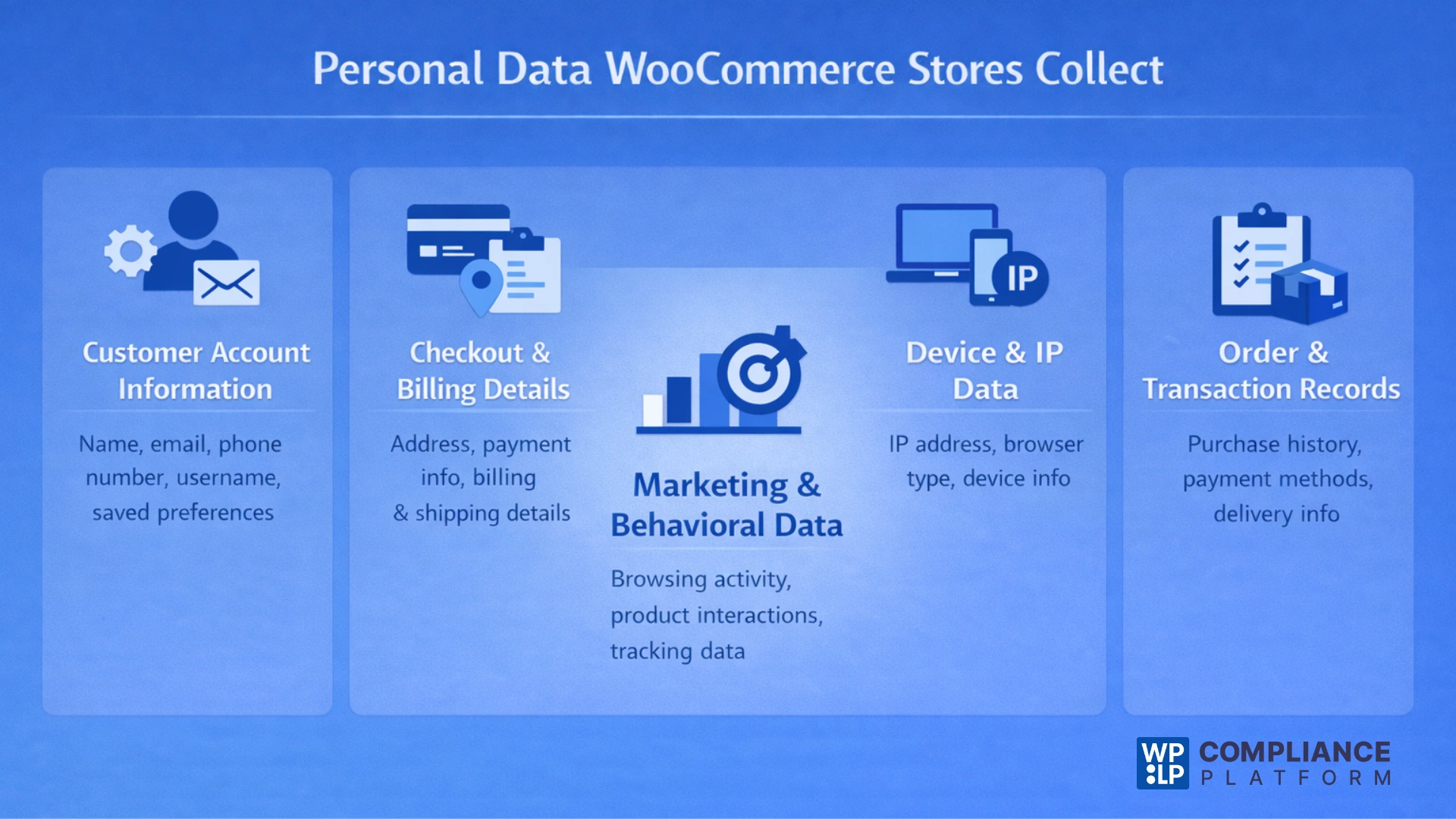
The only way to understand your total privacy obligations is to understand the types of personal data a WooCommerce business collects. The most common categories include:
Customer Account Information
It consists of the following: full name, username, password, email address, telephone number, and saved preferences. Once your customers create an account, this information will be stored indefinitely and can be linked back to the customer’s order history, support requests, and marketing activities.
This expands your privacy compliance obligations.
Checkout and Billing Information
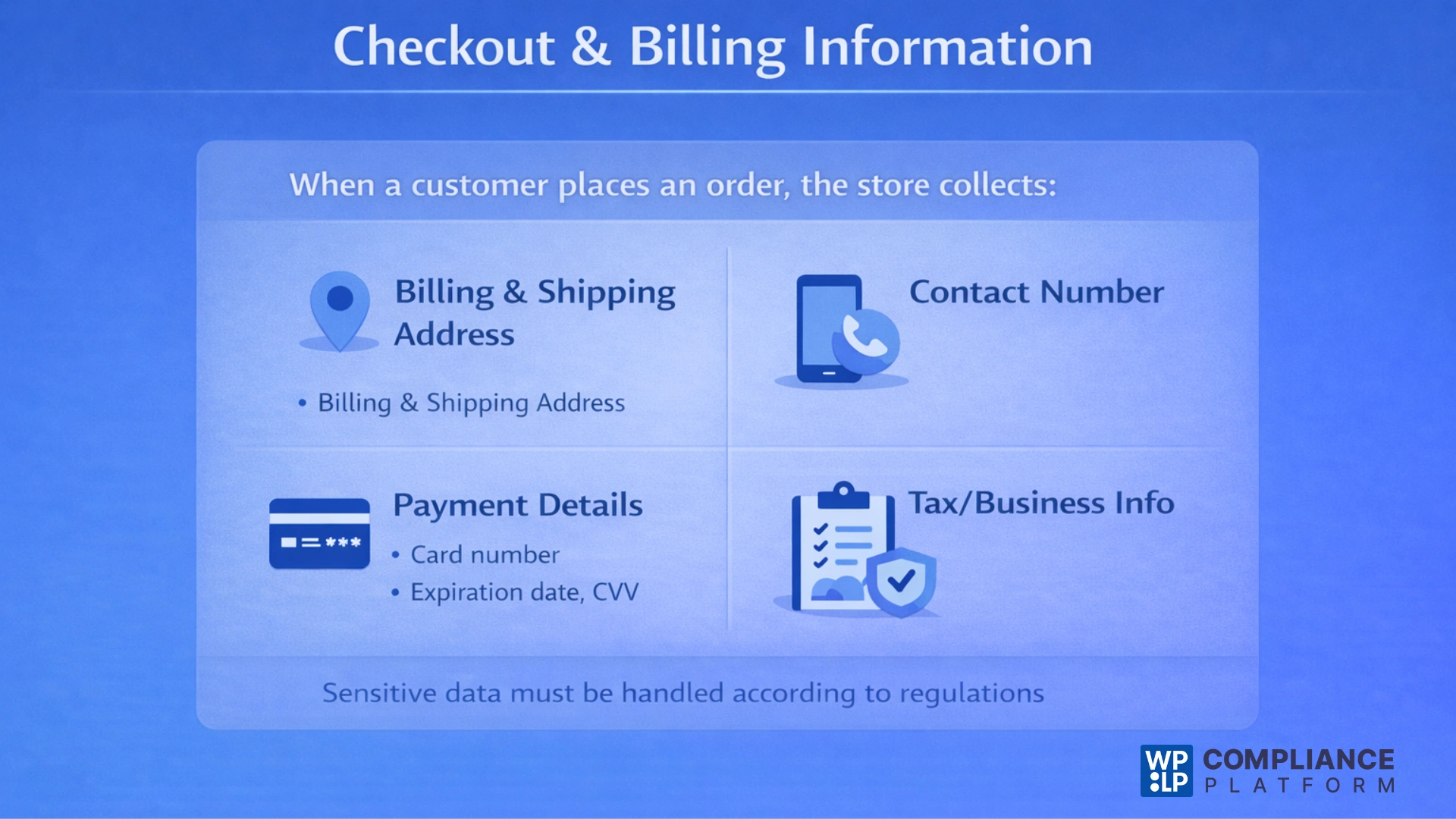
During checkout, when a customer places their order, the following personal data is collected by the store:
- Billing and shipping address
- Contact number
- Payment-related information such as card number, expiration date, and CVV
- Tax/business information
This information is collected to process orders and must comply with strict data privacy regulations.
Transaction History and Order Records
There are several different types of transaction records associated with every customer order. It also includes details of products purchased, prices paid, payment methods, delivery details, and when it was delivered.
Over time, this detailed information will create a customer profile that can help you understand customers’ buying behaviors and preferences.
Device-specific Data & IP Addresses
WooCommerce stores typically collect IP addresses along with a user’s browser type, operating system, and device identifier. This information is typically collected via hosting services, security plugins, and analytics tools on the WooCommerce website.
This data can help in preventing fraud, as well as performance tracking. But most privacy laws still consider it as personal data.
Marketing & Behavioral Data
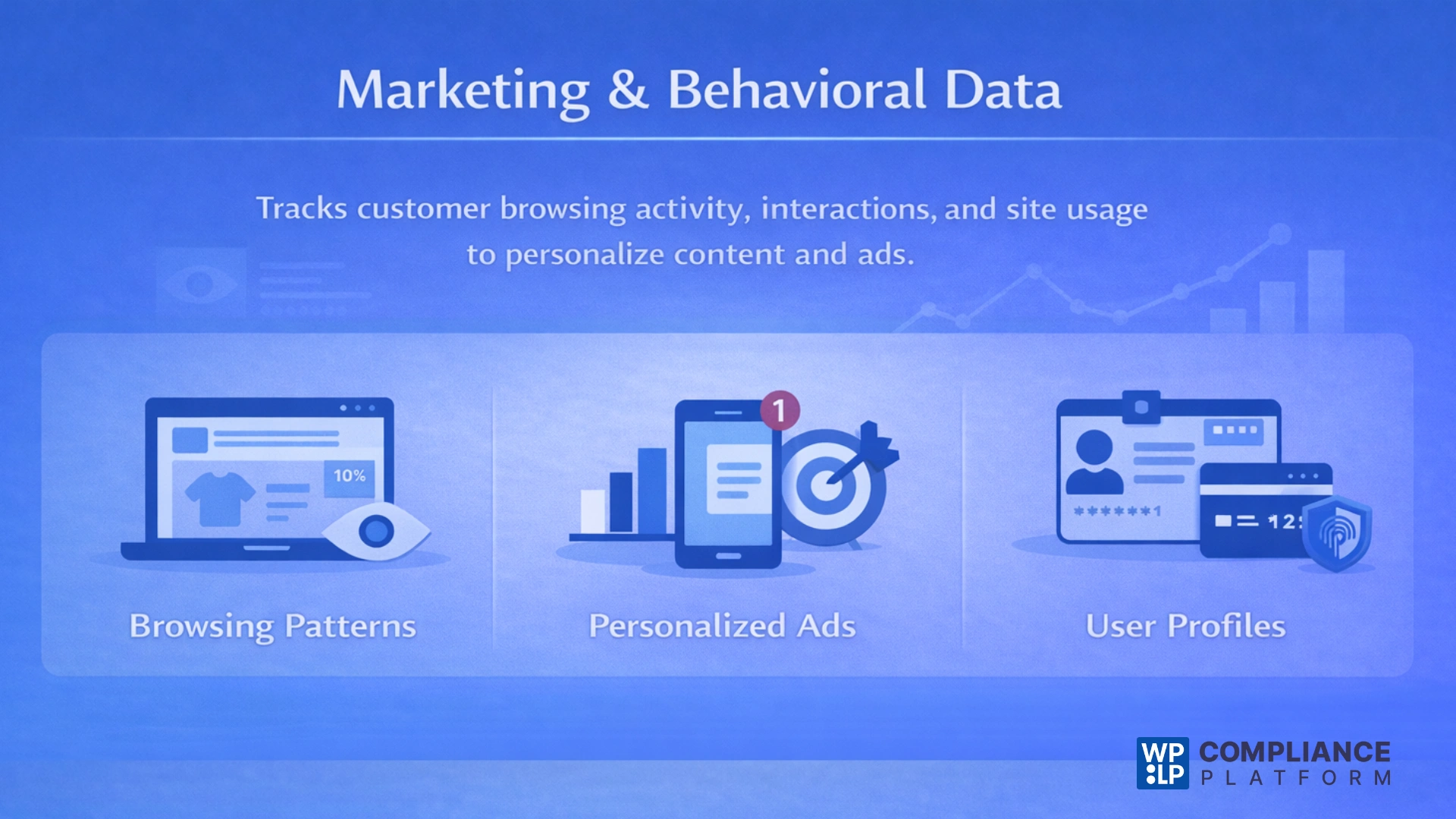
This category includes details about customers’ browsing patterns, site visits, time spent on product pages, etc.
Many marketing tools use this information to create personalized offers for your customers and to retarget them after they have made an initial purchase. Therefore, this category of marketing and behavioral data is considered a high-risk area for compliance.
Together, these types of data can create an accurate profile of every customer’s identity, behavior, and preferences. Even when a customer places a guest checkout order on the site, personal information will still be collected through credit card processing, shipping, and order confirmation.
Therefore, all WooCommerce stores should consider collecting and using these forms of data as part of their core privacy compliance efforts.
Is WooCommerce Privacy-Compliant by Default?
Many WooCommerce store owners believe that just installing the WooCommerce platform will ensure they have all their privacy obligations covered. This assumption can create serious gaps in your data protection practices and data protection systems.
As a general rule, WooCommerce installations are not privacy-compliant for several main reasons:
WooCommerce Is a Framework
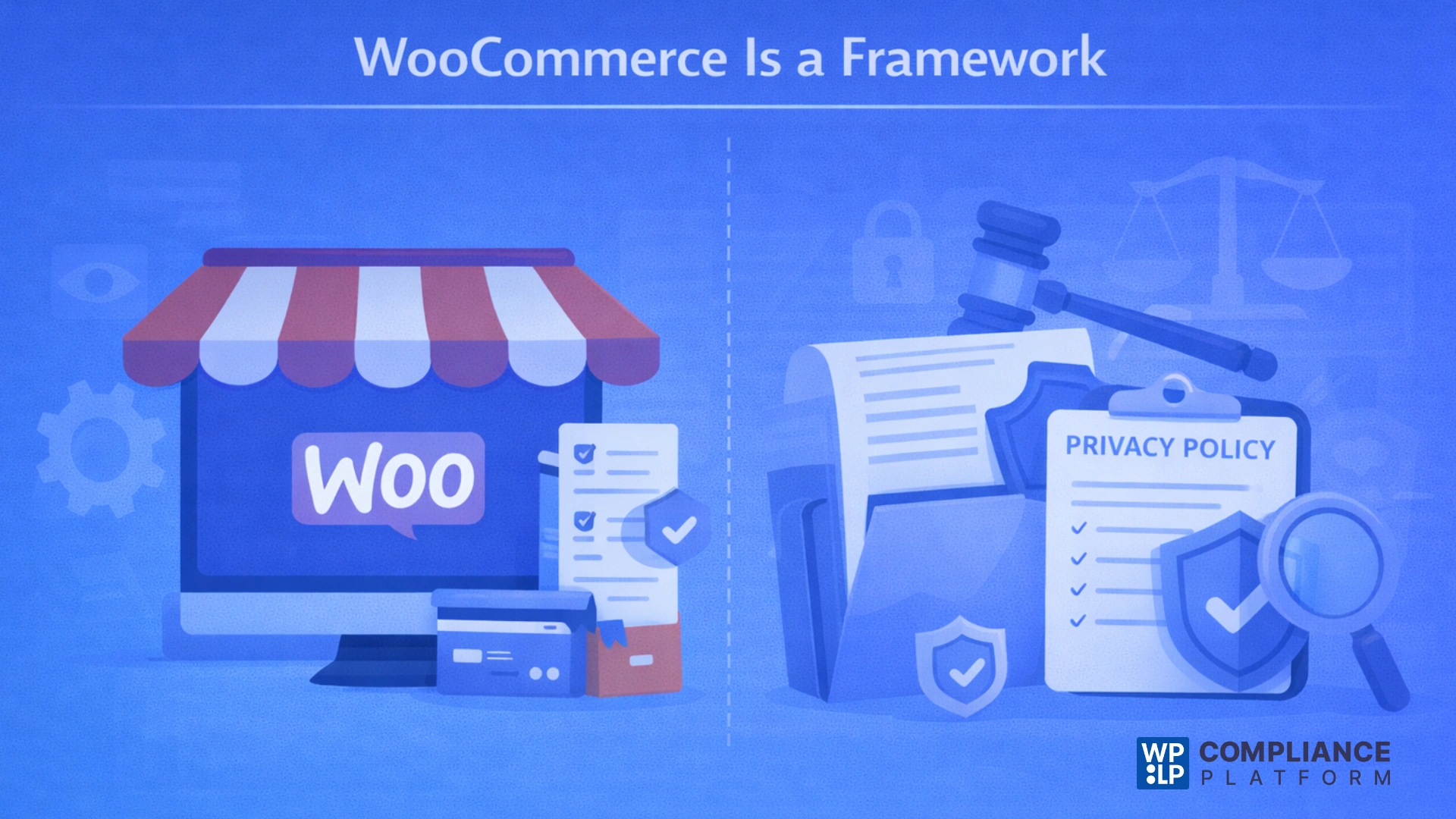
The WooCommerce framework does not necessarily provide you with a privacy-compliance solution. It isn’t designed to assist you with compliance. It was designed to be a framework to build and run an online business, and not to manage your legal obligations.
You will need to deal with your privacy obligations on an individual basis through proper legal policies, processes, and tools.
Store Owners Are Responsible for Customer Data
In most cases, WooCommerce store owners act as data controllers under GDPR, meaning they determine how and why personal data is processed. You have a legal obligation to make sure personal data is collected, retained, shared, and kept secure. Regardless of the fact that a third-party vendor is supporting you with the WooCommerce platform.
Plugins And Themes Introduce New Data Processing
All plugins, themes, and integrations generally collect personal data the moment you activate them. For example, live chat, reviews, analytics, etc., can all increase the number of compliance risks if not correctly reviewed.
To stay compliant, you must continuously monitor your systems and review new tools before activation all new data processing tools you add. You also should take ownership of your own data practices in order to be compliant long-term.
Common Privacy Compliance Gaps WooCommerce Store Owners Miss
Many WooCommerce stores possess compliance gaps. These gaps often remain undiscovered until triggered by customer complaints, regulatory investigations, or possible legal actions. One area with frequent compliance violations occurs during the checkout phase.
Checkout Data Without Disclosure
In WooCommerce stores, one of the biggest sources of information collection is through their checkout forms. Many businesses ask for more personal information than is needed to finalize a purchase. As a result, this creates unnecessary compliance risks.
Some common problems with checkout data collection include:
- Over-Collecting Optional Data: Optionally collected fields, such as date of birth, social media profiles, and marketing preferences, are added without any business justification.
- Lack of Purpose Explanation: Customers are generally not given any reason explaining why certain pieces of information are being collected from them or how the information will be utilized.
The fact that you are collecting personal information without having a clear and justifiable purpose means that you fail to meet the requirements of transparency. Consequently, regulators will require sellers to be able to justify every data point collected.
Therefore, there is a huge compliance risk when collecting unnecessary or unexplained fields in your checkout process.
Payment Gateways and Shared Responsibility
In any WooCommerce store, payment processing represents one of the most sensitive areas of data handling. Payment processing involves using financial and identity-related information. Therefore, it carries some of the highest compliance and privacy risks.
The following compliance considerations around payment gateways are important:
Gateways work as data processors
Most payment processors handle transactions on behalf of the store and collect payment card data, and verify payment card data, but they do not technically own the data. Instead, they process it under the authority of the store owner.
Store owners will be held legally responsible
The business will still retain the principal responsibility for ensuring the data is protected when it is using a reputable payment processor.
The store owner must ensure that the processor has procedures consistent with applicable privacy regulations. Also that customers are notified as to how their payment-related information is being shared and with whom.
As a result of this shared responsibility model, using a payment processor does not transfer legal responsibility. Store owners must verify processor agreements, security standards, and disclosure practices. The store owner must continuously evaluate its payment process providers, update their privacy documents, and remain transparent to avoid legal and reputational risks.
Third-Party Plugins and Tracking Scripts
Third-party plugins play a major role in how WooCommerce stores function. But they can also pose hidden risks to the privacy of users. Many times, third-party plugins are collecting data about users without store owners ever knowing how, or when, users are being tracked.
The following are common examples of third-party tools that can track customers:
- Review and rating systems: These types of plugins can track customer identifiers, IP addresses, and interaction history when customers submit feedback.
- Live chat and support widgets: These chats often track visitor behaviour, create conversation logs, and capture customer contact information for future follow-up contact.
- Analytics and heat mapping tools: These services track users’ browsing behaviours, clicks, and interactions with pages to provide usage insights.
- Advertising and social media pixels: Advertising pixels track visitors for the purpose of re-targeting and personalizing ads across all external platforms.
Many of these plugins load their tracking scripts when a web page is accessed, even before a visitor has provided valid consent. Collecting customer data before a visitor has given legal consent undermines consent requirements and increases compliance risk.
Marketing Integrations (Email, Ads, Retargeting)
Marketing tools help create customer interaction to drive up sales. But they are also the source of some of the largest privacy compliance risks in WooCommerce stores.
These systems rely on collecting personal information and behavioural information from users. Therefore, proper consent and transparency management must be ensured for their use.
Common compliance issues associated with marketing systems include:
- Sharing customer data without consent: Customer data can be shared via emails, ad networks, CRM systems without their consent.
- Abandonment cart tracking without proper permission: Many marketing systems will provide store owners with data about customers who did not complete their purchases. So that they can send them a reminder email for advertising.
Consent Management Challenges in WooCommerce Stores
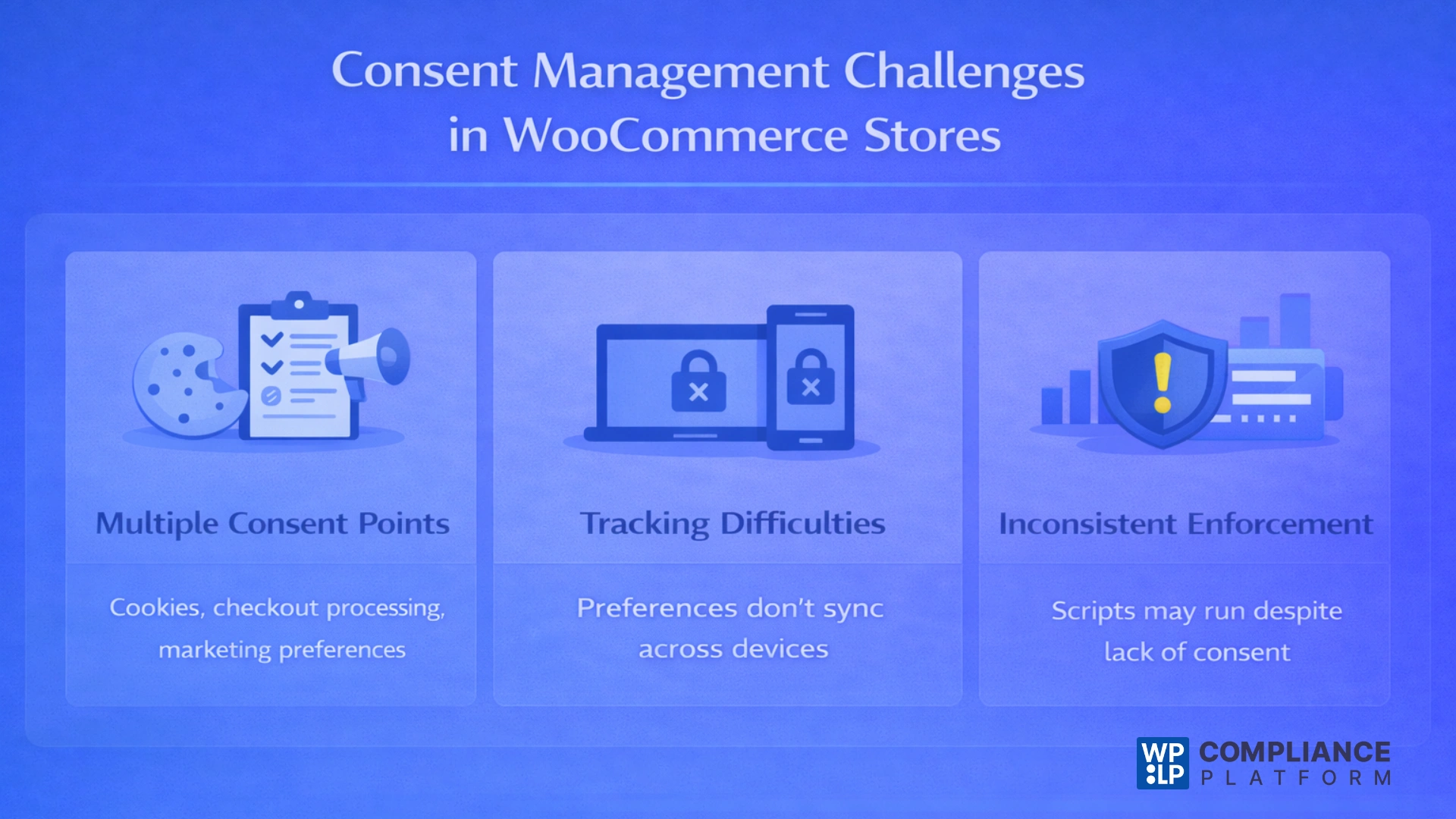
The management of user consent in a WooCommerce store has proven to be more difficult for many store owners. This is due to multiple points of data collection as well as the various systems that are used to process that data.
Several consent management hurdles that exist for store owners include the following:
- Many different consent points: There are many different types of permissions that need to be tracked for stores. This includes cookie permissions, checkout processing, marketing communications, and account creation.
- Difficulty in consent tracking: User preferences may not always pass through devices, browsers, or return visits.
- Inconsistent enforcement of consent: Some systems may continue to collect data after a user has declined consent.
Without consistent application of consent, then the validity of that consent may be reduced. For example, a user may decline cookie consent, but if the marketing scripts run anyway, the store is exposed to either regulatory action or loss of customer trust.
Real-World Scenarios Where WooCommerce Stores Get It Wrong
Business owners often discover gaps in their privacy policies only when a problem arises. Until there is a problem where they need to show proof or clear explanation.
Common examples of such situations include:
- A customer complains about receiving marketing emails without giving their consent first.
- Regulatory authorities request access to review consent logs during an audit or investigation.
- A plugin update contains new functionality for tracking customers without appropriate disclosures.
- Concerns over transactions that create a dispute trigger an inquiry into how customer data has been handled.
Store owners often struggle to produce evidence of the correct operation of their store. This can create additional legal expenses, delays in complaint resolution, and damage consumer trust.
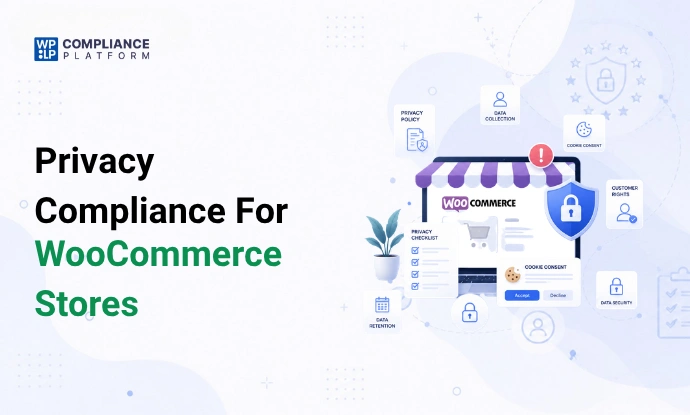
WooCommerce Privacy Compliance Checklist
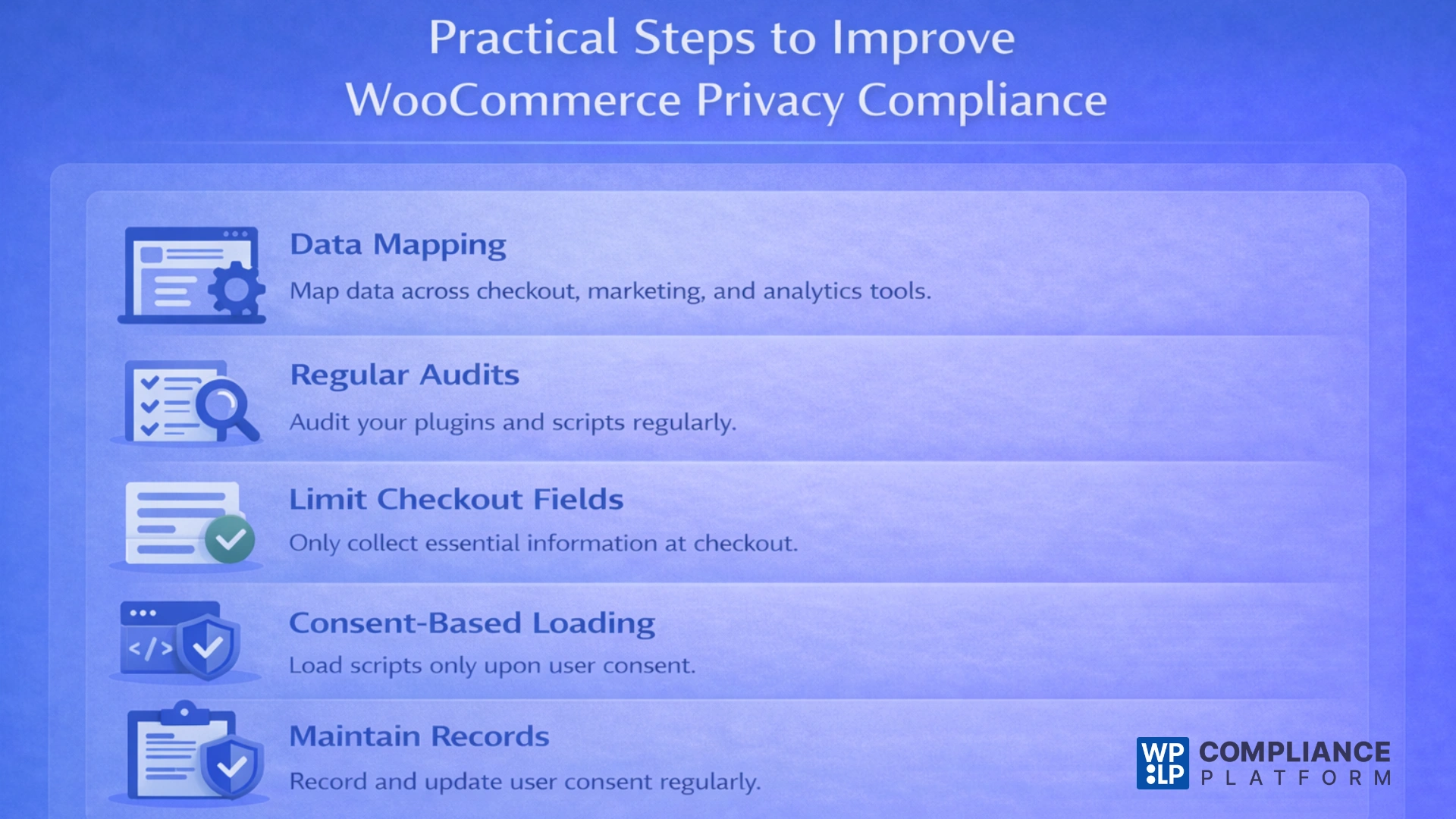
As WooCommerce stores expand, it becomes harder to manually ensure privacy compliance. Due to the introduction of new plugins, tools, and integrations, leading to a lack of consistency and higher levels of risk.
A practical compliance checklist to follow includes:
- Data mapping across your checkout process, your marketing tools, and any analytics associated with both.
- Routine auditing of your plugins and scripts.
- Limiting your checkout fields to essential information.
- Ensure scripts load only after valid user consent.
- Maintain detailed consent records.
- Regular updates on all privacy policies.
In addition, compliance will also require coordinating legal pages, cookie preference settings, and maintaining all records in an auditable manner.
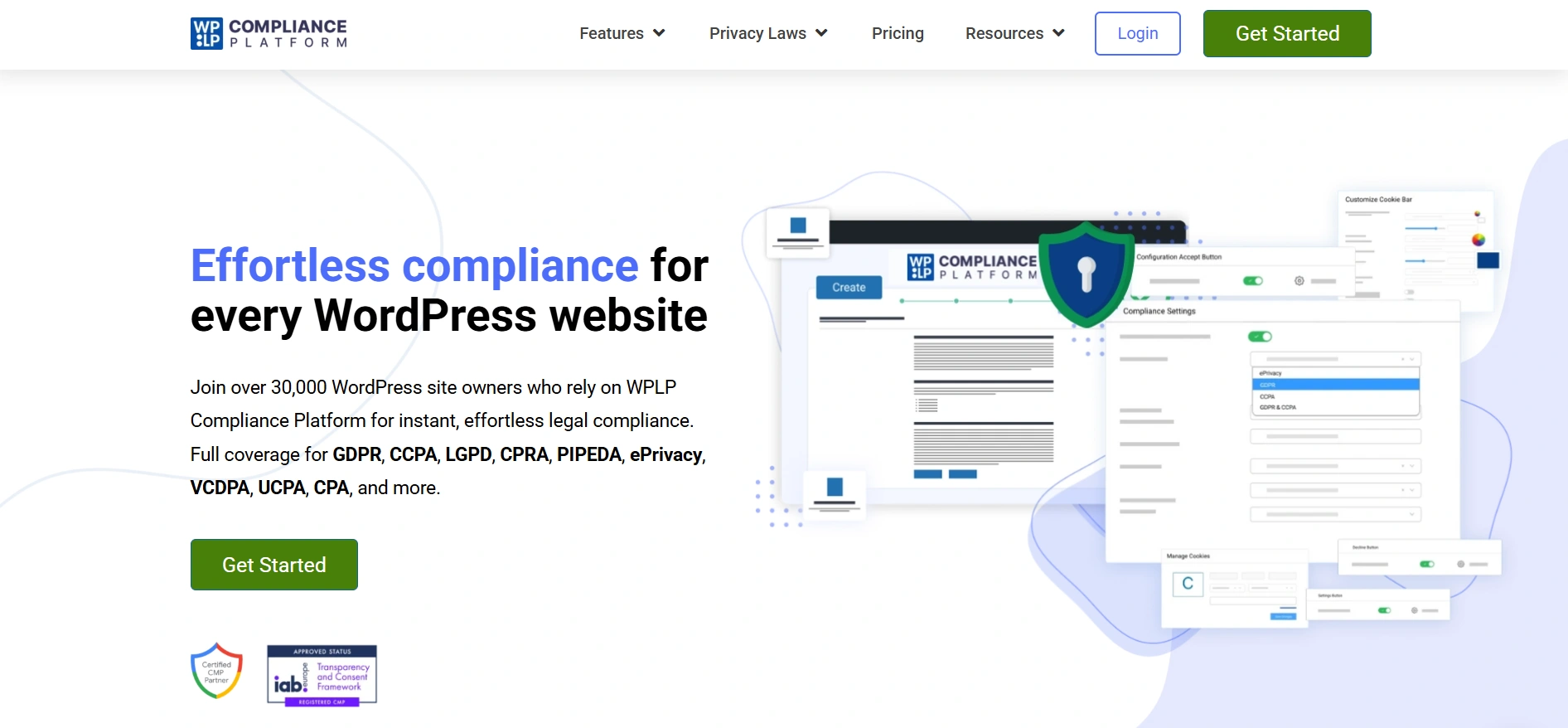
WPLP Compliance Platform is a centralized tool that you can use to help manage these components in a single location. Reducing complexity and ensuring consistency as your store grows.
FAQ
No, WooCommerce only provides the framework. The responsibility for complying with privacy laws rests entirely with the store owners.
Yes, most marketing and tracking tools require you to obtain clear, documented consent from users before they can collect any information from you.
Yes, when guest users check out, they will still provide personal information such as billing and shipping details.
Whenever you add a new plugin or integrate with an external service, you should create an opportunity to review your privacy practices.
Conclusion
Store owners are given new levels of privacy responsibility under WooCommerce. Systems such as checkout processes, marketing tools, or third-party integrations can create compliance gaps.
A lot of the time, store owners won’t fully realize their compliance exposure until they receive a complaint, are under audit, or are in dispute. Therefore, by managing data practices, enhancing consent management processes, and maintaining documents, store owners can minimize risk.
Consistent and clear privacy management will generate customer loyalty and ultimately help sustain the store’s long-term revenue.
If you enjoyed this article, then consider reading: