
Can You Copy Privacy Policy From Another Website? Here’s the Truth
Summary
Copying one can cause legal problems, incorrect information, and loss of user trust. Since every website handles data differently, the policy must match your own practices.
The blog also explains simple ways to create a proper Privacy Policy for your website safely.
Have you ever considered copying the Privacy Policy from someone else’s site?
It’s a question many website owners come across at some point. The Privacy Policy pages look very long and complex to write on your own. Because of that, copying one from another website can seem very tempting.
A Privacy Policy is a page that explains how your website handles user data. It can help you clearly communicate certain practices that take place on your site. That’s why it must be tailored to your specific business practices.
But what if the business you want to take inspiration from has the same niche as yours? Can you still copy from them? Let’s dissect this in more detail and understand the best way forward to attain legal compliance.
What Is a Privacy Policy and Why Does Your Website Need One?
Think of a Privacy Policy as a page on your website that helps build trust with your users. It explains what information your site collects from them, how that information is used, stored, or shared, and why you’re doing so.
It’s inevitable for users to provide some sort of information when they’re interacting with any site. This can happen when they fill out a contact form, create an account, or simply browse your website. During this interaction, their behavior and personal information may be collected.
Also, in most cases, technical details like cookie data or IP addresses will also be automatically collected. It can sound scary as a user if they don’t understand how their personal information is being accessed and then managed.
So, the Privacy Policy steps in and clears the air by clearly explaining the data collection policies of your site. It lets users know that their data is handled carefully and not misused by your site. This can improve the transparency and boost the trust between you and your users.
Why Your Website Needs a Privacy Policy
The following are some of the reasons that tell you why having a Privacy Policy is essential for your site.
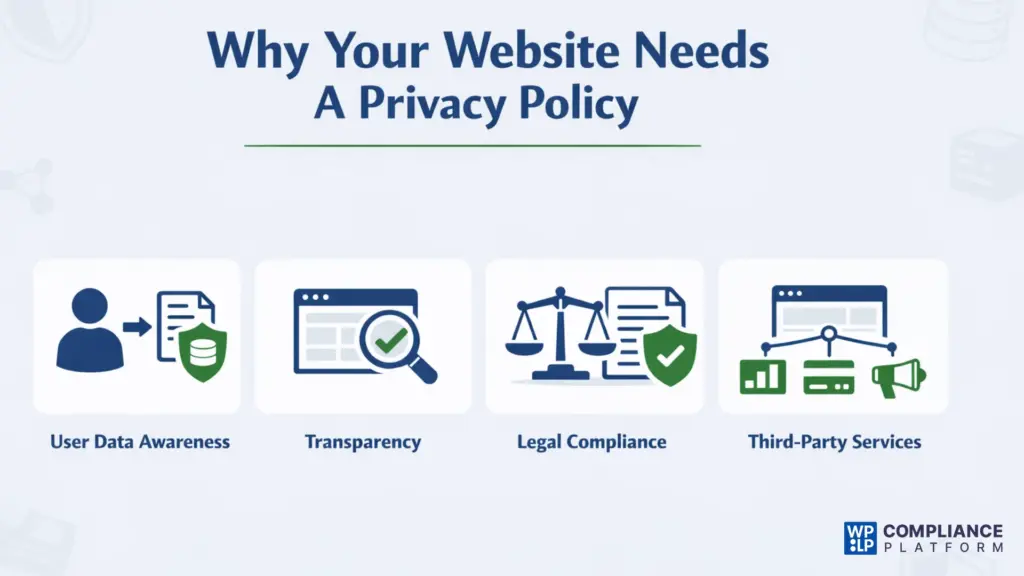
It Helps Visitors Understand How Their Data is Handled
When people share their information online, they’re placing their privacy at risk. So, it’s important for them to know what will happen to it. A Privacy Policy provides clarity and sets the right expectations.
It Supports Transparency
When someone says a Privacy Policy is well written, that means the page was able to communicate the website’s practices really well. This transparency can make your users feel at ease when interacting with your site.
It Draws Parallels With Common Privacy Requirements
Many privacy laws out there require websites to clearly explain their data practices. A Privacy Policy is the place where this information is typically disclosed. It should ensure alignment and compliance with the data privacy laws in their respective regions.
It Supports the Tools and Services Used on a Website
Websites often rely on third-party services such as analytics tools, advertising platforms, or payment processors. These services usually expect websites to inform users about how data may be collected or used.
Can You Copy Privacy Policy From Another Website?
Without beating around the bush, the clear answer is “No.” You can not copy and paste a Privacy Policy from another website. It will do more harm than good.
Let’s look at the potential risks you can tap into when you’re copying the Privacy Policy from someone else’s site:
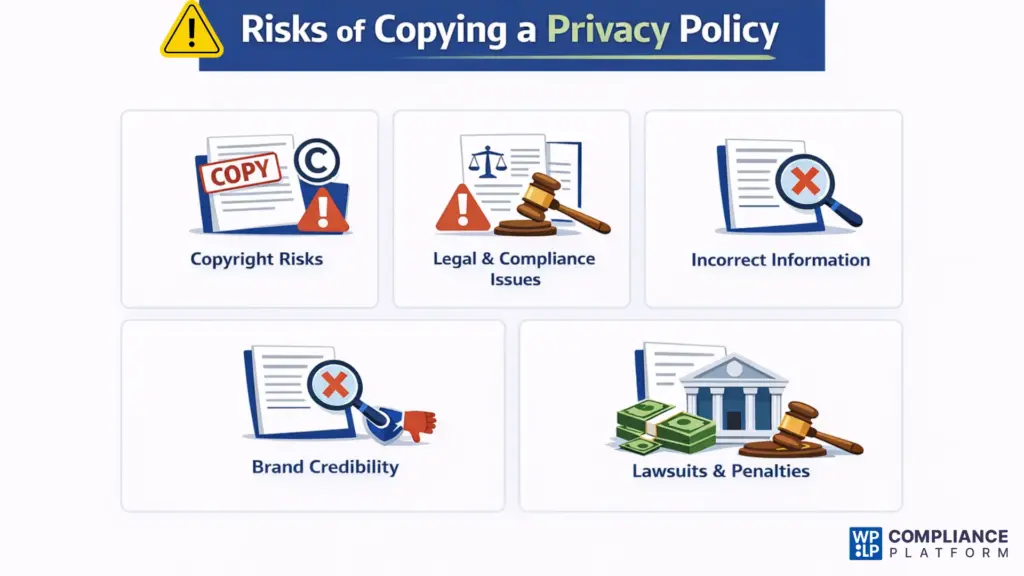
Copyright Risks of Copying a Privacy Policy
Documents such as a Privacy Policy are generally protected by copyright laws. Just like images, blogs, or any website content online, Legal documents present on a website are also considered original work.
That means you’re taking advantage of someone’s hard work by stealing word-for-word from their website. So it’s considered not just risky but also unethical to copy their Privacy Policy document.
If the owner of the original Privacy Policy finds out that you’re using their words in your document, they have the right to get it removed. Or worse, they can pursue legal action or demand hefty compensation from you.
The policies have to be unique and should be designed to communicate your practices and needs properly. There is no way any Privacy Policy could be the same. Yes, there can be “similar” policies, but not “same.” The wording and structure should be unique to the businesses that created them.
Legal and Compliance Issues
Data privacy laws demand that businesses clearly disclose how they manage user data. That means how you collect and make use of that data will definitely vary from business to business. And, if you were to copy it from other sites, it would create a major discrepancy.
For example, a website’s Privacy Policy might include clauses about services or tools that your site doesn’t use. Also, you might leave out details about tools and services that your site is actually using.
Not just this, regional laws like GDPR & CCPA mandate websites to provide the most accurate information about their data practices. If you failed to do so, you would have to face regulatory issues or hefty penalties.
Incorrect or Misleading Information
Yet another common risk of copying someone else’s Privacy Policy is incorrect or misleading information. It’s similar to how we discussed before: The information you’re providing in the document may simply not match how your site operates.
Every website manages data differently. It varies by their needs, like some sites collect email addresses for sharing newsletters, others track the user behaviours on their site through analytics, while others collect payment details.
When you’re copying a Privacy Policy from another website, you may end up including something that’s not relevant to your business at all. This can lead to a policy that is not just inaccurate but also misleading for your website users.
Damage to Brand Credibility
You never want to put your brand image at risk just to cut down on time by copying a Privacy Policy from others.
You might be wondering how a brand image is related to the copying of a Privacy Policy document. But brand image is inversely proportional to the Privacy Policy inconsistencies. More inconsistencies mean less trust and a bad reputation.
Think about it, if any user lands on your site and sees that the Privacy Policy clauses present on the document are nowhere related to the business operations, it can make your site look very careless and unprofessional, thus impacting the brand credibility.
Trust is a very important factor. It ultimately decides how a user will interact with your site. If your legal pages appear to be copied or very poorly written, the users will hesitate to share their information.
Risk of Lawsuits and Legal Penalties
Copying a Privacy Policy can expose your business to multiple legal risks at the same time.
First, there is the possibility of a copyright claim from the owner of the original policy. Second, if your policy does not accurately disclose how your website handles user data, it may also violate applicable privacy regulations.
Both situations can lead to serious consequences, including legal disputes, fines, or the need to revise your policies under pressure. Even if a lawsuit never occurs, resolving these issues can take time and resources that could have been avoided by creating a policy tailored to your own website.
How to Create a Privacy Policy for Your Website
Up until now, you must have gotten a clear understanding that copying a Privacy Policy from another site is a very bad idea. So, how do you create one from scratch?
A common answer would be, “You should either be a law practitioner or get a lawyer consultancy and create one from scratch.” It must seem like a long and hectic process, right? But don’t worry, we’ll discuss all the possible ways of creating a Privacy Policy for your website.
First, we’ll look at the longer, more complex, and harder approaches, then we’ll slowly make our way to the easier, shorter, and best ones. This way, you can get a clear understanding of which method to use and which one not to.
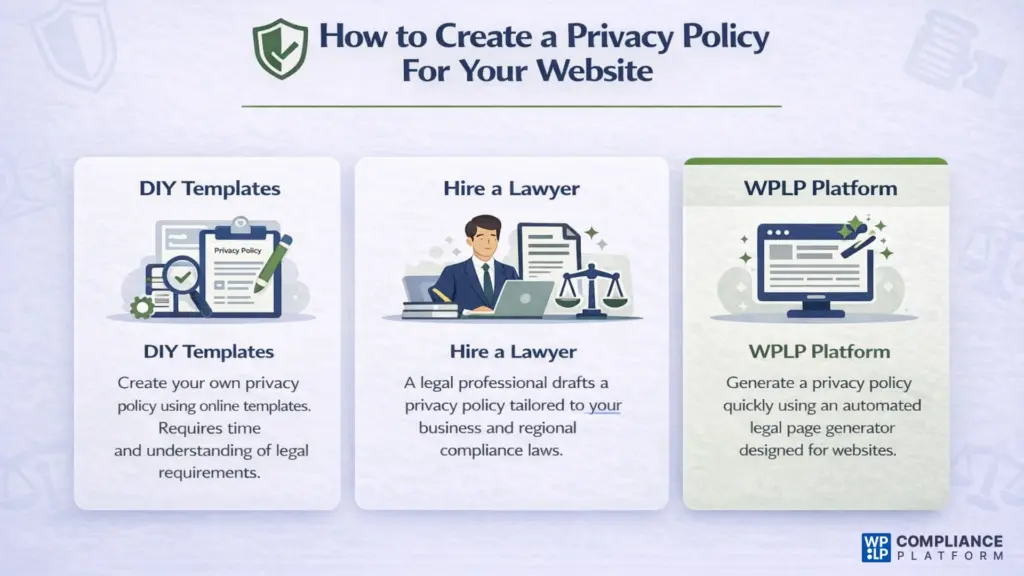
1. Write It Yourself Using Online Templates
If you want to write a Privacy Policy by yourself, you can search for “Privacy Policy templates and examples” online. You will come across multiple sites providing online templates. Pick the one that best suits your business needs and start drafting your legal page.
Here are some of the Privacy Policy templates that you can check out:
- Termly – Privacy Policy Template
- WebsitePolicies – Sample Privacy Policy Template
- Privacy Policy Online – Privacy Policy Template
The templates mentioned above will provide the ready-made structure of the required legal page. This will only outline the typical sections that are found in the legal pages.
You will need to have in-depth knowledge of your business’s operations & data collection practices, like information collection, data usage, cookies, and third-party tools or services that are embedded into your site. Only then will you be able to draft and publish a very good Privacy Policy page on your own.
This is one of the longest and most complex approaches amongst all. But this one will go easy on your pocket. So, basically, you will be trading money for your own effort and time.
This approach will also require you to have a good knowledge of data privacy laws and their compliance rules specific to your region. Or else you will definitely need to consult and get it reviewed by a law practitioner before publishing it.
Pros & Cons of Drafting Privacy Policy Page Using Online Templates
| Pros | Cons |
| ✅ Quick starting point ✅ Low cost or free | ⚠️ Requires careful editing ⚠️ May miss important legal details ⚠️ Not tailored to your exact practices |
2. Hire a Lawyer and Do it Manually
The previous approach was good, but it would still require you to hire a lawyer for the review. In this approach, instead of just getting it reviewed by the lawyer, we’ll ask him/her to draft a Privacy Policy page for our site by themself.
Before that, the lawyer will first review how your website collects, stores, and manages user information and start drafting your page accordingly.
Also, as we know, the data privacy laws and data requirements can vary from region to region, so the document needs to be uniquely tailored to that factor, too. The main advantage of hiring a lawyer is that they will ensure the policy includes all the appropriate disclosures.
This approach will take your headache away from drafting an accurate Privacy Policy page on your own. But it’s coming at a cost of more time and financial investment when compared to the other approaches. If you’re running a small business online, the cost and effort that goes into this approach might feel unnecessary to you.
Pros & Cons of Taking Help From a Lawyer
| Pros | Cons |
| ✅ Legally tailored to your websiteHigher level of legal accuracy ✅ Best suited for large & complex online businesses | ⚠️ Quite expensive ⚠️ More time and effort ⚠️ Not at all practical if you’re running a small-scale online business |
3. Best Option: Generate Privacy Policy Using the WPLP Compliance Platform
The most optimal way to generate a Privacy Policy page is by using a legal page generator like the WPLP Compliance Platform.
Whether you’re a small business owner who just started going online or a large business owner who needs an accurate and legally compliant Privacy Policy, this is the best approach to opt for.
This approach negates all the cons of the previous approaches, like heavy time and effort, lawyer consultation, and missing important legal details if you’re drafting one on your own.
You can literally generate a Privacy Policy page in under 5 minutes if you’re using WPLP. Let’s see the step-by-step process of how you can generate a Privacy Policy page using the WPLP legal page generator:
How to Create a Privacy Policy Page Using the WPLP Legal Pages
- Open your WordPress dashboard and navigate to the plugins section.
- Search and install the plugin – WP Legal Pages.
- Activate the plugin and open the WPLP dashboard.
- Navigate to the Legal Pages ➡️Create Legal Pages section
- A very handy wizard of the WPLP will show up. It will guide you through the entire process of Privacy Policy generation.
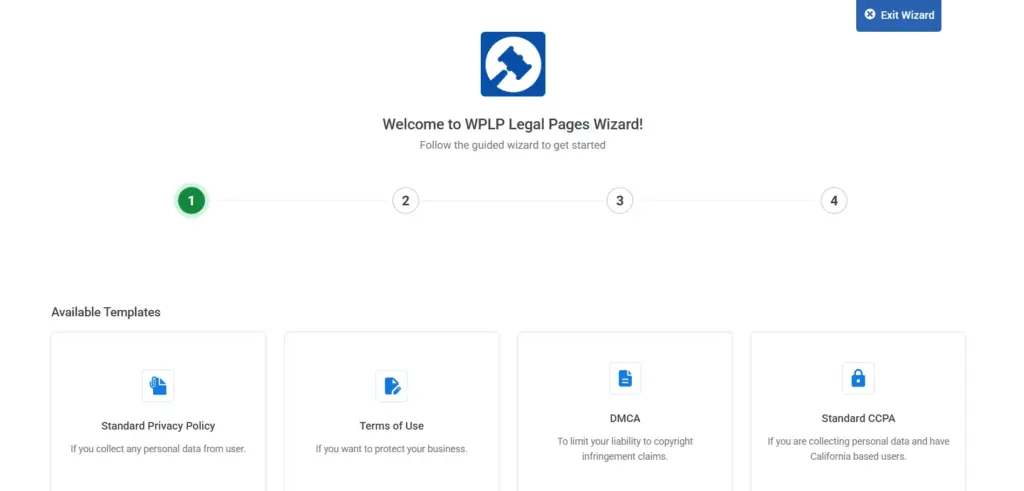
- This wizard consists of 4 main steps. In the first step, you will get to choose the required legal template. In our case, let’s choose the Standard Privacy Policy template.
- In the second step, you will be asked to fill in the basic details of your online business, like domain name, business name, language, and contact details.
- Next, in the third step, you will be required to answer the questions related to the data collection practices of your website.
- That’s it, in the final step, you will be shown the preview of the Privacy Policy page tailored to your business. If you then click on the create and edit button, a draft will be created of this preview.
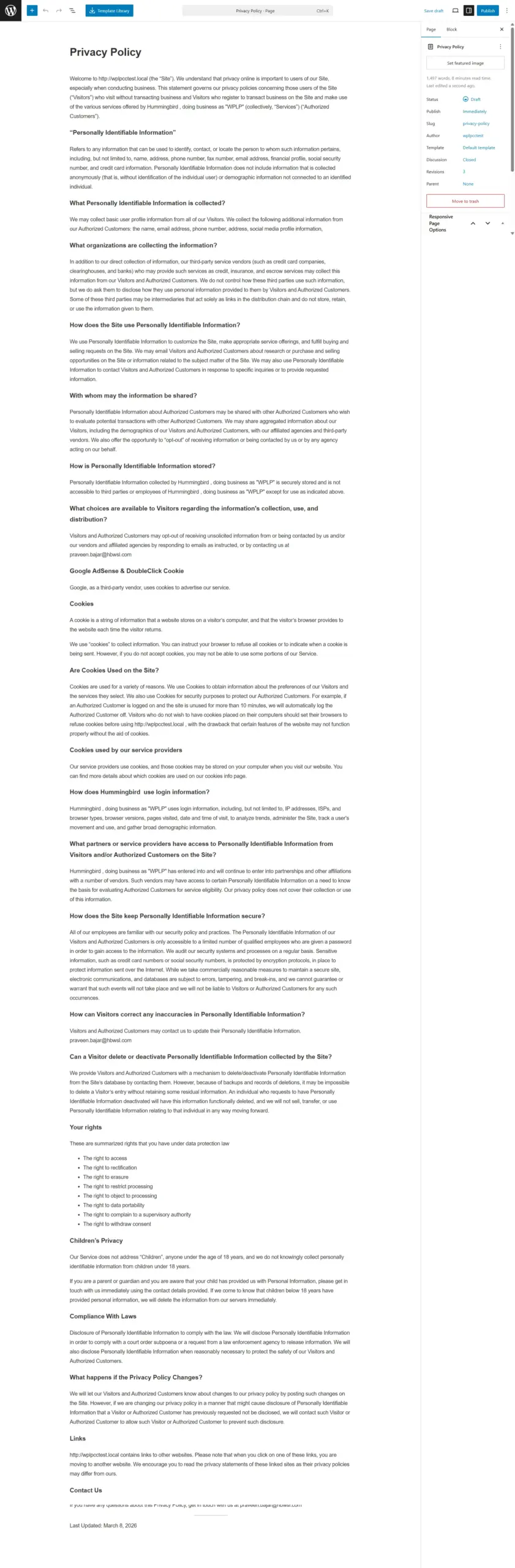
- You can edit the draft if you think there are any changes necessary. After the final review, you can successfully publish it.
Pros & Cons of Using WPLP for Generating the Privacy Policy Page
| Pros | Cons |
| ✅ Generates a complete Privacy Policy in just a few minutes ✅ WPLP Pro Plan is also the most affordable one in the market ✅ Not just the Privacy Policy page, you can generate all kinds of legal pages using this generator. ✅ Guided wizard makes the process simple, even for beginners ✅ Covers important legal sections automatically ✅ Reduces the risk of missing key compliance details ✅ No need for manual drafting or legal expertise ✅ Easy to edit and update the generated policy later | ⚠️ Requires a WordPress website (But we’ll soon be moving to a SaaS platform, so regardless of your CMS – be it WordPress, Shopify, Magento, etc, you can use our product) ⚠️ Advanced features may require a paid plan ⚠️ Still needs a basic review before publishing |
FAQs
Anyone who runs a website or app can write a privacy policy. Many businesses ask a legal expert to review it to make sure it follows the law.
Yes. In most cases, it is required by law if your website collects personal information like name, email, or payment details.
Common mistakes include:
• Copying from another website
• Adding incorrect or outdated information
• Not explaining how user data is collected or used
• Using language that is too complex for users
A Privacy Policy is a full document that explains how a company collects and uses data.
A Privacy Notice is a short message that informs users about data collection at a specific moment.
No, it is not recommended. Each website handles user data differently. Copying a Privacy Policy can lead to legal issues and incorrect information.
Conclusion
The key point we want you to take away from this article is that you should never copy a Privacy Policy page from someone else’s website. Taking shortcuts with legal pages might seem convenient at first, especially when you are trying to launch or manage a website efficiently.
But always make sure your legal pages are novel, and you’re clearly communicating the data collection practices of your website. While staying aligned with the expectations of modern online privacy standards.
Now, you also know the best way to generate the Privacy Policy. With the right approach and platforms like WPLP easily generate a policy that aligns with your site’s needs while saving both time and effort.
If you like reading this, you should also check out our other blogs:
- Who takes legal reponsibility of third-party scripts on your site?
- A beginner-friendly guide on Data Subject Access Request.
- How to split cookies by region using WPLP?
Ready to secure your global presence? Grab the WPLP Compliance Platform today!